Abstract
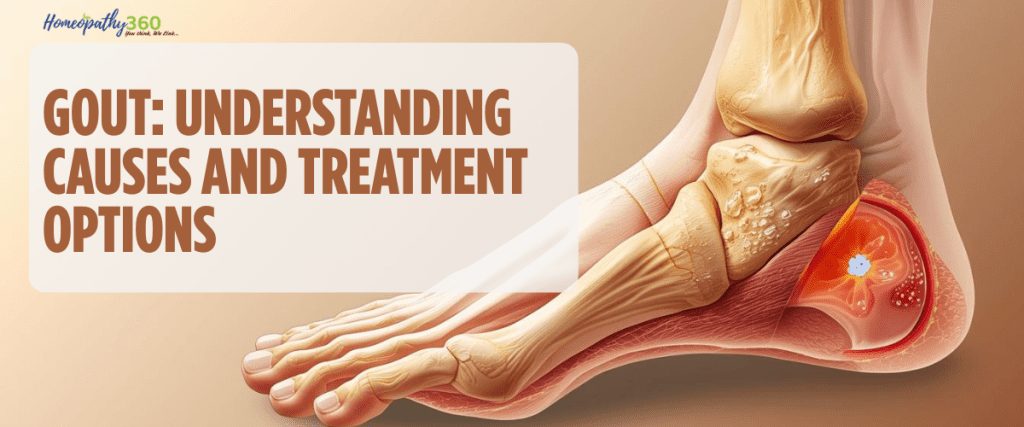
Gout is a metabolic disorder characterized by elevated serum uric acid levels leading to the deposition of monosodium urate crystals in joints and surrounding tissues, resulting in acute inflammatory arthritis. The prevalence of gout varies widely across populations, ranging from less than 1% to 6.8%, with an incidence of 0.58 to 2.89 per 1,000 person-years. The disease is more common in males and shows an age-related increase. Clinically, gout most frequently affects the first metatarsophalangeal joint, although other peripheral joints such as the ankles, knees, and fingers may also be involved. It presents with sudden, severe episodes of joint pain, swelling, redness, and tenderness. The global burden of gout is increasing due to lifestyle changes, comorbid conditions such as hypertension, diabetes mellitus, renal disease, obesity, high-purine diet, alcohol consumption, and the use of certain medications. Psychological factors including stress and emotional disturbances may further precipitate acute attacks. Homeopathic potentized medicines play a significant role in the management of gout by addressing the underlying metabolic imbalance, enhancing uric acid excretion, reducing inflammation, and preventing recurrent attacks, thereby improving overall quality of life.
Keywords
Gout; Hyperuricemia; Uric acid; Inflammatory arthritis; Homeopathy; Metabolic disorder
Introduction –
Gout is a metabolic disease that most often affects middle-aged to elderly men and postmenopausal women. It results from an increased body pool of urate with hyperuricemia. It typically is characterized by episodic acute arthritis or chronic arthritis caused by deposition of MSU crystals in joints and connective tissue tophi and the risk for deposition in kidney interstitium or uric acid nephrolithiasis .Although hyperuricaemia is a strong risk factor for gout, only a minority of hyperuricaemic individuals actually develop gout.
Gout manifests clinically as acute arthritis, tenosynovitis, bursitis, tophaceous deposits, and in some cases, renal complications such as uric acid nephrolithiasis. The condition arises from an imbalance between uric acid production and excretion, leading to crystal formation and subsequent inflammatory responses.
Crystal-induced arthritis encompasses a broader group of disorders in which crystals accumulate in and around joints, triggering inflammation, mechanical damage, and tissue destruction. Factors influencing crystal formation include the concentration of chemical components, local tissue conditions, and the presence of promoters or inhibitors of crystal nucleation. Crystals may remain asymptomatic for years, only inducing inflammation when released by trauma, changes in solute concentration, or systemic illness.
Historical View
- Ancient times: First identified by Egyptians (2640 BC) as podagra; Hippocrates called it “the unwalkable disease” and linked it to a rich lifestyle.
- Cultural link: Known as the “disease of kings” due to association with wealth, rich foods, and alcohol.
- Etymology: “Gout” from Latin gutta (“drop”), reflecting the idea of bad humours entering joints.
- Scientific discoveries:
- Early identification of urate crystals in tophi (Smith & Jones, Leeuwenhoek).
- Chemical composition as uric acid confirmed by Wollaston (1797).
- Modern understanding: Garrod (1931) recognized gout as an inherited metabolic disorder, an inborn error of purine metabolism.
Epidemiology:
- Prevalence: 1–2% of the population, with a >5:1 male-to-female ratio.
- More common in middle-aged to elderly men and postmenopausal women.
- Risk factors: increasing age, higher serum uric acid (SUA), obesity, and metabolic syndrome.
- Lifestyle and diet in affluent societies have contributed to increasing prevalence.
Precipitating Factors:
- Trauma, unusual physical exercise, surgery
- Alcohol consumption
- Severe systemic illness or caloric restriction
- Dietary excess (high-purine meats and seafood)
- Medications: diuretics, low-dose aspirin, ethambutol, pyrazinamide, cyclosporine
- Other triggers: initiation of uricosuric therapy, drug allergies, cytotoxic drugs, B12 therapy in pernicious anaemia
Dietary Risk:
- High-risk foods: beef, lamb, pork, organ meats, tuna, shrimp, lobster, clams.
- Low-risk foods: dairy products, fruits, vegetables (except purine-rich), nuts, breads, pasta, sugar-sweetened soft drinks (increase SUA independently).
- Vegetables like peas, lentils, spinach, mushrooms, oatmeal, cauliflower do not significantly increase gout risk.
Aetiology:
- Primary Gout:
- Mostly in adult males.
- Due to intrinsic defects in purine metabolism. Defective renal tubular urate secretion.
- Secondary Gout:
- Due to underlying disorders or external factors.
- Causes include drug-induced hyperuricemia (diuretics, cyclosporine) or increased nucleic acid turnover (myeloproliferative diseases, multiple myeloma).
- Reduced urate excretion due to decreased GFR, increased reabsorption, tubular defects, or toxins (lead).
- Affects both sexes.
Uric Acid Metabolism And Gout Pathogenesis
Sources of Uric Acid:
- Dietary purines: About 1/3 of uric acid comes from food.
- Endogenous production: Two-thirds arises from purine metabolism in the body.
- Tissue turnover: Breakdown of cells and nucleic acids also contributes.
Key Enzyme:
- Xanthine oxidase converts hypoxanthine → xanthine → uric acid.
Normal Uric Acid Levels:
- Pathological hyperuricemia occurs when serum uric acid > 6.8 mg/dL.
Hyperuricemia and Gout
- Hyperuricemia promotes monosodium urate (MSU) crystal formation, causing gout.
- Factors contributing:
- Genetic absence of uricase
- High reabsorption of uric acid (90% in kidneys)
- Limited solubility of urate in body fluids
Mechanisms:
- Overproduction of uric acid (10% of cases)
- Genetic enzyme defects (e.g., HGPRT deficiency, PRPP overactivity)
- High nucleic acid turnover (e.g., malignancies, haemolytic anaemias)
- Excess purine intake
- Under-excretion of uric acid (90% of cases)
- Kidney dysfunction: reduced secretion or abnormal tubular transport
- Drugs: diuretics, low-dose aspirin, cyclosporine, etc.
- Diseases: CKD, hypertension, lead toxicity, hyperparathyroidism
Renal Handling of Uric Acid:
Normal excretion: 600–800 mg/24 h; >1,000 mg/24 h = overproduction
- Four-step process:
- Glomerular filtration
- Proximal tubular reabsorption (~90%)
- Tubular secretion
- Post-secretory reabsorption
Transporters:
- URAT1, OAT1, OAT3 – help uric acid cross membranes.
Genetic and Enzyme Contributions
- HGPRT deficiency: Less hypoxanthine reused → more converted to uric acid.
- PRPP accumulation: Stimulates de novo purine synthesis → more uric acid.
- Purine salvage pathways: Enzymes APRTase and HGPRTase recycle purines; defects increase uric acid production.
Secondary Causes of Hyperuricemia
- Increased nucleic acid turnover in malignancies
- Drugs or toxins affecting kidney function
- Metabolic disorders (e.g., glycogen storage diseases, hereditary fructose intolerance)
Elimination of Uric Acid
- Primary route: Kidneys (~2/3)
- Secondary route: Gastrointestinal tract (~1/3)
- Minor Routes: Saliva, Tears, Sweat
Clinical Features
- Presentation:
- Acute monoarthritic (most commonly first MTP joint, >50% cases)
- Other sites: ankle, mid-foot, knee, small hand joints, wrist, elbow
- Rapid onset (2–6 hours), severe pain, extreme tenderness, swelling, erythema
- Fever, malaise, or delirium may occur with large joint involvement
- Self-limiting in 5–14 days; recurrent attacks may cause cartilage/bone damage
- Types of Gout:
- Asymptomatic hyperuricemia: Elevated urate without symptoms
- Acute gout attack: Sudden, severe, usually monoarticular; often affects lower extremities
- Intercritical gout: Symptom-free periods between attacks, progressively shortening
- Chronic tophaceous gout: Recurrent attacks; formation of tophi in periarticular tissues, bursae, tendons, ear cartilage; may rarely affect eyes, tongue, heart
- Nephropathy:
- Obstructive uropathy (nephrolithiasis): Uric acid stones, blockage of urine flow
- Urate nephropathy: Interstitial urate deposition → albuminuria, renal failure
Diagnosis
- Clinical: Sudden onset of inflammatory monoarthritic, history of hyperuricemia or nephrolithiasis, family history
- Laboratory:
- Serum uric acid: >7.0 mg/dL (males), >6.0 mg/dL (females); may be normal during acute attack
- Inflammatory markers: ESR, CRP, neutrophilia
- Synovial fluid analysis: Needle-shaped, negatively birefringent MSU crystals
- Imaging:
- X-ray: Chronic erosions, soft tissue tophi
- Ultrasound: Urate deposits visualization
- DECT: Non-invasive detection of uric acid crystals
- MRI: Extent of tophi, including bursae and tendons
Associated Systemic Diseases
- Lesch-Nyhan syndrome: X-linked recessive disorder; gout, mental deficiency, self-mutilation
- Hypertension: Hyperuricemia from reduced renal urate excretion
- Postmenopausal women: Higher gout incidence
- Diabetes mellitus: Insulin increases renal urate reabsorption
Drug-Induced Gout
- Diuretics: Volume contraction → reduced urate secretion
- Fructose: ATP breakdown → uric acid production
- Cyclosporine: Renal alterations → hyperuricemia
- Low-dose salicylates: Block urate excretion
- Pyrazinamide: Reduces renal clearance of uric acid
- Allopurinol: Lowers uric acid via xanthine oxidase inhibition
Differential Diagnosis
- Acute: Septic arthritis, cellulitis, bursitis, pseudogout (calcium pyrophosphate), reactive arthritis, rheumatoid arthritis
- Chronic: Nodular RA, psoriatic arthritis, osteoarthritis, sarcoid arthritis
Management
- Lifestyle measures:
- Weight loss, regular low-impact exercise (walking, swimming, biking)
- Reduce alcohol, high-purine foods (meat, seafood, offal)
- Plant-based, low-fat, low-carb diet acceptable; purine-rich vegetables (peas, beans, lentils, spinach, mushrooms, cauliflower) safe
- Acute attacks:
- NSAIDs, colchicine, rest, ice, analgesia
- Urate-lowering therapy:
- Allopurinol, febuxostat, uricosuric agents
Prognosis
- Varies with comorbidities
- Proper treatment → most patients lead normal life
- Early-onset gout → more severe, recurrent attacks common without lifestyle modification
Complication
| SKELETAL COMPLICATIONS | UROLOGICAL COMPLICATIONS | OCULAR COMPLICATIONS |
| Tophi | Urate nephropathy | Conjunctivitis |
| Joint deformity | Nephrolithiasis | Uveitis |
| OA | Scleritis | |
| Bone loss |
Homoeopathic View
Homoeopathy approaches gout as a constitutional disorder rather than a mere joint disease. It aims to restore health gently by treating the individual as a whole, based on the law of similar and individualization. In both acute and chronic gout, homoeopathic medicines act on the uric acid diathesis while improving general health. Remedy selection depends on the totality of symptoms, including mental, physical, and characteristic features. Thorough case-taking, consideration of lifestyle and constitution, and removal of obstacles to cure are essential for lasting recovery.
Gout and Its cure by J. Compton Burnett”
“In a given case of gout the symptoms are not those of the individual himself, but of its material presence in the individual: the pain, the swelling, the redness, the tenderness, the fever, the restlessness- these are produced by the gouty material, which we see from the fact that they disappear as soon as this material is washed out; so that what we require are remedies that are homeopathic to the state of the patient which preceded the gouty deposit into the tissue, inclusive of these deposits. In fact, the pathology of gout must be considered, in prescribing adequately, homoeopathically.”
Richard Huges “The Principles and Practice of Homoeopathy” says that rheumatic gout retains name in preference to Rheumatic Arthritis. The cardinal facts about it are first, the great predominance of woman among its subjects, second, the frequent co-existence in them of menstrual perturbation or disorder.
From a homoeopathic perspective, gout reflects underlying miasmatic influences, chiefly psora, sycosis, and syphilis, each presenting with characteristic symptom patterns.
- Psora is marked by burning sensations, neuralgic pains relieved by rest and warmth, numbness, tingling, and general chilliness. Patients tolerate walking better than standing.
- Sycosis presents with shooting or tearing joint pains, stiffness, and lameness, which are aggravated by rest and damp weather but relieved by motion, rubbing, and stretching.
- Syphilitic involvement is characterized by deep-seated bone and periosteal pains, worse at night and in cold, damp conditions, often associated with bone fragility and defective ossification. Understanding these miasmatic traits aids accurate remedy selection in gout.
Therapeutic Approach In Gout
(Based on Phatak, Robert & Boericke)
| Medicine | Key Indications in Gout | Characteristic Modalities / Notes |
|---|---|---|
| Ammonium carb | Swollen, red, hot great toe; burning of hands and feet | < evening, winter, wet weather; > warmth |
| Antimonium crudum | Deposits in great toe, swollen inflamed joints, cracking | < heat of sun, bathing; > open air |
| Argentum metallicum | Boring, tearing bone pains; cartilage affected | < touch, morning; > motion |
| Arnica montana | Bruised, sore pains; gout after injury or strain | < touch, motion; > lying down |
| Belladonna | Sudden acute inflammation; red, hot joints; fever | < afternoon, touch; > bending |
| Benzoic acid | Gouty nodes; great toe swollen; offensive dark urine | < night, motion, wine; > heat |
| Berberis vulgaris | Gout with renal symptoms; radiating pains | < motion, standing |
| Bryonia alba | Hot, swollen joints; stitching pains | < motion; > rest, warmth |
| Calcarea carb | Gouty nodes; weakness; profuse sweating | < standing; > lying on painful side |
| Causticum | Chronic gout; deformity; tearing pains | < night, cold air; > warmth |
| Colchicum autumnale | Acute gout; extreme joint sensitivity | < night, damp, motion; > rest, warmth |
| Formica rufa | Gouty nodosities; stiffness; right-sided | < motion, cold; > pressure |
| Guaiacum | Stiffness, contractions, offensive sweats | < motion, open air; > rubbing |
| Kali carbonicum | Stitching, tearing pains; puffy joints | < 3 a.m., rest; > warmth |
| Kali Iodatum | Severe gout with stiffness, exudation | < night, touch; > warmth, open air |
| Ledum palustre | Gout begins in feet; great toe affected | < heat of bed; > cold applications |
| Lithium carbonicum | Gout with cardiac involvement | < morning, right side; > motion |
| Lycopodium | Right-sided gout; brick-dust urine | < 4–8 pm, rest; > motion |
| Nux vomica | Gout from rich food, alcohol, sedentary life | < morning, motion; > warmth |
| Pulsatilla | Wandering gouty pains; swelling | < warmth, evening; > open air |
| Rhododendron | Wandering joint pains; weather sensitivity | < rest, cold weather; > motion |
| Rhus Toxicodendron | Stiffness, restlessness; sprain-like pains | < rest, cold damp; > motion |
| Sabina | Bright red, swollen great toe; acute pain | < night, heat; > cold air |
| Sepia officinalis | Gout with hormonal & circulatory issues | < evening, damp; > exercise |
| Staphysagria | Gouty nodes; pains after emotional stress | < anger, touch; > warmth |
| Sulphur | Chronic relapsing gout; burning pains | < rest, heat of bed; > warm weather |
| Urtica urens | Gout alternating with urticaria | < evening, lying on affected part |
| Zincum metallicum | Nervous gout; restless feet | < heat, wine; > sitting |
963.*Conclusion
Gout is a complex metabolic disorder resulting from persistent hyperuricemia, leading to monosodium urate crystal deposition and recurrent episodes of acute and chronic inflammatory arthritis. Its prevalence is increasing globally due to advancing age, lifestyle changes, metabolic comorbidities, dietary habits, medication use, and psychosocial stressors. Although hyperuricemia is a major risk factor, the development and severity of gout depend on individual metabolic, genetic, renal, and environmental factors.
Early recognition and appropriate management are essential to prevent recurrent attacks, joint destruction, tophi formation, and renal complications. Along with conventional measures such as lifestyle modification and urate-lowering therapy, a constitutional homoeopathic approach offers a holistic method of management. Homoeopathy addresses not only acute inflammatory symptoms but also the underlying uric acid diathesis by considering the totality of physical, mental, and miasmatic factors.
Individualized homoeopathic treatment aims to restore metabolic balance, enhance uric acid excretion, reduce inflammation, and prevent recurrence, thereby improving overall quality of life. An integrated understanding of modern pathology and classical homoeopathic principles allows for comprehensive, patient-centred care in the long-term management of gout.
Reference
- Blom A, Warwick D, Whitehouse M. Apley & Solomon’s System of Orthopaedics and Trauma 10th Edition. Portland Crc Press; 2017.
- Newcombe DS. Gout. Springer Science & Business Media; 2012.
- Wiener C, Fauci AS, Hauser SL, Longo DL, J. Larry Jameson, Kasper DL, et al. Harrison’s Principles of Internal Medicine Self-Assessment and Board Review, 20th Edition. McGraw Hill Professional; 2021.
- Ralston SH, Penman ID, Strachan MWJ, Hobson RP. Davidson’s Principles and Practice of Medicine. 24th ed. Edinburgh: Elsevier; 2023.
- Burnett JC. Gout and Its Cure. 1895.
- Hahnemann S, Sarkar BK, Dudgeon RE. Organon of medicine. Delhi: Birla Publications; 2006.
- Hughes R. The Principles and Practice of Homoeopathy. 1902.
- J Henry Allen. The chronic miasms with repertory. New Delhi: B. Jain Publishers (P) Ltd; 2013.
- Banerjea Subrata Kumar. Miasmatic prescribing: its philosophy, diagnostic classifications, clinical tips, miasmatic repertory, miasmatic weightage of medicines & case illustrations. New Delhi: B. Jain; 2016.
- Boericke W. Pocket Manual of Homeopathic Materia Medica & Repertory. New Delhi, India: B. Jain; 2007.
- Phatak SR. Phatak’s materia medica of homoeopathic medicines. London: Foxlee-Vaughan; 1995.
- Herbert Alfred Roberts. The rheumatic remedies. New Delhi: B. Jain; 1994.