Abstract
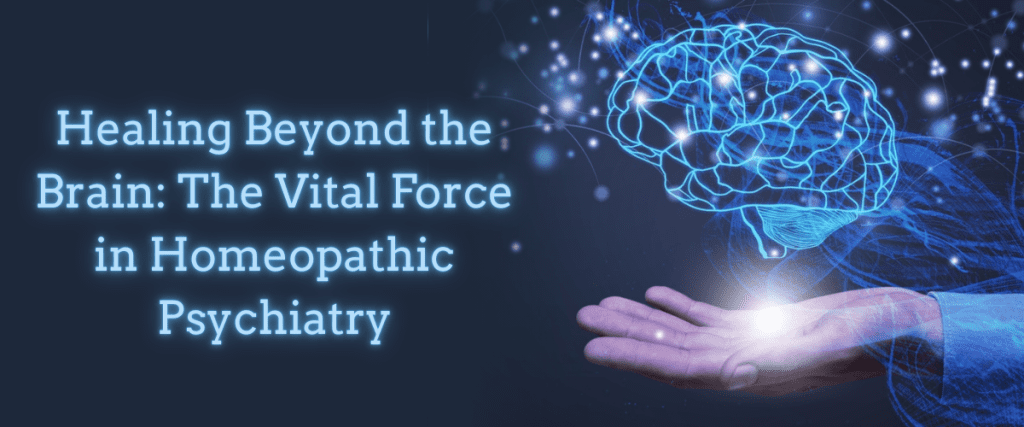
The rising prevalence of mental health disorders highlights the limitations of conventional psychiatry, where pharmacological interventions often dominate, yet fail to address the deeper roots of illness. Homeopathic psychiatry, grounded in Hahnemann’s Organon and the dynamic concept of the vital force, offers a holistic perspective that unites mind, body, and spirit. This article explores the relevance of Organon principles in modern psychiatric practice, reviews historical contributions of women in homeopathy and psychiatry, and proposes integrative approaches for addressing emotional and cognitive disturbances in patients.
Introduction
Mental health disorders such as anxiety, depression, and psychosomatic illnesses are steadily increasing in India and worldwide. While psychiatry has advanced significantly, there remains a gap between symptom management and holistic healing. Homeopathy, with its emphasis on the totality of symptoms and individualization, provides an avenue to bridge this gap. The Organon of Medicine describes the physician’s mission as “to restore health rapidly, gently, and permanently.” This principle is highly relevant when addressing psychiatric disorders, where both symptom relief and restoration of harmony are essential.
The Concept of Mind in Organon
Hahnemann was far ahead of his time in acknowledging the primacy of the mind in disease.
● In Aphorism 210–230, he emphasizes that mental and emotional disturbances are often the first expressions of chronic miasms.
● The vital force, when deranged, manifests not only as physical dysfunction but also as altered thoughts, emotions, and behaviors.
● This view aligns with modern neuropsychiatry, which recognizes the interplay of neurotransmitters, hormones, and psychosocial stressors in shaping mental health.
Homeopathy and Psychiatric Case-Taking
A psychiatrist trained in homeopathy benefits from a dual perspective:
- Classical psychiatric assessment – focusing on history, mental status examination, and diagnostic criteria.
- Homeopathic case-taking – emphasizing peculiar, characteristic symptoms such as fears, dreams, guilt, obsessions, and modalities.
For example:
● A patient with depression may present conventionally with low mood, fatigue, and loss of interest.
● A homeopathic psychiatrist, however, also notes the peculiar modalities: grief better from consolation (Ignatia), aversion to company (Natrum muriaticum), or religious delusions with guilt (Arsenicum album).
Integration in Clinical Practice
● Acute psychiatry: Remedies like Aconite, Belladonna, and Stramonium can be lifesaving in acute panic, mania, or delirium.
● Chronic psychiatry: Deep-acting remedies such as Sepia, Pulsatilla, Aurum metallicum, or Syphilinum address deep-seated personality structures.
● Therapeutic alliance: The homeopathic approach emphasizes listening, empathy, and individualized care—core skills for every psychiatrist.
The Role of Women in Homeopathic Psychiatry
The world has seen women such as Elizabeth Wright Hubbard and women how can we forget Margaret Tyler how as incorporated psychological insights into the materia medica. Their writings emphasized the “emotional color” of remedies, bridging psychology and homeopathy. Today, women psychiatrists in homeopathy continue this legacy, especially in addressing issues such as perinatal depression, menopausal mood changes, and psychosomatic complaints.
Challenges and the Way Forward
Despite its promise, homeopathic psychiatry faces challenges:
● Scientific validation of outcomes in mental health.
● Skepticism among conventional psychiatrists.
● Training gaps in integrating Organon principles with modern psychiatry.
Future directions include collaborative research, randomized control trials, and cross disciplinary dialogue.
Conclusion
Homeopathic psychiatry, rooted in Organon philosophy, provides a humane and individualized framework for mental healthcare. By acknowledging the unity of body, mind, and vital force, it can complement modern psychiatry and restore balance in
patients’ lives. As assistant professors and practitioners, it is our responsibility to train future physicians to embrace this integrative vision.
References
- Hahnemann S. Organon of Medicine, 6th edition.
- Kent JT. Lectures on Homoeopathic Philosophy.
- Hubbard EW. A Study of Remedies by Comparison.
- Tyler M. Homoeopathic Drug Pictures.
- Dhawale ML. Principles and Practice of Homoeopathy.
- World Health Organization. Depression and Other Common Mental Disorders:
Global Health Estimates (2017).
Dr. Damini Solanki, MD in Homoeopathic Psychiatry, serves as an Assistant Professor in the Department of Organon of Medicine at Amaltas Institute of Homoeopathy, Dewas (M.P.)