Abstract
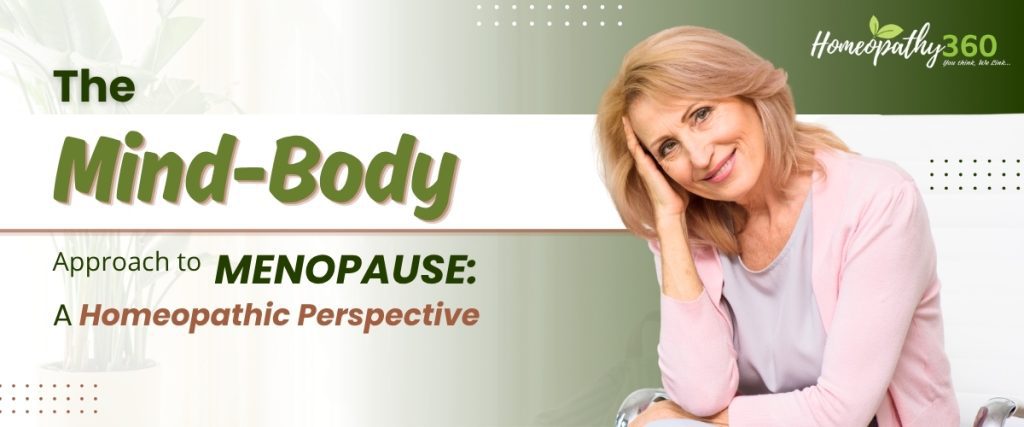
• Menopause is a natural physiological transition in women.
• It is associated with hormonal, physical, emotional, and psychological changes.
• Psychological symptoms may significantly affect quality of life.
• Homeopathy adopts a holistic and individualized approach.
• The mind–body concept emphasizes the relationship between emotional and physical health.
• This article reviews psychological changes during menopause and their homeopathic management.
Keywords: Menopause, Homeopathy, Mind–Body Approach, Psychological Symptoms, Holistic Care.
Introduction
• Menopause marks the permanent cessation of menstruation.
• Usually occurs between 45–55 years of age.
• Results from depletion of ovarian follicles.
• Associated with decreased estrogen and progesterone levels.
• Produces physical, emotional, and psychological changes.
• Psychological symptoms are often under-recognized but significantly affect quality of life.
Menopause and the Mind–Body Connection
Hormonal Influence
Estrogen affects serotonin, dopamine, and norepinephrine. Hormonal fluctuations influence mood and emotional stability.
Neurochemical changes may contribute to psychological symptoms.
Common Psychological Symptoms
• Anxiety
• Depression
• Mood swings
• Irritability
• Emotional sensitivity
• Sleep disturbances
• Poor concentration
• Memory difficulties
• Loss of confidence
• Social withdrawal
Physical Symptoms Affecting Mental Health
• Hot flushes
• Night sweats
• Fatigue
• Headache
• Palpitations
• Sexual discomfort
Psychological Changes During Menopause
1) Anxiety
Excessive worry
Restlessness
Nervousness
Increased stress sensitivity
2) Depression
Persistent sadness
Loss of interest
Emotional exhaustion
Hopelessness
3) Mood Instability
Sudden emotional changes Irritability
Anger outbursts
Tearfulness
4) Cognitive Difficulties
Poor concentration
Forgetfulness
Mental fatigue
5) Sleep Disturbances
Insomnia
Frequent awakening
Non-restorative sleep
Homeopathic Perspective on Menopause
Basic Principles
Treat the patient, not the disease.
Individualization is the basis of prescription.
Mental symptoms are given special importance.
Physical and emotional symptoms are evaluated together.
Objectives of Treatment
Improve emotional well-being.
Reduce anxiety and depression.
Improve sleep quality.
Relieve vasomotor symptoms.
Enhance adaptability to hormonal changes.
Improve overall quality of life.
Homeopathic Management of Psychological Symptoms
Individualized Case Taking
Assessment includes:
Emotional state
Mental symptoms
Physical complaints
Modalities
Family history
Constitutional traits
Constitutional Treatment
Benefits include:
Better emotional balance
Improved stress tolerance
Long-term health improvement
Enhanced coping ability
Frequently Indicated Homeopathic Remedies
Sepia
Indications:
Emotional in difference
Irritability
Fatigue
Aversion to family member s
Desire for solitude
Lachesis
Indications:
Jealousy
Suspicious
Excessive talkativeness
Hot flushes
Symptoms worse after sleep
Pulsatilla
Indications:
Mild disposition
Tearfulness
Desire for consolation
Emotional dep endency
Ignatia
Indications:
Grief
Emotional disappointment
Suppressed emotions Mood fluctuations
Cimicifuga
Indications:
Anxiety
Depression
Nervousness
Emotional instability
Kali Carbonicum
Indications:
Weakness
Anxiety
Sleep disturbances
Irritability
Lifestyle Measures Supporting Homeopathic Care
Physical Health
Regular exercise
Walking
Yoga
Balanced diet
Adequate hydration
Mental Health
Meditation
Mindfulness
Counseling
Stress management
Social support
Sleep Hygiene
Fixed sleep schedule
Reduced caffeine intake
Reduced screen exposure
Relaxation techniques
Advantages of the Mind–Body Homeopathic Approach
• Individualized treatment
• Holistic patient-centered care
• Simultaneous attention to mental and physical symptoms
• Improved emotional resilience
• Better coping skills
• Enhanced quality of life
Conclusion
• Menopause is a natural life transition.
• Physical and psychological symptoms are closely interconnected.
• Homeopathy emphasizes a holistic mind–body approach.
• Individualized treatment addresses emotional and physical health together.
• Combined with healthy lifestyle measures, homeopathy may support overall well-being during menopause.
References
1. Hahnemann S. Organon of Medicine. 6th ed.
2. Kent JT. Lectures on Homeopathic Philosophy.
3. Kent JT. Lectures on Homeopathic Materia Medica.
4. Boericke W. Pocket Manual of Homeopathic Materia Medica. 5. Allen HC. Keynotes and Characteristics with Comparisons. 6. Close S. The Genius of Homeopathy.
7. Dutta DC. Textbook of Gynecology.
8. Berek JS. Berek & Novak’s Gynecology.
9. WHO. Research on Menopause in the 1990s.
10. Soules MR et al. Fertil Steril. 2001;76(5):874–878.
11. Burger HG et al. Recent Prog Horm Res. 2002;57:257–275. 12. Freeman EW. Menopause. 2010;17(4):823–827.
13. Speroff L, Fritz MA. Clinical Gynecologic Endocrinology and Infertility. 14. North American Menopause Society. Menopause Practice: A Clinician’s Guide.
Co-Author-
Jignasa Parmar, Intern BHMS Doctor