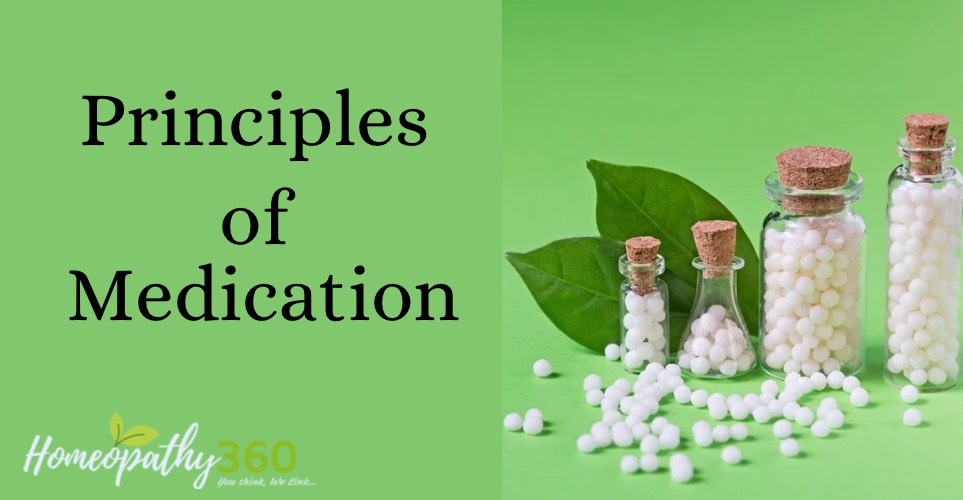
Medication is a technique which consists in fixing a homeopathic liquid attenuation on matrix pellets or globules, tablets, lactose.
Solid Dosage Form
The popular category of dispensing agents include the solid dosage forms as they show a greater stability and are more convenient to carry as compared to liquid dosage forms. The vehicles usually preferred are globules or pillules, cones, sugar of milk and tablets.
Globules
Globules, also called pellets or pilules, are made of pure sucrose, lactose or other appropriate polysaccharides. They are formed into small globular masses of different sizes, designated according to the diameter of ten (10) globules measured in millimeters. Standard sizes are as follows:
- Very small globules (#10).
- Small globules (#20).
- Regular globules (#35).
- Large globules (#55).
“Globules made of lactose absorb alcoholic dilutions containing a much larger percentage of water than those made of sucrose.
Characteristics of Globules
- Made up of the purest raw materials, best media for preserving medicine.
- Perfectly white in color.
- Odorless.
- Ability to withstand all the tests prescribed for sucrose or lactose.
- Retain their virtue from 18 to 20 years, if they are protected from heat and sunlight.
- Serve a convenient dosage form when a large number of doses are to be dispensed for frequent or repeated use.
Medication
Globules are medicated by placing them in a vial and adding the liquid drug attenuation in the proportion not less than one per cent, volume by weight (i.e. one (1) drop for 2 g. or 1 drachm), and shaking to obtain a form of medication. The medicated globules are dried at a temperature not exceeding 40°C.
In medicating sucrose globules, care should be exercised not to use a dilution having an alcohol strength of less than 70%, or that of dispensing alcohol. The labeling of medicated globules should be marked with the degree of strength of the liquid attenuation used in their preparation.
According to Master Hahnemann, the pellets to be moistened with the medicine should be taken of the same size, hardly as large as poppy seeds, made by the confectioner to make the dose small, and for the homoeopathic physicians while preparing the medicines or while giving doses, they may act alike and thus be able to compare the result of their practise with that of other homoeopaths in the most certain manner. The moistening of pellets is best done with a quantity, so that a drachm or several drachms of pellets are put into a little dish of stoneware, porcelain or glass; in the form of a large thimble, which should be more deep than wide. Several drops of the spirituous medicinal fluid should be dropped into it (rather a few drops too many), so as to penetrate to the bottom and moisten all the pellets within a minute. Then the dish is turned over and emptied on a piece of clean double blotting paper, so that the superfluous fluid may be absorbed by it; and when this is done, the pellets are spread on the paper so as to dry quickly. When dried, the pellets are filled in a vial, marked as to its contents, and well stoppered.
Hahnemann has also mentioned that globules from 5 to 600 in each little bottle which fill it only about half full, should be moistened with 3-4 drops of the alcoholic medicinal dilution and should not be shaken in the corked up bottle, but rather stirred about it with a silver or glass pin and the bottle needs to be kept uncorked by the evaporation of alcohol, until they become dry and no longer adhere to each other, so that each globule may be taken out separately. The medicated alcohol that evaporates whilst the globules are stirred for about an hour, is no loss for the dried globules in the bottle.
According to the directions in Dr Willmar Schwabe’s Pharmacopoeia Homoeopathica Polyglotta, the pellets should be moistened with the potencies in a bottle of moderate size, filled with globules, drop in the potency, cork the bottle and shake it so that all the globules may become uniformly moistened. Then turn the bottle, standing it on the cork and let it remain for 9 to 10 hours. Then loosen the cork a little, and let the liquid (in the neck of the bottle) drain out. In a few days, the pellets become entirely dry and ready to be filled into smaller vials.
In medicating pilules and globules, a suitable quantity should be placed in a bottle and the tincture with which they are to be saturated should be poured over them in sufficient quantity to thoroughly moisten every one of them; and the regular admixture of the tincture and the pilules or globules should be insured by repeatedly shaking, or by grasping the bottle firmly and giving a rapid circular motion to the hand, holding the bottle, first perpendicularly, then horizontally. Some fill the bottles with the tincture and leave the pilules and globules to macerate for several days; while others carefully ascertain how much they will absorb and add exactly that quantity. Whichever plan is followed, the greatest possible care is required to secure perfect saturation. The latter has the advantage of avoiding all exposure of the pilules and globules in drying but the former plan is objectionable on many accounts according to British Homoeopathic Pharmacopoeia.
Note: In medicating cane sugar globules, care should be exercised not to use a dilution having an alcoholic strength of much less than 88% or that of dispensing alcohol, Globules need to be discarded if there is a change in the colour or odour or taste of the globules, or globules stick to each other or to the walls of the container or if impurities are present.
Cones
Cones are used for preservation of potentised medicines for a longer time, they are harder than globules so we dispense small quantity of medicine to patients.
Medication
The medication process of cones is the same as that of globules. They are medicated by pouring sufficient quantities of medicine upon them and pouring off the excess. The common size, numbered 6 should absorb 2 drops of dispensing alcohol.
Note: Medicated cones should be kept in a dry place to prevent fermentation due to dampness.
Tablets
Tablets are unit forms of solid medicinal substances, they may be premedicated while preparation or medicated by the same process as globules, but usually a small quantity of medicine is being used to medicate the tablets. For example, one drop of medicine is poured to medicate one grain tablet.
Tablets may be produced according to two approved methods. These methods include preparation of Triturated tabletables Tablet Triturates (T T) and Compressed (CT).
TABLET TRITURATIONS( T/T)
Moulded Tablet (T/M)
Definitions
Tablet triturates are defined as tablets produced from moist materials on a triturate mould which gives them the shape of cut sections of a cylinder. They act as effective, cohesive and protective excipients of drugs. Such tablets must be completely and rapidly soluble. Automated methods, including the Coulton method, have been developed and are acceptable.
Methods
Tablet triturates are produced according to a four step process, although appropriate modifications have been accepted. These steps include:
1. Preparation of a trituration according to methods prescribed in the Homoeopathic Pharmacopoeia of the United States.
2. Addition of binders as necessary (the generally accepted ratio for the binding solution is one part to fifteen parts of triturate material with variations accepted. Binding solutions are composed of a binder, i.e. gum arabic, microcrystalline cellulose, a preservative (if necessary), an inert lubricant and purified water).
3. Moulding of the tablets by hand or with appropriate automated equipment.
4. Drying of the moulded tablets by introducing them into a dehumidified area and reducing the relative humidity of that area by 35-40% with respect to the ambient humidity at a thermostatically controlled 70°-110°F (21°- 43°C).
Drugs are triturated with sugar of milk in a given proportion for not less than two hours till obtained. Then tablet triturates are made a the medicinal powder by making a stiff paste of apparatus of stainless steel upper plate with perforations that correspond in size, position and number to the range of pegs fixed in a lower stainless steel plate is being used. The plates are made in a range of sizes, to 4 grains and about 50 to 250 tablet triturates are prepared at a time. The stiff paste prepared is pressed into the perforations of upper plate. A spatula is used to smooth off the excess and ensure that each cavity is filled. The filled paste is then pressed down on the lower plate, thus leaving the paste in the form of tablets, resting on each plate. The tablets are then left to dry for 1 to 2 hour. When the alcohol evaporates and partially dissolved sugar of milk rapidly recrystallised, it becomes ready for administration.
Compressed Tablet
Definition
Compressed tablets are tablets formed by compression of a dry material. They contain no special coating. They are compressed from powdered or crystalline solids and as with tablet triturates may contain binders, excipients, lubricants and disintegrators.
Method
Compressed tablets are produced by a six step process with appropriate modifications.
- The first step is production of the necessary trituration according to HPUS.
- This preparation is then added to-
The appropriate liquid media (purified water, ethanol, etc.) to such an extent that the lactose/trituration is thoroughly moistened. If binders are necessary, they may be added at this juncture subject to the definitions and restrictions outlined in the Tablet Triturate section regarding binding solutions.
- Now granulate the moistened material with the appropriate mesh screen.
- The wet granulation is then introduced into a dehumidified area and the relative humidity of that area is reduced by 35-40% with respect to ambient humidity at room temperature. Drying is accomplished at 70 deg – 110 deg * F(21 deg – 43 deg * C)
- The dried granulation is then regranulated through an appropriate mesh screen and the necessary lubricants are added. Lubricants such as mineral oil, talc, calcium stearate, corn starch, etc, as approved by the United States Pharmacopoeia, are acceptable.
- The mixture is then compressed in a rotary tablet compressor or any other similar apparatus to the desired tablet size. Compressed air or vacuum may be necessary to remove any untableted material from the Compressed tablets prior to sale or use.
Medicated Tablets
Medicated tablets may be produced by medication of inert tablets with one or more liquid drug attenuations. Inert tablets are Compressed tablets made of a diluent such as lactose or sucrose, or a mixture of lactose and sucrose, to which is added, if necessary, a binder and/or lubricant. Inert tablets are medicated by placing them in an appropriate container, adding the liquid attenuation in the proportion of (2) per cent, volume by weight, and agitating to obtain a uniform medication. The medicated tablets then are dried at a temperature not exceeding 40°C. The labeling of Medicated tablets should be marked with the degree of strength of the liquid drug attenuation used in their preparation.
Medicated Powders
Drug substances, insoluble in water and alcohol, which are triturated to form the mother substance and further potencies, can be dispensed in their original form as medicated powders. They show a greater stability, and their smaller particle size of powders give a greater and more rapid diffusion.
Forms of Vehicles for Dispensing
Like all other conditions of homeopathic pharmacy, it should be governed by simplicity and usefulness to the physician and patient. In other respects the forms and shapes of vehicles are of no imprenience only to be varied to suit taste and convenience only. For this purpose, pharmacists have employed certain forms made of sucrose and lactose. These may be used simply as medicated powders or as pellets (globules), tablets, triturates, cones, etc. These are made of a sufficiently small size to serve as a convenient vehicle and dose. Liquid attenuations for parenteral administration shall be prepared in accordance with the appropriate specifications of the current United States Pharmacopoeia. They must bear the Federal Legend and must be rendered sterile according to section 16. Tinctures, liquids, and solid attenuations may also be dispensed as suppositories, ointments, cerates, gels, or lotions for topical use.
Ophthalmic Solutions
The ophthalmic solution, applies to sterile solutions, essentially free from foreign particles, suitably compounded and packaged for insertion into the eye.
General Conditions
Ophthalmic solutions should be isotonic with tear fluid. As a rule, sodium chloride is used as the isotonic medium. Any other isotonic medium used must be declared. If necessary, ophthalmic solutions may be suitably buffered. No other additives are permitted. Ophthalmic solutions in multiple dose containers must be preserved in a suitable manner. Ophthalmic solutions for use in surgery must be supplied in single use containers, contain no preservatives and must be rendered sterile according to section 16.
Ophthalmic solutions are made by the potentisation of base tinctures or solutions, or with decimal dilution uids. For the final potency in suitably prepared tonicitesimal dilution, only water for injection, may be used. Preservatives or stabilizers add to the attenuation. Ophthalmic solutions are the final specifications for ophthalmic solust me the US Pharmacopoeia.
Special Label Considerations
Each container shall bear a label stating the preservatives used. Multiple dose containers shall not exceed 15 ml. and must include a warning that the preparation should not be used more than 30 days after the seal has been broken.
Storage
As a rule, ophthalmic solutions should be stored and protected from light. Containers must not permit any quality loss by the entry of foreign substances into the preparation or by diffusion of the contents into the container walls. A dropper should be an integral part of the container.
Nasal Solutions
Nasal solution, applies to the preparation of liquids for use as nose drops or nose spray.
General Conditions
Nasal solutions should be isotonic and unhydric. As a rule, sodium chloride is used as the isotonic medium; any other isotonic medium used must be declared. If necessary, nasal solutions may be suitably buffered. Except for materials which increase viscosity, no additives are permissible. Nasal solutions in multiple dose containers must be preserved in a suitable manner. Nasal solutions are made by the potentisation of base tinctures or solutions, or by dilution with liquid. For the final potency in decimal dilution and centesimal dilution, only purified water or a suitable medium may be used. Preservatives or stabilizers may be added only after the final attenuation. Nasal solutions must meet the specifications for nasal products referred to in the appropriate sections of the HPUS.
Storage
- Store protected from light.
- Containers must not permit any quality loss by the entry of foreign substances into the preparation or by diffusion of the contents into the container walls.
- Containers for nasal solutions must ensure an adequate release of contents either in the form.
Labels
Each container shall bear a label stating all preservative, isotonicity, viscosity and stabilization agents.
Author:
Dr. Rida Anjum Khan – Department of Homoeopathic Pharmacy Govt. Homoeopathic Medical College and Hospital
Guided by
Dr. B. D. Dwivedi M.D (Hom) HOD Surgery