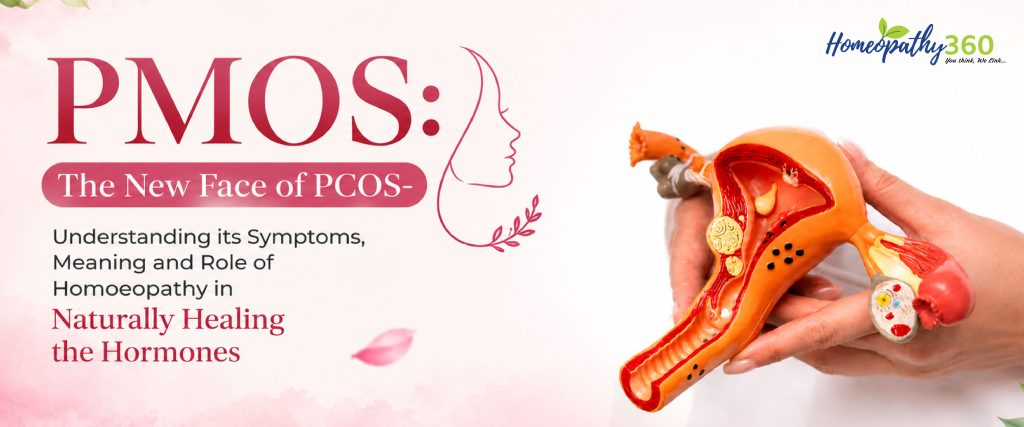
PMOS: The New Face of PCOS- Understanding its Symptoms, Meaning and Role of Homoeopathy in Naturally Healing the Hormones
Abstract:
For years, millions of women across the world have been diagnosed with PCOS – Polycystic Ovarian Syndrome, it affects one in eight women, a condition commonly associated with irregular periods, weight gain, acne, and fertility issues.
However, doctors and researchers are now increasingly recognising that the condition is much more complex than just an ovarian disorder or irregular periods. This evolving understanding has led to the emergence of a new term — Polyendocrine Metabolic Ovarian Syndrome, also known as PMOS.
The concept of PMOS is gaining attention and recognition because it better reflects the actual nature of the condition rather than affecting only the ovaries. PMOS impacts multiple hormonal systems, metabolism, mental health, and long-term overall well-being.
Before going further into PMOS, let us first understand Polycystic Ovary Syndrome or PCOS. It is a hormonal condition, also referred to as PCOD, affecting women of reproductive age. It was primarily identified by the presence of multiple cysts in the ovaries,irregular menstrual cycles, and elevated male hormones known as androgens. For decades, PCOS was viewed mainly as a reproductive or gynaecological disorder. Women diagnosed with PCOS commonly experiences:
● Irregular missed periods
● Difficulty in conceiving
● Excessive facial or body hair
● Acne and oily skin
● Weight gain
● Hair thinning
● Ovarian cysts on ultra sound
However, over time, doctors realised that many women with PCOS also suffered from insulin resistance, obesity, diabetes risk, cholesterol imbalance, anxiety, depression, sleep disturbances, and inflammation. This indicated that the condition is far more than just a reproductive disorder.
Keywords:
PMOS, PCOD, Infertility, Endocrine glands, Menstrual irregularities, Hormonal disturbances
What is PMOS?
PMOS stands for Polyendocrine Metabolic Ovarian Syndrome. The term highlights that the disorder affects multiple endocrine (hormonal) glands, metabolic health, ovarian function and reproductive health.
Let us understand each term of PMOS.
Polyendocrine:
Poly means multiple, and Endocrine refers to hormone-producing glands in the body. So, Polyendocrine means that the condition affects multiple hormonal systems or glands ,not just the ovaries.
These may include: Ovaries, Pancreas (insulin regulation), Adrenal glands, Thyroid hormones,etc.
Metabolic:
Metabolic relates to the body’s’ metabolism, which means how the body uses energy, processes sugar and fat, maintains weight and regulates insulin.
In PMOS, many women develop insulin resistance, weight gain, increased diabetes risk or cholesterol imbalance.This is why metabolism is considered a major part of the condition.
Ovarian:
Ovarian refers to the ovaries, the female reproductive organs responsible for releasing eggs and producing hormones like estrogen and progesterone.
Women with PMOS may experience:
● irregular ovulation
● hormonal imbalance
● fertility issues
● menstrual irregularities
Syndrome:
A Syndrome means a group of symptoms and health problems that occur together rather than a single isolated disease.
In PMOS, multiple symptoms may appear together such as:
● irregular periods
● acne
● weight gain
● excess hair growth
● fertility issues
● insulin resistance
So, the word syndrome indicates a combination of interconnected health issues.
Unlike the older understanding of PCOS, PMOS recognizes the condition as a whole-body metabolic and hormonal disorder rather than merely an ovarian problem. The term ‘PMOS in women’ is being discussed widely because many experts believe it more accurately describes the actual disease process.
Why is PCOS changed to PMOS?
One of the most commonly asked questions today is: “Why did PCOS change to PMOS?” The answer clearly lies in the evolving medical understanding of the condition. The word “polycystic ovary” can actually be misleading because:
Many women with PCOS do not have ovarian cysts,
– The condition affects much more than the ovaries
– Metabolic dysfunction is often the central issue
– Hormonal imbalance involves multiple endocrine systems
Therefore, experts began exploring terms that better represent the disease. The Shift from PCOS to PMOS:
-Emphasise metabolic health
-Recognise hormone complexity
PMOS Symptoms in Females:
The symptoms can vary from woman to woman. Some may experience severe symptoms while others may only notice mild hormonal changes.
Common symptoms are:
● Irregular Menstrual Cycles
● Weight Gain
● Acne and Oily Skin
● Excess Facial Hair
● Hair Fall and Hair Thinning
● Difficulty in Conceiving
● Fatigue
● Mood changes
● Dark Skin Patches
● Sleep Disturbances
PMOS Causes:
Understanding PMOS causes is essential for effective management. While the exact cause is not fully known,but experts believe several factors contribute to the condition. ● Insulin Resistance
● Genetics
● Chronic inflammation
● Hormonal Imbalance
● Lifestyle Factors
Who is at the Risk of PMOS?
Certain women are more likely to develop PMOS.
Risk factors include:
● Family history of PCOS or diabetes
● Obesity or overweight
● Sedentary lifestyle
● Unhealthy eating habits
● High stress levels
● Early puberty
● Insulin resistance
Young women and even teenagers may start showing symptoms early.
Diagnostic Investigations includes:
● Physical and Pelvic Examination
● Irregular Menstrual Cycles (Oligo- or anovulation)
● Blood tests (the key tests includes- Androgen levels, Ovarian hormones, Metabolic Screening, Thyroid hormones)
● Polycystic ovaries on an Ultrasound
Important Homoeopathic medicines:
P: Phosphorus, Phytolacca decandra, Platinum metallicum, Pulsatilla nigricans.
M : Magnesium carbonicum, Millefolium officinale, Medorrhinum, Mercurius, Moschus, Murex purpurea.
O : Onosmodium, Opium, Ovinium.
S : Sabina, Secale cornuatum, Senecio aureus, Sepia officinalis, Staphysagria, Stramonium, Syphilinum, Sulphur.
1. Phosphorus
-Early, profuse menses.
-Burning ovarian pains.
-Tall, sensitive, emotional patients.
-Great thirst for cold drinks.
2. Phytolacca decandra
-Hard enlarged glands or ovaries. -Pain radiating from the ovaries.
-Breast tenderness with pelvic complaints. -Dark painful menstruation.
3. Platinum metallicum
-Dark clotted menses.
-Ovarian pain with numbness
-Bearing-down sensation.
-Proud, haughty temperament.
4. Pulsatilla nigricans
-Delayed, scanty, irregular menses. -Mild, weepy, affectionate nature. -Thirstless patient.
-Better in open air.
5. Magnesium carbonicum
-Cramping dysmenorrhoea.
-Dark scanty menses.
-Nervous exhaustion.
-Chilly, irritable patients.
6. Millefolium officinale
-Profuse bright uterine bleeding. -Passive haemorrhage.
-Pelvic congestion.
-Weakness after blood loss.
7. Medorrhinum
-Irregular menses with ovarian complaints. -Extreme hyperactive personality. -Craving for sour foods/ice.
-Sleeps knee-chest position.
8. Mercurius
-Offensive leucorrhoea.
-Pelvic inflammation.
-Worse at night.
-Profuse perspiration and salivation.
9. Moschus
-Hysterical fainting tendency.
-Menstrual irregularity from emotions.
-Spasmodic complaints.
-Sensation of suffocation.
10. Murex purpurea
-Marked bearing-down sensation. -Increased sexual desire.
-Tender uterus and ovaries.
-Better by pressure/crossing legs.
11. Onosmodium
-Ovarian pain with headache. -Nervous exhaustion.
-Eye strain and fatigue.
-Delayed or suppressed menses.
12. Opium
-Amenorrhoea after fright.
-Torpid sluggish state.
-Drowsiness and constipation. -Congestive pelvic conditions.
13. Ovinium
-Ovarian insufficiency.
-Irregular menstruation.
-Hormonal/endocrine imbalance. -Sterility tendency.
14. Sabina
-Bright bleeding with clots.
-Pain from sacrum to pubis. -Menorrhagia.
-Worse slightest motion.
15. Secale cornutum
-Dark offensive bleeding.
-Thin exhausted patients.
-Wants uncovering despite coldness. -Tingling and numbness.
16. Senecio aureus
-Amenorrhoea in young girls. -Restores suppressed menses. -Urinary irritation.
-Pelvic heaviness with backache.
17. Sepia officinalis
-Bearing-down pelvic sensation.
-Indifference to family.
-Irregular/scanty menses.
-Better vigorous exercise.
18. Staphysagria
-Complaints from suppressed emotions.
-Ovarian pain after anger.
-Sensitive, easily offended patients.
-Increased sexual thoughts.
19. Stramonium
-Violent mental symptoms.
-Fear and terror.
-Spasmodic congestive states.
-Menstrual irregularity with nervous disorders.
20. Syphilinum
-Deep chronic destructive tendency.
-Severe night aggravation.
-Exhaustion and hopelessness.
-Chronic recurrent pelvic disorders.
21. Sulphur
-Early profuse menses.
-Burning sensations and heat.
-Standing aggravates.
-Chronic endocrine/metabolic tendency.
Conclusion:
The transition from PCOS to PMOS represents more than just a name change. It reflects a deeper understanding of how hormonal imbalance, metabolism, lifestyle, and reproductive health are interconnected.
The discussion around PMOS vs PCOS is helping women and health care professionals recognise the condition earlier and manage it more effectively. By understanding PMOS causes, recognising its symptoms in females, and seeking timely medical care, women can take control of their health and prevent future complications.
Reference:
1. Dutta DC, Konar H(ed.) Textbook of http://gynecology.2016.Jaypee brothers medical publishers (P) Ltd.
2. Boericke W. Boericke’s new manual of homoeopathic materia medica with repertory. 3rd ed. Noida: B Jain Publishers;2019.
3. Lilienthal S. Homoeopathic therapeutics. 24th ed. New delhi: B. Jain publishers (P) Ltd; 2016.
4. Kent JT. Lectures on Homoeopathic Philosophy. New Delhi: B. Jain Publishers.
5. National Institutes of Health (.gov)
https://pubmed.ncbi.nlm.nih.gov
6. Source: Cleveland Clinic
https://share.google/f29liCNTOWHNxjGrO
7. Source: Wikipedia https://share.google/0CuDBoLAlUqHPgVEl