Abstract
Background: Nocturnal enuresis (NE), or bedwetting, is a common pediatric problem that may persist beyond the expected age of bladder control. Although not life-threatening, it significantly affects the emotional, social, and psychological well-being of children and their families.
Objective: To provide an overview of nocturnal enuresis with special emphasis on Homoeopathic perspectives, commonly used remedies, and their role in holistic management.
Methods: A narrative review of current literature on nocturnal enuresis, its classification, etiology, conventional management, and Homoeopathic therapeutic approaches was undertaken using standard textbooks, clinical studies, and peer-reviewed research articles.
Results: Homoeopathy, through individualized prescriptions, has shown encouraging outcomes in several observational studies, with more than 70% of children achieving improvement. Remedies such as Kreosotum, Causticum, Sepia, Equisetum hyemale, and Sulphur are frequently indicated. Supportive measures including reassurance, lifestyle modifications, and parental counseling further enhance outcomes.
Conclusion: Homoeopathy provides a safe, effective, and individualized approach to nocturnal enuresis, addressing not only the physical symptom of bedwetting but also the child’s emotional and constitutional state. More structured research with larger sample sizes is needed to strengthen the evidence base.
Keywords: Nocturnal enuresis, Bedwetting, Homoeopathy, Pediatric disorders, Individualized
treatment
Introduction
Nocturnal enuresis is defined as involuntary urination during sleep in children beyond the age of expected bladder control, usually around five years. It is one of the most frequent developmental disorders encountered in pediatric practice, with an estimated prevalence of 15–20% among 5- year-olds, decreasing spontaneously with age (Robson, 2009). Despite being self-limiting in many cases, it can cause significant psychological distress to both the child and family.
This article provides a concise review of nocturnal enuresis, highlighting Homoeopathic perspectives and the role of individualized remedy selection in its management.
Classification
Nocturnal enuresis is classified into:
• Primary nocturnal enuresis (PNE): The child has never been dry at night.
• Secondary nocturnal enuresis (SNE): Bedwetting reappears after a period of at least six months of dryness.
Additionally:
• Monosymptomatic NE: Enuresis without daytime urinary symptoms.
• Non-monosymptomatic NE: Associated with frequency, urgency, or daytime incontinence (Nevéus et al., 2010).
Etiology
The etiology of nocturnal enuresis is multifactorial:
1. Genetic predisposition – Family history is strongly associated.
2. Bladder dysfunction – Small functional bladder capacity or detrusor overactivity.
3. Sleep arousal disorder – Inability to awaken in response to a full bladder.
4. Hormonal factors – Reduced nocturnal secretion of antidiuretic hormone (ADH).
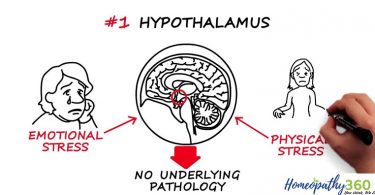
5. Psychological factors – Stress, sibling rivalry, or school-related anxiety. 6. Associated conditions – Constipation, urinary tract infections, or obstructive sleep apnea.
Conventional Management
Conventional strategies include:
• Behavioral therapy: Scheduled voiding, fluid restriction in the evening. • Alarm therapy: Conditioning devices that wake the child at the onset of urination.
• Pharmacological interventions: Desmopressin and imipramine, though associated with relapses and potential side effects.
⸻
Homoeopathic Perspective
Homoeopathy views nocturnal enuresis as an expression of constitutional imbalance rather than an isolated disorder. Individualized prescription based on physical, emotional, and behavioral traits forms the cornerstone of management.
Commonly Indicated Remedies
• Kreosotum: Profuse, offensive urine; bedwetting during first sleep.
• Causticum: Enuresis in the latter part of the night; worse in cold weather.
• Sepia: Enuresis in girls; often linked with constipation or worm infestations.
• Equisetum hyemale: Persistent enuresis without dreams; bladder irritability.
• Sulphur: Dirty, obstinate children with tendency to heat; associated with skin issues.
• Cina: Enuresis related to worm infestations; irritable, teeth-grinding children.
• Belladonna: Sudden urging; enuresis during vivid dreams or febrile states.
• Pulsatilla: Mild, clingy children; worse after emotional upsets.
Case-Taking Considerations
• Family and medical history.
• Sleep quality, depth, and dreams.
• Emotional makeup of the child.
• Concomitant complaints such as constipation or worms.
• Modalities: time of night, aggravating or ameliorating factors.
Evidence from Clinical Studies
Several observational and prospective studies in India have demonstrated promising results with individualized Homoeopathic prescriptions. Improvement rates of over 70% have been reported (Saxena et al., 2021; Sharma & Sharma, 2019). While the sample sizes were relatively small, findings support Homoeopathy as a viable, safe, and cost-effective alternative for nocturnal enuresis.
Supportive Measures
Alongside Homoeopathy, supportive care plays a vital role:
• Reassuring the child and avoiding punishment.
• Ensuring the bladder is emptied before bedtime.
• Reducing evening fluid intake.
• Implementing reward systems for dry nights.
• Treating associated conditions such as constipation or worm infestations.
Conclusion
Nocturnal enuresis is a common yet distressing childhood condition with multifactorial origins. While conventional treatments can help, they are often limited by relapse and side effects.
Homoeopathy, with its individualized, holistic approach, provides an effective, gentle, and sustainable alternative. Further research with well-designed randomized trials would strengthen its place in evidence-based pediatric care.
References
1. Robson WL. Clinical practice. Evaluation and management of enuresis. N Engl J Med. 2009;360(14):1429–1436.
2. Nevéus T, Eggert P, Evans J, et al. Evaluation and treatment of
monosymptomatic enuresis: a standardization document from the International Children’s Continence Society. J Urol. 2010;183(2):441–447.
3. Boericke W. Pocket Manual of Homoeopathic Materia Medica. New Delhi: B. Jain Publishers; 2007.
4. Allen HC. Keynotes and Characteristics with Comparisons of Some of the Leading Remedies of the Materia Medica. New Delhi: B. Jain Publishers; 2002.
5. Kent JT. Lectures on Homoeopathic Materia Medica. New Delhi: B. Jain Publishers; 2006.
6. Saxena T, Sharma D, Gupta N. Utility of Homoeopathic medicines in nocturnal enuresis in children: an observational study. Indian J Res Homoeopathy. 2021;15(3):212–218.
7. Sharma A, Sharma D. Clinical efficacy of individualized homoeopathic medicines in nocturnal enuresis: a prospective study. Indian J Homoeopathic Res. 2019;13(2):85–91.