Neurodermatitis As A Manifestation of Chronic Emotional Stress : A Homeopathic Case Report
Abstract :
Background : Lichen simplex chronicus (LSC) is a skin disorder characterized by lichenification of the skin as a result of primary excessive scratching. LSC (circumscribed neurodermatitis) is characterized by a central lichenificated plaque thickened and often hyperpigmented, usually surrounded by lichenoid papules and, along the borders with surrounding normal skin, by an indefinite zone of slight thickening.[1] Psychological stress influences Neurodermatitis through neuro-immuno-cutaneous Pathways, making Psychodermatological evaluation important in chronic cases.
Case presentation : Blackish, thick, dry plaque on the dorsal aspect of the index finger of both hand, (3 plaques on left index finger, one single plaque on right index finger) with intense itching & mild white- blackish scaling present, itching < by stress, amel. By scratching, small cracks are present, there was no bleeding, no discharge. Complain is since 1 year
Conclusion: The case highlights the relevance of individualised homoeopathic management in neurodermatitis as a psychosomatic skin disorder in which
prolonged emotional stress, suppressed emotions, and persistent brooding play a decisive role in the onset and maintenance of cutaneous pathology.
Key words: Case report, Lichen simplex chronicus, Eczema, suppress emotion and sadness.
Introduction :
Lichen simplex chronicus (LSC, also known as neurodermatitis) is a chronic dermatological disease characterised by intense itching and habitual scratching behaviour, resulting in increased skin markings, thickening, and dyspigmentation (lichenification) of the skin.[1,2] LSC commonly affects the sides of the neck, ankles, scrotum, vulva, pubic area, and extensor aspect of forearms. The highest incidence of LSC is between 35 and 50 years of age, and it is about two times more common in women than men. In a cross‑sectional study, LSC represented about 3% of outpatient dermatology visits.[3] LSC poses a significant challenge in management due to its chronic relapsing course, frequently associated psychological component, and relatively limited treatment options.[4]
Patients with LSC have higher rates of depression, anxiety, obsessive‑compulsive disorder, and other psychological disorders.[5] There are alterations in central neurological sensitisation and itch processing, which leads to chronic scratching and perpetuates pruritus, creating a vicious circle (the itch‑scratch‑itch cycle).[6] However, despite various therapeutic approaches, most patients experience limited symptomatic relief and recurrent flare‑ups, highlighting the need for more effective treatment modalities.[7]
Emotional tensions in predisposed subjects may play a key role in inducing a pruritic sensation, leading to a scratching that, becoming a self-perpetuating pathomechanism, may represent the main feature of lichen simplex chronicus. Psychogenic factors play a relevant role , and it often associated with depression and dissociative experiences. Hence the importance of the evaluation of these patients from the point of view of psychodermatology, which may analyze the relationship between skin disease and psychological factors. As psychosomatic factors have been estimated to be present in at least one-third of dermatologic patients, effective management of skin conditions involves consideration of the associated emotional factors.[1]
Psychodermatology refers to the interdisciplinary relationship between dermatology and psychiatry. This connection is mediated through the neuroendocrine and neuroimmune pathways, together forming the neuro immuno-cutaneous system (NICS). It is estimated that nearly 30–60% of dermatological disorders have associated psychiatric components.[8]
Case Presentation :
| Name:J.R. Chaudhari | Occupation: Housewife |
| Age: 35 year | Religion: Hindu |
| Sex: Female | Diet: Veg |
| Education:PTC.,BA , B.Ed. | Address: Vyara, Tapi |
| Marital status: Married | Date: 24/10/29/025 |
Chief Complaints:
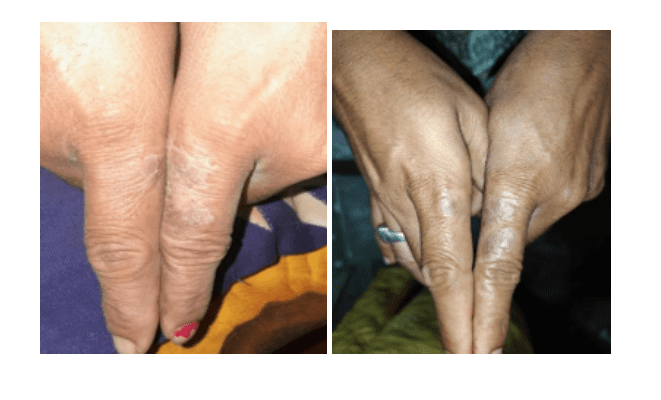
Blackish, thick, dry plaque on the dorsal aspect of the index finger of both hands, (3 plaques on left index finger, one single plaque on right index finger) with intense itching & mild white- blackish scaling present, itching < by stress , amel. By scratching, small cracks are present, there was no bleeding, no discharge. Complain is since 1 year
.ODP :
The patient was apparently healthy before 1 year .She initially noticed mild itching on the dorsal aspect of the left index finger, without any eruption at that time, itching gradually intensified. Due to repeated scratching, the affected area became dry, rough, and thickened, with a blackish discoloration. The plaque slowly increased in size.
After approximately two months, she developed similar itching and skin changes on the dorsal surface of the right index finger. Small cracks were present but there was no bleeding or discharge. No other treatment taken for this complaint.
Associted Complaint :
Leucorrhoea since 2 year scanty whitish, bland in nature (Occasionally present), aggravate before menses, no itching and no burning.
Physiological Function :
▪ APPETITE : Diminished( due to stress and thoughts)
No. Of meals: 2 time / day
• DESIRE : sweet
• THIRST: RO water of normal temperature (cold water cause indigestion and gas , so she stopped drinking it a long time ago and has not tried it again since. )
Interval: at 1-2 hour, 1 glass at a time
• URINE: Frequency: 4-5 time / day, pale yellow
• BOWEL: Frequency: Once/ day
• SLEEP: Position: Changeable, Duration: 6-7 hour, no snoring, no salivation, no walking in sleep
• DREAMS: Occasionally Dreams of snake in early morning (snake is seen only, it does nothing)( No history of any incidence)
• PERSPIRATION: location & quantity : All over body but more on Axilla, bland in nature.
• THERMAL : Hot , some times work in sun heat cause headache. • ADDICTION: No any
• ALLERGY: No any
• TENDENCIES: No any
Gynaecological History:
Menstrual History:
LMP: 5/10/2025
DURATION: flow for 4-5 day,late or early for 5-7 day after delivery QUANTITY: First 3 Day moderate flow, then last 2 day scanty, No clots. COLOR: bright red
STAIN: No
B/D/A: Headache and Leucorrhoea before menses
Leucorrhoea:
ONSET: since 2 year
QUANTITY: scanty
COLOUR: white
ODOR: No
STAIN: No, B/D/A: No any complaints
Obstetric History:
NO. OF PREGNANCY: 01
NO.OF CHILDREN : 01 ( 5 year Old Girl child)
NATURE OF DELIVERY : FTND
ABORTION: 0 (No)
Past History :No major illness
Family History :
| Family members | Age | Dead / Alive | Health |
| Mother | 59 year | Alive | Hypertension -On allopathic medication |
| Father | 61 year | Alive | Small soft growth on left buccal mucosa – biopsy result Benign Operated for it |
| Brother | 32 year | Alive | Healthy |
| Elder sister | 37 year | Alive | Healthy |
| Grandfather | Not known | Dead | – |
| P. Grandmother | Not known | Dead | – |
| M.Grandfather | Not known | Dead | – |
| Grandmother | Not known | Dead | – |
Physical Examination:
➢ General Examination
SKIN: face oily, Rest of the body skin is neither dry nor oily ( normal) TONGUE: Moist, clean
NOSE: No abnormality detected
NAILS: pink, No abnormality detected
EAR: No abnormality detected
CONJUCTIVA: sclera- white, Conjunctiva –Pink
Local Examination:
Blackish, Dry , Thick Plaque With mild white blackish scaling and small shallow cracks present on dorsal aspect of index finger of both hand, No discharge and No bleeding present.
Life Space:
She lives with her in-laws. Over time, she has become emotionally frustrated because her mother in-law repeatedly taunts her. Mother in-law taunting regarding household work & expenses related to her five-year-old daughter. Constantly hearing these remarks hurts her deeply. Every taunt stays in her mind and keeps replaying again and again.
Sometimes she tries to share her feelings with her husband, but he is not very supportive. He often ignores her concerns or gets irritated instead of understanding her. Sometimes she confides in her sisters, which gives her temporary relief, but soon the same troubling thoughts return.
Inside, she carries a heavy feeling that she has no value in that house. She thinks, “If even the one person who should understand me doesn’t, then what am I supposed to do?” Despite her pain, she has now started accepting everything as it is.
She often listens to sad music, and it brings her to tears — which becomes her way of releasing the emotions she has been holding inside.
Whenever she gets angry sometimes ends up shouting at her husband or expressing her frustration toward her daughter by shouting at her when she makes a mistake. It’s not intentional, but it happens when the emotional burden becomes too much for her to contain.
All these things have been happening since the last 3-4 years and she feels sad about it all. Her in-laws do not allow her to do job because of household work and other responsibilities. Even then she appears for exams but unable to prepare properly because of household duties and work.
Patient’s words: “I want to do a job so that I can become financially independent and stop hearing taunts about money. If I start earning, the constant remarks about financial matters may reduce. I also want to earn so that I can fulfill my daughter’s needs without depending on anyone. In today’s competitive world, I feel it is very important to give her a good education. If I have a job, I will be able to admit her to a good school and provide better opportunities for her future. Right now, I have to follow whatever my in-laws decide regarding her schooling, but I want to be in a position where I can make those decisions myself.”
Mental General:
1. Cry alone (when stress Increases & taunts continue to run in mind). 2. Want Company
3. Consolation ameliorates her emotions temporary then again thoughts start.
Observation :
Before answering some questions regarding life space first smile with tearful eyes then answer. ( Question about Emotion, & about her inner feeling)
Differential Diagnosis :
1) Neurodermatitis
2) Atopic Dermatitis
3) Contact Dermatitis
Final Diagnosis : Neurodermatitis
Susceptibility: High
Diagnosis Of Miasm:
Dominant miasm: Sycosis
Fundamental miasm: Sycosis
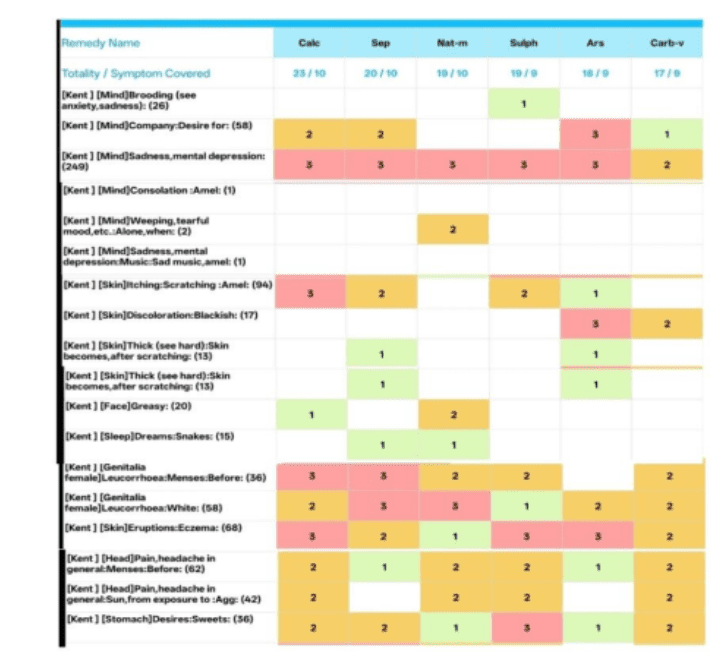
Totality Of Symptoms :
1) Brooding (taunts of mother in law stay in her mind & keeps replaying again and again)
2) Feeling of Unvalued in house.
3) want of Emotional support and company
4) Feeling of sadness, she often listen sad music it brings her to tear, cry in alone. 5) Smile and tearfully eyes before answering.
6) Desire Sweet
7) Blackish, Thick, Dry plaque on dorsal aspect of index finger of both hand with intense itching and white – blackish scaling present, itching agg. By stress. Cracks were present
8) Scanty, white. Bland leucorrhoea < before menses
9) Headache < in sun, Before menses
10) Face Oily
Treatment:
Rx
Natrum mur 200
1 dose
SL x BD for 15 days
Advice:
Avoid scratching by nails.
Apply coconut oil/ Vaseline for moisture.
Follow Up :
| DATE | FOLLOW UP | Treatment |
| 07/11/2025 | Plaque on right index finger size reduced, thickness reduce, cracks present. -one small patch on left index finger is clear. – Itching present with same intensity – mild whitish scaling -LMP 31/10/25- leucorrhoea present, no headache this time | Rx SL x BD for 15 day |
| 22/11/2025 | Thickness and discoloration reduce of all plaques – Cracks present. – Itching present with same intensity – whit scaling slightly increase | Rx SLx BD for 15 day |
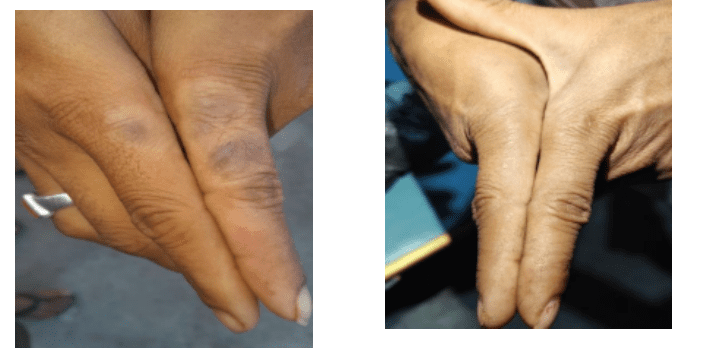
| 07/12/2025 | Thickness and area of discoloration reduce of all plaques. – Cracks heal. – Itching present with same intensity – No scaling. – LMP 25/11/2025 No leucorrhoea this time | Rx Sepia 200 1 dose SL BD for 15 days |
| 21/ 12/2025 | slight discoloration present – No cracks – No itching present – No scaling. | Rx. SL BD for 15 day |
Conclusion:
This case report highlights neurodermatitis as a psychosomatic skin disorder in which prolonged emotional stress, suppressed emotions, and persistent brooding play a decisive role in the onset and maintenance of cutaneous pathology. The successful outcome in this case underscores the effectiveness of individualized homoeopathic treatment when guided by a comprehensive evaluation of mental generals, physical generals, characteristic particulars, and miasmatic background.The gradual and sustained improvement observed—not only in the dermatological lesions but also in associated systemic complaints and emotional well-being—demonstrates that homoeopathy can address the patient as a whole rather than merely providing symptomatic relief. This case supports the relevance of individualized homoeopathic prescribing in chronic dermatological conditions with psychosomatic components and emphasizes the importance of understanding life space and emotional stressors in case analysis.
Declaration Of Patient Consent: The author confirms obtaining a signed patient consent form for publication of clinical information and images, ensuring anonymity and confidentiality are maintained.
Conflicts Of Interest:
None declared
References :
1. Lotti T, Buggiani G, Prignano F. Prurigo nodularis and lichen simplex chronicus. DermatolTher 2008;21:42–6.
2. Thünemann J, Müller S, Steinbrink K, Ständer S, Zeidler C. Chronic prurigo. J DtschDermatolGes 2024;22:813‑23.
3. Bilgili ME, Yildiz H, Sarici G. Prevalence of skin diseases in a dermatology outpatient clinic in Turkey. A cross‑sectional, retrospective study. J Dermatol Case Rep 2013;7:108–12.
4. Altunay K, Özkur E, Uurer E, Baltan E, Aydın Ç, Serin E. More than a skin disease: Stress, depression, anxiety levels, and serum neurotrophins in lichen simplex chronicus. An Bras Dermatol 2021;96:700–5.
5. Kouris A, Katoulis A, Christodoulou C, Rigopoulos D, Tsatovidou R, Petridis A, et al. Quality of life and obsessive‑compulsive behavior in patients with lichen simplex chronicus. J DtschDermatolGes 2015;13:162– 3.
6. Mortaki D, Mortakis A. Lichen simplex chronicus. In: Bornstein J, editor. Vulvar Disease: Breaking the Myths. Cham: Springer International Publishing; 2019. p. 121–9.
7. Silverberg JI. Nummular eczema, lichen simplex chronicus, and prurigo nodularis. In: Kang S, Amagai M, Bruckner AL, Enk AH, Margolis DJ, McMichael AJ, Orringer JS, editors. Fitzpatrick’s Dermatology. 9th ed. New York, NY: McGraw‑Hill Education; 2019.
8. Mar K, Rivers JK. The mind body connection in dermatologic conditions: a literature Review. Journal of Cutaneous Medicine and Surgery. 2023 Nov;27(6):628-40.
Co- Author :
GUIDE :
Dr. Rupal Mehta, Professor, Department of organon of Medicine & Homeopathic philosophy, Anand Homeopathic Medical College & Research Institute, Anand.