Abstract
Huntington’s disease (HD) is a rare, hereditary, progressive neurodegenerative disorder that devastates both the body and mind. Conventional medicine offers only symptomatic relief, with no treatment capable of halting its progression.
This case presents a 32-year-old female with advanced Huntington’s chorea, who had consulted several neurologists and undergone multiple therapies without improvement. Her physical and emotional suffering deeply affected both her and her husband. With individualized homoeopathic treatment, a remarkable turnaround was achieved—her involuntary movements reduced by 90%, her sleep normalized, and her ability to perform daily activities gradually returned. This case exemplifies the scope of homoeopathy in chronic neurodegenerative diseases, where the prognosis is otherwise grim.
Introduction
1. Huntington’s Disease – A Progressive Neurodegenerative Challenge
Huntington’s disease is an autosomal dominant neurodegenerative disorder caused by CAG trinucleotide repeat expansion in the HTT gene on chromosome 4. It leads to progressive neuronal degeneration in the basal ganglia and cerebral cortex, manifesting as involuntary choreiform movements, cognitive decline, and behavioral disturbances.
Symptoms typically begin in adulthood and progress relentlessly, often resulting in complete dependency within 10–15 years. The prognosis is poor, and available allopathic treatments such as tetrabenazine, antipsychotics, or antidepressants can only offer partial symptomatic relief. There remains no definitive cure or disease-modifying therapy.
2. A Journey Through Suffering and Hope – The Human Side of Huntington’s
Behind every diagnosis lies a story of endurance and silent pain.
This case belongs to a 32-year-old female whose life was gradually overtaken by uncontrollable movements that stole her ability to walk, eat, and even rest peacefully. Her husband stood by her side, helplessly watching the love of his life lose
control of her body and voice. The emotional toll was immense—they had visited multiple neurologists, tried therapies across systems of medicine, and yet, every consultation ended with the same words: “There is no cure.”
By the time they arrived at Pioneer Hospital, both were exhausted and desperate. Yet, their faith and discipline never wavered. With compassion, patience, and a personalized homoeopathic approach, a slow but steady transformation began. This story reflects not only the potential of homoeopathy but also the courage of two people who refused to give up hope.
Case Summary
Patient Profile
- Age/Sex: 32 years / Female
- Diagnosis: Huntington’s disease (confirmed by MRI and genetic testing)
- Duration: Gradual onset with progressive worsening over several months
Presenting Complaints
- Continuous involuntary choreiform movements throughout the day
- Disturbed sleep; unable to rest due to jerking
- Difficulty in walking, talking, and performing daily activities
- Itching and general weakness
- Marked reduction in appetite
- Deep emotional distress; everything felt impossible to do
Mental Generals
- Desires travel (“farva javano shokh”)
- Slowness in thinking and action
- Easily irritable and fidgety in all things
- Memory loss for recent events; recalls old memories vividly
- Desires company and emotional connection
- Feelings of helplessness and loss of confidence
Physical Generals
- Appetite: Decreased
- Thirst: Normal
- Sleep: Disturbed due to involuntary movements
- Stool/Urine: Regular
- Itching: Present
- Dreams: Not recalled
Investigations
- MRI Brain: Findings consistent with Huntington’s disease
- Genetic Testing: Positive for HTT gene expansion (CAG repeat)
- Neurological Examination: Typical choreiform movements, speech impairment, and cognitive slowing
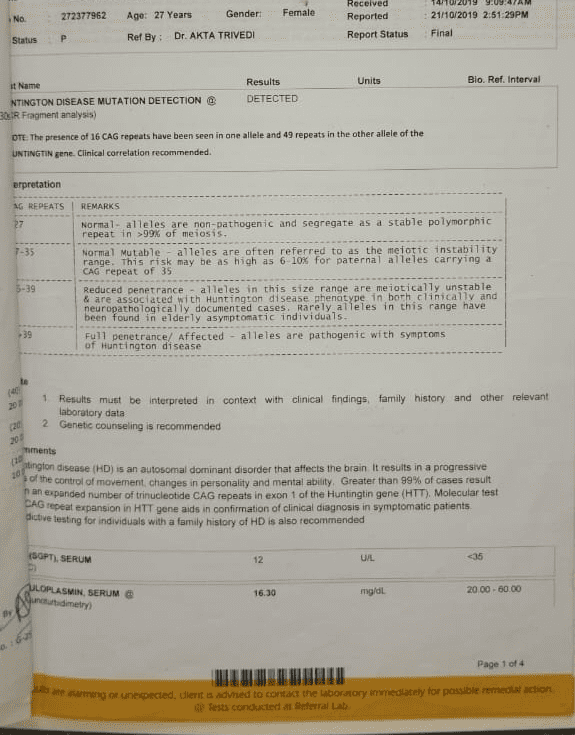
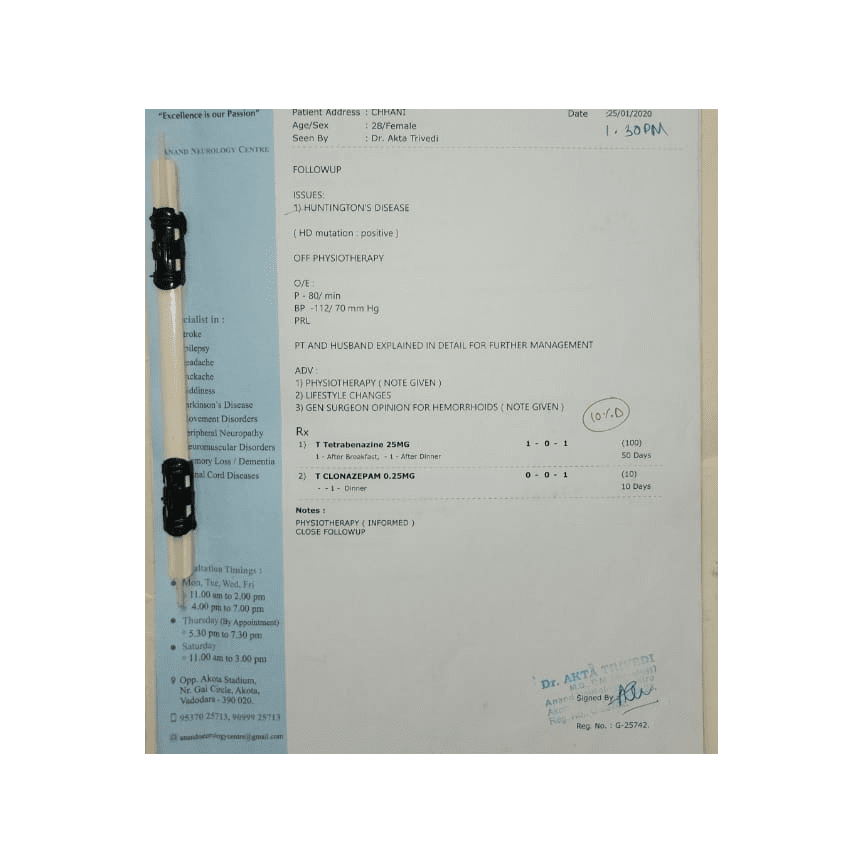
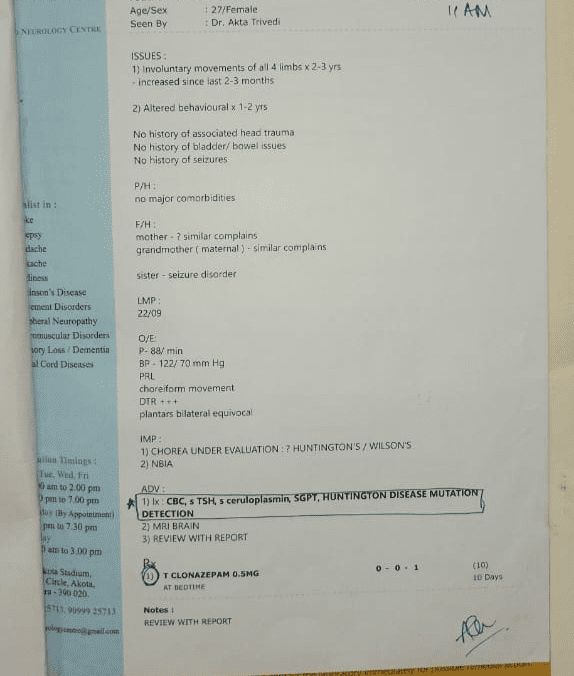
The video of patient before getting our treatment
The link of Google drive video file is attached here !
https://drive.google.com/file/d/1SAurfRUmM4rkWBzX9b9T5ao8PL255ahz/view?usp=drivesdk

Totality of Symptoms
Mental Generals – Characteristic
- Desire for company and travel
- Slowness of mental activity
- Fidgety, restless behavior
- Memory weakness for recent events
Physical Generals – Characteristic
- Chorea with continuous movements
- Disturbed sleep
- Difficulty in performing voluntary acts (walking, talking, eating)
Uncharacteristic Symptoms
- Itching
- Loss of appetite
Repertorial Totality (Kent’s Repertory)
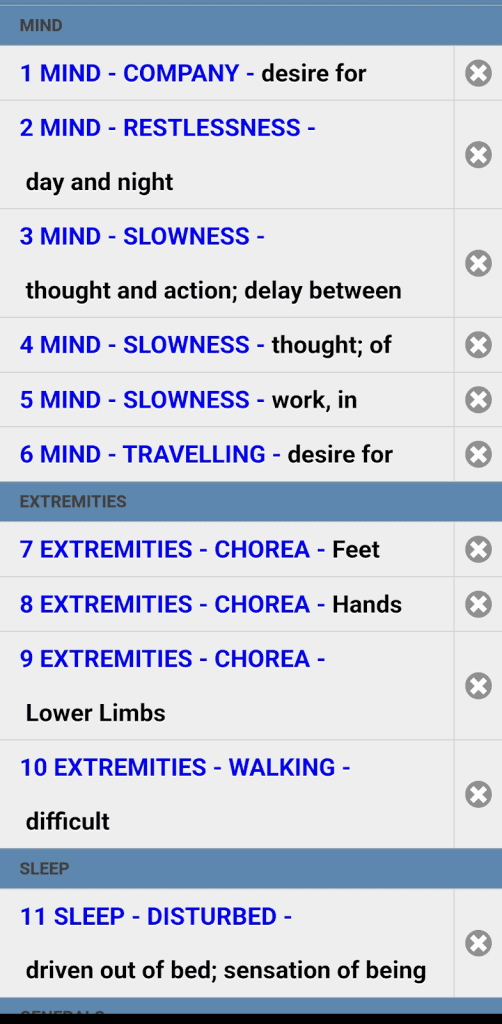
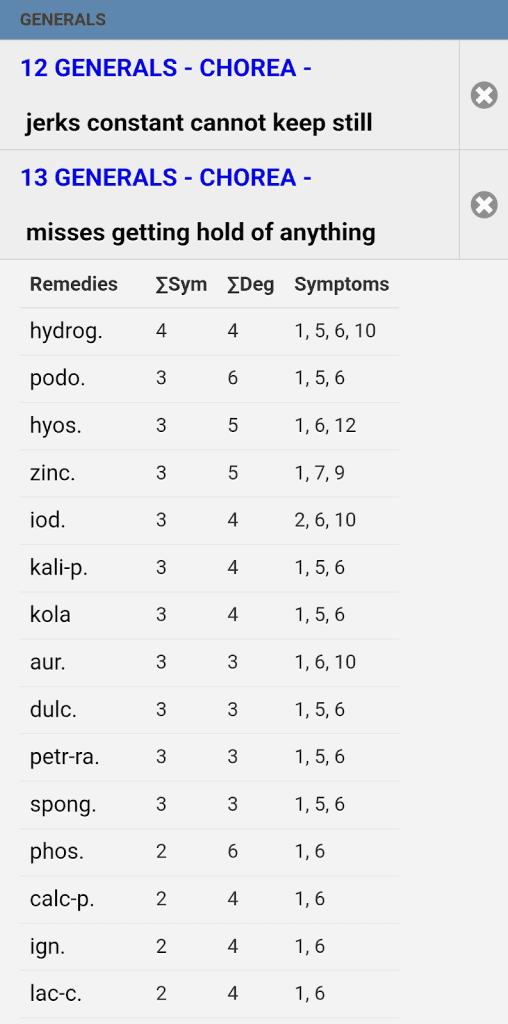
Rubrics considered:
- Mind – Restlessness, nervous
- Mind – Company – desire for
- Mind – Slowness of understanding
- Mind – Irritability
- Extremities – Chorea
- Sleep – Disturbed by movements
Remedies covering maximum rubrics: Agaricus muscarius, Kali phosphoricum, Ignatia, Silicea, Stramonium, Nux vomica
Prescription (Rx)
- Agaricus muscarius 200C – For choreiform jerks, muscular twitching, and lack of coordination.
- Kali phosphoricum 6x – For nervous exhaustion, muscular weakness, and poor sleep.
- Ignatia and Silicea – Given constitutionally when indicated.
- Stramonium and Nux vomica – Used symptomatically
for gastric disturbances and agitation.
Follow-up and Progress
First Follow-up (After 1 Month)
- Sleep improved
- Reduction in involuntary movements
- Gait slightly more balanced
- 10% improvement overall
Second Follow-up
- Further improvement in sleep
- Walking steadier; speech clearer
- Could perform simple tasks with help
- Appetite slightly better
Subsequent Follow-ups
- Gradual and sustained improvement
- Emotional stability improved
- Marked reduction in chorea—up to 90% improvement
- Patient regained confidence, could interact and perform personal activities
By the final review, her quality of life had transformed. The disease remained present but its dominance faded—her mind and body regained balance, and her husband’s tears of exhaustion turned into tears of relief.
Here is the link of video showing results after getting treatment

Video link- https://drive.google.com/file/d/1LL-3soUAc937x49EKQtDPWPG8Bsx2zQu/view?usp=drivesdk
Discussion
Huntington’s disease remains a therapeutic challenge, with no curative options in conventional medicine. This case demonstrates that individualized homoeopathic prescribing, guided by totality and constitution, can produce tangible improvement even in neurodegenerative disorders.
Agaricus muscarius acts on the cerebellum and spinal axis to regulate motor control. Kali phosphoricum restores nerve tone and combats mental exhaustion, improving emotional resilience and sleep.
This success underscores the importance of holistic treatment, patient discipline, and the healing power of the dynamic principle that defines homoeopathy.
Conclusion
Huntington’s disease carries a grim prognosis and deeply impacts both patient and caregivers. Yet, this case shows that healing is possible even where cure is not.
Through individualized homoeopathy, compassionate guidance, and unwavering patient cooperation, this 32-year-old woman experienced an extraordinary recovery—regaining mobility, sleep, and emotional equilibrium.
Her journey reaffirms that homoeopathy, when practiced with precision and empathy, can rekindle vitality even in the darkest corners of disease.
Patient Testimonial
We, the family of I.P., would like to express our deepest gratitude and heartfelt appreciation to Pioneer Hospital, Ajwa Road, especially to the treating physician Dr. Jignasha, for the remarkable care and treatment that have brought about a truly immense recovery in I.P.’s health.
Our journey has not been easy. We consulted several hospitals and tried various therapies—neurological, Ayurvedic, and even other homoeopathic approaches—but none of them brought lasting results. After years of emotional and financial struggle, we found true hope at Pioneer Hospital. Under this care, I.P. has shown noticeable improvement in insomnia, depression, mobility, stress management, and overall wellbeing.
Seeing her finally on the path of recovery after such a long battle is nothing short of a blessing. We are truly grateful for the compassionate guidance, understanding, and effective treatment that brought light back into our lives during a dark time.
— Family of I.P.
References
- Harrison’s Principles of Internal Medicine, 21st Edition – McGraw Hill.
- Davidson’s Principles and Practice of Medicine, 24th Edition – Elsevier.
- Boericke W. Pocket Manual of Homoeopathic Materia
Medica.
- Kent J.T. Repertory of the Homoeopathic Materia Medica.
- Allen H.C. Keynotes and Characteristics with Comparisons of Some of the Leading Remedies of the Materia Medica.
Co-Author Dr Hiren Mahera :-
Dr Hiren Mahera – Internee at Pioneer Homoeopathic Medical College and Hospital, Vadodara