Homeopathic Management of Facial Warts (Verruca Vulgaris): A Case Report from Aura Homeopathy Clinic
Abstract
Warts (verrucae) are common benign epidermal proliferations caused by infection with human papillomaviruses (HPVs), frequently encountered in dermatological practice. Facial warts, though usually asymptomatic, can cause cosmetic disfigurement and psychological distress, particularly when persistent or multiple. Conventional treatment options include cryotherapy, cautery, curettage, keratolytics, and immunomodulators, which may be painful, leave scars, or have recurrence. Homoeopathy offers both local and constitutional approaches, aiming to address the underlying susceptibility (sycotic miasm) and not only the lesion itself.
This case report describes a 59-year-old male, Mr. Sushil Sharma, with multiple facial warts of two years’ duration, treated at Aura Homeopathy Clinic with an individualized constitutional remedy selected as the simillimum. Over several months, there was gradual reduction in size and number of warts, with eventual spontaneous detachment, and no recurrence on follow-up. The case illustrates the potential of individualized homoeopathic prescribing in managing verruca vulgaris and highlights the importance of totality-based remedy selection rather than purely therapeutic, wart-specific remedies.
Keywords: Verruca vulgaris, warts, human papillomavirus, facial warts, homoeopathy, constitutional treatment, simillimum.
Introduction
Warts are benign hyperkeratotic lesions caused by infection of the epidermis or mucosa with human papillomavirus (HPV). They may occur at any age, with peak incidence in childhood and adolescence, but can persist or appear in older adults. Transmission is by direct skin-to-skin contact or indirectly via contaminated surfaces or instruments, and auto-inoculation can spread lesions to adjacent sites. Clinical subtypes include:
- Common warts (verruca vulgaris)
- Filiform and facial warts
- Plantar and palmar warts
- Flat warts (verruca plana)
- Genital and periungual warts
Facial warts often present as small, flesh-coloured or slightly pigmented, rough papules or filiform projections, especially around the beard area, eyelids, or cheeks, and are frequently a cosmetic concern. Diagnosis is largely clinical; cardinal signs include interruption of normal skin lines over the lesion and presence of punctate black dots (thrombosed capillaries).
Conventional therapy includes destructive methods (cryotherapy, electrocautery, laser), topical salicylic acid or other keratolytics, and, in recalcitrant cases, immunotherapy or systemic agents. While effective in many cases, drawbacks include pain, risk of scarring, pigmentary changes, and recurrence.
In homoeopathy, wart-like growths are classically associated with the sycotic miasm, and prescribing may be:
- Therapeutic/clinical (e.g., Thuja occidentalis, Causticum, Nitric acid, Antimonium crudum, Dulcamara, Natrum muriaticum, Ruta graveolens) based on lesion type and location.
- Constitutional, using the simillimum remedy based on the entire symptom totality, including mental and physical generals.
Clinical studies and trials have reported beneficial effects of specific homoeopathic medicines in warts, though evidence is still limited. This report presents a case of multiple facial warts managed successfully with an individualized constitutional approach at Aura Homeopathy Clinic, which also offers structured wart and skin-disease protocols integrated with lifestyle and immune support.
Case Profile
Patient Data
- Name: Mr. Sushil Sharma
- Age/Sex: 59 years / Male
- Marital status: Married
- Occupation: Retired government employee (currently part-time consultant)
- Address: Haryana, India
- Date of first visit: 18-02-2024
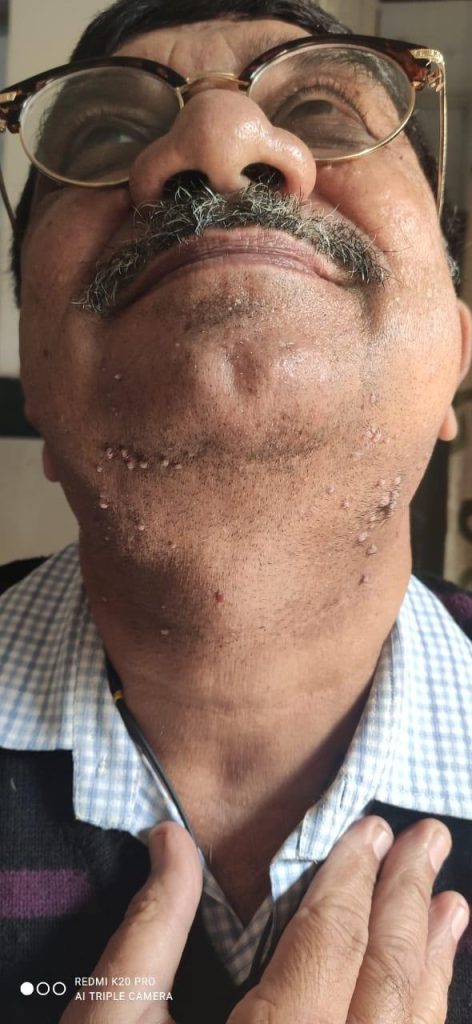
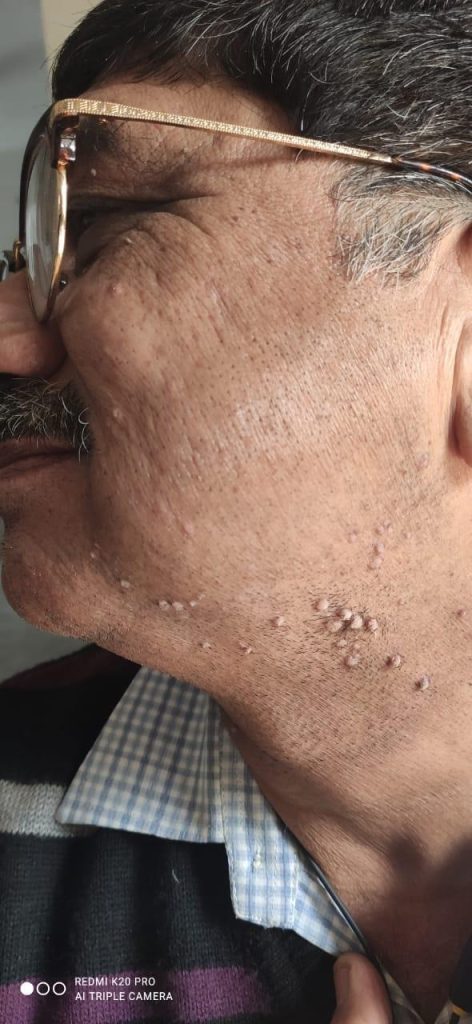
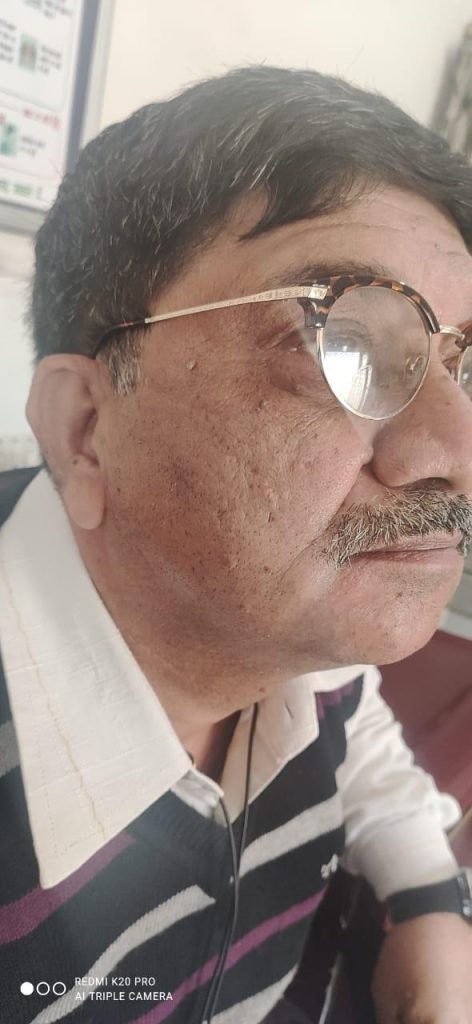
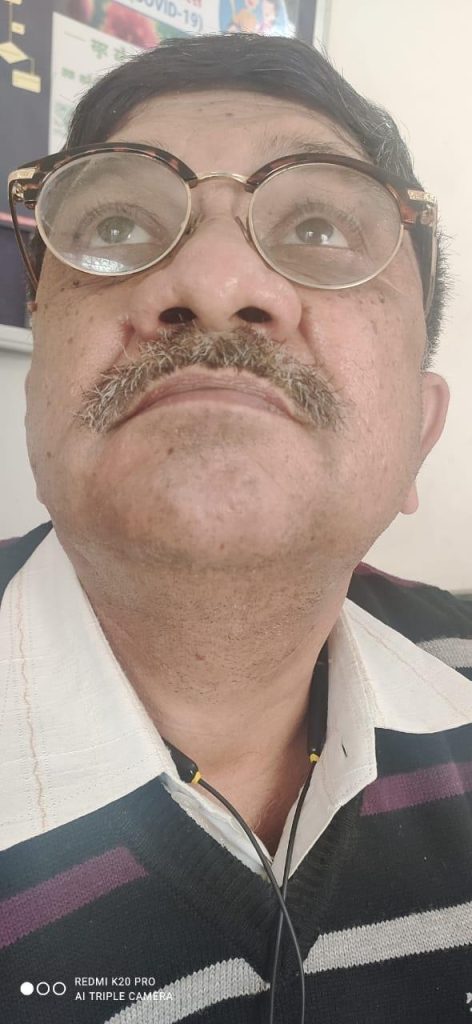
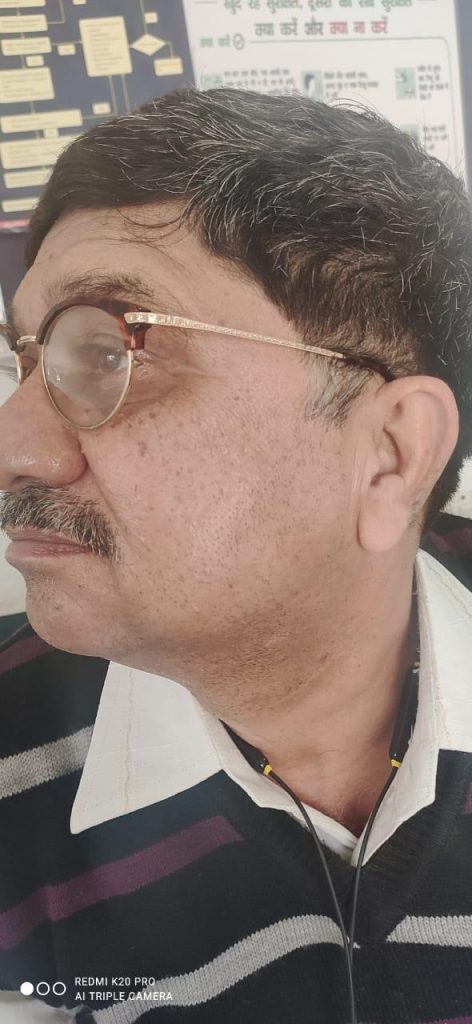
BEFORE PICTURES:-

AFTER PICTURES:-
Presenting Complaint
- Multiple facial warts for 2 years.
- Location: Scattered over the cheeks, neck and near the chin; 10–12 lesions, 2–4 mm in diameter, rough, slightly raised, flesh-coloured to light brown.
- Sensation: Generally asymptomatic; occasional mild itching when shaving.
- Course: Appeared gradually, starting with a single small wart on the right cheek; slowly increased in number over 6–8 months, then stabilized in count but persisted.
- No pain, bleeding, or discharge reported.
- Cosmetic concern: Patient felt embarrassed, avoided close-up photographs and social gatherings.
History of Presenting Illness
Two years prior to consultation, the patient noticed a small, rough papule on the right cheek near the beard line. Over the next months, new similar lesions appeared on the left cheek and chin region. He initially ignored them but sought dermatological care after relatives commented on the appearance.
He underwent:
- Topical keratolytic applications (salicylic acid) with minimal effect.
- One session of cryotherapy for a larger lesion, which scabbed and fell off but left a small hypopigmented spot and the emergence of new small lesions nearby.
Dissatisfied with recurrence and concerned about facial marks, he opted for a non-destructive, holistic approach and consulted Aura Homeopathy Clinic. No history of genital or plantar warts.
Past History
- Hypertension (on conventional medication, controlled).
- Past history of dyspepsia and gastritis, improved with lifestyle changes.
- No diabetes, no immunosuppressive treatment.
Family History
- No family history of warts.
- Hypertension and ischemic heart disease in older family members.
Physical Generals
- Appetite: Moderate, prefers small frequent meals.
- Thirst: Moderate; likes room-temperature water.
- Desires: Spicy food, tea.
- Aversions: Very oily or fried foods (cause heaviness).
- Bowel habits: Tendency to constipation (hard stool, some straining).
- Sleep: Light; wakes easily with noise, occasional worry-related insomnia.
- Thermal: Chilly; sensitive to cold winds on face.
Mental and Emotional State
- Responsible, conscientious, somewhat perfectionistic; likes things in order.
- Worries about appearance, especially with visible facial lesions.
- Mild performance anxiety in social settings; avoids being photographed.
- Does not express anger easily but broods over minor remarks.
Local Examination
- 10–12 discrete papular lesions on cheeks, neck and chin.
- Surface: Rough, verrucous, non-tender.
- Colour: Flesh-coloured to light brown; no ulceration.
- No surrounding erythema, no signs of infection.
Clinical diagnosis: Verruca vulgaris (common warts) – facial type, multiple, stable.
Analysis and Evaluation of Symptoms
Mentals
- Concern about appearance and social impression.
- Brooding over remarks, internalized worry.
- Conscientious, responsible nature.
Physical Generals
- Constipation with hard, unsatisfactory stools.
- Chilly, sensitive to cold.
- Preference for spicy food, dislike for heavy oily items.
- Light sleep, easily disturbed by noise.
Particulars
- Multiple, small, rough, non-tender facial warts (verruca vulgaris) for 2 years.
- Occasional mild itching on shaving.
- Aggravation by mental stress (patient feels warts look “worse” when stressed, though physically similar).
The approach at Aura Homeopathy emphasizes constitutional prescribing for chronic viral and immune-linked conditions, considering the miasmatic background and immune terrain, in line with broader homoeopathic dermatology literature.
Repertorial and Materia Medica Considerations
Representative rubrics (Kent/Synthesis style):
- Mind – Anxiety – about appearance
- Mind – Conscientious about trifles
- Mind – Brooding
- Skin – Warts – face – cheeks / chin
- Skin – Warts – multiple
- Rectum – Constipation – difficult stools
- Generalities – Cold – aggravates
Constitutional remedies considered included Natrum muriaticum, Causticum, Thuja occidentalis, and Lycopodium, but based on the totality (reserved emotional nature, brooding, sensitivity to remarks, chronic skin tendency, and mild digestive issues), Natrum muriaticum was selected as the simillimum, while Thuja was kept in mind as a possible complementary remedy, given its known anti-sycotic and anti-wart reputation
Prescription
- Natrum muriaticum 200C, single dose (3 globules) on 18-02-2024 at night.
- Followed by placebo, once daily for 4 weeks.
- Advice: Gentle facial hygiene; avoid picking or cutting warts; use mild, non-irritating shaving methods; no local wart-destructive measures during the observation period.
Follow-Up
1st Follow-Up – 18-03-2024 (4 weeks)
- Subjective change: Patient noticed slight flattening of one wart on left cheek; others unchanged.
- No new lesions.
- Emotional state is more hopeful, less embarrassed.
Prescription: Placebo for 4 more weeks (no repetition while some improvement evident).
2nd Follow-Up – 22-04-2024 (8 weeks)
- Two warts (one on chin, one on left cheek) clearly smaller and less rough; edges smoother.
- Others unchanged but not increasing.
- Constipation slightly better; sleep marginally improved.
Prescription: Natrum muriaticum 200C, single dose repeated (plateau in improvement), followed by placebo for 6 weeks.
3rd Follow-Up – 03-06-2024 (14 weeks)
- One wart on the chin detached spontaneously a week earlier, leaving a flat, slightly pink macule.
- Remaining lesions ~50% reduced in height and roughness.
- No new warts.
Prescription: Placebo only; observation.
4th Follow-Up – 19-08-2024 (~6 months)
- Most facial warts had either detached by themselves or flattened to the point of being barely perceptible.
- Skin texture smoother; no scarring except very faint marks.
- The patient’s confidence markedly improved; resumed social engagements and photographs.
No further remedies were given; patients advised to return if new lesions appear.
Follow-Up – 01-12-2025 (~1.5 years after initial consult)
- No recurrence of facial warts.
- Occasional isolated small papule removed by gentle care; no clinical wart features.
- General health stable.
Discussion
This case demonstrates successful management of multiple facial verruca vulgaris through individualized constitutional homoeopathic treatment, rather than strictly lesion-specific prescribing. Conventional literature recognizes that warts can spontaneously regress due to host immune response; however, in this case the lesions had remained stable for nearly two years and only began to regress after constitutional treatment was initiated.
Clinical studies on homoeopathic treatment of warts have reported positive outcomes using remedies such as Thuja, Ruta, Causticum, and others, often in double-blind or observational settings. The present case differs in that the simillimum was chosen primarily on constitutional grounds (Natrum muriaticum) and still resulted in regression of lesions, supporting the concept that enhancing the host’s systemic response can aid viral clearance and lesion resolution.
Key points:
- Constitutional remedy selection addressed not just the local pathology but the patient’s emotional pattern, lifestyle, and general health.
- No local destructive treatment was used; spontaneous detachment of warts occurred without scarring, which is important in facial lesions.
- Long-term follow-up (over 18 months) suggests durable remission.
This aligns with the broader philosophy of Aura Homeopathy’s approach to skin conditions and viral warts, which emphasizes immune modulation, miasmatic understanding, and integration with gentle skin care. While causality cannot be definitively established in a single case, the temporal association and pattern of improvement are consistent with other reported homoeopathic wart cases.
Conclusion
Verruca vulgaris (common warts), including cosmetically distressing facial lesions, may respond well to individualized homoeopathic treatment when an accurate simillimum is selected based on totality of symptoms. This case of a 59-year-old male with chronic facial warts demonstrates:
- Gradual regression and spontaneous detachment of warts under constitutional Natrum muriaticum.
- Absence of recurrence over extended follow-up.
- Improvement in associated general and emotional symptoms.
Such outcomes support considering homoeopathy as a complementary option in the management of warts, particularly where patients prefer non-destructive, scar-sparing approaches. Larger observational series and controlled studies are needed to better quantify efficacy, refine remedy selection, and integrate homoeopathy within evidence-based dermatological care.
- https://www.ncbi.nlm.nih.gov/books/NBK538209/
- https://www.ijrh.org/cgi/viewcontent.cgi?article=1831&context=journal
- https://www.aurahomeopathy.com