Abstract:
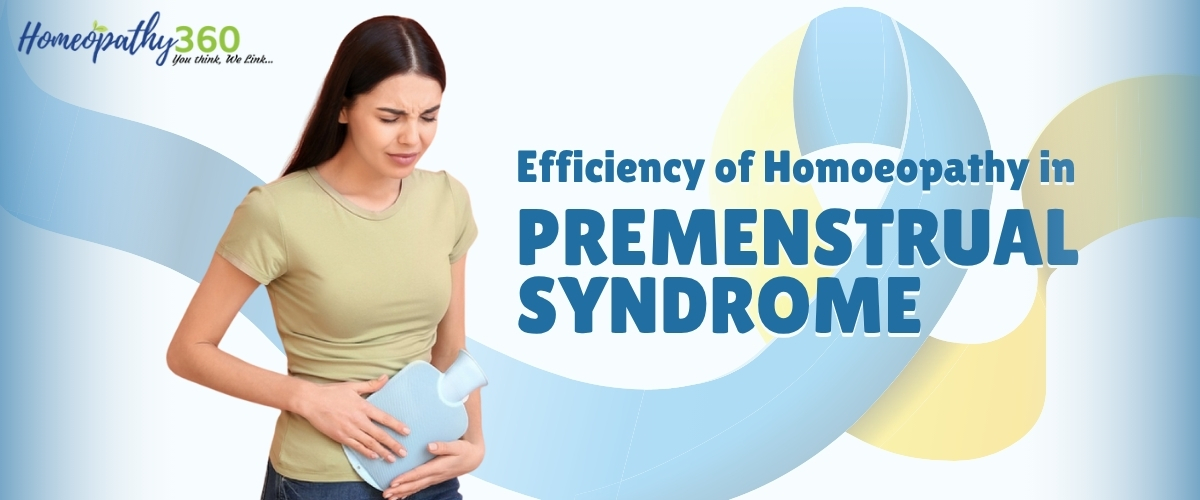
Premenstrual syndrome (PMS) is the symptom of stress that appears before the onset of menstruation. It is also called premenstrual stress syndrome, premenstrual stress or premenstrual tension. It lasts about 4 to 5 days prior to menstruation. Symptoms appear due to salt and water retention caused by estrogen.[1]
Keywords
Menstrual cycle, Premenstrual Syndrome (PMS), Premenstrual Tension, Premenstrual Dysphoric Disorder (PMDD), homoeopathy, materia medica, constitutional treatment, women’s health, individualized medicine, holistic approach, hormonal imbalance, natural remedies, and repertorization.
Introduction
Premenstrual Syndrome (PMS) is a common and often distressing condition affecting women of reproductive age. According to global epidemiology studies, between 70% to 90% of menstruating women experience at least one premenstrual symptom, and 20% to 30% report moderate to severe symptoms that interfere with daily functioning.[2] Furthermore, approximately 3% to 8% of women experience a more severe form of PMS called Premenstrual Dysphoric Disorder (PMDD), which includes intense mood – related symptoms. [3]
These symptoms are often unrecognised or dismissed as normal, contributing to delays in diagnosis and treatment. However, increased awareness and proper intervention can significantly improve quality of life. [5]
Etiology and pathophysiology
The exact pathophysiology of PMS remains incompletely understood, but several mechanisms have been proposed:
- Hormonal fluctuations, especially in estrogen and progesterone during the luteal phase, are believed to affect neurotransmitters such as serotonin and GABA, leading to physiological symptoms. [3]
- Neurotransmitter days regulation, particularly decreased serotonin levels, is associated with mood changes, irritability, and food cravings.[5]
- Nutritional deficiencies, especially in calcium, magnesium, and vitamin B6, have been implicated in the development of PMS symptoms [6]
- Genetic and environmental factors, including family history and lifestyle habits like stress, lack of sleep, and poor diet, can also play a significant role. [2]
Clinical features
Premenstrual Syndrome with a wide range of physical, psychological, and behavioral symptoms, usually occurring 5-10 days before menstruation and resolving soon after its onset. [4]
Physical symptoms:
- Bloating
- Breast tenderness
- Headache
- Fatigue
- Weight gain
- Acne [4]
Physiological and Behavioral Symptoms:
- Mood swings
- Anxiety
- Irritability
- Depression
- Crying Spells
- Food cravings
- Sleep disturbances [3]
These symptoms tend to recur cyclically and can vary in intensity from month to month. [5]
How Homoeopathy helps in Premenstrual syndrome
Homoeopathy is a therapeutic system that focuses on the individual’s overall symptom picture, rather than isolated disease.It emphasizes treating the person as a whole by selecting remedies to match their mental, emotional, and physical symptoms.[7]Homoeopathy views PMS as an expression of internal disharmony rather than a standalone disease. Remedies are prescribed after careful case taking, considering modalities, temperament and constitution.[8]
Remedy | Indications |
Pulsatilla nigricans | Mood swings, weepiness, desire for affection, changeable symptoms, better in open air[9] |
Sepia officinalis | Irritability, Indifference to loved ones, bearing down sensation inpelvis[10] |
Lachesis mutus | Irritability, loquacity, left-sided symptoms, worse before menses, aversion to tight clothing [11] |
Calcarea carbonica | Anxiety, fatigue, sluggish metabolism, craving for eggs, chilly with early profuse menses [10] |
Natrum muriaticum | Emotional suppression, aversion to consolation, silent grief, headaches before menses[9] |
Nux vomica | Irritability, oversensitivity, constipation, overuse of stimulants, cramping before menses [11] |
Ignatia amara | Mood swings, hysterical behaviour, suppressed grief, sighing, spasmodic pain before menses [10] |
Pulsatilla nigricans: The disposition and mental state are the chief guiding symptoms for its use. Changeability of symptoms is a leading indication. Weeps easily; can hardly give her symptoms on account of weeping. Menses suppressed or delayed, especially from getting feet wet. Before menses there is sadness, irritability, headache, fainting, chilliness. During menses there are cramps in abdomen and back, nausea, and diarrhea. After menses there is fainting, exhaustion, and moral depression.[9]
Sepia officinalis: A women’s remedy, especially suited to weak, easily exhausted women, with a sallow complexion, and a sense of bearing down in the pelvis. Indifferent, even to loved ones. Irritable, easily offended. Weeps when telling symptoms. Great sadness and dread of being alone. Aversion to occupation, family, and friends. Menses too late and scanty, irregular; early and profuse. Bearing – down sensation in pelvis, as if everything would escape through vulva.[10]
Lachesis mutus: Great loquacity; jumps from one subject to another. Jealousy; auspiciousness. Irritable, restless, and extremely sensitive to external impressions. Sadness, particularly before menses. Cannot bear contradiction. Before menses there is great sadness, headache, and irritability. All complaints are worse before the appearance of the discharge and relieved as soon as the flow begins. Pain in the left ovary; worse before menses. Cannot bear anything tight around the neck or waist.[11]
Calcarea carbonica: Anxious, easily frightened, confused, low spirited. Fears misfortune, insanity, or poverty. Averse to mental or physical effort. Averse to mental or physical effort. Obstinate, but timid. Menses too frequent, too profuse, and long lasting. Leucorrhoea like milk, burning, itching. During menses there is headache, colic, toothache, chilliness, fatigue. Sweats easily on exertion, especially on the head.[10]
Natrum muriaticum: Particularly useful in emotional disorders, headaches, and menstrual irregularities, especially when symptoms are aggravated by emotional suppression. Great sadness and depression. Dwells on past grief; weeps alone but dislikes consolation. Irritable, reserved, and easily offended. Averse to company but feels worse when alone. Before menses there is headache, bearing down pains, sadness, and irritability. Great weakness and exhaustion during and after menses. Leucorrhoea with backache and debility. Menses irregular, usually delayed and scanty.[9]
Nux Vomica: Great irritability and sensitive to all impressions. Angry, impatient, easily offended, violent outbursts. Cannot bear noises, odour, or light. Sleep disturbed by mental overactivity; wakes early and cannot go back to sleep. Before menses there is abdominal cramps, irritability, constipation, chilliness, and nausea. Menses too early and too profuse, or irregular and scanty. During menses there is bearing down sensation, urging to stool and urinate, worse in the morning. Great pelvic and rectal irritability; constant urging, but ineffectual efforts.[11]
Ignitia amara: Changeable mood; introspective; silently brooding. Sighing, sobbing, and choking from emotions. Tears with laughter; laughs when she ought to be serious. Aversion to consolation, yet seeks it. Easily offended; irritable; jealous. Menses too early, too profuse, or too scanty and irregular. Spasmodic uterine colic before and during menses. Cramps relieved by pressure or bending double. Tendency to fainting, headache, and sighing before periods. Suppressed or delayed menses from grief or emotional shock. Particularly helpful in cases where emotional trauma leads to menstrual irregularities.[10]
Advantages
- Individualized Treatment: Remedies are tailored for the patient’s unique physical, emotional, and mental symptoms, rather than offering a one-size-fits-all approach.
- No side effects: Homoeopathic medicines are highly diluted and safe, with not any known toxic effects or hormonal interference.
- Holistic Approach: Homoeopathy treats the whole person, aiming for long term balance and not just the symptom suppression.
- High patient satisfaction: Studies have shown significant symptom improvement and high levels of satisfaction among the women receiving homoeopathic treatment for premenstrual syndrome. [13]
Clinical Evidence
Several studies have highlighted the effectiveness of homoeopathy in PMS:
- A randomized, double – blind, placebo – controlled study conducted by Yamamoto et al. (2013) found significant reduction in PMS symptoms in the group receiving individualized homoeopathic remedies.[14]
- An observational study by Frei and Thurneysen (2006) reported that 80% of women with PMS showed marked improvement in symptoms after Homoeopathic treatment.[15]
- A systematic review published in Complementary Therapies in Medicine concluded that homoeopathy may provide benefit in PMS but called for larger, high – quality trials.[16]
Conclusion
Homoeopathy presents a promising and gentle approach to the treatment of Premenstrual Syndrome. By focusing on individual symptom expression and the patient’s overall constitution, homoeopathy addresses both immediate complaints and long standing imbalances. Clinical Evidence, though still evolving, supports its efficiency and safety, particularly when administered by qualified practitioners. With growing interest in personalized medicine, Homoeopathy stands well positioned to contribute meaningfully to the integrative management of Premenstrual Syndrome. [12]
References
- K Sembulingam, Prema Sembulingam. Essentials of Medicinal Physiology,6th Edition, pg 491.
- Direkvand – Moghadam, A., et al.(2014) Epidemiology of PMS -A systematic review and meta-analysis. J Clin Diagn Res, 8(2), 106-109.
- Rapkin, A.J., and Mikacich, J.A. (2013). PMS and PMDD in adolescents. Curr Opin Obstet Gynecol, 25(5), 350-356.
- American college of obstetrics and gynaecology. (2015). Premenstrual Syndrome. ACOG Practice Bulletin.
- Freeman, E.W. (2003). Premenstrual syndrome and Premenstrual Dysphoric Disorder: Definitions and diagnosis. Psychoneuroendocrinology, vol.28, page-25-37.
- Berentone – Johanson, E. R. (2008). Calcium and Vitamin D intake and PMS risk. Arch Intern Med, 165(11),1246-1252.
- Dr.Samuel Hahnemann. Organon of medicine, 6th edition. New delhi: B Jain Publishers, 2002
- Murphy R. Homoeopathic Clinical. Repertory, 3rd edition. Hahnemann academy 2005
- Clarke JH. A dictionary of Practical ctical Materia Medica B. Jain Publishers; 1995.
- Boericke W. Pocket Manual of Homoeopathic Materia Medica B Jain Publishers; 2008
- Allen T.F The Encyclopaedia of Pure Materia Medica B Jain Publishers; 2000.
12: Oberoi P et al. Homoeopathy: A holistic and individual – centric approach. Indian J Res Homoeopathy. 2017; 11(1):14-19.
- Frei H, Thurneysen A. Homoeopathy in primary care: outcome study of homoeopathic treatment in PMS. Br Hom J. 2006;95:189-197.
- Yamamoto T et al. Homoeopathic treatment of PMS: A randomized controlled trial. J Altern Complement Med. 2013;19(2):102-109
- Frei H, Thurneysen A. Homoeopathy in primary care: Outcome study of homoeopathic treatment in PMS. Br Hom J. 2006;95:189-197.
- Thompson EA, Reilly D. The homoeopathic approach to premenstrual syndrome: a systematic review. Complement Ther Med. 2003;11(2):95-102.