Abstract
Pityriasis versicolor is a common, superficial fungal infection caused by Malassezia yeast, often seen in hot and humid climates. While not dangerous, it can cause significant emotional distress due to its visible nature. This article explores the effectiveness of homoeopathic remedies in managing this condition, based on clinical observations and case studies collected at Gardi Hospital, Rajkot.
Keywords
Homoeopathy, Hypopigmented patches, Homoeopathic remedies, Dermatological disorders, Alternative medicine, individualized treatment, Holistic medicine.
Introduction
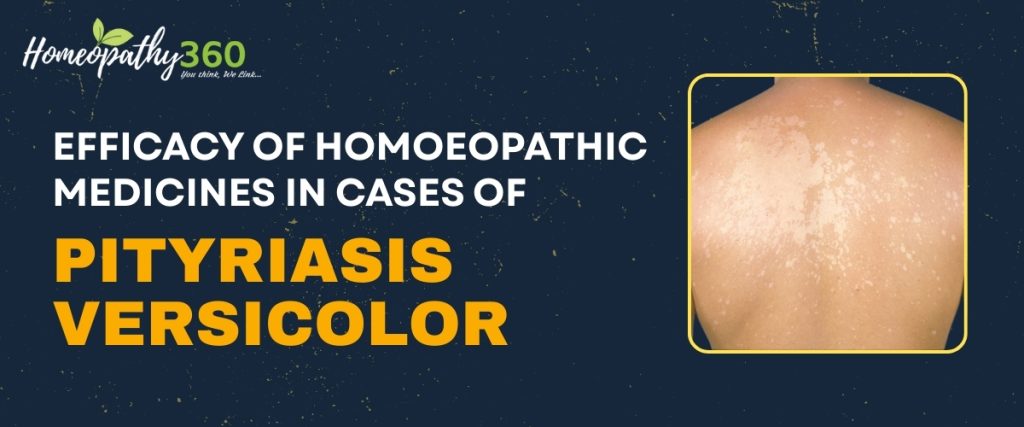
Pityriasis versicolor is characterized by scaly, discolored patches—either hypopigmented or hyperpigmented—typically affecting the upper trunk, neck, and upper arms. Although not contagious or physically harmful, the aesthetic impact can cause considerable psychological stress. The condition commonly affects adolescents, but it can appear in individuals of all ages and genders. Overgrowth of Malassezia yeast, influenced by hormonal changes, environmental factors, or genetic predisposition, disrupts skin pigmentation and results in characteristic lesions.
Definition:
Pityriasis versicolor is a benign, recurrent dermatological condition marked by discoloration and scaling.
Causes:
• Overgrowth of Malassezia yeast
• Hormonal changes (e.g., during puberty or pregnancy)
• Environmental factors (humidity, sweating, oily skin) • Genetic predisposition
Contagion:
Though not highly contagious, the yeast may spread through direct contact or shared personal items in conducive environments.
Classification:
• P. versicolor alba: hypopigmented patches
• P. versicolor nigra: hyperpigmented patches
• P. versicolor erythematosa: erythematous patches
Symptoms:
• Discoloration
• Fine scaling
• Mild to moderate itching
• Lesions on chest, back, or arms
Differential Diagnosis:
• Vitiligo
• Pityriasis alba
• Tinea nigra
Homoeopathic Management:
A range of remedies may be indicated based on individual symptomatology and constitution:
• Tellurium: Circular, scaly patches with itching and offensive odor.
• Bacillinum: For chronic, relapsing cases or as an intercurrent remedy.
• Sulphur: Intense itching, aggravated by warmth and bathing.
• Psorinum: Persistent dryness, offensive skin, recurrent eruptions.
• Natrum Muriaticum: Dry, cracked skin with emotional suppression. • Arsenicum Album: Multiple small patches, burning, and restlessness.
• Sepia: Yellow-brown patches; hormonal influences; suited to emotionally fatigued individuals.
• Kali Sulphuricum: Yellowish patches worsened by warmth and humidity, with scaling.
Conclusion:
The individualized application of homoeopathic medicines demonstrates promising results in managing Pityriasis versicolor. Remedies like Tellurium, Psorinum, and Arsenicum Album, chosen based on totality of symptoms, contribute to symptomatic relief and visible skin improvement. Further large-scale clinical studies are encouraged to validate these findings and develop standardized homoeopathic protocols for dermatological conditions.
Bibliography
1. Davidson’s Principles and Practice of Medicine, 23rd Ed.
2. Boericke, W. Pocket Manual of Homoeopathic Materia Medica and Repertory, 9th Ed.
3. Allen, H.C. Allen’s Keynotes, 10th Ed.
4. James, W.D., Berger, T.G., Elston, D.M. Andrews’ Diseases of the Skin: Clinical Dermatology, 13th Ed.
5. Smith, A.D. The Homeopathic Treatment of Skin Diseases, 2nd Ed.
6. Ramakrishnan, A.U., Manchanda, R.K. Homeopathy for Skin Diseases, 2nd Ed.
Dr. Tirth Dave
L.R. Shah Homoeopathy College, Rajkot – Gujarat
Under the guidance of Dr. Dinesh Rawat, M.D. (Hom.), Associate Professor, Department of Physiology and Biochemistry