


CASE REPORT: 1
Very Serious Chronic Cholecystitis, Enlarged Peripancreatic &Retroperitoneal Lymph nodes, Multiple Gall Stones ,CRP above 300.
Keywords: Cholelithiasis , Chronic Cholecystitis, Peripancreatic & Retroperitoneal Lymph nodes, Multiple Gall Stones ,C-RP, Potential malignancy, MRCP, homoeopathic medicine, Pancreatitis, metastatic, Fibrosis, lymphoma, sepsis, autoimmune diseases, cholecystectomy
Abbreviations: Crp- C-reactive protein / MRCP- Magnetic resonance cholangiopancreatography / USG ultrasonography.
Abstract:
Chronic cholecystitis, enlarged peripancreatic and retroperitoneal lymph nodes (about 15 mm in size), multiple gallstones and CRP above 300. This combination of these conditions is very serious because chronic cholecystitis itself can cause serious complications, and enlarged peripancreatic and retroperitoneal lymph nodes may indicate underlying malignant disease or other serious pathology that needs to be investigated. Chronic inflammation of the gall bladder can cause damage, while swollen lymph nodes indicate a problem that may be cancer, infection or other systemic disease, which needs immediate medical investigation.
Objectives of the Study:
The study objectives are to diagnose the patient’s condition, understand the extent of the inflammation and infection, assess the severity and complications of the gallstones and cholecystitis, and guide treatment decisions. Key objectives include evaluating the link between high CRP, chronic cholecystitis, multiple gallstones, and the presence of enlarged peripancreatic and retroperitoneal lymph nodes to determine the potential causes and outcomes.
CASE REPORT: 2
Introduction : This presentation suggests chronic inflammation of the gallbladder (chronic cholecystitis), possibly caused by multiple gallstones. A highly elevated C-reactive protein (CRP) level above 300 mg/L confirms significant, ongoing inflammation. The finding of enlarged peripancreatic and retroperitoneal lymph nodes on imaging suggests a widespread inflammatory or possibly reactive process, possibly associated with gallstone disease or another underlying condition.
Chronic cholecystitis:
Chronic cholecystitis is long-term gallbladder inflammation, often from gallstones, intermittently blocking the bile ducts. causing recurring pain, particularly after fatty meals. Enlarged peripancreatic (around the pancreas) and retroperitoneal lymph nodes can occur due to inflammation or infection, like pancreatitis, infection, or even malignancy. A combination of these findings suggests inflammation originating in the gallbladder may be spreading to nearby structures or that the gallbladder issue is a symptom of a broader inflammatory or infectious process. Can lead to scar tissue, reduced bile flow, and may be a risk factor for gallbladder cancer.
Causes:
The most probable cause for this combination of conditions is a gallstone-related blockage and infection, leading to chronic cholecystitis, which in turn causes inflammation and enlarged lymph nodes, with the high CRP indicating significant systemic inflammation. Multiple gallstones themselves are the underlying issue, and their migration can block bile flow, initiating a cascade of inflammation in the gallbladder, nearby tissues (including the retroperitoneum), and potentially the pancreas. This widespread inflammation explains the enlarged peripancreatic and retroperitoneal lymph nodes and the markedly elevated C-reactive protein (CRP).
Symptoms:
Abdominal pain (often in the upper right, radiating to the back or shoulder blade), nausea, vomiting, fever, and changes in stool colour, Bloating and indigestion Nausea and vomiting, Fever, Fatigue and weakness
CASE REPORT: 3
Enlarged Lymph Nodes: Swollen lymph nodes, especially in the retroperitoneal space, are a significant finding.
Potential malignancy: Enlarged lymph nodes can be a sign of metastatic cancer from other organs, including the pancreas, liver, or biliary system, or they can indicate lymphoma.
Inflammatory processes: Lymph node enlargement can also be a sign of severe infection or autoimmune disorders.
Peripancreatic Lymph Nodes:
Located around the pancreas, these can become enlarged due to pancreatitis, infection, or tumours.
Retroperitoneal Lymph Nodes:
Located behind the lining of the abdominal cavity, enlargement can be a sign of infection, inflammation (like Fibrosis), spread of cancer.
Overview of findings related to case :
The combination of severely elevated CRP and enlarged retroperitoneal lymph nodes, the following causes are among the most likely possibilities:
1. Severe bacterial infection (sepsis)
A life-threatening condition where the body’s response to an infection damages its own tissues and organs., A severe bacterial infection is a primary cause of CRP levels well over 100 mg/L. The lymphadenopathy would be a reactive response to the widespread infection.
2. Lymphoma
A cancer of the lymphatic system, which often starts in or involves the lymph nodes. The enlarged retroperitoneal lymph nodes could be the site of a primary lymphoma, such as Hodgkin or non Hodgkin lymphoma. Elevated CRP levels are a common finding in these cases and can be a marker for advanced-stage disease and poor prognosis.
3. Metastatic cancer
Cancer that has spread from another part of the body to the retroperitoneal lymph nodes. The retroperitoneal nodes are a common site for metastasis from cancers of nearby organs, such as the kidneys, or gastrointestinal tract.
4. Inflammatory or autoimmune diseases
Conditions such as inflammatory bowel disease, rheumatoid arthritis, or lupus can cause persistent, severe inflammation throughout the body.
While these are typically associated with less severe CRP elevations, an acute flare-up of a systemic inflammatory condition could cause both a spike in CRP and enlarged lymph nodes.
Peripancreatic lymph nodes are located in the pancreas’s vicinity, while retroperitoneal nodes are deeper, surrounding the aorta and vena cava. The distinction is anatomical: peripancreatic refers to proximity to the pancreas, and retroperitoneal refers to the anatomical space behind the abdominal lining. Both can enlarge due to infections, inflammation, or cancers, with peripancreatic nodes sometimes indicating pancreatic, biliary, or stomach issues, and retroperitoneal nodes suggesting conditions like kidney or bowel problems or widespread lymphoma.
CRP test:
A CRP test is a simple blood test that measures the amount of C-reactive protein (CRP) in your blood, indicating inflammation in the body. Produced by the liver in response to infection, injury, or chronic disease, elevated CRP levels can signal issues like infections, autoimmune diseases, or heart problems. .
A normal CRP (C-Reactive Protein) level is generally less than 3 mg/L, indicating no inflammation. Levels between 3 and 10 mg/L are considered moderately elevated, suggesting mild inflammation, while levels above 10 mg/L indicate significant inflammation, often linked to an infection, injury, or inflammatory disease and may require further medical attention. However, these ranges can vary.
CRP Levels and What They Mean :
Normal (< 3 mg/L): No inflammation in the body.
Moderately Elevated (3–10 mg/L): May indicate mild inflammation, which could be due to autoimmune diseases, heart attacks, pancreatitis, or bronchitis.
High (> 10 mg/L): Suggests inflammation from a more serious cause, such as a bacterial infection, significant injury, or a flare-up of a chronic inflammatory condition.
Factors Influencing CRP Levels:
Infections: Bacterial or viral infections are common causes of elevated CRP.
Inflammatory Conditions: Autoimmune diseases like rheumatoid arthritis and lupus can also lead to increased CRP.
Injury or Trauma: Significant injury to the body can trigger a rise in CRP.
Chronic Conditions: Ongoing inflammatory diseases may result in persistently higher CRP levels.
INVESTIGATION:
MRCP- Magnetic Resonance Cholangiopancreatography
CT- SCAN – CT scan of the abdomen or a Computed Tomography (CT) scan. CBC- Complete Blood Count
ESR- Erythrocyte Sedimentation Rate
CRP- C-Reactive Protein.
AMYLASE/ LIPASE
URINE-R
USG-W/A
LFT- liver function test
RFT- renal function test
Treatment
Surgical removal (cholecystectomy):
The preferred treatment is surgical removal of the gallbladder, usually performed laparoscopically. Nonsurgical options:
For patients who cannot undergo surgery, options may include dietary changes, medications to dissolve gallstones.
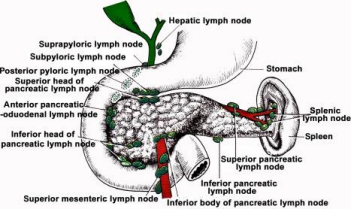
Diagrammatic View : common causes of Swollen Retroperitoneal Lymph Nodes :
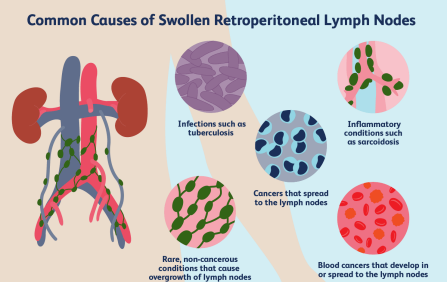
Case History :
A 70-year-old male patient visited OPD of Babu G. Ram Homoeopathic Clinic, Jaipur, Rajasthan on dated 20-9-2024 with the following complaints like pain in abdomen, Recurrent Fever, vomiting, nausea, weight loss, Anorexia for a few days.
Investigation :
-MRCP (Magnetic Resonance Cholangiopancreatography) done on dated 20-9-24, Shown in Report Chronic Cholecystitis, Enlarged Peripancreatic & upper Retroperitoneal Lymph nodes measuring About 10-15mm in size, Gall Bladder Contracted with Multiple calculi in gall bladder with thickened gall bladder wall. The doctor suggested surgery after that Biopsy .The patient & his relatives refused the surgery because of the risk factor after surgery .
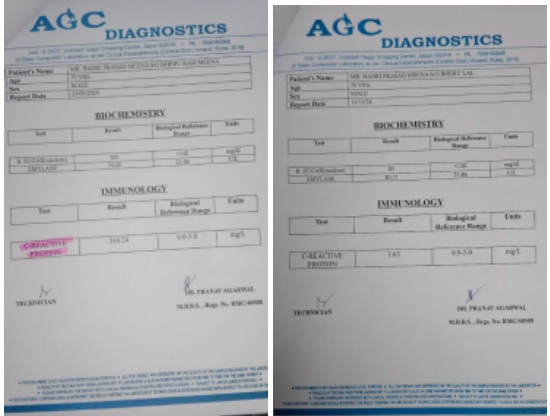
– CRP (C-Reactive Protein ) was 310.24 mg/l on dated 25-9-24
Diagnosis:
Chronic Cholecystitis, Enlarged Peripancreatic & upper Retroperitoneal Lymph nodes, Multiple Gall Stones ,CRP above 310 mg/l (as per MRCP & blood test )
Chief complaints:
Recurrent Episodes Of Abdominal Pain, Recurrent Fever, vomiting, nausea, weight loss, Anorexia, profound weakness after stool, Constipation, Bloating, Hypotension (80/50mmhg),weight 41kg,spo2%-93,extreme weakness, sour taste, vomiting, pain
Version of the patient :
Doctor sahab, I have been having pain in my stomach for many days. I vomit. I have a frequent fever. I can’t even sleep. What is my problem? Please examine me and tell me. What is in my stomach? Why am I not feeling well? Why does this happen to me again and again? Why do I have frequent stomach pain? Due to this pain, I am not able to go anywhere. Whenever I eat something, & even touch the stomach, I get severe pain. It increases in a hot environment and during the pain, I feel very irritable. The doctor told me that the pain is due to a stone in the gall bladder. Please give me medicine to cure it.
ANALYSIS AND EVALUATIONS
Mental Generals:
Anxiety dark in
Light Desire
Sensitive to touch
Sensitive to surroundings
Irritable during Pain
Physical Generals:
Thirst: Thirsty
Thermal State : chilly++
desire : sweet. Table salt : ++
Generals Air Open Amel.
Generals Emaciation
Generals weariness stool after
Sleep: insomnia
Modalities: <touch >open air.
Thirst: normal
Dreams: NP
Urine: Np
Sweat: np
Physical Appearance: Tall, Weak .
Repertorial charts :
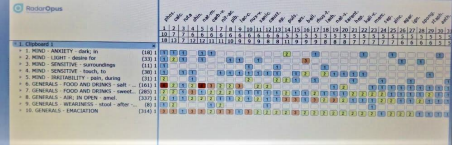
REPERTORIAL ANALYSIS & REMEDY SELECTION:
After Repertorisation Analysis “PHOSPHORUS- MEDICINE ” got maximum totality of symptoms of the case..
FOLLOW UP:
| DATE OF VISIT | INDICATION OF PRESCRIPTION | MEDICINE & DOSES |
| 21-9-2024 | Recurrent Episodes Of Abdominal Pain , Recurrent Fever, vomiting, nausea, weight loss, Anorexia, Constipation, Bloating, Hypotension (80/50mmhg),weight 41kg,spo2%-93,extreme weakness , chilly. | Phos 6 -tds and diet management. |
| 25-9-2024 | Slight better in condition but Fever reduced & abdominal pain – slight decreased / weakness there When the blood test was done, the result came out to be very high in level – crp 310 mg/dl | Phos 30 -tds and diet management |
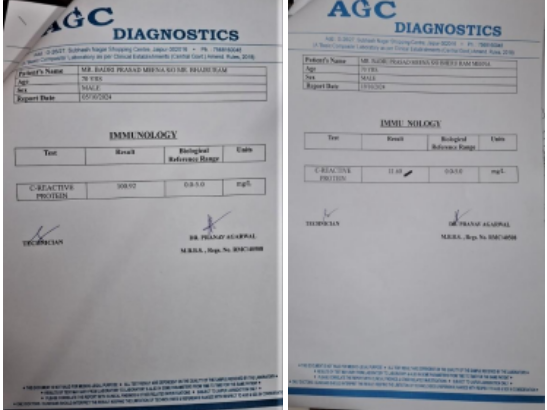
| 5-10-2024 | Better in condition but Weakness ,dyspepsia,great weakness after stool still , But CRP levels decreased . Now blood test -Crp level -100 mg/dl (The lab test report is mentioned with proof in the next section of the article.) | Phos 200 1 DOSE & after sac. Lac. -tds & diet management |
| 19-10-24 | Slight constipation / CRP levels decreased Now blood test – Crp level – 11.60 mg/dl (The lab test report is mentioned with proof in the next section of the article.) | Phos 200 1 dose & sac. Lac. bd for 15 days & diet management |
| 11-11-25 | Better In Condition … When the patient felt better, the blood test was done again and the CRP level came back to normal. CRP level -1.6 mg/dl – normal | Sac . lac. for 15 days |
| (The lab test report is mentioned with proof in the next section of the article.) | ||
| 4-12-25 to 5-3-25 | No abnormal symptoms mentioned above were observed | Rpt |
| 14-5-25 to 20-8- 25 | No medication was given during this period | – |
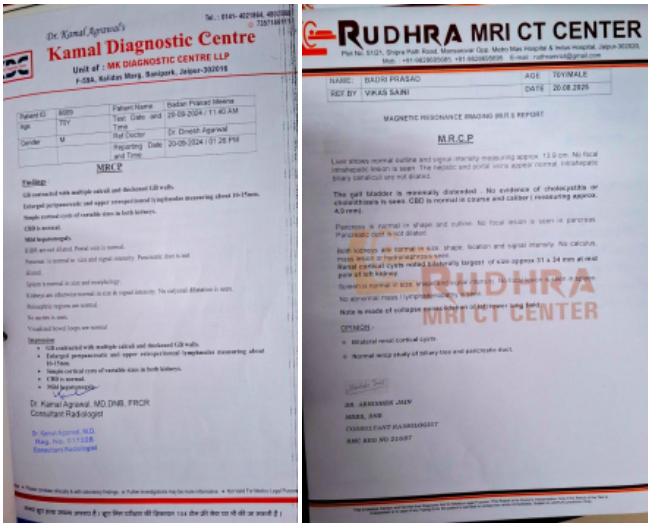
| 20-8-25 | (Now MRCP was done again on 20 August ) MRCP – shown no multiple calculi and no peripancretic & retroperitoneal lymphnode –Normal MRCP study Of Biliary tree and pancreatic duct . (No evidence of Cholecystitis or Cholelithiasis is seen , CBD normal in course and caliber (The MRCP report is mentioned with proof in the next section of the article.) | Closed |
Before-2O-09-24: and After MRCP report-2O-08-25: …………………………………………………………………………………………..
BLOOD REPORTS
Discussion :
This combination of these conditions is very serious because chronic cholecystitis itself can cause serious complications, and enlarged peripancreatic and retroperitoneal lymph nodes may indicate underlying malignant disease or other serious pathology that needs to be investigated. Chronic inflammation of the gall bladder can cause damage, while swollen lymph nodes indicate a problem that may be cancer, infection or other systemic disease, which needs immediate medical investigation.
The present case shows the symptoms of Recurrent Episodes of Abdominal Pain, Recurrent Fever, vomiting, nausea, weight loss, Anorexia, profound weakness after stool, Constipation, Bloating, Hypotension (80/50mmhg), , sour taste, vomiting were treated with the help of homoeopathic medicine , in increasing potencies (6c,30C,200C), according to the response of the patient over approximately 11 months.
No adverse event was encountered during the period of treatment. Phosphorus was found to be homoeopathically the most indicated remedy for this particular case as per the totality of symptom & which was chosen based on the picture produced by the entirety of the symptoms after consulting with materia medica.
CONCLUSION:
After this, started The homeopathic treatment and the patient started seeing improvement in the symptoms. After taking medicines for a few months, then MRCP was done again by Radiologist on 20-8-2025 is normal .
This whole matter shows the wonderful role of homeopathic medicine. Homeopathy has once again proved that it is a wonderful scientific medicine. Apart from this, it is also proved here that if a homeopathic doctor has the right knowledge of proper treatment method and homeopathic material and he can treat the most complex disease by selecting the right medicine based on the symptoms, then I would like to advise the new homeopathic doctors that if they work hard in homeopathy science with true honesty, then the whole world will praise homeopathy medicine and the whole world will praise and congratulate our Sir Dr. Hahnemann and this wonderful treatment method given by him
REFERENCES:
1. Repertory of Homoeopathic Materia-Medica, Dr.J.T Kent
2. Allen HC, Allen’s Keynote
3. William . Boericke’s pocket manual of Materia medica & Repertory
4. Goggle – image & some study material
5. Hompath Firefly
6. Radar Software


