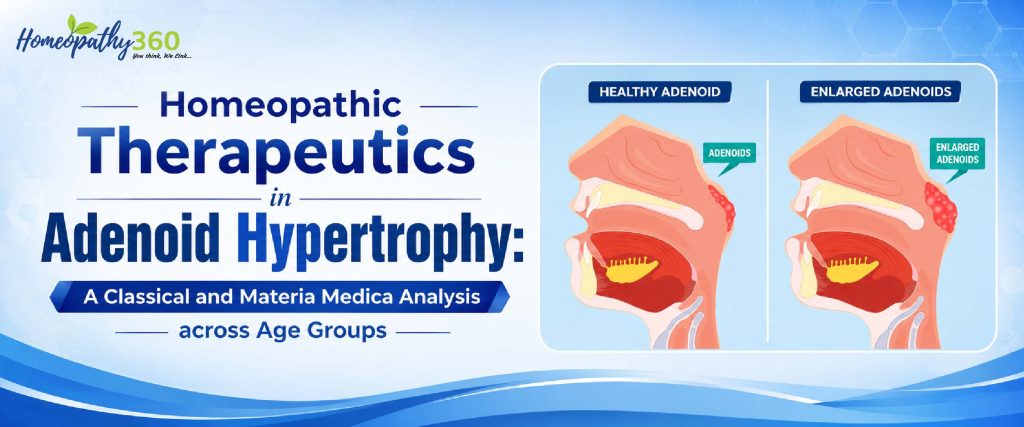
Homeopathic Therapeutics in Adenoid Hypertrophy: A Classical and Materia Medica Analysis across Age Groups
Ontogeny, Pathophysiology, and Age-Specific Clinical Manifestations of Adenoid Hypertrophy
Introduction
The adenoids, or nasopharyngeal tonsils, are crucial components of Waldeyer’s ring of lymphoid tissue, which also includes the palatine, tubal, and lingual tonsils. Originating during the twelfth to fourteenth week of gestation, the adenoids develop as a quadrilateral lymphoid mass situated at the junction of the roof and posterior wall of the nasopharynx. Lined with a specialized pseudostratified ciliated columnar epithelium, this tissue is structured with deep mucosal folds that expand its functional surface area.
The primary physiological role of the adenoids is to serve as a first-line immunological defense against inhaled or ingested pathogens. The subepithelial lymphoid follicles are highly populated with immune cells, including B cells, T cells, natural killer (NK) cells, macrophages, and antigen-presenting dendritic cells, which organize immune responses and produce secretory immunoglobulins.
Under normal physiological conditions, the adenoids undergo progressive atrophy and regression during late childhood and adolescence, typically becoming clinically imperceptible by early adulthood.
However, persistent antigenic stimulation from recurrent upper respiratory tract infections (URTIs), environmental allergens, or chronic inflammation can trigger pathological hyperplasia. This chronic inflammatory state leads to mechanical nasopharyngeal airway obstruction, which disrupts normal tissue growth and physiological function.
Clinical Manifestations Across Age Groups
Infants and Toddlers
In infants, mechanical nasopharyngeal obstruction primarily disrupts feeding. Because infants are obligate nasal breathers, adenoidal enlargement forces frequent, sudden pauses during breastfeeding or bottle-feeding to allow for oral respiration. This interrupted feeding pattern leads to increased physical fatigue, reduced caloric intake, and a failure to thrive. Respiration is typically noisy, presenting as a wet, bubbly sound due to the retention of secretions in the narrow post-nasal space.
School-Aged Children
In children aged two to twelve, the classic presentation of adenoid hypertrophy involves chronic mouth breathing, snoring, and obstructive sleep apnea (OSA), which peaks between two and eight years of age. Persistent mouth breathing alters the physiological forces exerted by the tongue and facial muscles on the developing facial bones. Without the natural molding action of the tongue against the hard palate, the facial skeleton develops the structural changes known as “adenoid facies”. This condition is characterized by an elongated face, a dull expression, an open-mouth posture, crowded and prominent upper teeth, a highly arched hard palate, and a pinched nose due to atrophy of the alae nasi from chronic disuse.
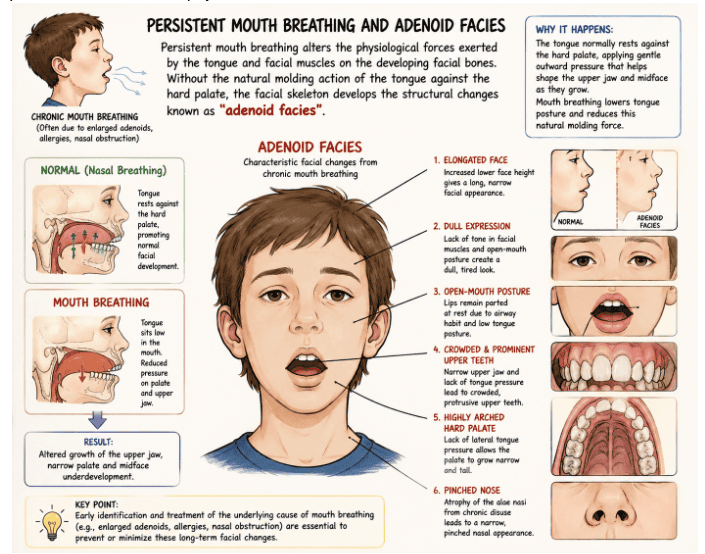
Additionally, chronic airway obstruction and disrupted sleep architecture lead to neurocognitive issues, such as daytime drowsiness, behavioral problems, learning difficulties, and aprosexia—the inability to maintain mental concentration. Chronic obstruction of the Eustachian tube also impairs middle-ear ventilation, leading to recurrent otitis media with effusion, Eustachian tube catarrh, and conductive hearing loss.
Adolescents and Adults
In adults, symptomatic adenoidal tissue is highly uncommon because the tissue typically regresses during adolescence. When clinical cases do occur—most frequently in young adults aged 16 to 25, with a higher incidence in males due to occupational exposure to airborne pollutants—they are often associated with chronic rhinosinusitis or severe environmental allergies.
In adult populations, the clinical evaluation of nasopharyngeal masses must be highly detailed. Clinicians must conduct appropriate examinations to differentiate benign adenoid hypertrophy from potentially serious conditions, including human immunodeficiency virus (HIV) infection, non-Hodgkin lymphoma, or nasopharyngeal malignancies.
The Classical Homeopathic Paradigm and Miasmatic Dynamics
The classical homeopathic approach to adenoid hypertrophy differs fundamentally from conventional medical and surgical treatments. Standard conventional therapies often rely on corticosteroids or antibiotics for symptomatic relief. In severe cases of airway obstruction or chronic otitis media, surgical excision (adenoidectomy) is typically recommended. Although adenoidectomy is a common pediatric surgery, it carries potential risks, such as postoperative bleeding (4% to 5%), and can cause significant physical stress to a developing child.
Additionally, surgical removal may reduce local immunocompetence, as the adenoids are active in producing protective immunoglobulins. From a classical homeopathic perspective, surgical excision of the hypertrophied tissue is viewed as a suppressive measure. This approach addresses the physical mass but leaves the patient’s underlying disease susceptibility and constitutional weakness uncorrected.
Hahnemannian philosophy holds that localized physical changes, such as the enlargement of lymphoid tissue, are external signs of a deeper, dynamic disturbance of the vital force. To achieve a gentle and lasting recovery, the homeopath must evaluate the patient’s constitutional state and miasmatic background. Miasms are understood as deep-rooted dynamic predispositions that shape an individual’s susceptibility to disease. Chronic adenoid hypertrophy typically represents a complex, mixed miasmatic state—primarily Sycotic and Tubercular, built upon a foundational Psoric state.
[ Foundational Psoric State ]
(Functional sensitivity & susceptibility)
│
▼
[ Deeper Sycotic Expression ]
(Lymphoid hyperplasia, tissue hypertrophy)
│
▼
[ Mixed Tubercular Diathesis ]
(Rapid respiratory changes, recurring suppuration)
The functional, physiological, and structural changes of these miasms can be traced through distinct phases:
The Psoric Phase
Psora represents the foundational state of dynamic susceptibility, characterized by functional changes and heightened sensitivity of the nervous system and mucous membranes without permanent structural alterations. In the respiratory system, this presents as acute nasal irritation, watery rhinorrhea, and minor, temporary swelling of the lymphoid tissues in response to environmental or atmospheric changes. The Psoric child is highly reactive, catches cold easily, and lacks internal physical heat. Under classical homeopathic theory, if these primary Psoric manifestations are repeatedly suppressed with suppressive medications, the dynamic disturbance can be driven deeper into the organism, progressing to more complex miasmatic states.
The Sycotic Phase
Sycosis represents a state of chronic inflammation, tissue accumulation, and physical overgrowth. In this phase, the vital force attempts to localize systemic irritation by proliferating lymphoid tissue, leading to persistent adenoid and tonsillar hypertrophy.
This sycotic expression often occurs in patients with a “hydrogenoid constitution,” who are highly sensitive to moisture, cold, and damp environments. The tissues develop progressive hypertrophy, induration, and condensation. Thick, sticky, greenish-yellow discharges and persistent catarrhal blockages are common. When these physical growths are surgically removed without resolving the internal sycotic state, the underlying disease process may shift to other organs, potentially leading to respiratory, behavioral, or neurological issues.
The Tubercular Diathesis
The Tubercular miasm is historically understood as a mixed miasmatic state, combining elements of Psora and Syphilis. It is characterized by physical instability, a tendency toward rapid tissue changes, and respiratory vulnerability.
In children with a Tubercular diathesis, adenoid hypertrophy is often accompanied by rapid physical emaciation despite a strong appetite, night sweats, and highly changeable symptoms. The clinical course is marked by recurrent, suppurative infections of the middle ear and nasal passages, with a tendency toward early tissue breakdown. This miasmatic state requires deep-acting remedies to address the chronic susceptibility to respiratory infections.
The Syphilitic Phase
The Syphilitic miasm represents a state of structural degeneration, necrosis, and tissue destruction. In advanced cases of nasopharyngeal pathology, this syphilitic energy can lead to severe complications, such as ulceration of the mucous membranes, necrosis of the auditory ossicles from chronic otitis, and the development of hard, calcified indurations within the glandular tissues. Chronic ulceration of the nostrils and structural changes in the nasal cartilage or septum also reflect this destructive miasmatic influence.
By aligning remedy selection with the patient’s predominant miasmatic state, classical homeopathic treatment aims to guide the pathological process from deep, structural changes back to functional, superficial expressions, eventually leading to resolution in accordance with Hering’s Law of Cure.
Repertorial Analysis and Synthesis of Adenoid Rubrics
To determine the homeopathic similimum for a patient with adenoid hypertrophy, the clinician must conduct a systematic case analysis and construct a repertorial totality. In classical practice, this process is guided by different repertorial methodologies.
James Tyler Kent’s hierarchical method prioritizes symptoms from the center of the organism to the periphery, starting with mental and emotional states, followed by physical generals, and finally physical particulars. Kent’s Repertory utilizes a three-tier grading system to represent the strength of remedy indications based on drug provings and clinical verifications:
- First Grade (Bold, 3 Marks): Symptoms experienced by a large majority of provers and consistently verified in clinical practice.
- Second Grade (Italics, 2 Marks): Symptoms confirmed by a smaller number of provers and occasionally verified in clinical settings.
- Third Grade (Roman, 1 Mark): Symptoms rarely experienced during provings but verified through clinical cures.
In pediatric cases, where detailed mental and subjective symptoms can be difficult to elicit, Murphy’s Homeopathic Medical Repertory offers updated, clinically integrated terminology. It includes specialized rubrics for child-specific behaviors, modern clinical diagnostics, and specific environmental modalities.
Alternatively, the Boger-Phatak repertorial approach focuses on alphabetical organization and the concept of the “qualitative totality”. This method emphasizes the generalized value of local symptoms, their specific modalities, and key concomitants. Boger’s philosophy allows a clinician to elevate a highly characteristic physical particular (such as a specific thermal modality or physical posture) to a general symptom of the case, helping to identify the curative remedy when mental symptoms are absent.
Primary Repertorial Rubrics for Adenoid Hypertrophy and Associated Conditions
| Repertory Chapter | Clinical Pathological Rubric | Indicated Remedies and Gradings |
|---|---|---|
| Nose | Nose; ADENOIDS (under the diagnostic category) | AGRAPHIS NUTANS (3), BARYTA CARBONICA (3), CALCAREA CARBONICA (3), Calcarea fluorica (2), Calcarea iodata (2), Calcarea phosphorica (2), Psorinum (2), Sanguinaria nitrica (2), Sulphur (2), Thuja (2), Tuberculinum (2), Hydrastis (1), Cistus canadensis (1), Teucrium marum (1). |
| Ears | Ears; DEAFNESS, adenoids/hypertrophied tonsils (chronic middle ear blockage) | BARYTA CARBONICA (3), CALCAREA PHOSPHORICA (3), Aurum metallicum (2), Mercurius (2), Nitric acid (2), Staphysagria (2). |
| Hearing | Hearing; IMPAIRED, enlarged tonsils adenoids, with | AGRAPHIS NUTANS (3), BARYTA CARBONICA (3), Calcarea phosphorica (2). |
| Throat | Throat; SWELLING, general adenoids (pharyngeal lymphoid tissue overgrowth) | BARYTA CARBONICA (3), CALCAREA CARBONICA (3), Baryta muriatica (2), Mercurius solubilis (2). |
| Nose | Nose; SNUFFLES (noisy, wet respiration in pediatric cases) | SAMBUCUS NIGRA (3), NUX VOMICA (3), Ammonium carbonicum (2), Calcarea carbonica (2), Pulsatilla (2). |
| Nose | Nose; OBSTRUCTION, has to breathe through mouth | AMMONIUM CARBONICUM (3), LYCOPODIUM (3), NUX VOMICA (3), Natrum muriaticum (2), Sambucus nigra (2). |
| Throat | Throat; TONSILS, HYPERTROPHY, with hardness of hearing | BAR-C (3), Calc-p (2), Hep (2), Lyc (2), Plb (2), Psor (2). |
| Children (Murphy) | Children; BEHAVIOR PROBLEMS, home, but good at school, with strangers, at | LYCOPODIUM (3), Silicea (2), Lachesis (2). |
| Children (Murphy) | Children; TIMID, in school, children | BARYTA CARBONICA (3), PULSATILLA (3), Silicea (2). |
To analyze these symptoms in clinical practice, the homeopath must differentiate between common and peculiar characteristics. Common symptoms, such as basic nasal congestion or snoring, are expected features of adenoid hypertrophy and have lower diagnostic weight in remedy selection.
Instead, the clinician looks for peculiar, uncommon, and characteristic symptoms (striking, singular, uncommon, and peculiar), as well as the specific modalities that modify them. For example, if a child with nasal obstruction presents with a distinct “fear of downward motion” (Borax), or constantly grinds their teeth and rolls their head on the pillow during sleep (Podophyllum), these physical concomitants guide the prescription toward the individual’s constitutional remedy.
Expanded Materia Medica of Constitutional and Regional Remedies
Primary Constitutional Polychrests
Calcarea Carbonica (Calcium Carbonate)
Calcarea carbonica is a deep-acting constitutional remedy with a profound effect on nutrition, calcium metabolism, and the lymphatic system.
- Constitutional Dynamics: Suited to children who are fair, flabby, and tend toward obesity. They are physically slow, sweat easily, and lack intrinsic vital heat.
- Nasopharyngeal Symptoms: Marked hypertrophy of the adenoid tissue and cervical lymph nodes, often accompanied by chronic, thick, non-irritating yellow nasal discharge. The child catches cold with every change of weather or exposure to damp air.
- Key Modalities: Pronounced aggravation from cold, damp air, wet weather, washing, and physical exertion. Amelioration in dry, warm climates.
- Concomitants: Profuse, sour-smelling perspiration, particularly on the scalp and occiput during sleep, which dampens the pillow. Slow, difficult dentition and delayed closure of the cranial fontanelles. A strong dietary craving for boiled eggs and indigestible substances like chalk, soil, or coal.
Baryta Carbonica (Barium Carbonate)
Baryta carbonica acts on the lymphatic vessels and glands, making it a key remedy for hypertrophic and indurated tissues.
- Constitutional Dynamics: Suited to children with mental, emotional, or physical developmental delays. They are chronically bashful, slow to comprehend, and physically underdeveloped. It is also indicated at the senile stage of life when accompanied by cognitive decline and physical weakness.
- Nasopharyngeal Symptoms: Massive, hard swelling of both the tonsils and the adenoids, which can nearly close the pharyngeal space. The submaxillary and cervical lymph nodes are swollen, hard, and knotted. Chronic nasal obstruction is constant, and the child presents with “throat deafness” and chronic Eustachian tube blockages.
- Key Modalities: Aggravation from cold air, dampness, damp weather, and when thinking of symptoms. Amelioration from warm wrapping and dry weather.
- Concomitants: Drooling of saliva during sleep, which wet-stains the pillow. Offensive, excoriating foot sweat that causes soreness between the toes. Extreme shyness and timidity; the child frequently avoids eye contact and hides behind furniture or the parent when strangers are present.
Tuberculinum (Tuberculinum Bovinum)
Tuberculinum is a deep-acting nosode that addresses the respiratory and metabolic vulnerabilities of the Tubercular miasm. * Constitutional Dynamics: Suited to individuals with a personal or family history of tuberculosis, asthma, or chronic chest ailments. They are typically tall, thin, narrow-chested, and intellectually active but physically delicate.
- Nasopharyngeal Symptoms: Rapidly recurring episodes of acute tonsillitis, adenoiditis, and respiratory infections. The symptoms are highly changeable and shift quickly between different mucosal surfaces. The adenoids are enlarged and sensitive, accompanied by a chronic nasal discharge that alternates with bouts of dry, painful irritation.
- Key Modalities: Marked aggravation in closed, warm rooms, from draft, damp cold, and change of weather. Amelioration from continuous physical motion and in cool, open, fresh air.
- Concomitants: Rapid physical emaciation despite a voracious appetite and high caloric intake. Chronic mental restlessness, hyperactive behavior, and a constant desire for travel, changes in environment, or dynamic stimulation. Nocturnal sweats, especially on the upper torso.
Silicea (Silicon Dioxide)
Silicea acts on nutritional assimilation, structural tissues, and chronic suppurative processes.
- Constitutional Dynamics: Delicately built children with fine, pale skin and soft muscles. They are physically cold and sensitive but possess a strong-willed, persistent mental character.
- Nasopharyngeal Symptoms: Chronic, hard induration of the adenoid pad and tonsillar tissues, which may resist resolution. The nasal passages are dry and filled with hard, crusty secretions that bleed when dislodged. The child experiences recurrent ear infections and conductive hearing loss with a plugged sensation in the ears that is temporarily relieved by swallowing or yawning.
- Key Modalities: Aggravation from cold draft, cold dampness, uncovering the head, and physical exertion. Amelioration from warm wrapping of the head, a warm room, and in dry weather.
- Concomitants: Offensive, sour foot sweat that can cause soreness. Highly sensitive nasal bones, morning sneezing, and a localized itching sensation at the tip of the nose. Every minor cut or scratch tends to suppurate.
Phosphorus (Elemental Phosphorus)
Phosphorus acts on the blood, nervous system, and mucosal linings, making it useful in hemorrhagic and sensitive states.
- Constitutional Dynamics: Slender, tall, and fast-growing children who are intellectually quick, artistic, and highly responsive to environmental stimuli.
- Nasopharyngeal Symptoms: Adenoid hypertrophy accompanied by a tendency toward easy bleeding from the nasal mucous membranes. Nosebleeds of bright red blood occur frequently, often triggered by minor excitement or physical exertion. Swollen, red nasal passages with nasal polyps that bleed easily.
- Key Modalities: Aggravation from lying on the left side, warm food or drinks, and changes in atmospheric pressure. Amelioration from cold food or drinks, sleep, and in open, fresh air.
- Concomitants: A strong appetite with specific cravings for cold water, ice cream, and salty foods. Physical and mental restlessness, with a tendency to become easily fatigued. Sensation of emptiness or weakness in the stomach.
Lycopodium Clavatum (Club Moss)
Lycopodium acts on nutritional assimilation, respiratory mucous membranes, and liver function.
- Constitutional Dynamics: Suited to children who are intellectually sharp and alert but physically delicate, with thin limbs and a distended, flatulent abdomen.
- Nasopharyngeal Symptoms: Chronic adenoid enlargement and nasal obstruction with dry mucous membranes. The child experiences a feeling of dryness in the back of the nose, accompanied by an irritating discharge from the front of the nostrils. The nostrils are chronically ulcerated, showing crusts and elastic plugs.
- Key Modalities: Aggravation from 4:00 PM to 8:00 PM, warm rooms, and cold drinks. Amelioration from cool, open air and warm drinks.
- Concomitants: The child may wake up suddenly during sleep, rubbing the nose, with a fan-like movement of the nostrils. They are typically unruly, irritable, and disobedient when ill, yet can be polite and well-behaved at school or with strangers.
Calcarea Phosphorica (Calcium Phosphate)
Calcarea phosphorica acts on bone development, cellular nutrition, and the lymphatic system, making it useful during periods of rapid growth.
- Constitutional Dynamics: Thin, emaciated children who are irritable, have weak muscles, cold extremities, and poor digestive function.
- Nasopharyngeal Symptoms: Chronic enlargement of the adenoids and tonsils, causing pain when opening the mouth. Flabby, swollen tissues that bleed easily and obstruct the nasopharyngeal airway.
- Key Modalities: Aggravation from cold damp winds, changes of weather, and melting snow. Amelioration in dry, warm air.
- Concomitants: Slow, difficult dentition with rapid decay of teeth. Bone development issues, such as slow-closing cranial sutures. The child is often anemic, flabby, and irritable.
Target-Specific Regional and Sclerotic Remedies
Agraphis Nutans (Bluebell / Wild Hyacinth)
Agraphis nutans is a localized remedy with a specific affinity for the mucous membranes of the nasopharynx and Eustachian tubes.
- Clinical Character: Introduced by Dr. Robert Cooper and documented by Dr. John Henry Clarke, this remedy acts on the adenoid tissue and tonsils. It is indicated for nasal obstruction and “throat deafness” caused by adenoidal overgrowth.
- Key Modalities: Marked aggravation from exposure to cold, damp winds, cold air, and wet weather. A key clinical modality is “amelioration from shelter” or being in a protected environment, which is similar to the modalities of Silicea.
- Concomitants: Adenoids and enlarged tonsils that are aggravated during dentition. A tendency toward free, watery mucus discharges from the respiratory and gastrointestinal tract. Exposure to cold winds can trigger sudden, noisy, watery diarrhea with bloating and cold sweats. It can also be indicated for children with a history of mumps or whooping cough who continue to suffer from chronic nasopharyngeal catarrh.
Lemna Minor (Duckweed) Lemna minor is an organ-specific remedy that acts directly on the nasal passages, turbinates, and nasopharyngeal mucous membranes.
- Clinical Character: Indicated for severe, mechanical nasal obstruction caused by swollen nasal bones, turbinate hypertrophy, or adenoidal growths. The patient experiences a loss of the sense of smell and a constant post-nasal drip of thick, offensive mucus.
- Key Modalities: Marked aggravation in wet, rainy, or damp weather, and in cold climates. Amelioration in dry, warm weather.
- Concomitants: Dryness and burning in the pharynx, with constant attempts to hawk up thick, dry crusts. Persistent, purulent nasal discharge that is typically worse in winter.
Petroleum (Crude Rock Oil)
Petroleum is a deep-acting carbonaceous remedy that acts on the skin, mucous membranes, and nervous system.
- Clinical Character: Indicated for chronic, recurrent middle ear infections, Eustachian tube catarrh, and adenoid hypertrophy. It is useful in cases where surgical adenoidectomy has failed to resolve ear symptoms and the patient experiences recurrent ear pain and conductive deafness.
- Key Modalities: Marked aggravation in winter, from cold air, and while riding in a vehicle (causing motion sickness). Amelioration from warm air, eating (which relieves stomach pain), and in dry weather.
- Concomitants: Chronic skin eruptions behind the ears or on the hands that crack and bleed in winter. The child is typically quiet, reserved, shy, and lacks self-confidence, often avoiding social contact. They may also experience nocturnal enuresis and nighttime startles.
Baryta Muriatica (Barium Chloride)
Baryta muriatica combines Barium and Chlorine, acting on the vascular walls, lymphatic vessels, and glandular tissues.
- Clinical Character: Indicated for chronic, hard induration of the tonsils and cervical glands. It acts on hypertrophied lymphoid tissue, making it a key anti-sycotic remedy for chronic, indurated glandular enlargements that are prone to recurrent infections.
- Key Modalities: Aggravation from cold, damp air, and changes in atmospheric pressure. Amelioration from dry warmth and motion.
- Concomitants: Chronic swelling and induration of the submaxillary and cervical lymph nodes, which can feel like hard knots. Recurrent inflammatory throat infections and middle ear catarrh. Sclerosis of the blood vessels, physical weakness, and dynamic sluggishness.
Baryta Iodata (Barium Iodide)
Baryta iodata combines Barium and Iodine, acting on the lymphatic system and metabolic processes.
- Clinical Character: Indicated for chronic, hard hypertrophy of the lymphoid tissues, including the tonsils, adenoids, and breasts. It is useful in children with compromised physical growth and chronic enlargement of the cervical lymph nodes.
- Key Modalities: Aggravation from cold air, wet weather, and physical inactivity. Amelioration from cool, open air and continuous motion.
- Concomitants: Strumous ophthalmia with marked swelling of the eyelids and chronic enlargement of the cervical glands. The child may show rapid physical emaciation despite a strong appetite. Increased leucocytosis and chronic induration of glandular tissues.
Synthesis and Strategic Clinical Guidance
Classical homeopathic therapeutics offer a systematic approach to managing adenoid hypertrophy across all age groups, allowing clinicians to integrate homeopathic treatment with a “watchful waiting” strategy to avoid unnecessary surgery.
1. Age-Specific Clinical Guidelines
Infants and Toddlers
In infants, treatment focuses on resolving mechanical feeding difficulties and noisy, bubbly respiration. The clinician should evaluate physical general symptoms, such as head sweat, thermal sensitivities, and developmental milestones (e.g., dentition and walking).
Remedies with a strong pediatric profile, such as Calcarea carbonica, Calcarea phosphorica, or Sambucus nigra, are frequently indicated to resolve the acute snuffles and improve constitutional vitality.
School-Aged Children
In children aged two to twelve, who represent the largest demographic, the primary goals are to relieve nasal airway obstruction, resolve sleep apnea, and improve cognitive focus. The homeopath must analyze both mental and physical general symptoms.
For example, a child’s behavior in different environments (e.g., “timid at school but aggressive at home”) can help differentiate between remedies like Lycopodium and Baryta carbonica.
Adults and Young Adults
In adults presenting with persistent or secondary adenoid hypertrophy, the etiological focus shifts toward environmental allergens, occupational pollutants, or chronic sinusitis.
The homeopath must choose remedies that address these specific environmental triggers, while also conducting appropriate examinations to rule out underlying systemic or malignant conditions.
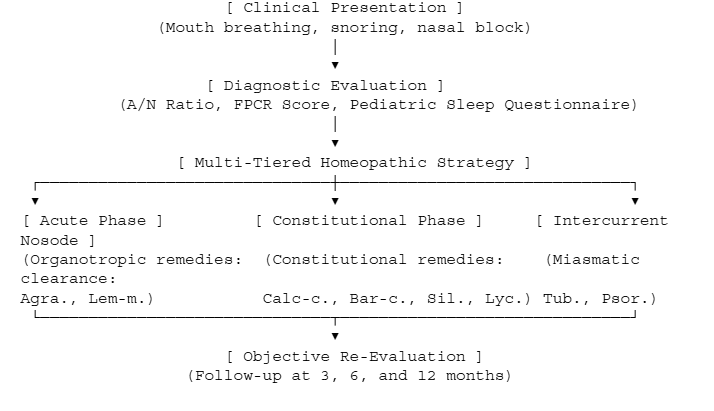
2. A Multi-Tiered Homeopathic Strategy
The homeopathic management of chronic adenoid hypertrophy is organized into three distinct therapeutic phases to address both acute symptoms and deep-seated constitutional susceptibility:
The Acute Organotropic Phase
When a patient presents with severe mechanical nasal obstruction, loud snoring, or acute middle ear congestion, the primary goal is to provide symptomatic relief.
Organ-specific remedies with a direct affinity for the nasopharynx—such as Agraphis nutans (especially when adenoids are accompanied by enlarged tonsils during dentition), Lemna minor (worse in damp, wet weather), or Sambucus nigra (dry, blocking coryza forcing mouth breathing)—are used in lower potencies (e.g., 6C to 30C) to reduce tissue congestion and improve nasal airflow.
The Constitutional Phase
Once the acute obstructive symptoms are stabilized, the clinician must prescribe a deep-acting constitutional remedy to halt chronic lymphoid hyperplasia and address the patient’s underlying disease susceptibility.
The similimum is selected based on the complete symptom totality, including mental attributes, physical generals, and modalities. Leading remedies like Calcarea carbonica, Baryta carbonica, Silicea, Phosphorus, or Lycopodium are typically administered in moderate to high potencies (e.g., 200C to 1M) with infrequent repetition to allow for deep, constitutional action.
The Intercurrent Miasmatic Phase
If a well-selected constitutional remedy fails to act, or if progress stall despite symptomatic improvement, the clinician must evaluate the patient’s miasmatic background.
Administering an intercurrent miasmatic nosode, such as Tuberculinum Bovinum (for patients with a strong family history of respiratory disease or rapid emaciation) or Psorinum (for severe lack of vital heat and skin eruptions), helps clear inherited or acquired miasmatic blockages, allowing the constitutional treatment to resume its curative action.
3. Supportive Lifestyle and Hygiene Measures
To optimize the outcomes of classical homeopathic treatment, clinicians should advise patients and parents to implement supportive general hygiene and dietary measures:
- Dietary Modifications: Encourage the consumption of fresh, warm, and easily digestible foods. Instruct the patient to avoid cold, refrigerated, processed, or highly fried foods (such as ice creams, cold drinks, or heavily processed pastries), which can increase mucosal secretions and exacerbate nasopharyngeal catarrh.
- Nasal Hygiene: Recommend regular steam inhalation to help thin thick, retained nasal secretions, reduce mucosal congestion, and soothe irritated passages. Ensure the patient maintains local hygiene and avoids exposure to environmental irritants or secondhand tobacco smoke.
- Physical Activity and Rest: Promote age-appropriate physical exercise in open, fresh air to strengthen cardiovascular health and improve overall immune function. Ensure the child maintains a regular sleep schedule and receives adequate sleep to minimize the neurocognitive effects of daytime fatigue.
Through this comprehensive strategy, which integrates clinical evidence with classical homeopathic principles, clinicians can effectively manage adenoid hypertrophy, improve nasal respiration, and support the long-term health and development of the patient.
Bibliography:
1. Wikipedia contributors. Adenoid hypertrophy [Internet]. Wikipedia, The Free Encyclopedia; 2026 [cited 2026 Jul 3].
2. Ponnam HB, Varanasi R, Shil RC, ER VE, Goel M, Ramteke S, Karthikeyan D, Arya DD, Swain TL, Bagdi N, Srivastava P, Manchanda RK, Oberai P. Individualized Homeopathic Medicines in the Management of Symptomatic Adenotonsillar Hypertrophy in Children: A Prospective Observational Study. *Homeopathy*. 2024.
3. Ussi S, Ramanan VE. Effectiveness of individualised Homoeopathy in hypertrophied adenoids in pediatric population: A single-arm, prospective pilot study. *Indian Journal of Research in Homoeopathy*. 2025.
4. Ramanan VE. Scope of integrating Homeopathy with “Watchful Waiting Approach” in the Treatment of Adenoid Hypertrophy – an Evidence-based Case Report. *Journal of Clinical Otorhinolaryngology*. 2022.
5. Tayade KR, Mahajan PS, Sangtani R. Evidence-Based Study of Enlarged Adenoid Treated with Homoeopathic Medicine: A Case Report. *Alternative Therapies in Health and Medicine*. 2024 May.
6. Friese KH, Feuchter U, Lüdtke R, Moeller H. Results of a randomised prospective double-blind clinical trial on the homeopathic treatment of adenoid vegetations. *European Journal of General Practice*. 2001.
7. Friese KH, Feuchter U, Moeller H. [Homeopathic treatment of adenoid vegetations. Results of a prospective, randomized double-blind study]. *HNO*. 1997 Aug.
8. de Lange de Klerk ES, Blommers J, Kuik DJ, Bezemer PD, Feenstra L. Effect of homoeopathic medicines on daily burden of symptoms in children with recurrent upper respiratory tract infections. *BMJ*. 1994 Nov 19.
9. Chakraborty S, Uchat UG, Ghosh P, Singh NK, Koley M, Saha S. Agraphis nutans in Treatment of Chronic Tonsillitis: Randomised, Pragmatic, Equivalence Trial. *Homœopathic Links*. 2022;135(02).
10. van den Aardweg M, Boonacker CW, Rovers MM, Schilder A. Proportion of children with upper respiratory tract infection (prevalence/week) in adenoidectomy and watchful waiting group: evaluation of plasma hypoxia induced factor-1a (HIF-1a) in children undergoing adenoidectomy. *Journal of Laryngology & Otology*. 2011.
11. Boericke W. *Pocket Manual of Homoeopathic Materia Medica & Repertory*. 9th ed. Philadelphia: Boericke & Runyon; 1927.
12. Clarke JH. *A Dictionary of Practical Materia Medica*. Vol. 1. London: Homoeopathic Publishing Company; 1900.
13. Hahnemann S. *The Chronic Diseases, Their Specific Nature and Their Homeopathic Treatment*. Translated by Hempel CJ. New York: Wm. Radde; 1845.