Introduction
Melasma is a common acquired hyperpigmentation disorder characterized by symmetrical brown, gray-brown, or blackish patches predominantly affecting sun-exposed areas of the face, particularly the cheeks, forehead, nose, and upper lip. It is more frequently observed in women and is often associated with hormonal influences, pregnancy, oral contraceptive use, genetic predisposition, thyroid dysfunction, and excessive sun exposure.
Although melasma is primarily a cosmetic concern, it can significantly affect an individual’s self-esteem and quality of life. Conventional treatment mainly focuses on depigmenting agents and sun protection, whereas homoeopathy emphasizes treating the individual as a whole. Constitutional prescribing considers not only the pigmentation pattern but also the patient’s thermal state, thirst, desires, sleep position, mental characteristics, and associated complaints. This individualized approach helps in selecting the most suitable remedy for long-term management.
Role of Homoeopathic Medicines in Melasma
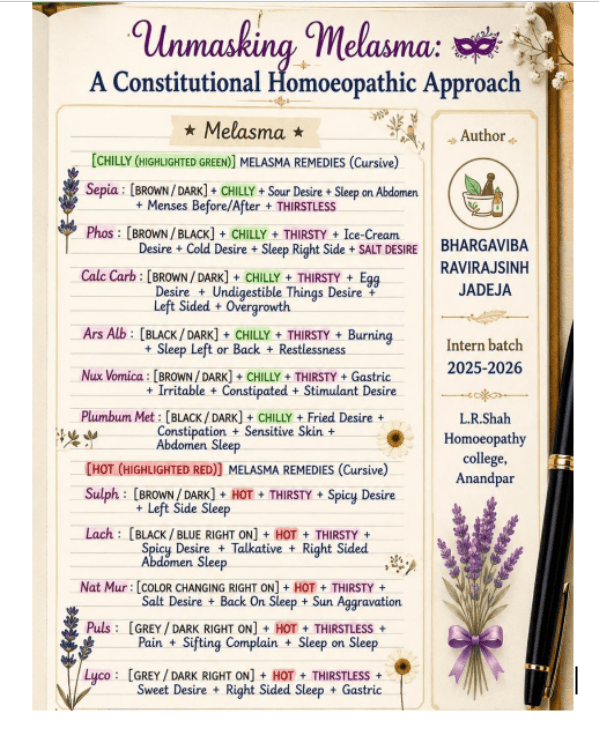
Chilly remedies
1.Sepia
It is particularly useful in women with brown facial pigmentation associated with hormonal disturbances, menstrual irregularities, a desire for sour foods, and a tendency to be chilly and thirstless.
2.Phosphorus
It is indicated in individuals with brown to black pigmentation who are chilly, thirsty, crave ice cream and salty foods, and are generally sensitive and affectionate in nature.
3.Calcarea Carbonica
It is often prescribed for dark pigmentation in chilly, obese individuals who perspire easily and have a marked craving for eggs.
4.Arsenicum Album
It is suitable for dark pigmentation accompanied by burning sensations, restlessness, anxiety, and marked thirst.
5.Nux Vomica
It is beneficial for patients whose pigmentation is associated with digestive disturbances, constipation, irritability, and a sedentary lifestyle.
6.Plumbum Metallicum
It may be considered in chronic cases with blackish discoloration, constipation, sensitive skin, and a craving for fried foods.
Hot remedies
7.Sulphur
Among the hot patient, sulphur is a prominent remedy characterized by dark pigmentation, increased thirst, a desire for spicy foods, and chronic skin complaints.
8.Lachesis
It is particularly useful in menopausal women with bluish-black pigmentation, hot constitution, talkative nature, and right-sided complaints.
9.Natrum Muriaticum
It is one of the most important remedies for melasma aggravated by sunlight, especially in individuals who crave salt, are emotionally reserved, and experience worsening after grief or emotional stress.
10.Pulsatilla
It is indicated in mild, emotional, and thirstless individuals whose pigmentation is linked to hormonal or menstrual disturbances.
11.Lycopodium
It is valuable for right-sided complaints, digestive disorders, sweet cravings, and grayish facial pigmentation.
12.Apis Mellifica
It may be considered when pigmentation is associated with allergic tendencies, puffiness, edema, and a hot, thirstless constitution.
The selection of these remedies depends upon the totality of symptoms rather than the pigmentation alone, emphasizing the individualized nature of homoeopathic prescribing.
Conclusion
Melasma is a multifactorial skin disorder that requires a comprehensive and individualized treatment approach. Homoeopathy offers a unique method of management by addressing the underlying constitutional factors that contribute to pigmentation rather than focusing solely on the visible lesions. Through careful evaluation of physical, mental, and general symptoms, remedies such as Sepia, Natrum Muriaticum, Sulphur, Calcarea Carbonica, Lycopodium, and others can be selected according to the patient’s specific presentation. Proper case-taking, constitutional analysis, and regular follow-up are essential for achieving favorable outcomes and improving both skin appearance and overall well-being.
Sources
Kent’s Repertory
Pocket Manual of Homoeopathic Materia Medica
A Dictionary of Practical Materia Medica
Lectures on Homoeopathic Materia Medica
Materia Medica Pura