

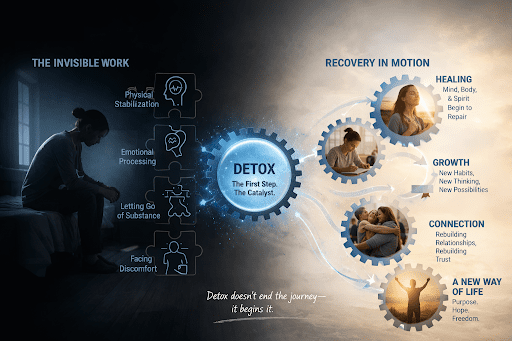
Recovery from substance use is often pictured as a visible journey: the moment someone walks into a treatment facility, begins therapy, and gradually reintegrates into life. But behind this visible path lies a less-discussed, yet equally critical, process—the invisible work that begins the moment detox starts. Detoxification is often seen as merely the physical clearing of substances from the body, but in truth, it’s the spark that sets recovery in motion on multiple levels: physical, emotional, and psychological.
Detox: More Than a Physical Reset
At first glance, detox may appear as simply the phase where withdrawal symptoms are managed. In reality, the body undergoes profound biochemical and neurological shifts during this period. Toxins are expelled, organs begin repairing themselves, and the brain’s neurotransmitter systems start recalibrating. For someone coming off alcohol or opioids, even small changes in chemistry can dramatically affect mood, sleep, and energy levels.
What’s less visible, but equally vital, is how detox initiates a sense of self-awareness. As the fog of intoxication lifts, individuals begin to notice patterns they hadn’t before—the triggers, habits, and emotional responses that contributed to their substance use. This clarity, though often uncomfortable, is the first step toward long-term recovery.
Emotional Ripples: Confronting the Mind
Detox is not only a physical journey; it’s a mental one. As substances leave the body, emotional states that were previously masked—grief, anxiety, irritability, and sometimes deep-seated guilt—surface. For many, this can feel like an overwhelming storm.
Yet these emotional ripples are crucial. They mark the beginning of introspection and self-reflection. Individuals start confronting realities they may have avoided for years. It’s here that the invisible work truly begins: learning to sit with discomfort, understanding emotional triggers, and gradually building coping strategies that don’t rely on substances.
Laying the Foundation for Behavior Change
Recovery isn’t just about stopping substance use; it’s about reshaping behaviors and patterns. Detox sets the stage for this by breaking the immediate cycle of addiction. The absence of substances creates space for new routines and healthier habits to take root.
For instance, a person who has completed detox may start noticing the benefits of regular sleep, balanced nutrition, and physical activity. These seemingly small changes have a compounding effect, supporting brain recovery, emotional stability, and resilience. While these adjustments might not be glamorous or visible, they are essential for sustainable recovery.
Social and Environmental Awareness
Detox also often brings heightened awareness of the social and environmental factors influencing addiction. Relationships, daily routines, and even certain physical spaces can act as triggers for relapse. By observing these patterns during detox, individuals gain insight into which aspects of their lives need adjustment or boundaries.
This awareness is invisible in the short term but forms a blueprint for the next stages of recovery. Establishing supportive networks, avoiding high-risk situations, and seeking healthy social interactions all stem from the clarity gained in detox.
Building Momentum for Recovery
Detox is sometimes mistakenly seen as the “hard part” that gets out of the way so the “real work” of recovery can begin. The truth is that detox is the first active stage of recovery. The habits, self-awareness, and resilience developed during this phase create momentum that carries into therapy, group support, and long-term lifestyle changes.
Every meal, every night of restful sleep, every small emotional insight during detox contributes to this momentum. Recovery is gradual, but the invisible work done in these early days often determines the trajectory of the entire journey.
Why Georgia Detox Programs Matter
While detox can technically be attempted at home, structured programs—like those offered in Georgia Detox settings—provide essential safety, guidance, and expertise. Medical supervision ensures that withdrawal symptoms are managed safely, while supportive environments foster emotional processing and habit formation.
The structured environment of a Georgia Detox program also offers accountability. The invisible work—mental, emotional, and behavioral—benefits immensely from professional observation, encouragement, and tools that help translate early progress into lasting recovery.
Conclusion: Recognizing the Invisible Work
Detox may be invisible in its full complexity, but it is the cornerstone of recovery. It initiates physical healing, emotional processing, behavioral restructuring, and social awareness. Understanding that detox is more than just a withdrawal phase helps individuals appreciate the depth of effort they are investing in themselves.
Recovery is not just a series of visible milestones; it is a tapestry woven from countless unseen moments of insight, struggle, and growth. By recognizing and valuing the invisible work set in motion during detox, individuals—and those supporting them—can approach recovery with patience, respect, and optimism.

