A Clinical Study To Assess The Effectiveness of Homoeopathic Medicines And Quality of Life In The Treatment of Bronchial Asthma In Adults
Abstract –
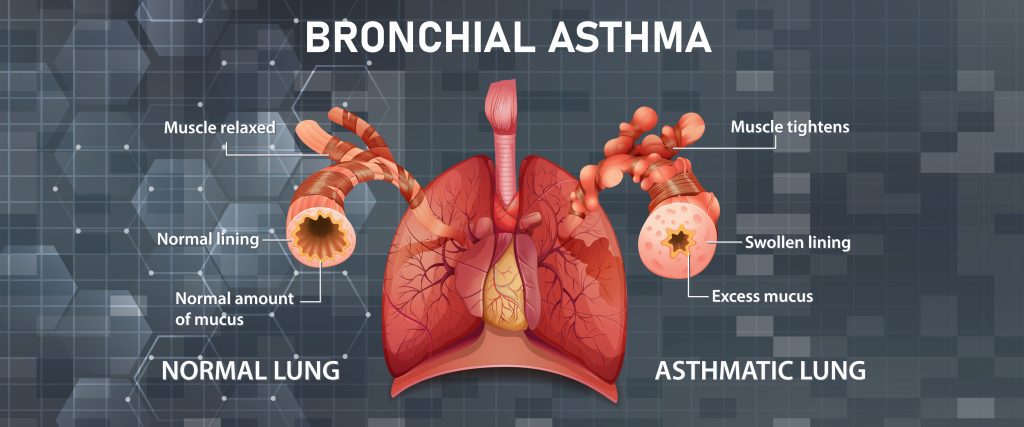
Background: Bronchial Asthma is a chronic inflammatory disorder of the airways characterized by recurrent episodes of wheezing, breathlessness, chest tightness, and coughing. It disturbs the quality of life and other impairments of daily activities, physical symptoms and emotional changes. Despite advances in conventional therapy, many patients continue to experience relapses and side effects from long-term medication use. Homeopathy, based on the principle of “like cures like,” offers a holistic approach aimed at reducing the frequency and intensity of asthmatic episodes by stimulating the body’s self-healing mechanisms.
Method: Forty-eight patients with clinically confirmed cases of Bronchial Asthma were taken and treated with Homoeopathic remedies on the basis of Homoeopathic principles with fixed criteria to know the results of treatment as recovered, improved or not improved. For the present study the patients who visited Dr. B. D. Jatti Homoeopathic Medical College & Hospital, Dharwad were selected based on the inclusion and exclusion criteria.
Results: Totally 48 cases were selected for the study. At the end of the study it was observed that, out of 48 patients, 12 recovered (12%), 32 improved (66.66%), and 4 were not improved (8.33%) with the help of suitable Homoeopathic medicines.
Key Words: Bronchial Asthma, Spirometry, Asthma Quality of Life, Homoeopathic Management.
Introduction –
Asthma is a chronic inflammatory disorder of the airways characterized by bronchial hyperresponsiveness to a variety of endogenous and exogenous stimuli, resulting in recurrent episodes of wheezing, breathlessness, chest tightness, and cough, with variable and often reversible airflow obstruction that may become partially irreversible over time. It represents a major global public health problem, affecting approximately 300 million individuals worldwide, with a steadily rising prevalence in both developed and developing countries; in India, the prevalence is reported as 2.05%, with regional variations such as 0.7% in men and 1.5% in women in Karnataka.
Despite the availability of effective conventional therapies, including inhaled corticosteroids and bronchodilators, asthma prevalence and mortality continue to increase, possibly due to factors such as urbanization, lifestyle changes, and environmental exposures, while long-term pharmacotherapy may be associated with relapse on discontinuation and potential adverse effects.
Asthma significantly impairs quality of life, affecting physical activity, work performance, and emotional well-being, which can be assessed using tools such as the Asthma Quality of Life Questionnaire (AQLQ).
In this context, homeopathy, with its holistic and individualized approach based on the totality of symptoms, has been observed to reduce the frequency, intensity, and duration of asthmatic episodes, improve quality of life, and decrease dependence on conventional medications, thereby offering a safe and comprehensive therapeutic option for the long-term management and prevention of recurrent bronchial asthma.
Aim: To assess the effectiveness of Homeopathic Medicines and Quality of life (QOL) in the treatment of Bronchial Asthma in adults.
Objectives:
1. To assess the effectiveness of Homoeopathic medicines in the treatment of Bronchial asthma in adults by using spirometry before and after the treatment.
2. To assess the quality of life in asthmatic subjects by using Asthma Quality of Life Questionnaire (AQLQ) before and after treatment in adults.
Methodology
Patients are considered on the basis of clinical presentations, i.e. wheezing, dyspnea, chest tightness cough & Expiratory flow limitation diagnosed by using spirometry. This study consists of 48 patients of Bronchial Asthma, who attended OPD at Dr. B D Jatti Homoeopathic Medical College for a period of 18 months. 48 cases were selected on the basis of inclusion & exclusion criteria.
Following are the inclusion criteria
1. Subjects who are willing to participate as volunteer and willing to sign the written informed consent for the study are included.
2. Clinically diagnosed cases of bronchial asthma by spirometry.
3. Adults of age group 20-40 are included.
Following are the exclusion criteria
1. Known asthmatic cases on active treatment with others system of medicine.
2. Subjects in severe acute exacerbation of asthmatic attacks.
3. Subjects suffering from any other respiratory complaints like COPD, Pneumonia, Bronchitis etc.
4. Subjects suffering from other Atopic conditions like Atopic Eczema, Allergic Rhinitis.
All the cases were recorded according to the individualistic & holistic approach of Homoeopathy.
Follow up
Follow up of the cases was done according to severity of the symptoms and as per the need of the cases, preferably once in a week for first 2 months followed by once in 15 days for next 2 months and monthly once for the remaining period of 2 months.
Sample size
48 cases are considered for the study.
Study design
Non-control trial based upon purposive sampling method. The cases are selected according to inclusion and exclusion criteria.
Parameters used are –
Change in clinical findings like the presenting symptoms, signs, change in Spirometry values (FEV1/FVC) & AQLQ score are parameter for accessing recovered, improved and not improved criteria.
1) Recovered
• Complete recovery of signs and symptoms and general wellbeing of the patients with no recurrent attacks within the period of 3 months.
• Spirometry FEV1/FVC > 70%
• AQLQ score is 7
2) Improved
• Partial relief of signs and symptoms and general well-being of the patient, with some recurrent attacks within the period of 3 months.
• Spirometry FEV1/FVC <70%
• AQLQ score < 7.
3) Not improved
• No improvement in the signs and symptoms even after sufficient period of treatment.
• No significant changes in Spirometry values.
• No significant changes in AQLQ score.
Statistical analysis
The collected data will be analyzed using paired t test before and after and the data is
presented in the form of mean, standard deviation and 95% confidence interval.
Statistical significance was set at P < 0.05.
Results: –
Age Incidence: The incidence of Bronchial asthma found in the age group between 20 to 40 years are shown in the table given below.
| Sl. No. | Age | No. of Cases | Percentage% |
| 1 | 20 – 24 | 7 | 14.58 |
| 2 | 25 – 29 | 8 | 16.67 |
| 3 | 30 – 34 | 12 | 25 |
| 4 | 35 – 40 | 21 | 43.75 |
| Total | 48 | 100 |
Gender Distrubition
| Sl. No | Gender | No. of Cases | Percentage% |
| 1 | Male | 27 | 56.25 |
| 2 | Female | 21 | 43.75 |
| Total | 48 | 100 |
Occupation Incidence
Out of the 48 subjects in the study maximum were students i.e., 10 subjects (20.83%) followed by Housewife’s 9 subjects (18.75%), Farmers 6 subjects (12.50%), Teachers 5 subjects (10.42%), Software and Bank employees 4 subjects each (8.33%), Shopkeeper 3 subjects (6.25%), Carpenter and Painter 2 subjects each (4.17%), Baker, Tailor, Driver 1 subject each (2.08%).
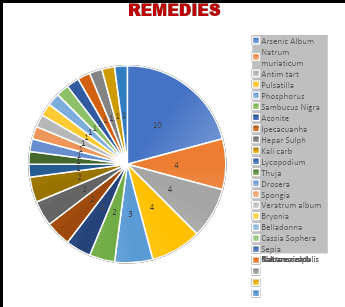
Indicated Remedies
Results Of Treatment
| Sl. No | Remedy | No. of patients | Percentage% |
| 1 | Recovered | 12 | 25 |
| 2 | Improved | 32 | 66.6 |
| 3 | Not improved | 04 | 8.33 |
The study involving 48 subjects with Bronchial asthma evaluated changes in spirometry values of FEV1/FVC before and after treatment and Asthma Quality of Life Questioner before and after treatment which is an important diagnostic tool for respiratory conditions. The values given in the above table show the FEV1/FVC values and AQLQ score at baseline and after 6 months of treatment.
In this study, out of 48 subjects, 12 subjects recovered, 32 subjects improved, and 4 subjects did not show improvement. The findings of this study strongly demonstrate the potential effectiveness of the intervention selected using the Homeopathic Medicines for managing Bronchial asthma.
Discussion: –
The homoeopathic system of medicine is founded on the Law of Similars and emphasizes individualization through a comprehensive assessment of physical, mental, and constitutional characteristics, thereby offering a holistic and patient-centered approach to disease management. Bronchial asthma is an increasingly prevalent chronic respiratory disorder in adults, significantly impairing quality of life by affecting daily activities, work efficiency, and emotional well-being, and in some cases progressing to persistent airflow limitation with reduced life expectancy. Despite advances in preventive strategies and rapid-acting conventional therapies, the prevalence of asthma continues to rise, partly due to limitations and reduced long-term effectiveness of conventional treatment. In this context, the present prospective clinical study was undertaken to evaluate the effectiveness of homoeopathic medicines in the management of bronchial asthma and their impact on improving quality of life. The study was conducted over a period of 18 months among patients attending the OPD and IPD of Dr. B. D. Jatti Homoeopathic Medical College and Hospital and its peripheral OPDs.
The present study had certain limitations, including a relatively small sample size, absence of a control or placebo group, and lack of evaluation of influencing factors such as the placebo effect, which may limit the generalizability and scientific strength of the findings. Irregular follow-ups, individual variations in drug response, time constraints, and the short duration of the study restricted assessment of long-term treatment outcomes. Additionally, the study included only adult patients from a single institutional setting, thereby limiting external validity and applicability to other age groups and populations. Future studies are recommended to include larger and more diverse samples, longer follow-up periods, and appropriate control groups to enhance reliability. Furthermore, patient education and counselling should be emphasized to improve awareness of the chronic nature of asthma, avoidance of triggering factors, and the role of individualized homoeopathic treatment in improving quality of life.
Conclusion: –
“A Clinical Study to Assess the Effectiveness of Homeopathic Medicines in the Treatment of Bronchial Asthma in Adults” was conducted from November 2023 to September 2025.
The study’s outcome of the study is briefly concluded below.
1. The highest age incidence was found between 35 to 40 years with 21 cases.
2. More commonly seen in males.
3. According to the occupation Students, Housewife’s, Farmers and Teachers are affected with Bronchial Asthma.
4. Maximum 40 cases clinically presented with cough with expectoration followed by wheezing, difficulty in breathing etc.
5. Significant Family History of Asthma was found in majority of 16 cases.
6. Arsenicum album was the most prescribed medicine. Next to it, Natrum mur, Antim tart, Pulsatilla, Phosphorus were commonly prescribed.
7. Out of 48 cases, maximum number of cases i.e. 32 cases (66.6%) showed improvement, 12 cases (25%) were recovered and 04 cases (8.33%) did not show any improvement.
8. There was a significant change in the spirometry values (FEV1/FVC) and AQLQ score before and after Homeopathic Treatment.
Along with the homoeopathic treatment, the patients were advised to avoid exposure to Known triggers, avoid smoking and exposure to fumes, stress, management and to practice yoga and Breathing exercises which can enhance lung functions. Hence, on the basis of above points we can conclude that 58 Homoeopathic medicines and effective in the treatment of Bronchial Asthma in adults.
References –
1. Juniper EF, Buist AS, Cox FM, Ferrie PJ, King DR. Validation of a standardized version of the Asthma Quality of Life Questionnaire. Chest. 1999 May 1;115(5):1265-70. Available at – https://doi.org/10.1378/chest.115.5.1265
2. Longo DL, Fauci AS, Kasper DL, Hauser SL, Jameson JL, Loscalzo J. Harrison’s Principles of Internal Medicine. 19th edition. New York. McGrawhill education. 2015. Volume-2. Pg no. 1670
3. Boon NA, Colledge NR, Walker BR, Hunter JA, Davidson LS. Davidson’s principles and practice of medicine. (No Title). 2006 Jun 1. Pg no. 671
4. Munjal Yash Pal, API text book of medicine. 10th edition. New Delhi. Jaypee Brothers Medical Publishers. 2012. Vol. 2 Pg no. 2319, 2320.
5. Ali R, Ahmed N, Salman M, Daudpota S, Masroor M, Nasir M. Assessment of quality of life in bronchial asthma patients. Cureus. 2020 Oct;12(10). Available at: https://www.ncbi.nlm.nih.gov/pmc/articles/PMC7651774/