Abstract
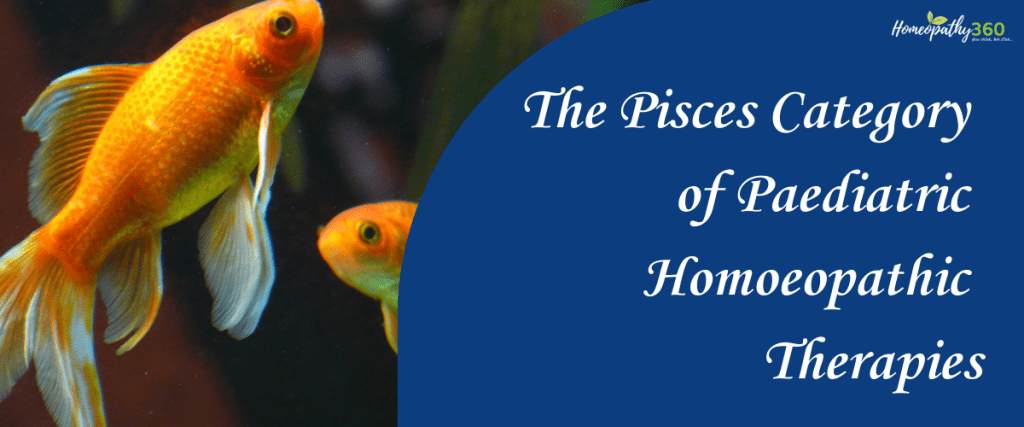
The most fascinating and elegant creature to swim over the boundless sea was the fish, which stands for eternal life. Fish is a good source of vitamins A and D, which are beneficial for children’s brain development. Fish-based remedies, notably in homoeopathy, are frequently used to treat emotional disorders, sensitivity, and developmental problems, particularly in young patients. Fish can represent the need for balance in delicate, impressionable people because they are a sign of profound emotions and the unconscious. Children who may experience problems like hyperactivity, emotional overload, or growth and learning difficulties may benefit from these treatments. An imbalance in growth patterns, emotional processing, or susceptibility to external stimuli is frequently the underlying theme. In homoeopathy, the Fish Group treatments are usually selected based on the child’s constitutional type as well as their emotional and physical symptoms.
Keywords– Fish group, Homoeopathy
Introduction: –Fish belong to the phylum chordate, invertebrate group, and species: Pisces There are a variety of homoeopathic medicines that function on the human body’s physical, mental, and dynamic plane. Homoeopaths believe that the Fish Group is very helpful in healing ailments that impact general health, development, and growth, especially in youngsters. Fish-based therapies frequently address themes of sensitivity, emotional disorders, and developmental problems, all of which are frequently observed in kids with specific health problems2.
There are 3 types of fishes
Cartilaginous: It has strong, horny skin and is composed of a firm yet flexible material.
Bony: composed of a skeleton and covered in horny scales
Lung fish are typically found in freshwater and have both lungs and gills.
Doctrine of signature
The fish swims and dives with ease and grace, causing little turbulence as it darts back and forth, gently fanning its fins and routing its mouth. Fish have incredibly sophisticated sensory organs. The person in need of a fish treatment is highly vigilant and active. When it comes to flavour, fish are a trillion times more sensitive than humans.1, 2
Since fish dwell in cold water, the cures soothe burning sensations similar to those seen in their habitat.
Constitution- The majority of fish group cures’ children exhibit frailty as a result of ageing or overwork; they are slender or flabby, anaemic, and lethargic at work. Fish group medicines make children exceedingly agitated and prone to crying. Climacteric age, music, exposure to cold, thunderstorms, and being wet all affect them.
Fish Group Remedies’ Features and Themes
It is believed that homoeopathic remedies from the Fish Group share a number of common themes that apply to the treatment of children.
In certain clinical diseases like as asthma, constipation, convulsions, climacteric problems, eczema, jaundice, and whooping cough, fish group medicines primarily affect the mind, skin, and stomach.
Irritability: Children react fast to any stimulus and are easily irritated.
Children who are lazy and dislike working
Violent emotional outbursts accompanied by sensory disturbances are indicative of a psychoneurotic disorder. Fish Group therapies may be helpful for kids with behavioural issues including aggression, temper outbursts, or a propensity to retreat socially.
Indifference: Children have a lazy, apathetic demeanour and are always nervous and concerned, worrying about small things.
Developmental delays: Children who have delays in their physical or mental development are frequently treated with homoeopathic remedies from the Fish Group.
Environmental sensitivity: When kids are extremely sensitive to stimuli like light, noise, or emotional stress, a lot of fish cures are recommended. They might respond more strongly to their environment, which could result in irritability, mood fluctuations, and even physical conditions like skin rashes or digestive issuesWashing, cold air and application, touch, music, early mornings, and exercise, warmth, crossed limbs, and fresh air all aggravate children with fish group medicines..
A few instances of homoeopathic fish group cures for kids
Ambra grisea- It is a nosode, or morbid substance, that is believed to be formed in the sperm whale’s gut, expelled, and floating in vast amounts on the ocean. Ambrergris is a fat-like material that is present in sperm whale excrement and intestines. Ambra Grisea is a well-known homoeopathic medicine that causes feelings of self-disgust, shame, and oversensitivity. It is frequently linked to a strong feeling of filth or uncleanliness.
Ambra Grisea has been characterised by Dr. S. R. Phatak as a cure for shyness and social embarrassment. Additionally, it is associated with senility and early ageing. The child’s statement, “I feel like shit,” perfectly captures Ambra’s primary emotion—the urination won’t start when anyone is around. This is a sycotic remedy, where the child believes something is wrong with them and needs to hide it. That is one of the remedy’s general characteristics. A youngster always leaps from one state to another as soon as they are in company. According to Hahnemann, this causes the child to speak excessively and get extremely weary. Infants has fear of people approaching to them, infant cannot bear anyone go near him. Children in school complain of memory problems, inferiority complexes, and poor maths and calculation skills.
Indications- Constipation, Convulsion, Cough, Dyspepsia, Hysteria, Neurosis.
Sepia officinalis: –
Sepia is a marine animal that is a member of the cephalopod family. Cuttlefish are solitary creatures that usually swim alone. When they feel threatened, they defend themselves by releasing ink. The cuttlefish can flee and avoid danger because the ink produces a cloud that can block the predator’s view. Sepia is a member of the sycosyphilitic miasmas. Sepia’s youngster is made to do things that they don’t want to do. A child who finds it difficult to show love and affection may appear close and uninterested on the first visit. A child’s history of dominance can lead to sadness, depression, and obstinacy. As a result of feeling neglected, the child develops feelings of insecurity and indifference, which manifests as anger, irritability, and rudeness. The child also feels too exhausted to play outside due to the rejection of affection
Indications: Constipation, eczema, ringworm, intolerance to milk, persistent appetite loss, and enuresis are typically signs of developmental delay in children.
Asterias rubens– The primary distinction between Sepia and Asteria is that Sepia shuts down and flees from prayers, whereas Asteria cannot respectfully tolerate contradiction. Medicine is made from starfish, which are members of the natural order Radiata and thus exhibit a pathogenetic relationship to Sepia and Murex, which are derived from cuttlefish and purple fish. Compared to Sepia, Asteria youngsters are more sensitive to unpleasant news, continually desire to fight, and are impatient. They also feel as though they are under the control of strangers and are away from home. belonging to miasmas that are sycotic. adapted to a child with a lymphatic constitution and a red face
Indications include apoplexy, constipation, chorea, and epilepsy, which is characterised by an unsteady stride, twitching throughout the body, and slurred speech.
Murex purpurea: – Murex purpurea, often known as purple fish, is derived from a sea snail that inhabits the Mediterranean coast. Similar to sepia, this purple fish secretes Tyrian purple dye, a distinctive substance with a delicate red hue, from its purple gland. Murexine, the active ingredient in murex, is used to treat neurotic affliction because it contains 5-hydroxytryptamine, which has a profound effect on the central nervous system and smooth muscles. It is recommended for youngsters with poor memory, difficulty expressing themselves verbally, severe despair, extreme weakness, hunger, the need to eat, and frequent nighttime urine.
Indications-UTI, and all urinary troubles.
Astacus fluviatilis– More than any other kind, Astacus exemplifies the well-known effects of shellfish and other fish in causing nettle-rash. The river crab, which they utilise in their art, is the best remedy for the symptoms of Rhus, according to the lacquer workers of the East.
Indications– It affects the skin, particularly in cases of erysipelas, nettle rash, and swollen lymphatic glands throughout the body. Children with urticaria, jaundice, and inward chilliness during fever who are extremely sensitive to cold air
How Fish Group Remedies Are Prescribed by Homoeopaths: A homoeopath will closely examine and assess the child’s personality, medical history, and general symptoms. Due to the highly individualised nature of homoeopathy, two children with the same ailment may receive different treatments depending on their unique physical and emotional conditions. To choose the best course of action, a thorough consultation is required, taking into consideration
Physical symptoms: Any physical conditions, including growth delays, skin disorders, or stomach troubles
Emotional state: The child’s level of fear, anxiety, anger, or emotional repression
Constitutional type: A child’s general disposition, sensitivity, and reaction to their surroundings.
Homoeopathic treatments are administered in extremely diluted forms. Liquids or pellets are frequently used as remedies. The chosen treatment is customised to meet the individual needs of the child. The way the youngster reacts to the treatment is closely observed. Over time, the remedy is modified as needed. Frequent follow-up visits guarantee the best possible treatment results.
Advantages and Efficiency of Fish Group Treatments: A child’s emotional equilibrium is restored with homoeopathic treatments. Children’s natural healing processes are supported by remedies. Homoeopathic treatments are non-toxic and extremely diluted. Children can safely use the treatments, and there is little chance of adverse consequences. The focus of homoeopathy is on customised care for every child. The child’s particular condition and constitution are taken into consideration when choosing remedies. Correctly administered treatments enhance behaviour, emotional stability, and physical well-being. Numerous parents attest to the benefits of using homoeopathic treatments. Children’s general health is enhanced by homoeopathic treatments.
Conclusion
Fish Group treatments are a useful way to heal ailments in children. These treatments deal with a child’s emotional and physical well-being. Fish Group treatments support children’s healthy growth, well-being, and equilibrium. To comprehend the mechanisms underlying homoeopathic therapy, more research is required. Fish Group treatments have proven helpful for kids, according to numerous parents and professionals.
These treatments enhance kids’ mental and physical well-being. Finding the ideal treatment requires speaking with a licensed homoeopath. A customised approach to homoeopathic treatment is necessary for every child. A licensed homoeopath can offer tailored advice and assistance.
Co-Author-
Dr. Prasoon Choudhary
HOD, Dept. of Paediatrics, Dr. MPK Homeopathy Medical College And Research Center Jaipur Rajasthan