Abstract
Homoeopathic prescribing is traditionally based on totality of symptoms; however, there are clinical situations where a single characteristic symptom or striking keynote becomes the basis of successful prescription. This approach is known as Single Rubric Prescription. When the symptom is clear, peculiar, uncommon, and characteristic (PQRS), it can directly lead to the similimum. This article explores the concept, philosophy, scope, limitations, and clinical utility of single rubric prescribing, supported by a short clinical illustration.
Keywords
Single rubric prescription, keynote symptoms, PQRS, individualization, homoeopathy
Introduction
Homoeopathy is based on the principle of individualization and similitude. While classical case analysis emphasizes the totality of symptoms, there are instances where a single characteristic symptom stands out so prominently that it alone can guide the physician to the remedy. This concept is recognized by stalwarts like Hahnemann,
Boenninghausen, Kent, and Boger and is widely applied in acute as well as certain chronic cases.
Single rubric prescribing does not contradict classical homoeopathy; rather, it represents refined observation and deep understanding of characteristic symptoms.
Concept of Single Rubric Prescription
Single rubric prescription refers to selecting a remedy based primarily on one striking, characteristic symptom that clearly represents the individuality of the patient and corresponds strongly with the remedy picture.
This is possible when the symptom is:
− Peculiar
− Uncommon
− Characteristic
− Intense
− Clearly expressed
− Reliable and consistent
Such symptoms are known as PQRS symptoms.
Philosophical Basis
1. Hahnemann’s View(1)
In Organon of Medicine Aphorism 153, Hahnemann emphasizes that the most striking, singular, uncommon, and peculiar signs and symptoms must chiefly determine the choice of the remedy.
“The more striking, singular, uncommon and peculiar symptoms… are chiefly and most solely to be kept in view…”
This clearly supports the concept of single rubric prescription.
2. Kent’s Perspective(2)
Kent emphasized the importance of characteristic symptoms and mental generals. According to him, one strong mental or general symptom may
outweigh numerous common particulars and lead directly to the similimum.
3. Boenninghausen’s Contribution(3)
Boenninghausen introduced the concept of complete symptom (Location, Sensation, Modality, Concomitant). When one complete symptom is very intense and characteristic, it can form the sole basis of prescription.
When is Single Rubric Prescription Applicable?
− In acute conditions with clear characteristic symptoms − When keynote symptoms are strongly present
− In cases with clear modalities
− When peculiar mental symptoms are prominent
− When pathology is common but expression is individual − In pediatric cases where expression is limited but behavior is characteristic
Clinical Illustration
Case Summary:
A 28-year-old male presented with bilateral pulsating ear pain radiating to shoulders, worse at night and in cold weather, along with occasional thick yellow discharge, and emotional features such as silent grief and anxiety about future. Examination revealed no swelling but confirmed discharge. Vitals were stable.
Characteristic Symptom:
Pulsating ear pain radiating towards shoulders (PQRS).
Rubric Used:
Ear – Pain – pulsating – extending to shoulders (Kent’s Repertory)

Figure 1: Repertorial chart from complete repertory(4)
Remedy:
Natrum muriaticum was selected mainly on the basis of this single rubric.
Treatment and Follow-up
Natrum muriaticum 30 was prescribed initially, followed by 200 potency in later visits. Marked improvement was noted over successive follow ups.
Outcome Assessment (MYMOP)
MYMOP score(5) showed clinical improvement over time.
Result:
The patient showed complete relief without use of antibiotics.
Conclusion:
This case demonstrates the clinical usefulness of simple rubric prescription in acute conditions, also how one strong characteristic symptom can lead directly to the similimum.
References:
1. Hahnemann S. Organon of Medicine.
2. Kent JT. Repertory.
3. Boericke W. Materia Medica.
4. Van Zandvoort, R. (2020). The Complete Repertory 2020. Zomeo. 5. https://pmc.ncbi.nlm.nih.gov/articles/PMC2350813/
Advantages of Single Rubric Prescription
− Simpler and faster clinical decision-making
− Useful in acute practice
− Prevents over-analysis and confusion
− Strengthens observation skills
− Deepens understanding of Materia Medica
− Enhances confidence in prescribing
Limitations
− Risky if symptom is not truly characteristic
− Requires strong Materia Medica knowledge
− Cannot be applied in vague, unclear cases
− Needs experience and careful case-taking
− Over-reliance may lead to partial prescribing
Hence, this method should be used judiciously.
Discussion
Single rubric prescribing is not a shortcut but an advanced clinical skill. It demands sharp observation, careful listening, and deep understanding of remedy pictures. When applied correctly, it can produce rapid and lasting results. Many successful prescriptions in homoeopathic practice arise from keynote or characteristic symptoms rather than mechanical repertorization.
Conclusion
Single rubric prescription is a valid and valuable method within classical homoeopathy. When the symptom is truly peculiar and characteristic, it can act as a reliable guide to the similimum. This approach reinforces the importance of individualization and highlights the artistic dimension of homoeopathic practice.
Acknowledgment
I express gratitude to my guide Dr. Mukesh P. Khatri sir and my Institution for support.
MYMOP2
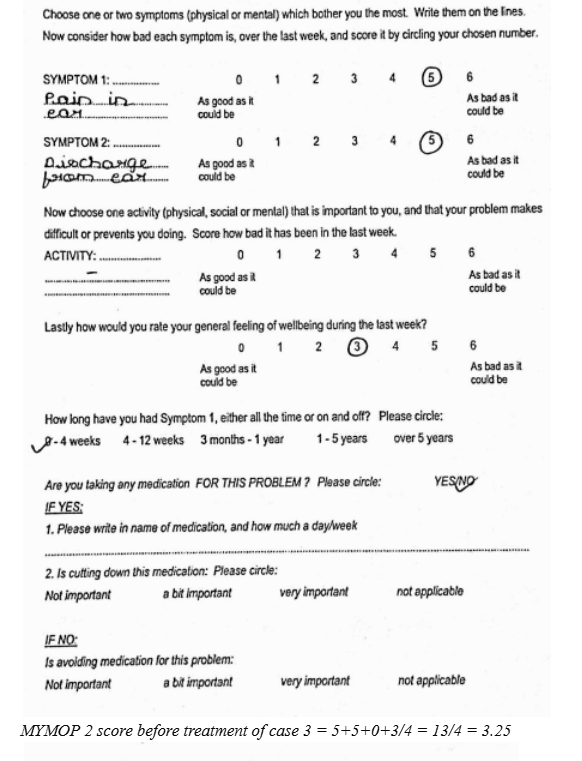
MYMOP 2 score before treatment of case 3 = 5+5+0+3/4 = 13/4 = 3.25
MYMOP 2 score after treatment of case 3 = 1+0+0+1/4 = 2/4 = 0.5
References
− Hahnemann S. Organon of Medicine, 6th Edition. Aphorism 153. − Kent JT. Lectures on Homoeopathic Philosophy.
− Kent JT. Repertory of the Homoeopathic Materia Medica. − Boenninghausen C. The Therapeutic Pocket Book.
− Allen HC. Keynotes and Characteristics of Homoeopathic Remedies.
− Stuart Close. The Genius of Homoeopathy.
− https://pmc.ncbi.nlm.nih.gov/articles/PMC2350813/ − Van Zandvoort, R. (2020). The Complete Repertory 2020. Zomeo.
Guide: Dr. Mukesh P. Khatri
M.D (Hom.) Assosciate Professor in PG Department of Homoeopathic Materia Medica – C. D. Pachchigar College of Homoeopathic Medicine & Hospital, Surat