
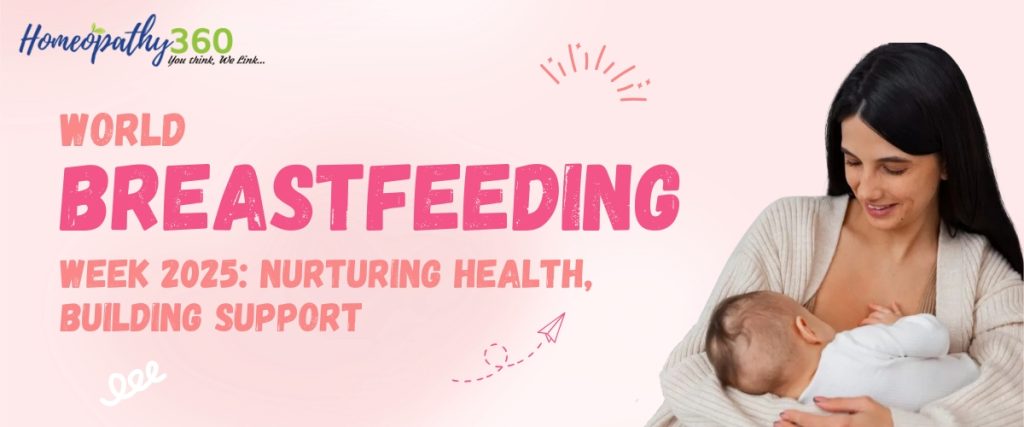
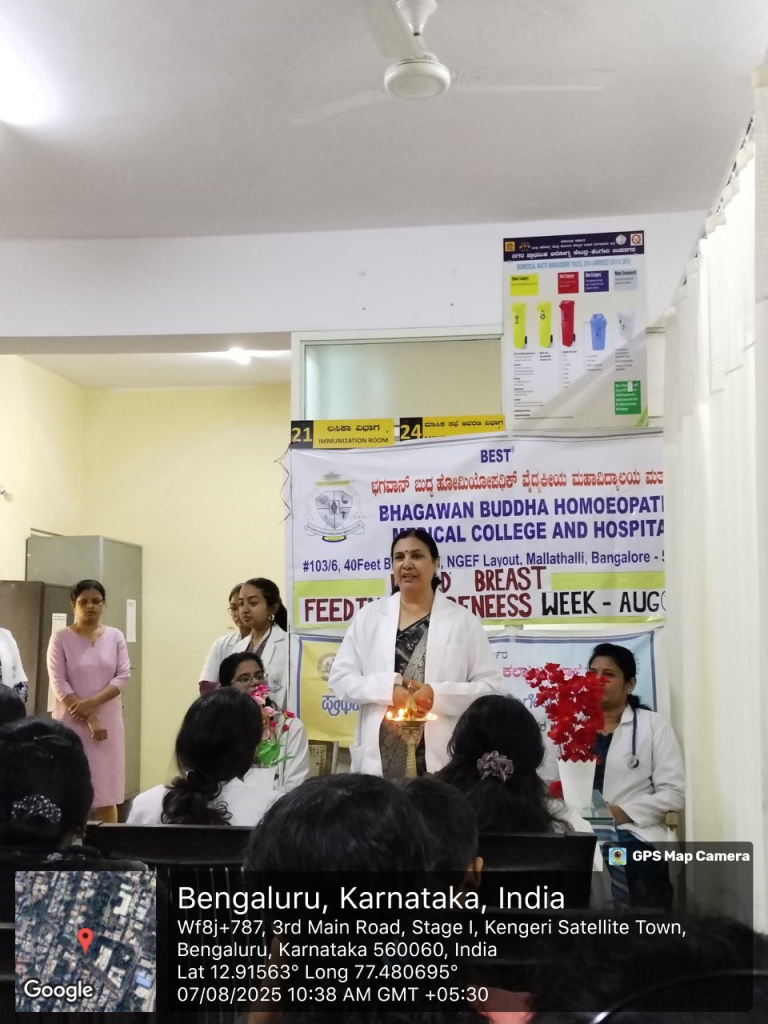
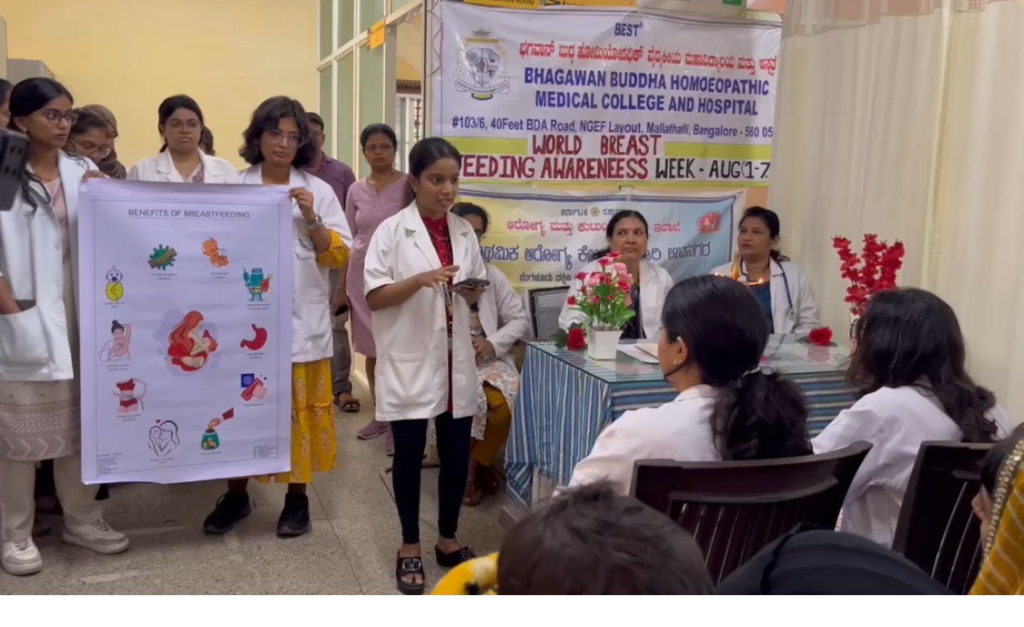
From August 1 to 7, 2025, the world comes together to celebrate World Breastfeeding Week, a global campaign that champions the life-changing benefits of breastfeeding for both mothers and babies. World Breastfeeding Week was launched in 1992 by WABA, WHO, and UNICEF. Today, it’s observed in over 120 countries, reminding us that breastfeeding success depends on the collective responsibility of sustainable support systems—from medical and AYUSH professionals to skilled healthcare workers, family members and employers. This year’s theme, “Invest in Breastfeeding: Invest in future,” calls on communities, workplaces, and healthcare systems to build environments that empower mothers to breastfeed confidently and comfortably. Because breastfeeding is the strongest foundation for lifelong health, development & equity.
Why Breastfeeding Matters
Breastfeeding is more than nourishment—it’s a powerful tool for lifelong health:
- For babies: It supports brain development and protects against infections by boosting the immunity.
- For mothers: It helps in postpartum recovery, strengthens the emotional bonds with the child while feeding and reduces health risks.
But there are certain health conditions which prevent the mother from breast feeding. Homoeopathy can help to a greater extent to overcome these problems.
As we mark World Breastfeeding Week 2025, let’s commit to creating a world where every mother feels supported at home as well as at work, every baby receives optimal nutrition, and breastfeeding is normalized across all spaces—from hospitals to homes, and boardrooms to bus stops by providing hygienic spaces for the same, where no mother will face stigma to breastfeed her baby in public. Because breastfeeding is a right, not a privilege.
Practical Homeopathic Tips for Breast & Nipple Complaints
| Conditions | Remedies | Practical tips |
| Sore/cracked nipples | Graphites – Cracks, sticky fluidCastor equi – Bleeding, radiating pain Phytolacca – Shooting painsBorax – Tender, bleeding nipplesRatanhia– cracks & fissures of nipples, dark, thin, scrawny with haemorrhagic tendency.Sarasaparilla– retraction of nipples, withered & small nipples, suppuration of breasts.Phellandrum– pain & soreness in nipples especially on the right side while feeding, intolerable pain in milk ducts between nursing. Sticking pain through the right breast, sternum extending to back of shoulder. Silicea-inflammation of nipples, darting, burning pain.Sulphur– nipples, sore, ulcerated, drawn in with burning pain. | Calendula ointment locally, correct latching |
| Mastitis | Belladonna – Sudden, hot, throbbingPhytolacca – Hard, tender lumpsBryonia – Hard, stony breastsHepar sulph – Suppuration threatenedConium– inflamed breasts, sensitive to stepping. Stony hardness with lymphadenopathy.Lac can– Mastitis, pain < least jar. Erratic pains. | Frequent emptying, warm compress |
| Agalactorrhoea (Low/No milk secretion) | Urtica urens – Suppressed secretion of milk, stinging with swelling of breast. Ricinus communis – Promotes flow Pulsatilla – Gentle, weepy, scanty milkLac defloratum– increases or restores breast milk in an obese, exhausted woman.Agnus castus– Agalactia with depression & sadness.Galega– increases the quantity & quality of milk in an anaemic woman.Lac can– agalactia and scanty milk without known cause. | Fluids, rest, avoid tight clothing |
| To dry up milk | Lac caninum – Helps drying up the milkUrtica urens – Swelling, suppression Belladonna – Hot, engorged breasts | Supportive bra, avoid stimulation,cool compress |
Practical Homeopathic tips for diseases of children preventing breastfeeding.
| Condition | Remedies | Practical Tips |
| Oral Thrush | Borax – Aphthae bleed easily, pain while nursing Merc sol – Ulcerated patches, profuse saliva Sulphur – Recurrent thrush, red lipsMerc viv– fetid odour, swelling of soft palate, pharynx& tongueNat mur– blisters, inflamed throat, dry tongue | Maintain hygiene, sterilize nipples/pacifiers |
| Cleft Palate / Lip | Causticum – Congenital mucous anomalies Silicea – Aids tissue healing after surgery | Use feeding aids; surgery essential |
| Tongue-tie (Ankyloglossia) | Thuja – For congenital anomaliesCalcarea fluorica – For tight, shortened tissuesBellis p– for tissue healing | Frenotomy often required, supportive remedies |
| Nasal Obstruction | Sambucus – Sudden blockage, suffocation Nux vomica – Blocked nose at night, irritable Kali bich – Thick, stringy mucusLyco– nasal troubles from childhood. Mouth breathing prevents breast feeding. | Clear nose with saline before feeds |
| Weakness/Premature babies | China – Weak from fluid lossPhosphorus – Pale, weak, thin infants.Calcarea phos – Poor development, weak muscle | |
| CNS Disorders | Opium – Asphyxia, drowsy, poor reflexes Helleborus – Brain injury, sequelae Cicuta – Convulsions, poor feeding | Multidisciplinary care required with homoeopathic support. |
References:
- Boericke Willium, New manual of Homoeopathic Materia Medica & Repertory, Augmented Edition. Indian books & periodicals publishers New Delhi, December 2015,376,700,831.
- Clarke J.H. A dictionary of practical Materia Medica (Vol 1,2,3), B. Jain Publishers.
- S.R. Phatak, A concise repertory of Homoeopathic Medicines, IV Edition, Uttar Pradesh: B. Jain Publishers(p) Ltd; 2005. pp -351
- https://www.who.int/campaigns/world-breastfeeding-week/2025
Dr. Anupama Deshmukh,
Professor and Head of the Department, Department of Community Medicine,
Bhagawan Buddha Homoeopathic Medical College and Hospital, Bangalore.
Affiliated to Rajiv Gandhi University of Health Sciences, Bangalore