Uncommon Yet Powerful : Exploring Rare Remedies In Hemorrhoids Care
Abstract:
Hemorrhoids are a common condition that is often under reported because of embarrassment, yet they can significantly affect daily life and comfort. Conventional treatment usually involves creams, lifestyle changes, or surgery, but homeopathy offers an individualized approach that addresses both the symptoms and the patient’s underlying constitutional tendencies. Rare homeopathic remedies are especially useful in cases where commonly used medicines do not match the patient’s unique symptom pattern. This article looks at hemorrhoids from both modern medical and homeopathic perspectives, focusing on rare remedies that provide new therapeutic possibilities. Each remedy is described with its key indications, making the information practical for clinical use. The goal is to provide clinicians with additional, effective homeopathic tools to improve patient care in challenging hemorrhoid cases.
Key Words : Hemorrhoids, homeopathy, rare remedies, rectal bleeding, constipation, venous congestion, painful defecation
Introduction :
Hemorrhoids defined as pathological enlargement, inflammation or prolapse of the normal vascular cushions of the anal canal. Approximately 40.7 million Indians suffer from hemorrhoids, mostly adults aged 21-50. Risk is higher in women during pregnancy and in rural or higher socio-economic groups. Modern medicines offer symptomatic relief through dietary measures, local applications, minimally invasive procedures and surgery, however many patients continue to experience recurrent symptoms, chronic discomfort or incomplete resolution.
Homeopathy view hemorrhoids not simply as local vascular problem but as an expression of deeper constitutional tendencies like venous congestion, faulty digestion, emotional stress, sedentary habits or weakened connective tissues. The lesser used medicines often match subtle details such as exact pain sensations, unique modalities, associated symptoms or emotional concomitants which are frequently missed in routine prescribing. Their inclusion not only expands the clinician’s remedy spectrum but also reinforces the fundamental homeopathic principle “The remedy must match the man, not merely the disease.”
Common Causes :
- Chronic constipation
- Sedentary lifestyle
- Prolong sitting
- Low fiber diet
- Pregnancy
- Excessive intake of spicy food
Types :
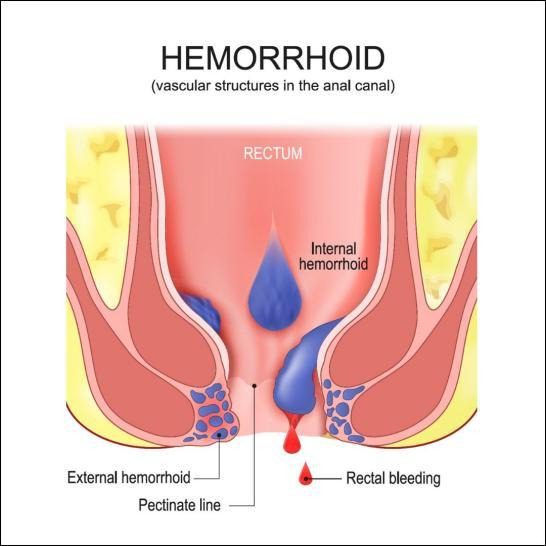
- Internal – Above dentate line, usually painless due to poor nerve supply. Presents with bright red bleeding, mucus discharge, or prolapse.
- External – Below dentate line, richly innervated. Presents as painful swelling, bluish lumps, itching, and discomfort.
Clinical features :
- The most common presentation is painless bright red bleeding during or after defecation
- Patient may experience mucus discharge, anal itching and feeling of incomplete evacuation.
- Pain or discomfort while sitting
- Secondary infection, edema, or ulceration may worsen symptoms in advanced cases.
- Prolpase seen at later stage
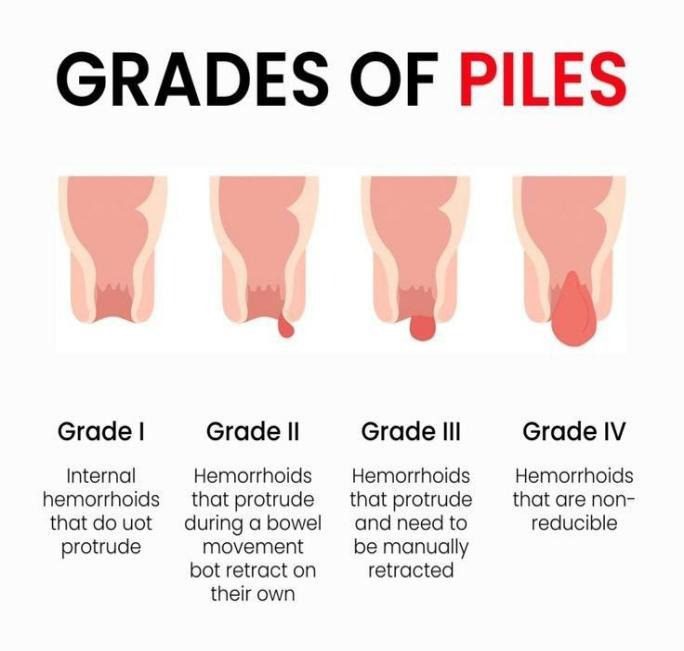
Classification – hemorrhoids classified into 4 categories as following
- 1st Degree: Bulge into the anal canal but do not prolapse outside.
- 2nd Degree: Prolapse during straining but go back inside on their own.
- 3rd Degree: Prolapse during stool and need manual pushing to go back.
- 4th Degree: Permanently prolapsed, cannot be pushed back; may thrombose or ulcerate
Complications :
- Profuse hemorrhage
- Strangulation
- Thrombosis
Investigation and diagnosis:
- History – bright red painless bleeding, prolapse, mucus discharge, constipation
- Examination
- Inspection – prolapse, skin tags
- Digital rectal examination – usually normal. Rules out mass or fissure
- Proctoscopy – most important. Confirms internal piles and their grade.
- Basic investigations
- CBC (anemia)
- RBS
- Coagulation profile
- Sigmoidoscopy or colonoscopy if needed – to rule out polyps, IBD, cancer
Management
- Conservative
- High-fiber diet: Fruits, vegetables, whole grains to soften stool and reduce straining
- Adequate fluids: At least 2–3 liters/day to prevent constipation
- Avoid irritants: Spicy food, alcohol, caffeine, and excessive processed foods
- Regular exercise: Walking or mild aerobic activity to improve bowel function
- Avoid prolonged sitting or standing
- Sitz baths with herbal additives: Hamamelis, Calendula for soothing effect10–15 min, 2–3 times daily to relieve pain and itching
- Avoid straining during defecation
- Cold packs for acute thrombosed hemorrhoids to reduce swelling
- Non operative procedures
- Rubber band ligation
- Sclerotherapy
- Infrared coagulation
- Cryotherapy
- Operative procedures
- Open hemorrhoidectomy
- Closed hemorrhoidectomy
- Laser hemorrhoidoplasty
- Stapled hemorrhoidopexy
Homeopathic management with rare remedies
Rare homeopathic remedies play an important role in clinical practice because they help treat patients whose symptoms do not fully match commonly used medicines. They are especially useful in chronic, recurrent, atypical, or difficult cases, allowing treatment to be individualized according to the patient’s unique physical, mental, and emotional signs. Rare remedies also expand the clinician’s therapeutic options and provide flexibility in managing complex or unusual cases. In addition, studying and applying these remedies enhances knowledge of clinical materia medica, deepens understanding of peculiar and characteristic symptoms, and strengthens skills in precise remedy selection. Overall, rare remedies not only improve patient outcomes but also help homeopaths refine their clinical reasoning and ability to manage challenging cases effectively.
- Aesculus glabra : it has marked action on rectum. Produce hard knotty stool, very painful. “Dark purple hemorrhoids + backache + vertigo.” Hemorrhoids with constipation. Speech thick, tickling in throat.
- Abrotanum : remedy for alternating conditions, one disease disappear and another appears. “Diarrhoea ↔️ Rheumatism ↔️ Hemorrhoids.” Frequent urging for stool. Bloody stool.
- Petroselinum : Hemorrhoids associated with urinary complaints such as sudden irresistble desire to urinate, itching deep in urethra. “Itchy hemorrhoids + urethral tingling.” Burning, tingling from perineum throughout whole urethra.
- Merc Iod Ruber : pain in anus as if piles would appear. “Inveterate piles + tenesmus not relived.” Copious yellow brown stool with mucus and slighlty bloody. Preceded by colic, urging and tenesmus remained.
- Hamamelis : hemorrhoids after confinement. Blood dark profuse with soreness in rectum, great weakness after bleeding. It acts on coats of vein causing relaxation with consequent engorgement associated with 3rd degree hemorrhoids. “Profusely bleeding hemorrhoids + soreness.”
- Ficus indica : try this remedy when mucuna fails. It possesses great anti hemorrhagic properties. Blood is pure red. Successfully arrests hemorrhage from piles.
- Hypericum : Dr. Roehrig, germany, said that hypericum was the greatest of all pile remedies. Applied externally it gives quick relief and taken internally it cures. “Extremely painful external piles”
- Carbo veg : hemorrhoids, excoriation of the anus. Bluish, burning piles. Pain after stool. White hemorrhoids + fluent discharge.
- Leptandra : external piles with prolapse of rectum. Constipation, hard, black stools followed by mushy portion. Piles from hepatic derangement, frequently bleeding piles. Gallstones + piles + prolapse
- Lilum tig : “hemorrhoids after delivery +constant urging for stool + better by urination.” sore to touch, itching. Bearing down at stool as if all would protrude through vagina.
- Sedum acre : plant has irritant, hemostatic and anti inflammatory properties. Medicines for hemorrhoidal pain of constricting type < few hrs after stool.
- Mucuna urens : burning smarting pain in rectum. Blind painful hemorrhoids. Hemorrhoids with pelvic congestion. “Specific remedy for hemorhhoidal diathesis.”
- Negundo : it is claimed that the tincutre or the 1x of negundo, taken internally will give quick relief in cases of painfully engorged piles.
- Lycopus virginicus : Dr. Proell said that lycopus v in the 1st decimal potency, has the peculiar power to bring back hemorrhoidal fluxes that have been suppressed or suddenly ceased even for years. Bleeding from rectum.
- Polygonum : interior of anus studded with itching eminences, as from corrugation without contraction, a kind of hemorrhoidal tumor. Hemorrhoids with itching and burning. Pruritus ani. Copious stool followed by smarting in anus. Painful engorged veins, varicosis, hemorrhoids, rectal pockets.
Repertory rubrics :
- Rectum – hemorrhoids – alcohol abuse in, sedentary persons agg : aesc g, nux v
- Rectum – hemorrhoids – vertigo, in : aesc g, coll, graph
- Rectum – hemorrhoids – hemorrhaging, bleeding – as soon as rheumatism is better : ABROT
- Mind – fear – stool, involuntary of – with hemorrhoids : ozon
- Mouth – aphtahe – hemorrhoids with : semp
- Rectum – hemorrhoids – salivation amel : brom
- Rectum – hemorrhoids – fissure like : SED A
- Rectum – hemorrhoids – itching – delivery, parturition, after : LIL T
- Rectum – hemorrhoids – recurrent : crot h, Grat
- Rectum – hemorrhoids – white : carb v
- Respiration – asthmatic – hemorrhoids with : agar, arg n, JUNC, kali bi, nux v , SULPH
- Dreams – hemorrhoids : cadm
Conclusion :
Rare homeopathic remedies provide a powerful approach to hemorrhoidal care, particularly in patients with chronic, recurrent, or resistant symptoms. Remedies such as Aesculus glabra, Abrotanum, Ficus indica, and Polygonum demonstrate targeted efficacy for specific symptom patterns, including pain, bleeding, prolapse, and nerve involvement.Their use enhances patient satisfaction, reduces recurrence, and fosters a nuanced understanding of complex cases. Ultimately, rare remedies exemplify the core homeopathic philosophy of treating the patient, not just the disease.
References :
1. Bhat S. SRB Manual of Surgery. 7th ed. New Delhi: Jaypee Brothers; 2023.
2. Das S. A Concise Textbook of Surgery. 11th ed. Kolkata: S. Das; 2020.
3. Lilienthal S. Homoeopathic Therapeutics. 2nd rev & enl. ed. New York: Boericke & Tafel; 1879. (Reprint 2005 by B. Jain Publishers)
4. Anshutz EP. New, Old and Forgotten Remedies. 2nd ed. Philadelphia: Boericke & Tafel; 1917. (Indian reprint 2002, B. Jain Publishers)
5. Boericke W. Pocket Manual of Homoeopathic Materia Medica. New Delhi: B. Jain Publishers; 2002.
6. Phatak SR. Materia Medica of Homoeopathic Medicines. New Delhi: B. Jain Publishers; 1999.
7. Clarke JH. A Dictionary of Practical Materia Medica. 5th ed. New Delhi: B. Jain Publishers; 2006.
8. Van Zandvoort R. Complete Repertory. 4th ed. Haarlem: Institute for Research in Homeopathic Information and Practices; 2000.
9. Schroyens F. Synthesis: Repertorium Homoeopathicum Syntheticum. 9th ed. New Delhi: B. Jain Publishers; 2004.
About the Authors
Dr. Astha Soni1, Dr. Muskaan Bellani2, Dr. Nidhi Dandwani3
1(PG Scholar) Department of Homeopathic Materia Medica, Anand Homeopathic Medical College and Research Institute
2(PG Scholar) Department of Homeopathic Repertory and Case taking, Anand Homeopathic Medical College and Research Institute
3(PG Scholar) Department of Homeopathic Materia Medica, Anand Homeopathic Medical College and Research Institute