From the hum of a bee to the iridescent wings of a dragonfly, insects embody one of evolution’s greatest success stories. With over a million known species, they dominate nearly every ecological niche on Earth, surviving in desert sands, tropical forests, and even our homes. Beneath their delicate exoskeletons lies a remarkable story of adaptation, metamorphosis, and raw instinct; a story that homeopathy captures with uncanny precision.
In the materia medica, insect remedies reflect the same primal forces that govern their biological existence: rapid response, relentless activity, and the perpetual urge to evolve. Whether biting, stinging, secreting, or transforming, the insect’s survival blueprint mirrors the human experience of intensity: the mind in overdrive, the body in defence, the psyche yearning to change.
1. The Evolutionary Blueprint of Insects
Insects belong to the Kingdom Animalia, Phylum Arthropoda, Class Insecta: the most diverse class in biology. They are defined by segmentation (head, thorax, abdomen), six legs, compound eyes, and often, wings. Their exoskeleton offers both armour and limitation: protection from the outside world, but also a constant need to moult and renew.
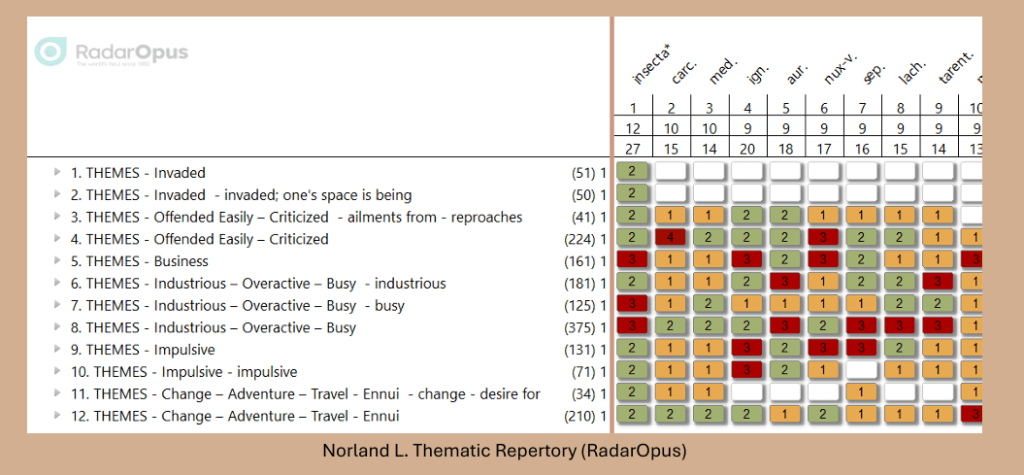
This evolutionary paradox – vulnerability encased in strength – translates beautifully into homeopathic themes. Insect patients, like their biological counterparts, live in states of defence and reactivity. The nervous system is fast, the reactions immediate. Every stimulus: sound, light, touch – is felt deeply, producing acute irritability or panic.
Just as insects undergo metamorphosis, egg to larva to pupa to adult, human beings in an insect state often describe needing a total transformation. They don’t merely want change; they crave rebirth.
Core Evolutionary Keynotes:
- Survival through sensitivity – hypersensitivity to external stimuli
- Rapid reaction and movement – restlessness, industriousness
- Metamorphosis – deep identity change and psychological rebirth
2. The Psychology of the Hive and the Solitary
Insects are either social (ants, bees) or solitary (beetles, wasps). These biological distinctions are
mirrored in their mental landscapes.
• Social insects live by strict hierarchy and purpose. The Apis or Formica individual thrives on structure but suffers deeply when excluded or ignored. Alienation from the “colony” evokes anxiety, jealousy, or loss of identity.
• Solitary insects, like Cantharis or Coccus cacti, represent a more self-centred survival: intense, reactive, and sometimes destructive when cornered.
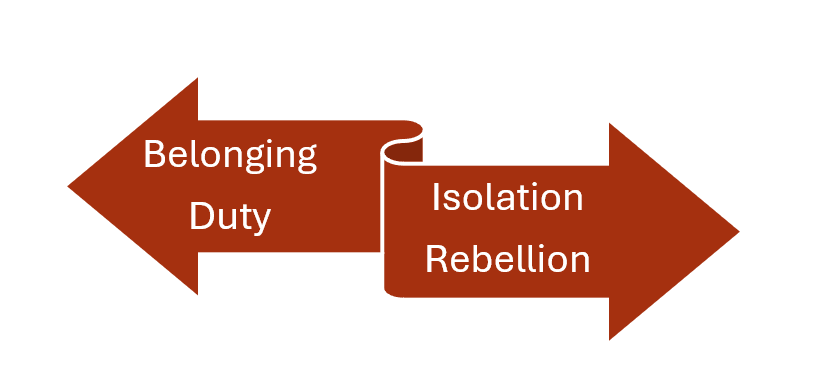
The insect psyche thus oscillates between belonging and isolation, duty and rebellion, an
evolutionary echo of the struggle between instinct and individuality.
3. Reproduction, Defence, and the Urge to Transform
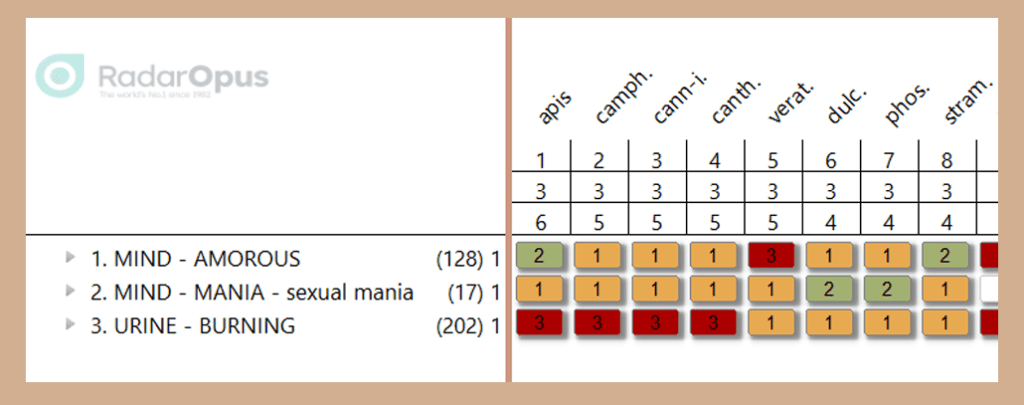
Insects reproduce prolifically, often with fierce competition for mates and resources. Sexuality in this realm is not tender or romantic – it is instinctual and consuming. In Cantharis vesicatoria, the fiery beetle secreting cantharidin, we find the same burning passion and aggression reflected in its physical pathologies: burning urinary pain, inflammation, and sexual mania.
Defensive strategies are also central. Stings, venom, and secretions parallel emotional self-protection in human states – irritability, rage, and hypersensitivity.
Vespa attacks when threatened; Formica burns with formic acid; Coccus cacti defends through secretion. In homeopathy, these defences appear as
reactive anger, fear of invasion, or allergic overresponse.
Each remedy thus reflects an evolutionary purpose: to protect, to survive, and ultimately, to evolve.
4. Key Species and Their Human Archetypes
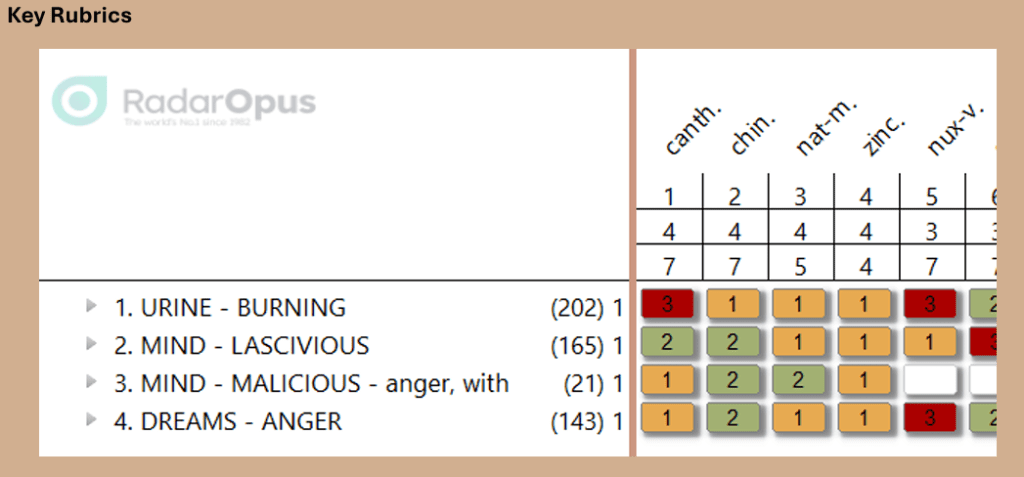
Cantharis vesicatoria – The Burning Beetle
Biological Paradox: Beauty and danger combined. The Spanish fly secretes blistering cantharidin when threatened.
Human Reflection: The Cantharis state burns with desire, anger, and inflammation. Every sensation is too intense, the mind consumed by passion or pain.
Themes: Burning, sexual frenzy, destructive inflammation
Formica rufa – The Ant at Work
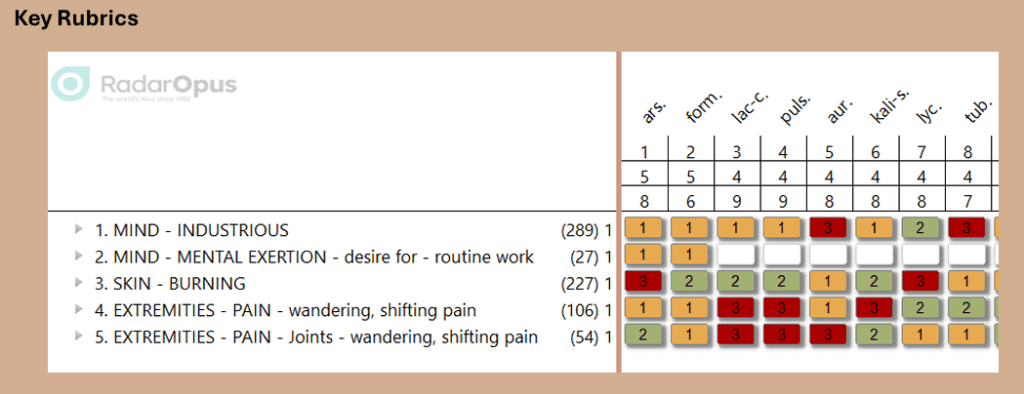
Biological Paradox: A tireless worker devoted to the colony, yet quick to bite when disturbed.
Human Reflection: The Formica individual is industrious, restless, and easily irritated “I can’t stop working, but everything annoys me.”
Themes: Duty, overwork, irritation, environmental reactivity
Coccus cacti – The Defensive Parasite
Biological Paradox: A small insect extracting life from cactus sap, producing deep crimson dye.
Human Reflection: The Coccus patient feels invaded, choking, suffocating under pressure. Their body and mind secrete defensively – mucus, emotion, tears.
Themes: Choking, constriction, reactivity, survival under pressure
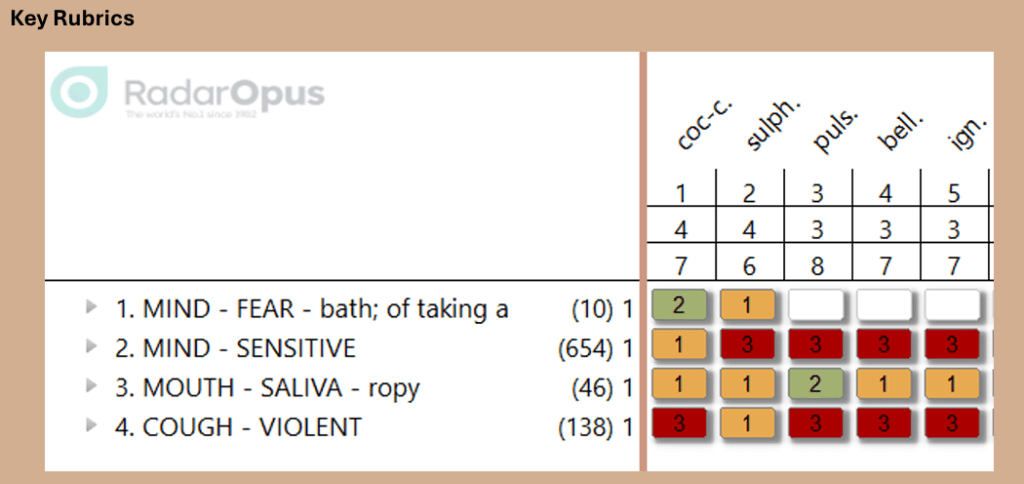
5. The Insect Signature in Clinical Practice
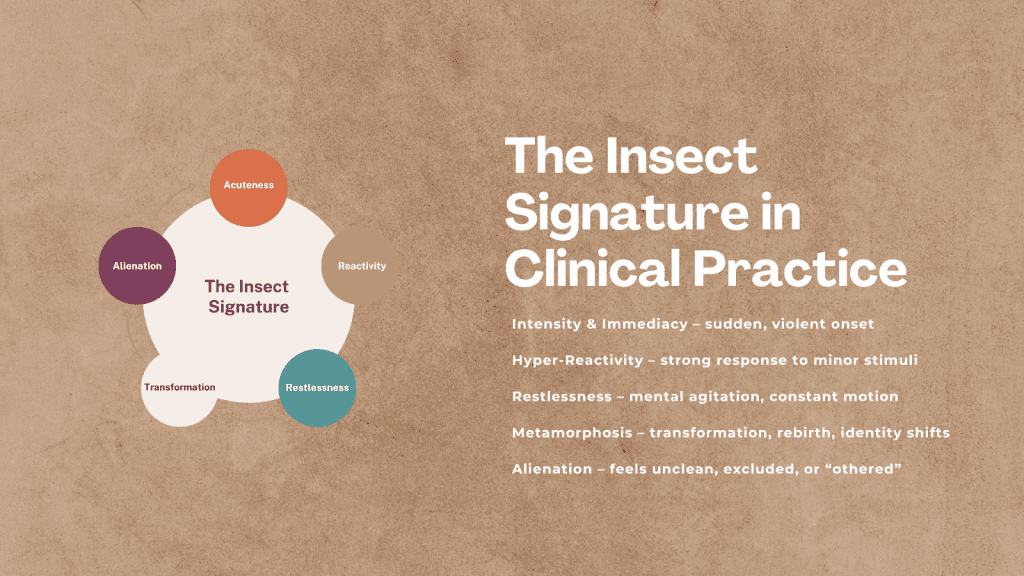
Insect remedies speak the language of intensity and immediacy. Symptoms appear suddenly and violently – just as an insect reacts without hesitation.
When analysing a case, look for:
- Acuteness – rapid onset and peak intensity
- Reactivity – physical or emotional response to slightest stimulus
- Restlessness – physical movement, mental agitation
- Transformation – metaphors of change, metamorphosis, rebirth
- Alienation – feeling unclean, outcast, or “different”
These themes map the insect’s journey from survival instinct to transformation impulse and allow us to locate the correct remedy within this vibrant sub-kingdom.
6. The Deeper Meaning: Metamorphosis of the Human Psyche
Insects do not merely change – they become something else entirely. Their metamorphosis is total, dissolving the old self before forming the new. This process mirrors the psychological rebirth many patients describe in deep homeopathic healing: shedding old defences, identities, and patterns of reaction.
The insect remedies remind us – that transformation often requires intensity – the burning of the old before the emergence of the new.
“The firefly’s glow – brief as a spark; but enough.”
Matsuo Bashō
So too, the insect patient lives in moments of urgency: restless, reactive, and driven toward transformation.
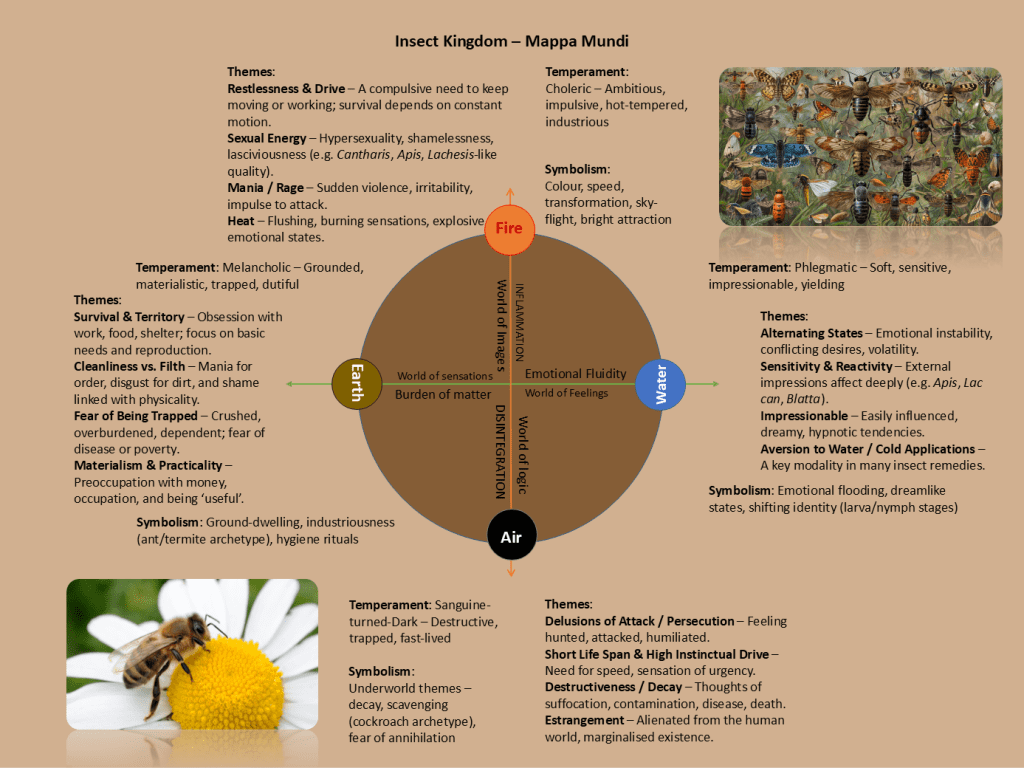
The insect kingdom in homeopathy bridges biology and psyche – a living metaphor for survival, defence, and evolution. From the hive’s discipline to the beetle’s fire, these remedies illuminate the primal forces that drive both insects and humans: the need to protect, to adapt, and ultimately, to transform.
Through remedies like Cantharis, Formica, and Coccus cacti, we glimpse the secret life within, the part of us that still reacts like the insect: fierce, fragile, and endlessly striving for metamorphosis.
Bibliography
- Fraser, P. (2010). Insects Escaping The Earth – Transformation between The Realms. Kent: Winter Press.
- Sankaran, R. (2023). Schema 2.0. Mumbai: Homoeopathic Medical Publishers.
- Boger, C. (2019). A Synoptic Key of the Materia Medica. Noida: B. Jain Publishers.
- Lee, A. (2016). Homeopathic Mind Maps (8 ed., Vol. 2). Auckland, New Zealand: Moozoonsii.
- Norland, L. (2021). Animalia A synthesis of Homepathic Themes, Mappa Mundi, Proving & Clinical Cases. Glasgow: Scotland.
- Sankaran, R. (2005). Sankaran’s Schema. Mumbai: Homoeopathic Medical Publishers.
- Diagrams and Mappa Mundi made by Naila Cheema