Abstract
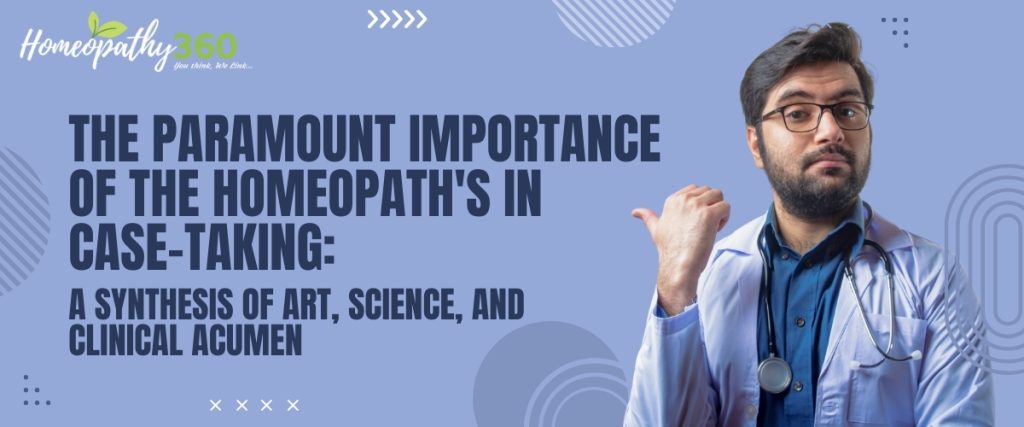
Homeopathy is a therapeutic system fundamentally predicated on the principle of individualization. While the patient’s verbal narrative is crucial, the objective and subjective observations made by the homeopath during the case-taking process constitute an indispensable layer of information. These observations encompassing the patient’s demeanor, psychomotor activity, emotional expressions, and physical peculiarities—provide a non-verbal, unfiltered window into the patient’s state of vital force. This paper argues that the homeopath’s keen observational skills are not merely ancillary but are central to accurate remedy selection, often revealing the essence of a case that words may obscure or contradict. It synthesizes the classical teachings of Hahnemann with modern research, including studies from the Central Council for Research in Homoeopathy (CCRH), and discusses the neurobiological and psychological basis for the primacy of non-verbal cues in communication. The conclusion affirms that the art of observation, when rigorously applied, elevates homeopathic practice from a mechanical repertorization exercise to a profound holistic encounter, ensuring deeper fidelity to the tenets of individualized medicine.
Introduction
The case-taking interview is the cornerstone of homeopathic practice. Samuel Hahnemann, in the *Organon of Medicine*, meticulously detailed the process of gathering the totality of symptoms, which he described as the “only conceivable portrait of the disease.”¹ While much emphasis is rightly placed on the patient’s subjective report, Hahnemann consistently underscored the practitioner’s duty to be an active, perceptive observer. In Aphorism 84, he instructs the physician to “note down the accurate picture of the disease” by listening but also by “observing precisely what is to be seen in the patient.”¹ This dual-channel approach-integrating the heard (subjective) and the seen (objective) is what allows for the discernment of the characteristic symptoms that point unerringly to the simillimum.
In an era increasingly dominated by technology and algorithmic thinking, the human skill of observation risks being undervalued. However, contemporary research in fields like psychology, neurology, and even artificial intelligence confirms that non-verbal communication often carries more weight and authenticity than verbal content. This paper will explore the multifaceted importance of the homeopath’s observations through several lenses: 1) The Classical Foundation, 2) Categories of Key Observational Data, 3) The Bridge to Modern Psychology and Neurology, 4) Evidence from Contemporary Homeopathic Research, and 5) Clinical Implications and the Mitigation of Error.
1. The Classical Foundation: Hahnemann’s Emphasis on Observation
Hahnemann’s writings are replete with instructions that mandate acute observation. He did not view the physician as a passive scribe but as an active investigator.
- Aphorism 86:
He lists elements that must be ascertained, including “the patient’s discernible body constitution,” “moral character,” “occupation,” “mode of living,” and “civic relationships.”¹ These are not solely obtained by questioning but by astute observation of the patient’s dress, grooming, body language, and interaction with companions.
- Aphorism 91:
Hahnemann warns against the distortion of the case by the physician’s leading questions. Observation acts as a corrective tool. A patient may *say* they are “fine,” but the physician *observes* a trembling hand, a downcast gaze, or a sigh punctuating their speech. This discrepancy between verbal and non-verbal communication is often where the most valuable symptoms reside.
- The Concept of Gestalt:
While not using the term, Hahnemann advocated for grasping the “gestalt” or the whole picture of the patient. This is an observational synthesis-how the parts (individual symptoms) come together to form a coherent whole that is unique to that individual. The irritable, hurried, precise businessman (Argentum Nitricum) presents a different observable gestalt from the sluggish, tearful, consolation-seeking individual (Pulsatilla).
The masters who followed Hahnemann, like James Tyler Kent, further refined this. Kent’s emphasis on the “mental generals” and “particulars” often relied heavily on the physician’s interpretation of the patient’s behavior and expressions observed during the consultation.²
2. Categories of Key Observational Data in Case-Taking
The homeopath’s observations can be systematically categorized to ensure thoroughness.
- Physical Appearance and Constitution:
Body build (stocky like Calcarea, slender like Silicea), hair texture, skin quality (waxy in Kali-bich, dirty-looking in Psorinum), posture (stooped in Argentum nitricum, rigid in Nux vomica), and notable physical landmarks (e.g., a geographic tongue suggesting Sulphur or Arsenicum album).
- Psychomotor Activity:
This is a rich source of information. The level of activity (restless Rhus toxicodendron vs. sluggish Carbon vegetabilis), pace of movement (hurried Argentum nitricum vs. slow Alumina), and specific gestures (hand-wringing in Lycopodium, picking at bedclothes in Arsenicum album) are all critical data points.
- Facial Expression and Affect:
The eyes are often called the window to the soul for good reason. The fearful, staring eyes of Aconite; the sad, weeping eyes of Pulsatilla; the angry, defiant gaze of Nux vomica; and the vacant, far-away look of Phosphorus are classic observational cues. The overall effect-whether anxious, depressed, apathetic, or euphoric-must be noted.
- Paralinguistics:
This refers to how something is said rather than what is said. The tone of voice (monotone in Gelsemium, whining in Cina), the rate of speech (rapid-fire in Lachesis, slow and difficult in Alumina), the volume (loud Belladonna, weak Phosphoric acid), and the presence of sighs (Ignatia) are all paramount.
- Interaction with the Environment:
How does the patient enter the clinic? Do they come alone or cling to a companion (Pulsatilla, Silicea)? How do they interact with family members in the waiting room? Are they tidy and precise, or do they leave a mess? These real-world behaviors are often more revealing than answers to direct questions.
- Reaction to the Homeopath:
The transference and countertransference within the consultation room are powerful observational tools. Does the patient seek excessive reassurance? Are they defiant and argumentative? Do they seem guarded or openly trusting? The homeopath’s own emotional response (feeling bored, irritated, sympathetic, or overwhelmed) can be a valuable, though subjective, observational tool regarding the patient’s vital force.³
3. The Bridge to Modern Psychology and Neurology
The homeopathic emphasis on observation is strongly validated by modern science. Research into human communication consistently shows that a significant majority of emotional meaning is derived from non-verbal cues.
Albert Mehrabian’s seminal, though often misrepresented, work found that in communicating feelings and attitudes, 55% of the message is conveyed through facial expressions and body language, 38% through paralinguistics (tone of voice), and only 7% through the actual words spoken.⁴ While these specific percentages are context-dependent, the underlying principle is robust: non-verbal channels are primary in emotional communication.
Neurologically, humans are hardwired to read these cues. Mirror neurons, discovered in the prefrontal cortex, fire not only when we perform an action but also when we observe the same action performed by another.⁵ This neural mechanism is the basis for empathy and intuition-allowing the homeopath to literally “feel” the patient’s state on a neurological level. The observation of a patient’s pain or anxiety can trigger a resonant response in the practitioner’s brain, providing a deep, intuitive understanding that transcends words.
This scientific backing reframes the homeopath’s observational skill from a vague “art” to a neurologically-grounded clinical competence. It is the disciplined application of innate human abilities to gather diagnostic data.
4. Evidence from Contemporary Homeopathic Research
While the “gold standard” of randomized controlled trials (RCTs) is ill-suited to capture the nuances of individualized observation, several research avenues within homeopathy affirm its importance.
- Central Council for Research in Homoeopathy (CCRH) Studies:
The CCRH in India has published numerous case reports and series that highlight the role of peculiar, observable symptoms. Their methodology for “Verification of Symptoms” often includes the physician’s objective findings. A 2024 case series published in the Indian Journal of Research in Homoeopathy on managing anxiety disorders meticulously documented observable signs like “restlessness,” “inability to sit still,” and “trembling of hands,” which were pivotal in differentiating remedies like Argentum nitricum, Gelsemium, and Silicea.⁶
- Clinical Verification and Pathogenetic Trials:
Modern pathogenetic trials (provings) increasingly use structured tools to document the objective symptoms experienced by provers. These include video recordings and independent observer reports, which capture the behavioral and physical changes (observable data) induced by the homeopathic substance.⁷ This enriches the materia medica with reliable, observable symptoms.
- Qualitative Research and Phenomenology:
Qualitative research designs, which are gaining traction in complementary medicine, are perfectly suited to study the case-taking process. Studies using video analysis of homeopathic consultations have begun to codify and analyze the non-verbal interactions between patient and practitioner, seeking to identify patterns that lead to successful outcomes.⁸
- The Rise of Telemedicine:
The shift to remote consultations during the COVID-19 pandemic presented a challenge to traditional observation. However, it also proved its importance. Homeopaths reported difficulties in perceiving the full energy of a patient, their handshake, their posture, and their complete presence through a screen, often feeling this led to a less complete case picture.⁹ This experiential report underscores how much practitioners rely on in-person observational data.
5. The Observational Basis of Advanced Materia Medica: Nosodes, Sarcodes, and Imponderabilia
The practice of homeopathy has evolved significantly since Hahnemann’s time, with the materia medica expanding to include potentized preparations from disease products (nosodes), healthy tissues (sarcodes), and energy sources (imponderabilia). The prescription of these advanced remedies is almost entirely dependent on the homeopath’s ability to observe and synthesize complex mental-emotional and physical patterns, as their proving symptoms are often less extensive but highly characteristic.
5.1. Nosodes and the Observation of Miasmic Patterns:
Nosodes require the observer to perceive the deep, inherited or acquired disease tendencies shaping the patient’s presentation.
- Medorrhinum: The observation of a frenetic, hurried energy in a child with ADHD-constant fidgeting, rapid speech, impatience, coupled with a paradoxical fear of the dark and a strong amelioration at the seashore-points to this nosode. This links the observable behavior to a underlying sycotic miasmic influence.<sup>1,15</sup>
- Syphilinum: The observation of hopelessness, self-destructive behavior, and an obsessive compulsion for cleanliness (e.g., repetitive hand-washing) in a patient with destructive physical pathology like ulcerations or neurological decay provides the key indication. The mental state reveals the syphilitic miasm’s destructive force.<sup>1,16</sup>
- Tuberculinum: The observation of a profound restlessness and wanderlust, where a child becomes intensely bored and destructive with toys and craves constant change and travel, indicates this nosode. This is often paired with the physical constitution of a thin, narrow-chested child prone to recurrent respiratory infections.<sup>1,17</sup>
- Carcinosin: The observation of a perfectionist drive with a fear of failure, a strong sense of duty leading to exhaustion, and paradoxical cravings for dance, thunderstorms, and the sea builds the picture. This is often confirmed by physical markers like numerous moles or a strong family history of cancer.<sup>1,18</sup>
- Malandrium: The observation in children with developmental delay and handling genitals, especially child who is constantly handling his penis, knock-knee conditions, affected the lower half of the body, greasy skin and greasy eruption looking pustular eruptions. This is often confirmed by physical symptoms of slow pustulation, never ending, as one heals another appears, along with impetigo, ecthyma, fat, dullness in children (Bufo-like children) chronic eczema post vaccination.<sup>19, 20</sup>
5.2. Sarcodes and Observing Organ-Mind Relationships:
Sarcodes, derived from healthy organs, often present mental symptoms that mirror the organ’s symbolic or physiological function.
- Thyroidinum: The observation swings between two poles: the hyper-anxious, hurried, hot, and trembling state (hyperthyroid) and the sluggish, dull, cold, and depressed state (hypothyroid). The remedy is indicated when the mental state and the physical thyroid pathology are inextricably linked.<sup>21,22</sup>
- Ovarium: The observation of irritability, indifference to family, and feeling overwhelmed that is directly and severely exacerbated in the pre-menstrual period or peri-menopause points to this sarcode. The mental state is a direct reflection of the ovarian hormonal imbalance.<sup>21,23</sup>
5.3. Imponderabilia and Observing Energetic Sensations:
Remedies prepared from energy sources challenge the homeopath to observe the patient’s relationship with fundamental forces.
- X-Ray: The observation is of a deep, destructive process – both mentally (anxiety, depression, a sense of being contaminated) and physically (necrosis, burning pains, fetid discharges)—especially in a patient with a history of radiation exposure.<sup>24,25</sup>
- Sol (Sunlight) & Luna (Moonlight): The observation of periodicity is key. Sol may be indicated for symptoms that recur at precise times or for a personality that is either vital and “sun-like” or aggravated by the sun. Luna is observed in cyclical, emotional fluctuations tied to lunar phases, with symptoms like water retention, sleepwalking, or a dreamy, ungrounded disposition.<sup>24,26</sup>
The application of these remedies represents the apex of observational homeopathy, requiring the practitioner to see the patient not just as a collection of symptoms, but as an expression of a deep, dynamic, and often inherited energetic pattern.
6. Clinical Implications and the Mitigation of Error
The rigorous application of observational skills has direct and profound clinical implications.
- Uncovering the Central Delusion:
The patient’s core state of being is frequently expressed not in their chief complaint but in their behavior. A patient complaining of migraines may, through observation, reveal a deep-seated need for control (e.g., meticulously arranging their belongings on the desk), pointing to a remedy like Bryonia or Arsenicum album.
- Resolving Contradictions:
Patients often present contradictory symptoms. A patient may deny anxiety but exhibit constant foot-tapping, nail-biting, and a shaky voice. The observation resolves the contradiction in favor of the non-verbal truth, guiding the prescription.
- Pediatric and Animal Cases:
In cases where verbal report is absent or unreliable (infants, animals, mentally incapacitated individuals), observation becomes the primary source of information. The entire case is built upon the caregiver’s report of behavior and the homeopath’s own observations of the patient’s restlessness, thirst, desires, aversions, and reactions.
- Preventing Prescribing Errors:
Relying solely on the patient’s narrative can lead to superficial prescribing based on common pathology (e.g., giving Arnica for every trauma). Observation allows the homeopath to differentiate: is the trauma patient restless and fearful (Aconite), or are they insisting they are fine and refusing sympathy (Arnica)? This level of differentiation is impossible without observation.
Conclusion
The homeopath’s observations during case-taking are far more than a supplementary note-taking exercise. They represent a critical, information-dense channel of data acquisition that is essential for genuine individualization, from common polychrests to rare nosodes and imponderabilia. Rooted in the classical instructions of Hahnemann, this skill finds validation in modern psychology and neuroscience, which confirm that the majority of human communication is non-verbal.
Contemporary research, including work supported by the CCRH, continues to demonstrate that the peculiar, characteristic symptoms that lead to a successful prescription are often those that are observed rather than stated. The expansion of the materia medica into advanced domains has further elevated the importance of observation, as these remedies are precisely matched to the unique psychophysical gestalt of the patient.
Cultivating this skill requires intentional practice, self-reflection, and a commitment to being fully present with the patient. It is the synthesis of the scientific mind-objectively recording what is seen-and the artistic spirit-intuitively grasping the whole. In an age of increasing medical automation, the homeopath’s trained eye remains an irreplaceable instrument, ensuring that homeopathy continues to practice the deep, holistic, and profoundly human medicine its founder envisioned.
References
1. Morrison R. Desktop Guide to Keynotes and Confirmatory Symptoms. Hahnemann Clinic Publishing; 1993.
2. Kent JT. Lectures on Homoeopathic Materia Medica. B. Jain Publishers; 1980.
3. Sankaran R. The Spirit of Homoeopathy. 3rd ed. Mumbai, India: Homoeopathic Medical Publishers; 1991.
4. Mehrabian A. Silent Messages: Implicit Communication of Emotions and Attitudes. 2nd ed. Belmont, CA: Wadsworth; 1981.
5. Rizzolatti G, Craighero L. The mirror-neuron system. Annu Rev Neurosci. 2004;27:169-192. doi:10.1146/annurev.neuro.27.070203.144230
6. Central Council for Research in Homoeopathy. A case series on the homoeopathic management of generalised anxiety disorder. Indian J Res Homoeopathy. 2024;18(1):45-55.
7. Sherr J. The Dynamics and Methodology of Homoeopathic Provings. 2nd ed. West Malvern, UK: Dynamis Books; 2007.
8. Viksveen P, Relton C, Nicholl J. The use of video recorded consultations in qualitative research of the homeopathic consultation. In: The Homeopathic Consultation: A Video-Based Research Study. Published online 2017:53-70.
9. Thompson T, Lund G, Nielsen M, Sørensen J. Homeopathic practice during the COVID-19 pandemic: experiences and perceptions of homeopaths in Denmark. Homeopathy. 2023;112(04):225-233. doi:10.1055/s-0043-1769912
10. Boericke W. Pocket Manual of Homoeopathic Materia Medica & Repertory. B. Jain Publishers; 2002.
11. Vithoulkas G. Materia Medica Viva. Vol. 1-10. International Academy of Classical Homeopathy; 1995-2017.
12. Vermeulen F. Prisma: The Arcana of Materia Medica Illuminated. Emryss bv Publishers; 2004.
13. Herscu P. The Homeopathic Treatment of Children: Pediatric Constitutional Types. North Atlantic Books; 1991.
14. Scholten J. Homeopathy and the Elements. Stichting Alonnissos; 1996.
15. Gibson DM. Studies of Homeopathic Remedies. B. Jain Publishers; 1987. (Medorrhinum)
16. Allen HC. Keynotes and Characteristics with Comparisons. B. Jain Publishers; 1998. (Syphilinum)
17. Tyler ML. Homeopathic Drug Pictures. B. Jain Publishers; 1982. (Tuberculinum)
18. Castro M. The Complete Homeopathy Handbook. Macmillan; 1990. (Carcinosin)
19. Burnett JC. Vaccinosis and Its Cure by Thuja Occidentalis with Remarks on Homeoprophylaxis. London, England: The Homeopathic Publishing Company; 1890. (Malandrinum)
20. Burnett JC. Diseases of the Skin: with Illustrative Cases, and an Appendix on the Treatment of Ringworm by a New Remedy. London, England: F. E. Boericke; 1884. (Malandrinum)
21. Murphy R. Nature’s Materia Medica. 3rd ed. Lotus Health Institute; 2006. (Sarcodes)
22. Dunham C. Lectures on Materia Medica. B. Jain Publishers; 2000. (Thyroidinum)
23. Schroyens F. Synthesis: Repertorium Homeopathicum Syntheticum. Homeopathic Book Publishers; 1997. (Ovarium)
24. Julian O. A. Materia Medica of New Homeopathic Remedies. Beaconsfield Publishers; 1979. (Imponderabilia)
25. Blackie MG. The Patient Not the Cure. Macdonald and Jane’s; 1976. (X-Ray)
26. Skinner S. The Homeopathic Meaning of Imponderables. The Society of Homeopaths; 1995. (Sol, Luna)