

Study of Chelidonium Majus from Boericke and Materia Medica Pura – Part 1
Here we begin the study of remedies from Boericke’s Materia Medica and Hahnemann’s Materia Medica Pura
I chose these immortal classics because this series begins today on 2nd July – the death anniversary of our Master Dr Hahnemann, as a tribute to him and Boericke because; I think, in a hypothetical situation if Homoeopaths are told to choose only one Materia Media for the rest of their life, majority of Homoeopaths would choose Boericke’s Materia Medica .I strongly think so, please write in the comments if you agree with my opinion or not.
There are some other reasons for choosing Boericke’s Materia Medica which are as follows (these are excerpts from the preface of 9th edition of his Materia Medica)
- In its present compact form it contains the maximum number of reliable Materia Medica facts in the minimum space.
- The book is in no sense a treatise, and must not be considered or judged as such. It is as accurate and reliable a compilation and the fullest collection of verified Materia Medica facts and clinical suggestions as it is possible to obtain within the compass of the volume. It supplements every other work on Materia Medica, and if used as a ready reminder of the essential facts or our vast symptomatology and as an introduction to the larger books of reference and record of provings, it will fulfil its purpose and prove a useful aid to the student and general practitioner.
- I have Hering as pioneer guide for the legitimacy of this method (using nosological terms in Materia Medica), which he also followed in his great work, the Guiding symptoms. He said that he used disease designations not for the purpose of recommending the particular remedy for that disease, but to show the great variety of remedies that may be used for any form of disease when otherwise indicated. For the same reason I have included nosological terms in the symptomatology and Therapeutic Index, as this is a practical handbook for every-day service, and any aid for finding the curative remedy ought to be utilized
- “The fact is we need any and every way of finding the right remedy: the simple simile, the simple symptomatic similimum and the farthest reach of all-the pathologic similimum, and I maintain that we are still well within the lines of Homoeopathy that is expansive, progressive, science fostered and science fostering”. Dr Boericke here mentions what Dr J C Burnett said
Here in part 1 of the article about Chelidonium in Materia Medica Pura I would only like to highlight that how Hahnemann criticizes Doctrine of signature
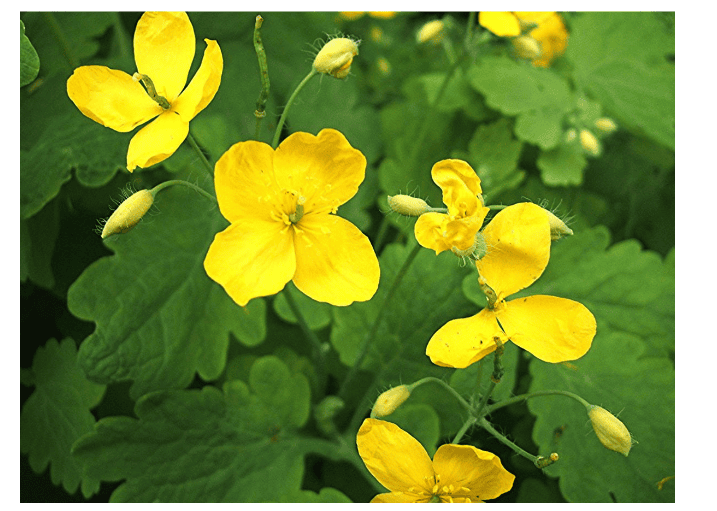
The ancients imagined that the yellow colour of the juice of this plant was an indication (signature) of its utility in bilious diseases.
The moderns from this extended its employment to hepatic diseases, and though there were cases where the utility of this plant in maladies of that region of the abdomen was obvious, yet the diseases of this organ differ so much among one another, both in their origin and in the attendant derangements of the rest of the organism; moreover, the cases in which it is said to have done good have been so imperfectly described by physicians, that it is impossible from their data to tell beforehand the cases of disease in which it must certainly be of use; and yet this is indispensably necessary in the treatment of diseases of mankind which are of such serious importance.
) is of but a general, undefined, and dubious character, especially since this plant was so seldom given simply and singly by physicians, but almost always in combination with heterogeneous, powerful substances (dandelion, fumitory, water-cresses), and along with the simultaneous employment of the so-called bitters, which vary so much in their effects.
The importance of human health does not admit of any such uncertain directions for the employment of medicines.
It would be criminal frivolity to rest contented with such guesswork at the bedside of the sick.
Only that which the drugs themselves unequivocally reveal of their peculiar powers in their effects on the healthy human body-that is to say, only their pure symptoms-can teach us loudly and clearly when they can be advantageously used with certainty; and this is when they are administered in morbid states very similar to those they are able to produce on the healthy body. (Excerpts from Chelidonium in Materia Medcia Pura)
[Hahnemann warned against using doctrine of signatures or essence, early on in the development of Homoeopathy.]
[Reference – What is constitutional prescribing by Grant Bentley]
Now we shall study something about Chelidonium from Boericke’s Materia Medica
The first line of Chelidonium drug picture says that
A prominent liver remedy, covering many of the direct reflex symptoms of diseased conditions of that organ.
Now let us see some other references that strongly support which Boericke write this as the first line
The liver symptoms of Chelidonium are very prominent. There is soreness and stitching pains in the region of the liver, but the keynote for this drug in hepatic diseases is a pain under the angle of the right shoulder blade, which may extend to the chest, stomach, or hypochondrium; there is swelling of the liver, chilliness, fever, jaundice, yellow coated tongue, bitter taste and a craving for acids and sour things, such as pickles and vinegar. The stools are profuse, bright yellow and diarrhoeic; they may be clayey in color. It is a remedy to be used in simple biliousness and jaundice, and in hepatic congestion or inflammation the character of the stools will distinguish Bryonia. Taken altogether, Chelidonium is perhaps our greatest liver remedy; it causes the liver to secrete thinner and more profuse bile than any other remedy; it is a useful remedy to promote the expulsion of gall stones, and to prevent their formation. It was Rademacher’s great remedy for gall stones, and Cowperthwaite finds it his best remedy. In simple catarrhal jaundice it is often all sufficient. It affects the left lobe of the liver much less than does Carduus marianus. (Dr Dewey – Practical Homoeopathic therapeutics)
It is to illustration the use of remedies of this kind that Dr. Burnett published his brochure on “The Greater Diseases of the Liver” (1891). Carduus is one of his chief medicines: he thinks its action to be upon the left lobe of the liver, and that it is especially indicated when there is a patch of eruption over the lower end of the sternum, and when any enlargement present is horizontal. When it is perpendicular he prefers Chelidonium. (Dr Hughes – The principles and practice of Homoeopathy)
The second line of Chelidonium in Boericke
The jaundiced skin, and especially the constant pain under inferior angle of right scapula, are certain indications.
Constant pain under the lower and inner angle of right scapula (Kali c., Mer.-under the left, Chenop. g., Sang.). – Allen’s keynotes
Chelidonium has – DISTRESSING PAIN UNDER THE RIGHT SCAPULA (Bry., Card-M., Chen-A., Con., Lac-C., Lycps., Nat-M., Nux-V., Phos., Pic-Ac., Podo., Ruta., Sec.) – Lippe’s keynotes and Dunham’s Materia Medica
Third line of Chelidonium in Boericke
Paralytic drawing and lameness in single parts.
Dr Pulford in his Homoeopathic Materia Medica of graphic drug pictures and clinical comments mentions that – Rheumatism : upper limbs, flesh sore to touch and no relief from sweat; lower limbs : in hips and thighs, worse right side and right knee, oedema of ankles, stiffness and feeling as if right leg was paralyzed.:
Fourth line of Chelidonium in Boericke
The great general lethargy and indisposition to make any effort is also marked.
Boger’s synoptic key mentions – Lazy.Averse to mental exertion or conversation.
Clarke’s Dictionary of practical Materia Medica says that – Paralytic symptoms are prominent.
There is great debility and drowsiness after eating and on waking.
Prefers hot things.
Desire to lie down after a meal.
Aversion to move, feels tired on least exertion.
Sleepiness and yawning.
Fifth line of Chelidonium in Boericke
Ailments brought on or renewed by change of weather.
Sixth line of Boericke
Serous effusions. Hydrocele. Bilious complication during gestation.
Here just to refrain from making the article too long ,I stop here.We have seen the reasons for Studying Boericke’s Materia and inrocdution to study of Chelidonium ,in part 2 we shall study in detail.
References
- Materia Medica Pura – Dr Samuel Hahnemann
- Pocket manual of Homoeopathic Materia Medica – Dr William Boericke
- What is constitutional prescribing – an article by Grant Bentley
- Practical Homoeopathic therapeutics – Dr W Dewey
- The principles and practice of Homoeopathy – Dr Hughes
- Synoptic key – Dr CM Boger
- Homoeopathic Materia Medica of graphic drug pictures and clinical comments – Dr Pulford
- Dictionary of Practical Materia Medica – Dr JH Clarke
- Allen’s keynotes
- Lippe’s keynotes