

Abstract
Benign Prostatic Hyperplasia (BPH) is a common condition in elderly men characterized by the non-cancerous enlargement of the prostate gland, which leads to lower urinary tract symptoms such as urinary frequency, nocturia, hesitancy, weak urinary stream, and incomplete bladder emptying. The condition mainly develops due to age-related hormonal changes, genetic predisposition, and lifestyle factors.
Homoeopathy provides a holistic and individualized approach in the management of BPH by considering the totality of the patient’s symptoms rather than focusing only on the enlarged prostate. Homoeopathic medicines such as Sabal Serrulata, Conium Maculatum, Chimaphila Umbellata, and Baryta Carbonica are commonly used to relieve urinary symptoms, improve bladder function, and enhance the patient’s overall health. This system of medicine is particularly beneficial in the early and moderate stages of BPH, where it may help reduce symptoms and improve the patient’s quality of life.
Introduction
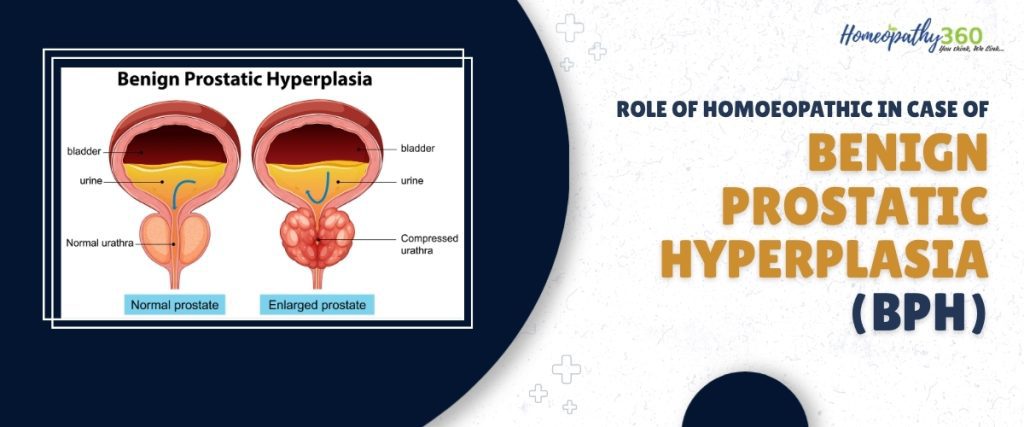
Benign Prostatic Hyperplasia (BPH) is a common condition characterized by non-malignant enlargement of the prostate gland, usually affecting men above the age of 50 years. Enlargement of the prostate may compress the urethra and interfere with the normal flow of urine. Patients commonly present with symptoms such as increased frequency of urination, nocturia, hesitancy, weak urinary stream, and a sensation of incomplete bladder emptying.
Homoeopathy offers a holistic and individualized approach to the management of BPH, focusing on relieving urinary symptoms, improving bladder function, and enhancing the overall health of the patient.
BPH is a non-cancerous enlargement of the prostate gland that commonly affects men over the age of 50. It can cause urinary symptoms such as frequent urination, weak urinary stream, hesitancy, incomplete bladder emptying, and nocturia.
Homoeopathy aims to reduce symptoms, slow disease progression, and improve the quality of life through individualized remedies.
Therapeutic Role of Homoeopathy in BPH
- Symptomatic Relief
Homoeopathic medicines may help relieve:
• Frequent urination (especially at night)
• Difficulty starting urination
• Weak urinary stream
• Dribbling after urination
• Burning or discomfort during urination
- Functional Improvement
Certain remedies are used to:
• Improve bladder emptying
• Reduce prostate congestion
• Improve urinary flow
- Slowing Disease Progression
In early to moderate BPH, homoeopathy may help delay worsening of symptoms, potentially postponing surgical intervention in some patients.
- Holistic Management
Homoeopathy considers:
• Mental and emotional state
• General health and constitution
• Associated complaints (sexual weakness, constipation, etc.)
Common Homoeopathic Remedies Used in BPH
- Sabal Serrulata
• One of the most commonly used remedies for prostate enlargement
• Frequent urination, especially at night
• Dribbling urine with enlarged prostate
- Conium Maculatum
• Interrupted urinary flow
• Difficulty starting urination
• Often indicated in older men with a hard, enlarged prostate
- Baryta Carbonica
• BPH in elderly men
• Weak urinary stream
• Dribbling and incomplete bladder emptying
- Chimaphila Umbellata
• Need to strain to pass urine
• Better urinating while standing with feet apart
- Thuja Occidentalis
• Urinary frequency and split urinary stream
• Associated with prostate enlargement and urethral irritation
- Pulsatilla Nigricans
• Frequent urination with mild burning
• Symptoms are changeable and worse at night
Advantages of Homoeopathy in BPH
• Non-invasive treatment
• Minimal side effects
• Can be used along with conventional treatment
Limitations
Homoeopathy may not be sufficient alone in cases of:
• Severe urinary obstruction
• Acute urinary retention
• Complications such as kidney damage
Such cases require urgent evaluation by a urologist.
Conclusion
Homoeopathy can play a supportive role in managing the symptoms of Benign Prostatic Hyperplasia, especially in early and moderate cases. Proper individualized remedy selection by a qualified homoeopath is essential for effective management.Co-
Co-Author

Dr Nilesh Kanzariya, L R Shah homoeopathic college Rajkot, Gujarat


