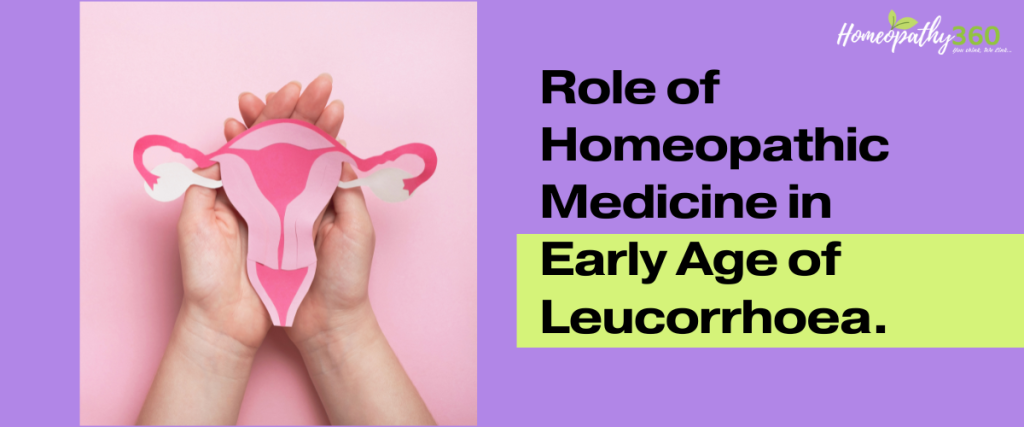
Abstract: Leucorrhoea, commonly referred to as abnormal vaginal discharge, is a prevalent condition in females, particularly during their early reproductive age. It may arise from physiological or pathological causes, including hormonal imbalances, infections, or poor hygiene. Homeopathy offers a holistic and individualized approach to managing leucorrhoea, emphasizing the alleviation of symptoms and addressing underlying causes. This article explores homeopathic medicine’s role in treating early-age leucorrhoea, highlights commonly used remedies, and discusses the importance of individualized treatment plans.
Keywords: Homeopathy, Leucorrhoea, Vaginal Discharge, Holistic Treatment, Early Reproductive Age
Introduction
Leucorrhoea, characterized by an abnormal white or yellowish vaginal discharge, is a common concern among young females, especially during hormonal transitions such as puberty. While mild leucorrhoea may be physiological, persistent or severe cases may signal infections or other medical conditions. Conventional treatments often focus on symptomatic relief, while homeopathy takes a holistic approach by addressing the root causes and enhancing overall well-being. According to Doctor Bhatia (2023), homeopathy aims to restore the body’s balance by considering the physical, emotional, and psychological dimensions of the patient.

Homeopathic Approach To Early-Age Leucorrhoea
Homeopathy operates on the law of similars — “like cures like” — where substances causing symptoms in healthy individuals can be used in diluted forms to treat similar symptoms in illness. The remedies prescribed in homeopathy are based on an individual’s unique symptomatology, lifestyle, and emotional state.
Detailed Description of Common Homeopathic Remedies
1. Calcarea Carbonica
• Indications: Profuse, milky-white or watery vaginal discharge, often associated with weakness, fatigue, and chilliness. These patients tend to sweat excessively, especially on the head, and are generally fair, flabby, and sluggish in development (Lybrate, 2023).
• Mental state: Anxiety about health and fear of misfortune.
• Modalities: Worse from cold and exertion, better with warmth and rest.
2. Borax Veneta
• Indications: Transparent, albuminous, or egg-white-like discharge, often with burning or itching. Associated with yeast or fungal infections.
• Characteristic symptom: Painful coition, marked fear of downward motion (e.g., fear of falling when being carried).
• Modalities: Worse before menstruation, better during menstruation.
3. Sepia Officinalis
• Indications: Thick, yellowish-green, foul-smelling discharge with itching and pelvic heaviness. Common in women with uterine prolapse or weakness.
• Mental state: Indifference to family, irritability, and a tendency to weep without cause.
• Modalities: Worse in the afternoon and with cold washing; better with warmth and exercise (Holy Pills Clinic, 2023).
4. Natrum Muriaticum
• Indications: Thick, whitish discharge, often egg-white-like and exacerbated by walking or physical exertion.
• Mental state: Reserved, emotionally sensitive individuals who dwell on past grief. • Modalities: Worse in the morning, at the seaside, better alone and with rest.
5. Pulsatilla Nigricans
• Indications: Creamy, bland discharge that is non-irritating and may increase before or after menstruation. Suited for gentle, emotional, and affectionate individuals.
• Mental state: Mood swings, desire for sympathy, and crying easily.
• Modalities: Worse in warm, stuffy rooms; better in open air and with gentle motion. 6. Kreosotum
• Indications: Very offensive, irritating discharge that causes excoriation of surrounding skin. Suited for cases with cervical erosions and chronic infections.
• Mental state: Restlessness, anxiety, and nightmares in children.
• Modalities: Worse during menstruation, better with rest.
7. Alumina
• Indications: Profuse, clear or yellowish discharge with dryness of the vaginal mucosa. Often accompanied by constipation and sluggish bowel movements.
• Mental state: Confusion, mental sluggishness, and indecision.
• Modalities: Worse in the morning, from potatoes, better in the evening.
8. Hydrastis Canadensis
• Indications: Ropy, thick, yellow discharge with a tendency to ulceration. Suited for debilitated patients with chronic inflammation.
• Mental state: Irritability and melancholy.
• Modalities: Worse in damp weather, better with dry heat (TJHMS, 2023).
Benefits of Homeopathic Treatment
• Holistic Healing: Addresses not just the symptoms but the underlying emotional and constitutional factors.
• Personalized Remedies: Each patient receives a remedy aligned with their specific mental, physical, and emotional makeup.
• Safe and Gentle: Homeopathic medicines are non-toxic and generally free from side effects, making them ideal for young individuals.
• Preventive Potential: Long-term use can help strengthen the immune system and reduce recurrence.
Conclusion
Homeopathy offers a comprehensive and effective strategy for managing early-age leucorrhoea. With its focus on the totality of symptoms and individualized treatment, it stands out as a gentle and sustainable approach. Remedies like Calcarea Carbonica, Sepia, Borax, and others demonstrate therapeutic potential when chosen according to the principle of symptom similarity. Regular follow ups and professional guidance are vital to achieving optimal results. Further research and clinical studies are recommended to enhance understanding and evidence-based practice in homeopathic gynecology.
References
1. Doctor Bhatia, M. (2023). Homeopathic Treatment for Leucorrhoea. doctorbhatia.com 2. Lybrate (2023). White Discharge: Homeopathic Remedies. lybrate.com
3. Holy Pills Clinic (2023). Leucorrhoea and Homeopathy: A Holistic Approach. holypillsclinic.com
4. TJHMS (2023). Leucorrhoea and Homeopathy. tjhms.com
Author Name:-
Dr.Ayushi Shrivastava
P.G Scholar Department of Homoeopathic Materia Medica
Government Homoeopathic Medical College and Hospital Bhopal
Under the guidance of:-
Dr Shobhana Shukla
Associate Professor & Former joint director AYUSH DEPT
Government Homoeopathic Medical College and Hospital Bhopal