Abstract:
Psoriasis is a chronic, immune-mediated dermatological condition with a significant impact on physical, psychological, and social well-being. Conventional treatment primarily focuses on symptomatic management, but long-term relief and improved quality of life often require a holistic approach. This Article explores the integration of homeopathic therapeutics with counseling interventions, emphasizing their role in reducing disease burden, improving emotional resilience, and enhancing overall life quality in patients with psoriasis.
Keywords: Knowledge, psoriasis,homeopathic management, counseling for improving quality of life.
Introduction:
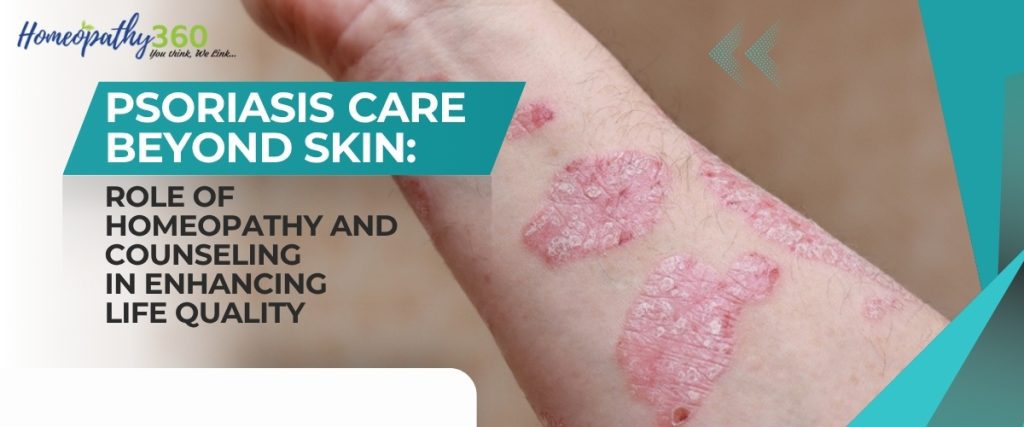
Psoriasis is a relapsing, inflammatory skin disorder characterized by erythematous plaques with silvery scales. It affects approximately 2–3% of the global population and is strongly associated with systemic comorbidities, including psoriatic arthritis, metabolic syndrome, cardiovascular disease, and psychological distress. While modern medicine provides topical agents, systemic immunomodulators, and biologics, many patients continue to suffer from recurrent episodes and diminished quality of life.
Etiology of Psoriasis;
Psoriasis is multifactorial in origin, with an interplay between genetic, immunological, environmental, and psychological components:
I. Genetic Factors
Strong familial history – risk is higher if one or both parents are affected.
Involvement of multiple genes such as PSORS1 locus on chromosome 6p21.
II. Immunological Factors
Dysregulation of the innate and adaptive immune system.
Overactivation of Th1, Th17, and Th22 cells, leading to excessive cytokine release (IL-17, IL-23, TNF-α).
III. Environmental Triggers
(a) Infections: Streptococcal throat infection may precipitate guttate psoriasis. (b) Medications: Beta-blockers, lithium, antimalarials, NSAIDs.
(c)Lifestyle: Alcohol, smoking, obesity.
(d)Climate: Cold weather worsens symptoms; sunlight often improves them.
IV. Psychological Stress
Stress is both a trigger and a consequence of psoriasis, contributing to flare-ups and disease persistence.
Stress alters immune function and increases neuroendocrine mediators that worsen skin inflammation.
V.Other Contributing Factors
Hormonal fluctuations (puberty, menopause,
pregnancy).
Trauma or injury to skin (Koebner
phenomenon).
Pathophysiology of Psoriasis:
Psoriasis involves a complex interplay between genetic predisposition, immune dysregulation, and environmental triggers. Hyperproliferation of keratinocytes is driven by Th1 and Th17-mediated immune responses, leading to chronic inflammation. Stress and psychosocial factors significantly exacerbate disease expression, highlighting the mind-skin connection.
Impact of Psoriasis on Quality of Life:
Psoriasis extends far beyond cutaneous manifestations, causing social stigma, low self-esteem, depression, and anxiety. The Dermatology Life Quality Index (DLQI) shows that even mild psoriasis can lead to significant impairment in daily activities, relationships, and work productivity. Thus, effective management must address not only physical symptoms but also emotional and social dimensions.
Role of Homeopathy in Psoriasis Management:
Principles of Homeopathy – Homeopathy operates on the law of similars, minimum dose, and individualized remedy selection. Remedies are prescribed based on totality of symptoms, including physical, mental, and emotional aspects.
Commonly Used Remedies in Psoriasis;
1. Arsenicum album- Dry, scaly, itching eruptions that worsen at night and with cold. Burning sensation, yet patient desires warmth.
Scaling with intense burning and anxiety and restlessness.
2. Graphites – Thickened, cracked, fissured skin with oozing sticky, honey-like discharge. Psoriasis in flexural folds and behind ears.
Cracks and oozing sticky exudation, worse in winter.
3. Sulphur – Intense itching, scratching till bleeding, followed by burning. Psoriasis aggravated by warmth of bed. Dirty, unhealthy-looking skin.
Itching worse at night in bed.
4. Sepia – Psoriasis with circular patches, especially on abdomen and flexures. Dry, hard, rough skin.hormonal imbalance and emotional indifference are prominent.
5. Petroleum – Cracked, rough, dry and harsh skin, prone to chronic eruptions. Itching and bleeding after scratching. Psoriasis worsens in cold weather.
6. Calcarea Carbonica – Psoriasis with profuse scaling, especially on scalp. Easy perspiration of head, cold damp feet. Fair, flabby, chilly, overweight individuals with sluggish metabolism.
7. Thuja Occidentalis – Psoriasis with greasy skin, oily eruptions, and scaling. Often linked with vaccination or suppressed eruptions. Nervous, timid, fixed ideas, warts, and glandular swellings.
8. Mercurius Solubilis – Psoriasis with offensive odor, moist eruptions, and profuse sweating. Aggravation at night, with burning and itching.
Counseling in Psoriasis Care :
Importance of Counseling – Counseling provides emotional support, stress management strategies, and lifestyle guidance, which are essential in chronic skin conditions.
Counseling Techniques;
1. Cognitive Behavioral Therapy (CBT): Reduces anxiety, depression, and stress-related flare-ups.
2. Mindfulness and Relaxation: Improves coping mechanisms and reduces stress-induced exacerbations.
3. Psychoeducation: Enhances patient understanding of disease, treatment adherence, and lifestyle modifications.
4. Group Therapy & Peer Support – Sharing experiences with others reduces isolation and stigma. Support groups provide practical tips on skin care, social interactions, and coping strategies.
5. Family Counseling – Educating family members about psoriasis reduces misunderstanding and criticism. Encourages emotional support, tolerance, and acceptance at home. Helps family cope with visible lesions, mood swings, or treatment burdens.
6.Body Image & Self-esteem Therapy – Counseling addresses embarrassment, shame, and low self-confidence. Use mirror exposure therapy, positive affirmations, and social skills training to restore confidence.
Encourage participation in daily life without avoidance.
7. Coping Skills Training – Teach problem-solving and adaptive coping mechanisms. Encourage journaling, art therapy, or expressive writing to channel emotions. Develop resilience for managing relapses.
Integrated Approach – Homeopathy and Counseling :
An integrative model that combines individualized homeopathic remedies with structured counseling sessions offers dual benefits: physiological symptom relief and psychological empowerment. Case reports and clinical experiences indicate reduced frequency of relapses, better stress handling, and improved quality of life in patients who undergo combined therapy.
Challenges and Future Perspectives :
Despite encouraging outcomes, the integration of homeopathy and counseling into mainstream psoriasis management faces challenges such as limited clinical trials, skepticism in evidence-based medicine, and lack of standardized protocols.
Future research should focus on large-scale studies, interdisciplinary collaboration, and the development of integrative treatment guidelines.
Conclusion :
Psoriasis is not marely a superficial skin disorder, rather it’s a complex, multidimensional condition that profoundly impacts the physical, emotional, and social well-being of those affected. Conventional approaches often emphasize symptom control, yet the broader challenges of living with psoriasis demand a more comprehensive framework of care. Homeopathy, through its individualized and holistic philosophy, offers a means of addressing the internal predispositions and overall health of the patient. At the same time, counseling provides essential psychological support, helping individuals cope with stress, build resilience, and adapt positively to the psychosocial burdens associated with the disease , considerable promise in enhancing long-term quality of life, empowering patients to live more confidently and with improved well-being.
References :
1. Davidson’s Principles and Practice of Medicine. 23rd ed. Edinburgh: Elsevier; 2018. 2. Harrison’s Principles of Internal Medicine. 21st ed. New York: McGraw Hill; 2022.
3.Latheef EN, Prabhu S, Shenoi SD. Handbook of Psychodermatology. Jaypee Brothers Medical Publishers; 2016.
4. Nagarajan P, Thappa DM. Effect of an educational and psychological intervention on knowledge and quality of life among patients with psoriasis. Indian Dermatol Online J. 2018 Jan-Feb;9(1):27-32.
5. Godse K, Parasramani SG, De A, Singh NK, Kawatra P. Counseling in psoriasis: overcoming the concerns and challenges. Int J Res Dermatol. 2021;7(6):876-81.
6. Boericke W. Pocket Manual of Homoeopathic Materia Medica. New Delhi: B. Jain Publishers; 2007.
7. Kent JT. Lectures on Homoeopathic Philosophy. New Delhi: B. Jain Publishers; 2002.
8. Allen HC. Keynotes and Characteristics with Comparisons of Some of the Leading Remedies of the Materia Medica. New Delhi: B. Jain Publishers; 1999.