Abstract
In homoeopathy, medicines are prepared through serial dilution and potentization using decimal and centesimal scales, resulting in extremely low concentrations of the original substance. Classical pharmacology finds difficulty in explaining the action of such ultra-diluted medicines. Recent advances in nanoscience and quantum physics provide a scientific framework to understand the pharmacodynamics of homoeopathic remedies. This article explores how nanoparticle formation and quantum physical principles together explain the dynamic action of homoeopathic medicines beyond material dose dependency. (1) (2)
Introduction
Homoeopathic medicines are prepared through systematic dilution and succussion, commonly following decimal (1:10) and centesimal (1:100) scales. With each successive step, the concentration of the original medicinal substance in the water–ethanol medium decreases significantly. Although material quantity diminishes, clinical efficacy is often reported to persist. Modern scientific research suggests that this phenomenon can be understood through the combined principles of nanomedicine and quantum physics, offering a rational explanation for homoeopathic pharmacodynamics. (1) (3)
Dilution Scales and Reduction of Material Concentration In the decimal scale, each step reduces the concentration of the medicinal substance to one-tenth of its previous strength, while in the centesimal scale it is reduced to one-hundredth. After repeated dilutions, the solution may no longer contain measurable amounts of the original molecules. However, dilution alone does not define homoeopathic medicine; the mechanical energy applied during succussion plays a crucial role in transforming the physical nature of the drug substance. (3)
Nanomedicine Perspective in Homoeopathy
Nanomedicine focuses on the therapeutic application of materials at the nano scale, where matter exhibits properties different from its bulk form. Reduction in particle size leads to a substantial increase in surface area, which directly enhances the biological activity of a substance.
Nanodoses of medicinal agents demonstrate several advantages over crude doses, including:
∙ Improved bioavailability
∙ Increased chemical and biological reactivity
∙ Enhanced adsorption capacity
∙ Better intracellular penetration
∙ Greater ability to cross cell membranes
∙Potential to cross the blood–brain barrier (2) (4) (5)
During homoeopathic potentization, mechanical forces generated by trituration and succussion facilitate the formation of nanoparticles derived from the original medicinal substance. These nanoparticles remain dispersed within the water–ethanol medium and act as biologically active agents, even at ultra-low concentrations. (2) (4) (6)
Quantum Physics and Dynamic Action of Homoeopathic Medicines
Quantum physics provides insights into phenomena occurring at atomic and subatomic levels. Electrons not only revolve around the nucleus but also spin around their own axis due to intrinsic angular momentum. Electron spin states are stable under normal conditions but can be altered by electromagnetic influences.
When electron spin momentum changes, the physical and functional properties of atoms may also change. In the human body, physiological electromagnetic waves maintain normal cellular function. Disturbance of these waves leads to pathological states. Homoeopathic medicines, acting as dynamic medicines, are believed to carry low-frequency electromagnetic information capable of converting non-physiological electromagnetic patterns back into physiological ones. (1) (7) (8)
Quantum Theories Supporting the Action of Homoeopathic Medicines
Non-Locality Theory
The principle of non-locality in quantum physics states that two systems can remain connected and influence each other regardless of spatial separation. This phenomenon, demonstrated through quantum entanglement, challenges the classical concept that interaction requires direct physical contact. In the context of homoeopathy, non-locality suggests that medicinal action does not depend solely on the physical presence of molecules. Instead, homoeopathic remedies may act through non-local informational or energetic connections, influencing the biological system without material transfer. This concept supports the idea that ultra-diluted medicines can exert therapeutic effects beyond chemical dose dependency. (9) (10)
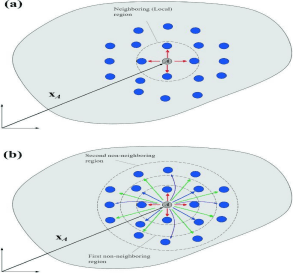
Fig: 1.Nonlocal mechanics in the framework of the general nonlocal theory.(11)
Holographic Theory
Holographic theory proposes that complete information about a system is encoded within each of its parts. Even when a hologram is fragmented, each fragment retains the image of the whole. Applied to homoeopathy, this theory suggests that during potentization, the medicinal information of the original substance becomes
embedded within the solvent structure. Although the material substance is diluted, its informational pattern is preserved holographically within the remedy. This explains how highly diluted homoeopathic medicines can retain the therapeutic identity and specificity of the original drug substance. (3) (12) (13)
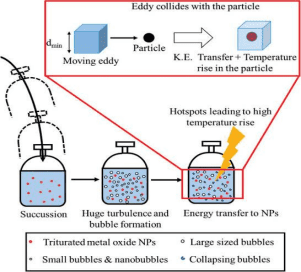
Fig: 2.Dilution-Induced Physico-Chemical Changes of Metal Oxide Nanoparticles Due to Homeopathic Preparation Steps of Trituration and Succussion. (14)
Observer Effect
The observer effect in quantum mechanics refers to the phenomenon where the act of observation influences the behavior of particles at the quantum level. Measurement alters the state of a quantum system. In homoeopathy, this concept aligns with the role of the physician and patient as active participants in the healing process. The individual perception, expectation, and awareness of the patient may influence biological responses to dynamic medicines. This theory supports the holistic approach of homoeopathy, where mind, body, and consciousness are considered interconnected and responsive to subtle therapeutic stimuli. (9) (15)
Resonance Theory
Resonance theory explains that when two systems vibrate at matching or compatible frequencies, energy transfer occurs efficiently between them. In biological systems, health is associated with harmonious electromagnetic oscillations, while disease reflects disturbed frequencies. Homoeopathic medicines are believed to possess specific electromagnetic signatures derived from the original substance. When administered, these remedies resonate with the altered frequency of diseased tissues, initiating a corrective response. Through resonance, homoeopathic medicines help restore physiological balance without direct chemical interaction. (1) (8)
Integration of Nanoscience and Quantum Physics
The integration of nanoparticle research with quantum physics offers a coherent explanation for the action of homoeopathic medicines. Nanoparticles serve as carriers of electromagnetic and informational signals, while quantum principles explain how these signals interact with biological systems at a fundamental level. This combined approach supports the homoeopathic concept of dynamic, non material therapeutic action. (6) (5) (13)
Conclusion
Advances in nanomedicine and quantum physics provide a scientifically plausible explanation for the pharmacodynamics of homoeopathic medicines prepared through decimal and centesimal dilutions. Nanoparticles formed during potentization enhance biological interaction, while quantum electromagnetic principles explain dynamic regulation at the cellular and systemic levels. Together, these modern scientific perspectives strengthen the theoretical foundation of homoeopathy and support its continued exploration within contemporary biomedical research. (1) (2) (4) (7)
Bibliography
1. Shahabi s. Like cures like: a neuroimmunological model based on electromagnetic resonance. Electromagn Biol Med. 2013; 32(4 Pages 499-518).
2. Malik N. Recent advances in nanoparticle research in homeopathy. Int J High Dilution Res. 2015. 3. Partha PM, Mandal B. A Text Book of Homoeopathic Pharmacy. 3rd ed.: B Jain; 2001.
4. Chikramane PS SABJKS. Extreme homeopathic dilutions retain starting materials: a nanoparticulate perspective. Homeopathy. 2010; 99(4 Pages: 231-242).
5. Upadhyay RP, Nayak C. Homeopathy emerging as nanomedicine. Int J High Dilution Res. 2011; 10(37 Pages : 299-310).
6. Bell IR, Koithan MBAJ. Testing the nanoparticle-allostatic cross-adaptation-sensitization model for homeopathic remedy effects. Homeopathy. 2013; 102(1 Pages: 66-81).
7. Vithoulkas G. The spin of electrons and the proof for the action of homeopathic remedies. Med Sci Monit. 2020; 26.
8. Montagnier L AJFSea. Electromagnetic signals produced by aqueous nanostructures. Interdiscip Sci. 2009; 1(2 Pages: 81-91).
9. Smith M. Can homeopathy be explained by quantum physics? The Earth & I. 2022.
10. Milgrom LR. Macro-entanglement and the possibility of homeopathy. Homeopathy. 2007; 96(3 Pages: 209-219).
11. Shaat M, Ghavanloo E. Nonlocal mechanics in the framework of the general nonlocal theory Size Dependent Continuum Mechanics Approaches: Ghavanloo E, Fazelzadeh SA, Marotti de Sciarra F, editors. Cham; 2021.
12. Chaplin MF. The memory of water: an overview. Homeopathy. 2007; 96(3 ): 143 – 150.
13. Rao ML, Roy R, Bell IR, Hoover R. The defining role of structure in the plausibility of homeopathy. Homeopathy. 2007; 96(3): 175 -182.
14. Basu A, Temgire MK, Suresh AK, Bellare JR. Dilution-Induced Physico-Chemical Changes of Metal Oxide Nanoparticles Due to Homeopathic Preparation Steps of Trituration and Succussion. Homeopathy. 2020; 109(2): 65 – 78.
15. Bell IR, Schwartz GE. Adaptive network nanomedicine. Front Biosci (Schol Ed). 2013; 5: 685 – 708.