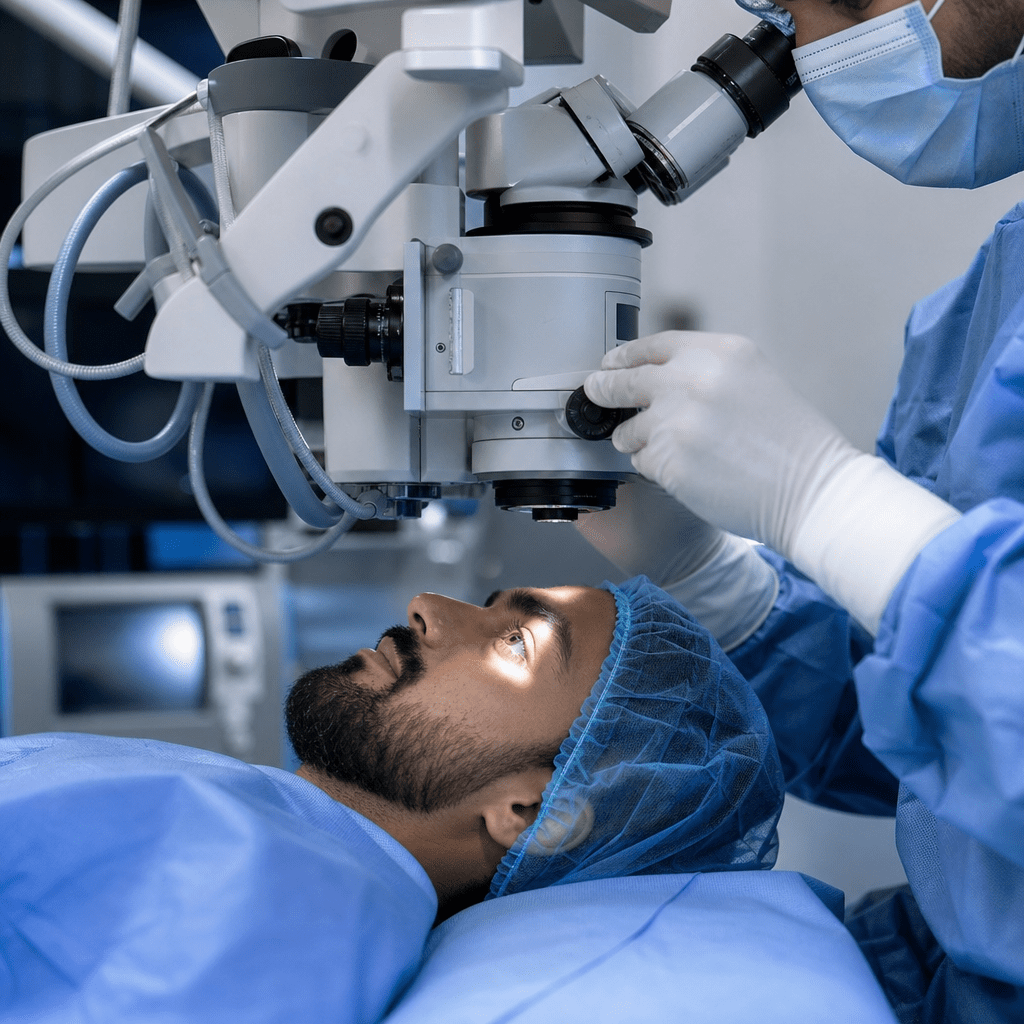
When patients are diagnosed with cataracts, many are surprised to learn that a pre-existing refractive condition like astigmatism can significantly influence the outcome of their procedure. Cataract surgery is one of the most commonly performed operations in the world, yet its success depends on far more than simply removing a clouded lens. For patients with astigmatism, the surgical planning process becomes considerably more nuanced, requiring careful measurement, lens selection, and sometimes additional corrective steps. Understanding how these two conditions intersect is essential for anyone preparing for this life-changing procedure.
What Is Astigmatism and Why Does It Matter in Cataract Surgery?
Astigmatism is a refractive error caused by an irregular curvature of the cornea or lens. Instead of having a perfectly spherical shape, the eye resembles more of a football, causing light to focus at multiple points rather than a single sharp one. This results in blurred or distorted vision at all distances. While astigmatism is extremely common and often corrected with glasses or contact lenses, it presents a unique challenge when a patient also requires cataract surgery.
During cataract surgery, the eye’s natural lens is removed and replaced with an artificial intraocular lens (IOL). If astigmatism is not addressed at this stage, the patient may still experience blurred vision after surgery despite having a clear new lens. This is why ophthalmologists must evaluate and plan for astigmatism correction as part of the overall surgical strategy.
How Surgeons Assess and Address Astigmatism Before the Procedure
Pre-operative assessments for cataract patients now routinely include corneal topography and biometry to measure the degree and axis of astigmatism. These measurements guide the surgeon in choosing the most appropriate IOL and surgical technique. Patients with mild astigmatism may benefit from limbal relaxing incisions (LRIs), small cuts made at the periphery of the cornea to reshape its curvature. Those with moderate to significant astigmatism are typically candidates for toric IOLs, which are specially designed lenses that correct astigmatism directly.
The placement of the main surgical incision also plays a role. Surgeons often position the incision along the steepest meridian of the cornea, a technique known as on-axis surgery, which can reduce corneal astigmatism by a small but meaningful amount. Every decision in the operating room is made with the goal of achieving the clearest possible vision post-operatively.
Toric IOLs: A Targeted Solution
Toric intraocular lenses have transformed the way surgeons manage astigmatism in cataract patients. Unlike standard monofocal lenses, toric IOLs have different powers in different meridians, allowing them to counteract the irregular curvature of the cornea. When properly aligned during surgery, they can dramatically reduce or even eliminate the need for corrective eyewear for distance vision. However, precise alignment is critical — even a small rotational error can reduce the lens’s effectiveness, which is why surgeons mark the eye before the procedure to ensure accurate positioning.
Holistic and Complementary Perspectives on Eye Health
While modern surgical techniques offer remarkable outcomes, some patients explore complementary approaches to support their overall eye health before and after surgery. Homeopathic traditions, for instance, have long documented remedies for various ocular conditions. Practitioners interested in classical approaches may find value in resources like the Berridge Eye Repertory for managing conditions such as stye, which reflects the broader tradition of individualized care in homeopathic practice. While such approaches are not a substitute for surgical intervention in cases of cataracts or significant astigmatism, they represent the diverse ways patients seek to maintain eye wellness.
Understanding the Risks and Realistic Expectations
No surgical procedure is without risk, and cataract surgery is no exception. Patients should have a thorough conversation with their surgeon about potential complications, which can include infection, inflammation, posterior capsule opacification, and in rare cases, retinal detachment. For those with astigmatism, there is also the possibility that the toric IOL may rotate slightly after surgery, requiring repositioning. Understanding these risks helps patients make informed decisions and set realistic expectations for their recovery.
For a comprehensive overview of the types of eye operations available and their associated risks, patients can consult this detailed guide on eye operation types and risks, which provides valuable context for anyone navigating the world of ophthalmic surgery.
Recovery and Post-Operative Care
Recovery from cataract surgery is generally swift, with most patients noticing improved vision within a day or two. However, full stabilization of vision — particularly when toric IOLs are used — may take several weeks. Patients are typically prescribed anti-inflammatory and antibiotic eye drops and advised to avoid strenuous activity, swimming, and rubbing the eye during the healing period. Follow-up appointments are essential to monitor the position of the IOL and the overall health of the eye.
For patients with residual astigmatism after surgery, glasses or a laser enhancement procedure may be recommended. The goal is always to achieve the best possible unaided vision, reducing dependence on corrective lenses wherever feasible.
Expert Guidance from Eye Surgery Today
Navigating the intersection of cataracts and astigmatism requires access to reliable, medically accurate information. Eye Surgery Today is a trusted resource dedicated to helping patients understand complex ophthalmic conditions and the procedures designed to treat them. The platform offers in-depth, patient-friendly content that bridges the gap between clinical expertise and everyday understanding, empowering individuals to approach their surgical consultations with confidence and clarity.
The Importance of Personalized Surgical Planning
One of the most important takeaways for any cataract patient with astigmatism is that there is no one-size-fits-all solution. The degree of astigmatism, its axis, the patient’s lifestyle, and their visual goals all factor into the surgical plan. A patient who prioritizes sharp distance vision for driving may have different needs than someone who values near vision for reading. Open communication with the surgical team ensures that the chosen approach aligns with the patient’s expectations and daily life.
Understanding astigmatism during cataract surgery is a critical step in preparing for a procedure that can genuinely transform quality of life. When patients are well-informed about how their refractive condition interacts with cataract removal, they are better equipped to participate meaningfully in their own care decisions and to appreciate the precision and expertise that modern ophthalmic surgery demands.
Conclusion
Cataract surgery has evolved into a highly sophisticated procedure that goes well beyond simply restoring clarity obscured by a clouded lens. For the millions of patients who also live with astigmatism, the procedure offers a remarkable opportunity to address two vision problems simultaneously. With advances in toric IOL technology, precise pre-operative mapping, and refined surgical techniques, outcomes have never been better. The key lies in thorough preparation, honest dialogue with your surgeon, and a clear understanding of what the procedure can and cannot achieve. Armed with the right knowledge, patients can approach cataract surgery with confidence and look forward to a future of clearer, sharper vision.