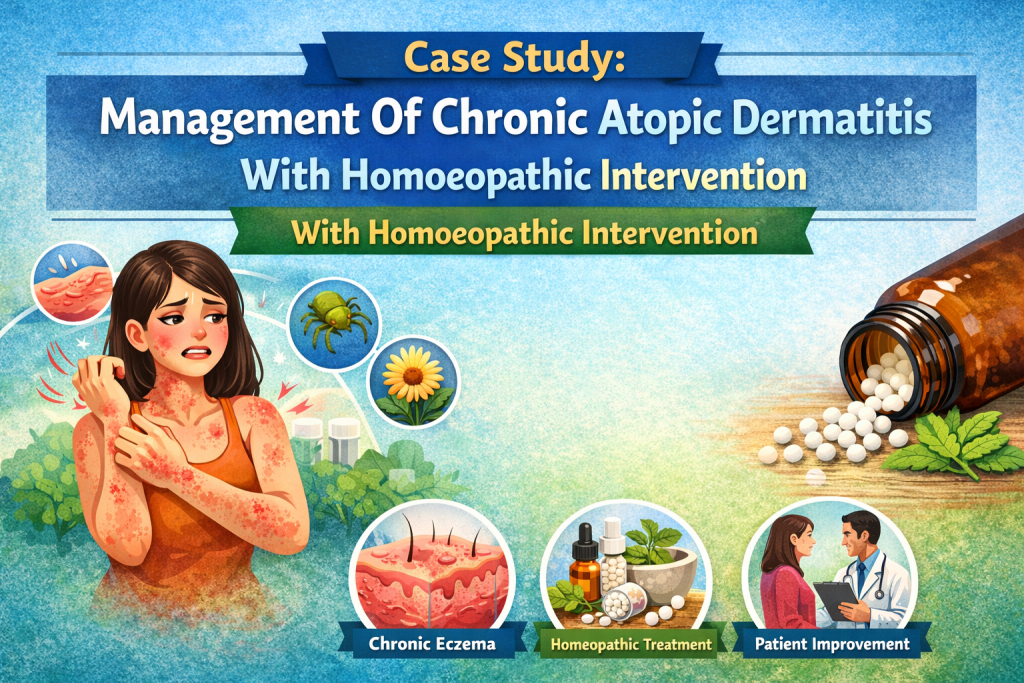
Case Study: Management Of Chronic Atopic Dermatitis With Homoeopathic Intervention
Introduction :
Atopic Dermatitis(AD) is a chronic, inflammatory skin Condition characterized by intense itching, dryness, and the formation of thickened, leathery patches( Lichenification ). For many patients ,the goal of treatment is not just temporary relief, but a reduction in skin inflammation and a restoration of the skin’s natural barrier and appearance.
1. Case History
Identification Data:
∙ Age: 32 years
∙ Sex: Male
∙ Occupation: Fish Market Worker
∙ Address: Rajkot, Gujarat
∙ Date of First Visit: 10/05/2025
2. History of Present Illness
∙ Patient apparently well 2 years back, gradually developed: ∙ Dry, hard, thickened skin over left leg
∙ Severe itching < night
∙ Burning sensation after scratching
∙ Skin became leathery and hyperpigmented
∙ Occasional oozing of sticky discharge during acute flare
∙ Itching so intense that patient scratches until bleeding.
∙ Temporary relief from cold water application.
Aggravation:
∙ Night
∙ Warm weather
∙ After perspiration
∙ Amelioration:
∙ Cold application
∙ Open air
∙ Progressive increase in thickness and discoloration over 2 years.
3. Treatment History
∙ Took Allopathic treatment (Topical corticosteroids) for 6 months → temporary relief.
∙ Symptoms recurred after stopping medication.
∙ Used antifungal creams → no improvement.
∙ No history of long-term systemic steroid use.
4. Past History
∙ Recurrent allergic rhinitis in childhood
∙ No history of diabetes, hypertension, tuberculosis ∙ No major surgical history
5. Family History
∙ Father: Allergic rhinitis
∙ Mother: Healthy
∙ No family history of psoriasis or autoimmune disorders
6. Physical Generals
∙ Thermal Reaction: Hot patient ,Cannot tolerate heat
Desires cold air and cold applications
Complaints < warm weather
∙ Appetite: Good 3 meals per day
Feels hungry at fixed timings
∙ Thirst: Increased 3–3.5 liters per day Prefers cold water
∙ Desire: Spicy food Fish Sour things
∙ Aversion: Milk Sweets
∙ Urine: D: 5–6 time N: 1 time
Colour: Pale yellow No burning
∙ Stool: D: Once daily Character: Soft, well formed No straining
∙ Sleep: 6–7 hours Disturbed due to itching, Unrefreshing
∙ Dreams:Dreams of quarrelling Anxious dreams
∙ Perspiration: Moderate More on face and neck
Odour: Offensive Stains yellow
7.Mental Generals
∙ Irritable due to persistent itching ∙ Anger easily excited but suppresses it ∙ Anxiety about health
∙ Sensitive to contradiction
∙ Fastidious in nature
∙ Restless during complaints
8.General Examination
∙ Moderately built
∙ Weight: 68 kg
∙ BP: 120/80 mmHg
∙ Pulse: 78/min
∙ Tongue: Clean
∙ No lymphadenopathy
9.Local Examination
∙ Left lower leg
∙ Hyperpigmented plaque
∙ Lichenification present
∙ Dry, rough surface
∙ Scratch marks visible
∙ No active bleeding
10.Analysis and Evaluation of Symptoms ∙ Characteristic Symptoms:
∙ Severe itching < night
∙ Burning after scratching
∙ Thick leathery skin
∙ < heat
∙ cold application
∙ Irritable temperament
∙ Offensive perspiration
∙ Totality Constructed On:
∙ Mind: Irritability
∙ Skin: Eczema, chronic, lichenified ∙ Itching < night
∙ Burning after scratching
∙ < heat & cold
∙ Offensive perspiration
11.Repertorial Analysis
∙ Rubrics Selected:
Mind – Irritability
Skin – Eruptions – Eczema
Skin – Itching – Night
Skin – Burning – Scratching after
Generalities – Heat – aggravates
Generalities – Cold application – ameliorates
Perspiration – Offensive
∙ Repertorial Result:
Top Remedies:
Sulphur
Graphites
Hepar Sulph
Arsenicum Album
⮚ After differentiation, Sulphur covered the thermal state and characteristic skin picture most prominently.
12.Repertory/Software Used: ∙ RADAR 10.0 – Synthesis Repertory
(You can insert repertorial screenshot here from your software) 13.Prescription
Rx
Sulphur 200 – Single Dose
Followed by Placebo for 15 days
∙ Advice:
Avoid steroid creams
Avoid excessive soap
Maintain skin hydration
14.Follow Up
∙ 1st Follow-up (15 days):
Itching reduced by 40%
Sleep improved
No new eruptions
Placebo continued.
∙ 2nd Follow-up (1 month):
Pigmentation reducing
Skin texture softer
No burning
Placebo continued.
∙ 3rd Follow-up (2 months):
80% improvement
Lichenification markedly reduced
Sleep refreshing
No repetition required.
15.Comparative clinical assessment:
Before Treatment:
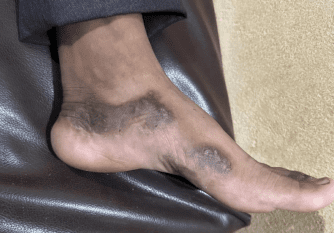
⮚ Hyperpigmented thick leathery plaque
⮚ Intense lichenification
∙ During Treatment:
⮚ Reduced thickness
⮚ Decrease in scratch marks
After Treatment:
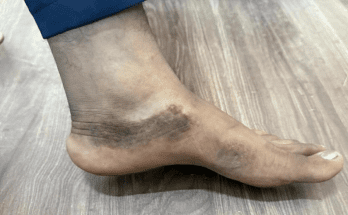
⮚ Significant lightening of pigmentation
⮚ Normal skin texture restored
⮚ Reduction in pigmentation :The intense dark coloring has begun to lighten significantly , suggesting a reduction in the underlying inflammatory process.
⮚ Skin Texture :The leathery appearance has softened.The skin appears smoother and more hydrated ,indicating that the skin barrier is recovering.
16.Conclusion
∙ This case demonstrates that individualized homoeopathic treatment based on totality of symptoms can effectively manage chronic atopic dermatitis. The remedy not only reduced itching and inflammation but also improved general well-being without steroid dependency.
∙ The holistic approach ensured long-term stability and restoration of skin health.
Key Benefits Observed In This Case:
▪ Non-Steroidal Recovery :Achieving skin clearance without the use of topical cortico steroids,which can sometimes cause thinning of the skin.
▪ Long-term Stability: Improving the skin’s health from the “insideout” to prevent frequent flare-ups.
17.References
∙ Boericke W. Pocket Manual of Homoeopathic Materia Medica. ∙ Kent JT. Repertory of the Homoeopathic Materia Medica. ∙ Davidson’s Principles and Practice of Medicine – Dermatology Section.
Co-Author
Grishma Vijaybhai Makwana – BHMS,Intern Batch 2025-26 L.R.Shah Homoeopathy College, Rajkot