Malaria with Its Miasmatic Approach and Homoeopathic Management
Definition:-
Malaria is a mosquito-borne infectious disease caused by a eukaryotic Protista of the genus Plasmodium. It is widespread in tropical and subtropical regions, including parts of America, Asia, and Africa.
Epidemiology:-
Susceptible species: About 65 Plasmodium sp. Have been isolated from over 1,000 different species of birds. Few of the Plasmodium sp. Which has been identified appears to be natural parasites of domestic poultry. A number of other species of Plasmodia that occur primarily in Passerine birds can infect or have been experimentally transmitted to the domestic fowl.
Etiology:-
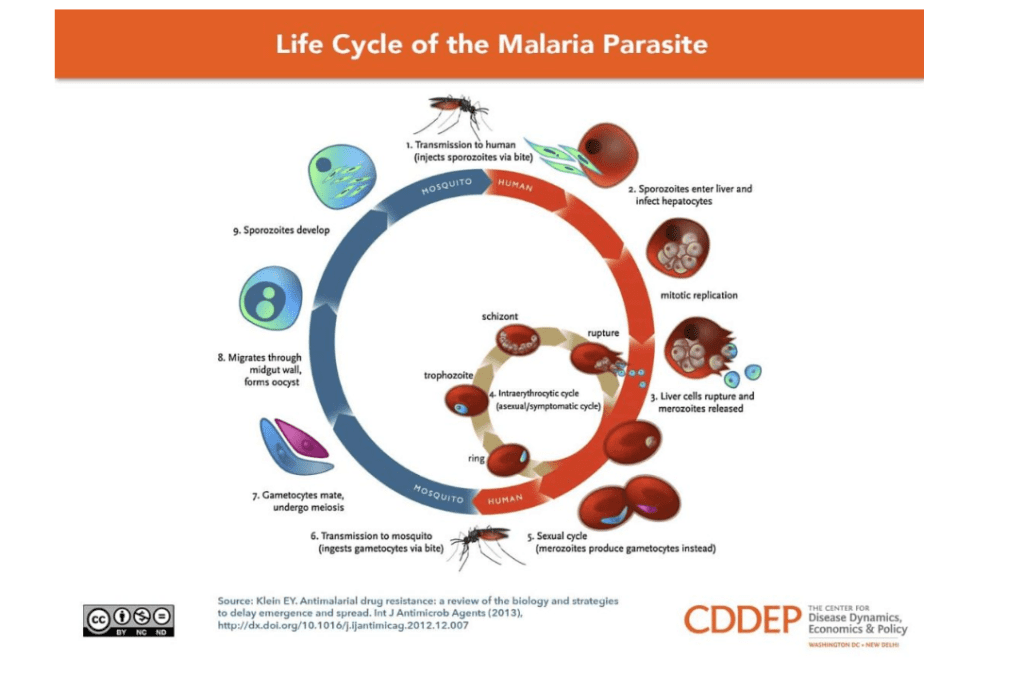
Malaria is a life-threatening disease. It’s typically transmitted through the bite of an infected Anopheles mosquito. Infected mosquitoes carry the Plasmodium parasite. When this mosquito bites you, the parasite is released into your bloodstream. Once the parasites are inside your body, they travel to the liver, where they mature. After several days, the mature parasites enter the bloodstream and begin to infect red blood cells. Within 48 to 72 hours, the parasites inside the red blood cells multiply, causing the infected cells to burst open. The parasites continue to infect red blood cells, resulting in symptoms that occur in cycles that last two to three days at a time.
Risk Factors:-
• Bite from infected mosquito High risk in HIV positive patients Mother to child transmission Visiting regions with malaria
Vectors:-
Plasmodium may exploit several genera of mosquitoes, as vectors and intermediate hosts.
• Culex
• Anopheles,
• Culiceta Mansonia
• Aedes
Incubation Period:-
Incubation period refers to how long it takes from initial infection to the appearance of symptoms. This generally depends on the type of parasite:
• P. Falciparum – 9 to 14 days
• P. Vivax – 12 to 18 days
• P. Ovale – 12 to 18 days
• P. Malariae – 18 to 40 days
Classical Stages:-
• Cold Stage: Characterized by shivering and intense chills, lasting from 15 minutes to an hour.
• Hot Stage: Following the chills, the patient experiences a high fever (up to 41.5 °C or more), headache, and muscle aches, which can last several hours.
• Sweating Stage : The fever breaks, leading to profuse sweating and a rapid drop in body temperature back to normal or below normal, often followed by extreme fatigue.
Clinical Features:-
Common symptoms of malaria:-
• Headaches Nausea and vomiting Body aches and general malaise Diarrhea Enlargement of the spleen and/or liver
Severe Malaria:-
Severe malaria is a medical emergency that occurs when infections are complicated by serious organ failures or abnormalities in the patient’s blood or metabolism. It is primarily caused by the species Plasmodium falciparum and can be rapidly fatal if not treated promptly.
Investigations:-
• Primary Diagnostic Methods:- Microscopy (Gold Standard): Involves examining blood smears (thick for detection, thin for species identification) under a microscope, usually stained with Giemsa.
• Rapid Diagnostic Tests (RDTs): Immunochromatographic tests (dipsticks/cassettes) that detect specific antigens, providing results in 2-15 minutes. Useful in settings without reliable microscopy.
• Molecular Testing (PCR): Polymerase chain reaction tests are highly sensitive for detecting parasites and identifying species, especially when microscopy is inconclusive, though they take longer.
ELISA:-
• A highly sensitive and specific dip-prick test using a monoclonal antibody to falciparum is very useful in field studies.
• Anemia due to destruction of infected RBC.
• Mild leucopoenia especially in pernicious type.
• Plasma albumin, globulin ratio is reversed.
• ESR is raised.
• Indirect reacting bilirubin is increased.
Diagnosis and Prevention:-
• Testing: All suspected cases must be confirmed with Microscopy or RDTs. Prevention: Use insecticide-treated bed nets, insect repellent (DEET), and prophylactic medication when traveling to endemic areas. Safety Warning: Primaquine should not be used in G6PD-deficient patients.
Vector Control Strategies:-
• Methods include Indoor Residual Spraying (IRS) with insecticides, distribution of Insecticide-Treated Nets (ITNs)/LLINs, and biological control using larvivorous fish.
MIASMATIC EVOLUTION:-
The Psora Miasm(The Foundation):- Psora represents the underlying susceptibility. In malaria, this manifests as the prodromal stage: the initial chill, the vague fatigue, and the body’s struggle to mount a defense. Without the Psoric foundation, the body wouldn’t be “fertile ground” for the infection.
The Sycotic Miasm (The Persistence):- When malaria becomes chronic or leads to “cachexia” (anemia and spleen enlargement), the Sycotic miasm is at play.
HOMOEOPATHIC MANAGEMENT:-
Arsenic Album:- Arsenic album is the top Homeopathic medicines for malaria with high fever (heat stage).
• Arsenic Album is one of the most excellent homeopathic medicines for malaria with high grade fever with marked periodicity. Great restlessness accompanying high fever that gets worse after midnight is also treated well with Arsenic Album.
China :-China is one of the most effective Homeopathic medicines for malaria with high temperature that returns every week. The person complains of chill in the morning with debilitating night sweats.
Natrum Muriaticum:-Natrum Muriaticum is top Homeopathic medicines for malaria with headache. Natrum Muriaticum is prescribed in case of continued chilliness along with the headache, especially on waking in the morning.
• Malaria cases with headache that persists from sunrise to sunset are also best treated with Homeopathic medicine Natrum Muriaticum.
Apis Mellifica:- Apis mellifica is prescribed when a chill with sudden violent vomiting is present. The fever comes in the evening between 6 and 7 pm. The chill begins in the chest and abdomen with the feeling of weight on the chest. Skin is dry and hot.
Reference
https://onehealthtrust.org/publications/infographics/life-cycle-malaria-parasite/