Abstract
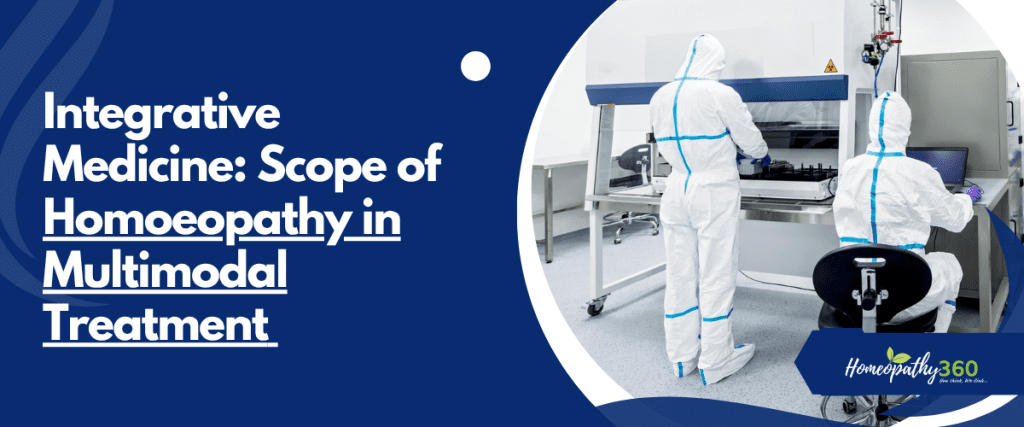
Integrative medicine represents a patient-centered approach that combines conventional medicine with complementary systems like homeopathy, Ayurveda, physiotherapy, and nutrition. In the context of chronic diseases, where mono-therapies often fall short, integrative approaches offer a holistic, individualized, and sustainable model of care. This article explores the scope of homeopathy within integrative frameworks, its synergy with other systems, and the challenges and opportunities in implementing such models in India.
Introduction
The burden of chronic diseases such as diabetes, arthritis, cancer, and mental health disorders is rising globally. Traditional biomedical models, though effective in acute conditions, often fall short in offering holistic solutions to these complex, multi-system disorders. Integrative medicine, which combines evidence-based conventional and complementary systems, has emerged as a promising paradigm.
Homeopathy, with its individualized, minimalistic, and holistic approach, is increasingly being integrated into multidisciplinary treatment plans worldwide. This article critically examines the scope, evidence base, and future of homeopathy in integrative medicine, with a focus on India’s healthcare system.
Understanding Integrative Medicine
Integrative medicine is not simply the co-existence of different systems but a collaborative, evidence-informed approach where the strengths of each modality are utilized in a complementary manner. Its key pillars include:
- Patient-centered care
- Holistic approach
- Prevention and wellness focus
- Evidence-informed therapies
In India, the Ministry of AYUSH has actively promoted integration of homeopathy, Ayurveda, Unani, Siddha, and Yoga into mainstream healthcare through various national programs and co-location of services.
Role of Homeopathy in Chronic Disease Management
Homeopathy, a system based on the principle of “Similia Similibus Curentur”, offers a time-tested approach to managing chronic, recurrent, and psychosomatic conditions. Its integration is particularly beneficial in:
- Autoimmune diseases (e.g., rheumatoid arthritis, psoriasis)
- Mental health disorders (e.g., depression, anxiety, OCD)
- Metabolic syndromes (e.g., diabetes, PCOS, obesity)
- Palliative care (e.g., cancer support)
- Functional GI disorders (e.g., IBS, GERD)
Homeopathic remedies are non-toxic, cost-effective, and can often be administered alongside conventional drugs with minimal risk of adverse interactions.
Models of Integration
1. Parallel Integration
Different systems work independently on the same patient. For example, an allopathic doctor treats a diabetic patient’s blood sugar, while a homeopath manages their neuropathy or anxiety.
2. Collaborative Integration
Shared case records, joint case discussions, and treatment planning by allopathy, homeopathy, and Ayurveda practitioners. For example, in chronic arthritis, NSAIDs may be combined with constitutional homeopathy and Ayurvedic physiotherapy.
3. Institutional Integration
Hospitals like Tata Memorial Hospital (Mumbai) and Banaras Hindu University (BHU) have integrative clinics where AYUSH and allopathic services are co-located and managed under a unified protocol.
Case Study: Integrative Oncology at Tata Memorial Centre, Mumbai
Tata Memorial Hospital has initiated collaborative research involving homeopathy as an adjunct to chemotherapy. Homeopathic medicines like Arnica, Cadmium Sulph, and Carcinosinum are being studied for their role in minimizing chemotherapy side effects, fatigue, and improving quality of life.
Preliminary data suggests:
- Reduction in nausea and mucositis in cancer patients receiving adjunct homeopathy.
- Improved sleep and mood in patients undergoing radiotherapy.
This model represents a working example of evidence-informed, patient-centered integrative care.
Benefits of Integrative Approach Involving Homeopathy
| Benefit | Description |
|---|---|
| Holistic Healing | Targets mental, emotional, and physical layers together |
| Reduced Drug Burden | Lower dependence on painkillers, sedatives, and steroids |
| Improved Quality of Life | Particularly in palliative care and psychosomatic disorders |
| Enhanced Patient Satisfaction | Patients feel “heard” and “understood” in individualized care |
| Cost-Effectiveness | Homeopathy is generally inexpensive and requires minimal infrastructure |
. Challenges in Integration
- Lack of Standard Protocols for dosages and combinations
- Inter-system Distrust among practitioners
- Scientific Validation Gap – Need for more RCTs and long-term data
- Regulatory Ambiguity – No clear inter-referral guidelines
- Training Deficiency – Few cross-disciplinary education programs
8. Recommendations for Effective Implementation
- Create interdisciplinary clinical protocols
- Strengthen AYUSH-ICMR collaborative research
- Introduce training modules on integrative care in MD (Homeo) & MBBS programs
- Promote digitization of integrated medical records
- Establish Centers of Excellence in Integrative Medicine in medical colleges
9. Conclusion
Homeopathy has immense potential within integrative medicine, especially for chronic and lifestyle-related conditions. By combining it thoughtfully with conventional and other AYUSH therapies, we can achieve a truly patient-centric, safe, and holistic model of care.
India, with its pluralistic medical tradition, is well-positioned to lead in integrative healthcare. However, the path forward demands scientific validation, collaborative training, and policy reforms that allow these systems to complement rather than compete with each other.
The future of medicine lies not in choosing sides, but in choosing synergy.
References
- Ministry of AYUSH. National Health Policy 2017. Government of India.
- Oberbaum M, Singer SR, et al. Homeopathy in Integrative Oncology. Oncology (2010).
- Central Council for Research in Homoeopathy (CCRH). Clinical Research Summaries. Govt of India.
- Bell IR, Koithan M, Brooks AJ. Integrative medicine and homeopathy: An overview. Global Adv Health Med.
- Banerjee A, Nigam A. Homeopathy as adjunct in cancer care. Indian J Res Homoeopathy
.
Dr.Umesh masram
MD HOM.
Assistant professor
Dept. of Practice of medicine
Dr. Riya Pal
{ MD Scholar }
Dept. Of Practice Of Medicine
Govt. Hom. Medical College, Bhopal.