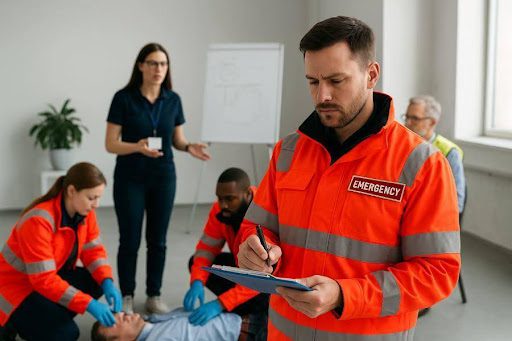
Emergency officers serve as pivotal figures in safeguarding public health during crises that range from infectious disease outbreaks to chemical spills and mass casualty incidents. Their responsibilities extend beyond immediate medical interventions to encompass comprehensive crisis management training and disaster response training, ensuring communities’ resilience and safety. These officers act as the linchpins in public safety training, coordinating efforts that involve first responder training, emergency medical training, hazardous materials training, and fire safety training to address diverse threats effectively.
Integral to their function is mastery of the Incident Command System (ICS), a standardized framework for command and control during emergencies. This system allows emergency officers to streamline operations in an Emergency Operations Center (EOC), which serves as the nerve center for crisis coordination and communications interoperability between agencies such as Emergency Medical Services (EMS), the Fire Department Training Academy, local law enforcement, and organizations like the American Red Cross and Federal Emergency Management Agency (FEMA).
Core Skills Developed Through Emergency Officer Training
- Risk Assessment and Hazard Identification: Critical for proactive disaster preparedness, officers are trained to evaluate potential threats including natural disaster preparedness scenarios, terrorism response capabilities, and chemical or biological hazards requiring specialized personal protective equipment training.
- Incident Command and Control: Training in the incident command system ensures officers can establish clear hierarchies and delegate responsibilities effectively in multi-agency responses, harnessing full command over mass casualty incident training and emergency communication channels.
- First Responder Coordination: Through first responder training, firefighter training, and emergency medical training, officers learn to integrate field teams while maintaining safety protocols guided by OSHA standards and National Safety Council (NSC) guidelines.
- Emergency Communications Interoperability: Ensuring seamless communication between disparate agencies is imperative. Training simulators and exercises emphasize communications interoperability to avoid information silos during critical events.
- Evacuation and Safety Drills: Proficiency in organizing emergency evacuation drills and safety drills enhances preparedness to swiftly relocate vulnerable populations during outbreaks or chemical exposure incidents.
These skills are enhanced via structured programs at institutions like OSHA, FEMA, and training academies that emphasize multi-disciplinary approaches, ensuring officers can perform under pressure while adapting to ever-changing scenarios.
Simulation and Real-World Scenario Practice
The complexity of public health emergencies demands experiential learning beyond theoretical knowledge. Training simulators deliver immersive environments replicating high-stress situations such as mass casualty incident response, active shooter response, and urban search and rescue operations. These realistic scenarios allow emergency officers to refine decision-making, resource allocation, and command execution within tightly controlled conditions that mimic real-life disasters.
Fire Department Training Academies and EMS training programs often incorporate joint exercises simulating large-scale urban disasters, enabling emergency officers to lead inter-agency incident response team training. These exercises emphasize the integration of evacuation procedures, triage protocols, and hazardous materials containment to develop operational fluency.
Community Emergency Response Teams (CERT) are regularly engaged in such drills, fostering grassroots preparedness and facilitating coordination between officials and volunteers. Safety drills and emergency evacuation drills governed by workplace emergency plans ensure a culture of readiness that permeates organizations and communities alike.
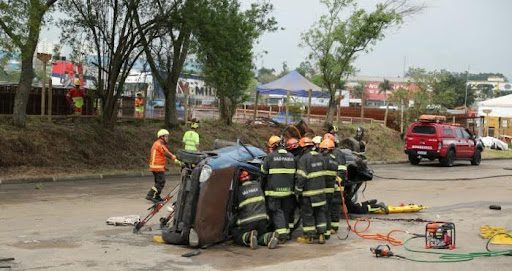
Coordination and Communication During Public Health Crises
Effective coordination and communication are the cornerstones of successful public health emergency management. Emergency officers are trained extensively in establishing and maintaining robust emergency communication systems that enable timely information flow between first responders, public health officials, and supporting agencies.
The Emergency Operations Center (EOC) functions as the hub for command and control, integrating inputs from various sources including Crisis Intervention Teams, EMS, fire and police departments, and volunteer organizations like CERT. The officer’s role encompasses managing communications interoperability, ensuring that radio systems, digital platforms, and traditional communication channels operate synergistically.
Crisis management training emphasizes maintaining a common operating picture, where situational awareness is constantly updated and disseminated to all stakeholders. This coordination facilitates the deployment of emergency medical training teams, search and rescue units, and hazmat response crews with precision, optimizing resource utilization during time-sensitive mass casualty incidents.
Continuous Learning and Adaptation in Emergency Response
Public health emergencies are inherently unpredictable, requiring emergency officers to embrace a philosophy of continuous learning and adaptability. Programs offered by entities such as the Federal Emergency Management Agency (FEMA), the International Association of Emergency Managers (IAEM), and the National Safety Council (NSC) provide ongoing professional development through workshops, refresher courses, and updated certifications.
Advances in technology, evolving public health threats, and lessons learned from past incidents shape new curricula in crisis management training and disaster response training, pushing emergency officers to upgrade their skills regularly. Visit www.metrofire.com.au to learn more.