Abstract
Lichen planus is a chronic inflammatory disorder of the skin and mucous membranes that often affects the quality of life of the patient due to persistent itching and long disease duration. The condition is believed to be immune-mediated and is frequently associated with emotional stress. Conventional treatment usually provides temporary symptomatic relief, while recurrence remains common.
Homoeopathy offers a holistic and individualized approach by treating the patient as a whole rather than focusing only on local skin manifestations. This case report presents the successful management of a patient suffering from lichen planus with individualized homoeopathic treatment. Significant improvement was observed in skin lesions, itching, and overall well-being, suggesting the usefulness of homoeopathy in chronic dermatological conditions.
Keywords
Lichen Planus, Homoeopathy, Chronic Skin Disease, Case Study, Individualized Treatment
Introduction
Lichen planus is a chronic inflammatory skin condition characterized by violaceous, flat-topped papules associated with intense pruritus. It commonly affects adults and may involve the skin, oral mucosa, nails, and scalp. The exact etiology of lichen planus is unknown, but immune dysregulation, stress, drugs, and infections are considered important contributing factors.
From a homoeopathic perspective, skin diseases are considered external expressions of internal imbalance. Therefore, treatment is based on the totality of symptoms, including mental, emotional,
and physical aspects. Individualized homoeopathic treatment aims to provide long-term relief and prevent recurrence.
Signs and symptoms
The following may be noted in the patient history:
Lesions initially developing on flexural surfaces of the limbs, with a generalized eruption developing after a week or more and maximal spreading within 2-14 weeks.
Pruritus of varying severity, depending on the type of lesion and the extent of involvement
Oral lesions that may be asymptomatic, burning, or even painful.
In addition to the widespread cutaneous eruption, LP can involve the following structures:
- Mucous membranes
- Genitalia
- Nails
- Scalp
The clinical presentation of LP has several variations, as follows:
- Hypertrophic LP
- Atrophic LP
- Erosive/ulcerative LP
- Follicular LP (lichen planopilaris)
- Annular LP
- Linear LP
- Vesicular and bullous LP
- Actinic LP
- LP pigmentosus
- LP pemphigoides
Case Summary
A 42-year-old female patient reported to the outpatient department with complaints of itchy skin lesions present for the past eight months. The lesions initially appeared on both wrists and gradually spread to the ankles. The itching was severe, especially during night hours, leading to disturbed sleep and irritability.
The patient had previously taken conventional treatment, including topical applications, which gave only temporary relief. Symptoms reappeared after discontinuation of medication. Due to the chronic nature of the disease and repeated relapses, the patient opted for homoeopathic treatment.
A detailed case history was taken, focusing on physical complaints, mental and emotional state, sleep pattern, and stress factors. Emotional stress was found to be a major aggravating factor. Based on the complete case analysis and symptom totality, an individualized homoeopathic remedy was selected.
Patient Information
- Age: 42 years
- Gender: Female
- Occupation: Homemaker
- Marital Status: Married
Chief Complaints:
- Purplish, itchy skin lesions over wrists and ankles
- Burning sensation after scratching
- Disturbed sleep due to itching
Duration of Illness: 8 months
Past Medical History: No significant chronic illness
Family History: Non-contributory
Mental State: The patient was anxious, emotionally sensitive, and stressed. Mental stress aggravated the skin complaints.
Clinical Findings
On clinical examination, multiple flat-topped, polygonal, violaceous papules were observed over the flexor surfaces of both wrists and ankles. The lesions were associated with severe pruritus, worse at night. Mild hyperpigmentation was present around the affected areas.
Wickham’s striae were faintly visible. There was no involvement of oral mucosa, nails, or scalp. General physical examination was within normal limits.
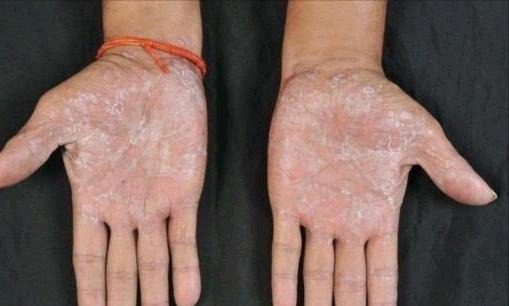
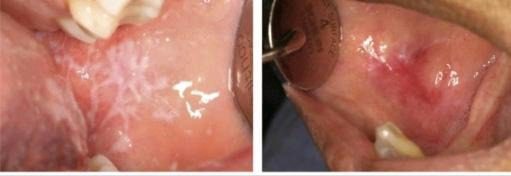
Fig: Wickham striae
Management
It is difficult to list specific medicines as treatment is highly individualized. However, commonly prescribed options may include Lycopodium clavatum, Sulphur, Thuja occidentalis, Sepia, Arsenicum iodatum, Phosphorus, Psorinum, Bovista, Mercurius solubilis, Natrum muriaticum, and Tuberculinum.
Selection depends on:
● Symptom pattern
● Disease distribution
● Chronicity
Duration:
The duration of treatment largely depends on the following factors:
● Type of Lichen Planus
● Duration (chronicity) of the condition
● Severity and extent of involvement
● Single or multiple sites affected (skin, mouth, nails, scalp, genitals, etc.)
● Previous use of corticosteroids or other immunosuppressive medicines
Therapeutic Intervention
After thorough case analysis, an individualized homoeopathic remedy was prescribed based on the totality of symptoms. The potency and repetition were decided according to the patient’s susceptibility and chronicity of the disease.
Homoeopathic Treatment and Management
After detailed case taking and analysis, the case was approached on the principles of individualization and totality of symptoms, giving due importance to both mental generals and physical particulars.
The totality of symptoms included:
- Purplish, intensely itchy eruptions over wrists and ankles
- Severe itching with burning sensation after scratching,Marked aggravation at night,Disturbed sleep due to itching
- Emotional sensitivity and anxiety.
- Clear aggravation of skin complaints during periods of mental stress.
- Chronicity with frequent relapses after conventional treatment.
- Considering the above symptom totality and miasmatic background, an individualized homoeopathic remedy was selected.
Selected Remedy:
Arsenicum album was prescribed as it closely covered the characteristic features of the case, such as
- Intense itching and burning of skin lesions
- Aggravation at night
- Anxiety, restlessness, and emotional sensitivity
- Chronic skin conditions with relapsing tendency
Potency and Dosage:
- Arsenicum album 200C
- One dose was administered, followed by placebo.
- The patient was kept under close observation with regular follow-ups
The remedy was repeated only when indicated, based on symptom recurrence or stagnation, strictly following homoeopathic principles.
During subsequent follow-ups:
- Gradual reduction in itching intensity was observed
- Burning sensation after scratching significantly decreased
- Sleep quality improved
- No new lesions appeared
- Old lesions started flattening with gradual change in discoloration
- Mental symptoms also showed improvement, with reduced anxiety and better emotional stability.
Adjunctive Management
- Along with internal medication, the patient was advised:
- To avoid excessive scratching and harsh soaps
- To maintain proper skin hygiene
Stress management through relaxation technique;
- Adequate sleep and a balanced diet
- No topical medicated ointments were advised during the course of homoeopathic treatment.
- The patient was advised regarding proper skin care, avoidance of known triggers, and stress management. No topical steroids or conventional medicines were used during the course of homoeopathic treatment. Regular follow-ups were conducted to assess progress.
Follow-Up and Outcome
During the initial follow-ups, the patient reported a marked reduction in itching and improvement in sleep quality. Gradually, the lesions became flatter and less prominent, and discoloration started fading. No new lesions appeared during the treatment period.
Mentally, the patient felt calmer and more confident. Overall general health improved without any adverse effects.
Discussion and Conclusion
Lichen planus is a chronic condition that often requires long-term management. This case highlights the role of individualized homoeopathic treatment in managing lichen planus by addressing the patient as a whole rather than suppressing local symptoms.
The positive outcome in this case suggests that homoeopathy can be a safe and effective therapeutic option in chronic dermatological disorders like lichen planus. Further clinical studies with larger sample sizes are recommended to support these findings.
References:
- Lehman, J. S., Tollefson, M. M., & Gibson, L. E. (2009). Lichen planus. International Journal of Dermatology, 48(7), 682–694. https://doi.org/10.1111/j.1365-4632.2009.04062.x
- Nwabudike, L., Miulescu, M., & Tatu, A. (2019). Case series of an alternative therapy for generalised lichen planus: Four case studies. Experimental and Therapeutic Medicine, 18(2), 943–948. https://doi.org/10.3892/etm.2019.7677
- Wastner, R. S. M. B. F., Zanferrari, F. L., & Sassi, L. M. (2017). Homeopathic treatment in oral lichen planus control. JORDI – Journal of Oral Diagnosis, 2, 1–4. https://doi.org/10.5935/2525-5711.20170001
- James, W. D., Elston, D., & Berger, T. (2011). Andrew’s Diseases of the Skin E-Book: Clinical Dermatology. Elsevier Health Sciences.
- Journal of Cutaneous and Genito-Urinary Diseases. (1902).
- Edwards, P. C., & Kelsch, R. (2002). Oral lichen planus: clinical presentation and management. PubMed, 68(8), 494–499. https://pubmed.ncbi.nlm.nih.gov/12323106
- Axéll, T., & Rundquist, L. (1987). Oral lichen planus – a demographic study. Community Dentistry and Oral Epidemiology, 15(1), 52–56. https://doi.org/10.1111/j.1600-0528.1987.tb00480.x
- Lamba, P. (2024). Lichen Planus Treated with Individualized Homeopathic Medicine, A Case Report. PubMed, 30(4), 144–147. https://pubmed.ncbi.nlm.nih.gov/38702160
- Crawford, F. C. (2017). Effectiveness of homeopathic arsenicum album in the treatment of oral lichen planus. In Edinburgh Research Archive (University of Edinburgh). http://hdl.handle.net/1842/24499
Co-Author-
Dr.Umesh Mesaram, Head of Department, Department of Practice of medicine, Nodal officer, Government Medical Homeopathic Medical College and Hospital, Bhopal, Madhya Pradesh