Abstract:
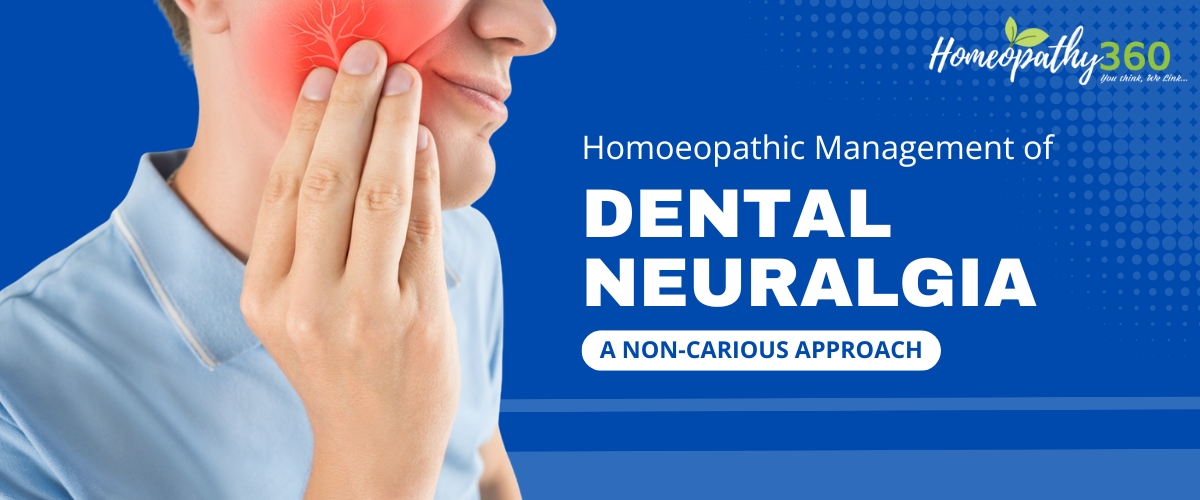
Dental neuralgia refers to toothache-like pain arising without any evident carious pathology or infection. Common in individuals with sensitive nerves or systemic disturbances, it presents a diagnostic and therapeutic challenge. Homoeopathy offers a promising alternative to conventional analgesics by addressing the root cause through a holistic, individualized approach. This article explores the homoeopathic understanding and management of dental neuralgia with emphasis on commonly indicated remedies, case-taking strategy, and supportive measures.
Introduction:
Dental pain is typically associated with dental caries or infection; however, many patients present with neuralgic toothache where no apparent dental cause is found. Known as atypical odontalgia, this condition may arise due to nerve hypersensitivity, psychological stress, hormonal imbalance, or systemic disorders. It is often misdiagnosed or over-treated by conventional dental approaches.
Homoeopathy offers a non-invasive, patient-specific therapeutic option that targets the underlying neurogenic or psychosomatic origin of pain without resorting to sedatives or unnecessary dental procedures.
Understanding Dental Neuralgia in Homoeopathy:
In homoeopathy, the patient is viewed as a whole, and symptoms like pain in the teeth are often reflections of deeper imbalances in the nervous system or emotional health. Factors like grief, anxiety, suppressed anger, hormonal changes, or even prior dental trauma can act as maintaining causes in such neuralgias.
Key characteristics of the pain—its location, timing, modality, and associated systemic or emotional symptoms—help in selecting the most similar remedy.
⸻
Commonly Indicated Remedies:
- Plantago Major: This is one of the most frequently used remedies for neuralgic pain in the teeth, especially if the pain radiates to the ears and there is hypersalivation. The patient may experience increased pain at night.
- Magnesia Phosphorica: Suitable for spasmodic, shooting pain in the teeth, relieved by warmth and pressure. Often helpful in right-sided toothaches. Emotionally sensitive patients benefit most.
- Chamomilla: Indicated for patients who are extremely irritable with unbearable pain.Toothache worsens from warm drinks and is commonly seen in children during dentition or in hormonal females.
- Coffea Cruda: Great sensitivity to pain, particularly where the slightest touch or exposure to air triggers severe pain. Often seen in people with overactive minds and insomnia.
- Spigelia: Used when there is a sharp, stabbing pain that moves in radiating patterns, often associated with trigeminal neuralgia. Pain aggravated by movement, touch, and cold.
- Staphysagria: Useful when toothache arises after dental procedures or emotional suppression (like insult, grief, or anger). The pain may be sharp, cutting, and intolerable.
- Hypericum: Ideal in cases of nerve damage following dental work, injury, or trauma. Patients may describe the pain as electric, shooting, or tingling.
Case-Taking in Dental Neuralgia:
A thorough case-taking should include:
- Pain modality: Aggravations and ameliorations
- Emotional triggers: Stress, grief, anger
- Menstrual or hormonal history in females
- Medical history: Diabetes, neuralgias, migraines
- Past dental interventions or surgeries
- Associated sensations: Tingling, numbness, radiating pain
These details help in differentiating remedies and tailoring treatment to the individual constitution.
Supportive Measures:
- Avoidance of cold air or cold water if it aggravates
- Application of warm packs (if it relieves)
- Maintaining oral hygiene without triggering sensitivity
- Stress management techniques: meditation, breathing exercises
- Dietary support: Avoiding hard or cold foods
Advantages of Homoeopathic Approach:
- No dependency on painkillers: Homoeopathy offers sustained relief without suppressing the pain through drugs.
- Holistic treatment: Emotional, nervous, and systemic causes are
addressed together.
- Avoidance of unnecessary dental procedures: Helps patients avoid root canal or extraction where there is no pathological need.
- Safe for all ages: Especially helpful in children and elderly patients sensitive to medications.
Discussion:
Dental neuralgia can often leave both dentists and patients puzzled due to lack of clinical findings. In many cases, the patient is referred to a neurologist or psychologist. Homoeopathy fills this gap by offering a treatment route based not on visible pathology but on symptomatology and the patient’s individuality.
Though empirical data is limited, many case studies and clinical experiences support homoeopathy’s role in these conditions. With proper remedy selection, homoeopaths can manage neuralgic dental pain effectively without invasive interventions.
Conclusion:
Dental neuralgia presents a unique challenge where pain is real but the pathology is invisible. Homoeopathy offers a compassionate and effective approach to treating such cases by focusing on the patient’s mental, emotional, and physical dimensions. Remedies like Plantago, Chamomilla, Magnesia Phos., and Hypericum have shown significant benefit in clinical practice. Further research and documentation can help strengthen its place in integrative dental care.
References:
- Boericke, W. (1927). Pocket Manual of Homoeopathic Materia Medica.
- Clarke, J.H. (1902). A Dictionary of Practical Materia Medica.
- Kent, J.T. (1905). Lectures on Homoeopathic Materia Medica.
- Vithoulkas, G. (1980). The Science of Homeopathy.
- Journal of Oral Rehabilitation. “Atypical odontalgia: Clinical characteristics and therapeutic considerations.”
- Allen, H.C. (1905). Keynotes and Characteristics with Comparisons.
- British Dental Journal (2016). “Non-odontogenic pain: Practical overview for the general dentist.”
Author: Dr. Sanchay Vasdev
Affiliation: Naiminath Homoeopathic Medical College, Hospital and Research Centre