ABSTRACT
Polycystic Ovary Disease (PCOD) is a hormonal disorder affecting women of reproductive age, characterized by irregular or absent ovulation, elevated androgen levels or multiple small cysts on the ovaries. A case of 18 years female was taken for the study. The case was taken with presenting complaints with detailed history. After physical general, mental generals, physical examination the case was repertorised and treated homoeopathically.
Keywords – Homoeopathy, PCOD
INTRODUCTION
PCOD, or polycystic ovarian disease, was originally described in 1935 by Stein and Leventhal, with the signsoligo-amenorrhea and polycystic ovaries that was variably accompanied by hirsutism, acne, and obesity(1) . The condition is defined as having at least one ovary with an ovarian volume of more than 10 mL and at least one ovary with an estimated ten tiny cysts that range in diameter from 2 to 9 mm(2). It is typically only identified when issues arise that substantially lower a patient’s quality of life (e.g., hair loss, alopecia, acne, and issue connected to infertility)(3). While PCOD can develop at any age, starting with menarche, most cases are seen in people between the ages of 20 and 30(4). A range of environmental factors, including geography, diet and nutrition, socioeconomic status, and environmental pollutants, are possibly contributing to the development, occurrence, and management of PCOD (5) .
CASE STUDY–
Age: 18 years
Gender: Female
Date of First Consultation: 01/01/2025
Chief complaints
- PCOD (Polycystic Ovarian Disease) – Duration: 2 months
◆ Irregular menses (since 3–4 years)
◆ Last Menstrual Period (LMP): 15/12/2024
◆ Pain: Lower abdomen, acute and stitching
◆ Weight loss: 5–6 kg in 3 months
◆ Irregular sleep, mood swings, and low appetite
2) Anxiety & Irritation – Duration: 3 months
◆ Negative thoughts, worse at night
◆ Anxiety during sleep, suicidal thoughts
◆ Lack of concentration, poor memory, easily distracted
◆ Low confidence
◆ Introverted, obstinate
PAST HISTORY-
Took allopathic medicine
FAMILY HISTORY-
Father – Diabetes mellitus
Mother- Hypertension
PHYSICAL GENERALS-
Appetite- Decreased
Thermals- Chilly
Desire- Spicy food
Tongue- Thick yellow coated
Aversion- Onion
Urine/ Stool- Normal
Perspiration- Normal
Sleep – Disturbed due to overthinking
Temperament – Irritable and angry
MENTAL GENERALS-
◆ Irritability well marked, short-tempered, reacts with anger and frustration. Sudden mood changes.
◆ Anxiety, negative thoughts, worse at night
◆ Restlessness of mind, lack of focus and poor concentration
◆ Low memory retention and mental fog
◆ Emotional instability – easily cries
◆ Feeling of isolation, misunderstood
◆ Difficulty in trusting others
◆ Emotional triggers – breakup with best friend
◆ Low self-esteem and self-worth
◆ Suicidal thoughts (mentioned on 12/03/2025)
◆ Easily offended and hypersensitive to criticism
PHYSICAL EXAMINATION
BP- 100/70 MMHG
PULSE – 82/min
R/R – 18/min
Temp. – Afebrile
Weight – 44.8 kg
Appearance- Thin build, long limbs, slender neck
Hair- Hair fall, 20–25 strands/day, persistent
TOTALITY OF SYMPTOMS-
◆ Mood swings: sadness ↔anger ↔anxiety
◆ Suicidal thoughts during emotional lows
◆ Irritability well marked, short-tempered, reacts with anger and frustration.
◆ Suicidal thoughts during emotional lows
◆ Irregular menses (since 3–4 years)
◆ Stitching pain in lower abdomen
ANALYSIS OF SYMPTOMS –
Symptoms- Irregular menses with pain in lower abdomen
Location – Abdomen
Sensation – Stitching pain
Modalities -Worse before menses
Concomitant – Weakness
ANALYSIS OF THE CASE-
1. PHYSICAL GENERAL:
Desire- Spicy food
Tongue – thick yellow coated
Sleep – Disturbed due to overthinking
Temperament – Irritable and angry
2. MENTAL GENERALS-
Mentally she was very irritable and has suicidal thoughts
3) PATHOLOGICAL-
Polycystic ovarian disease (PCOD)
4) CHARACTERISTIC PARTICULAR
Irregular menses with stitching pain in lower abdomen, with anxiety at night.
EVALUATION OF SYMPTOMS-
◆ Anxiety especially at night
◆ Easily offended and hypersensitive to criticism
◆ Restlessness of mind, lack of focus and poor concentration
◆ Suicidal thoughts
◆ Irregular menses with lower abdominal pain
◆ Hair fall
REPERTORIZATION-

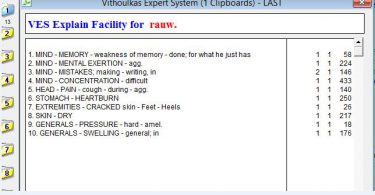
Symptoms of repertorial totality were used, for
repertorisation we used synthesis repertory.4 PRESCRIPTION-
Rx
Carcinosin 200 stat dose
Rubrum met 200/5 pills/ BD for 25 days
Follow up –
| DATE PROGRESS PRESCRIPTION | ||
| 25/02/2025 | – Better -Had her menses (LMP-13/02/25)- – No abdominal pain – Hair fall decreased by 10% | No need to repetition of medicine, only given placebo for 15 days |
| 15/03/2025 | -Appetite increased, Starting to gain weight – Hair fall decreased 60% – Emotional stability improved | – Carcinosin 200 stat dose – Placebo for 25 days by |
| 15/05 /2025 | – Emotionally stable, do not get easily irritated like before. – Sound sleep, no anxiety | Placebo 30 BD for 10 days |
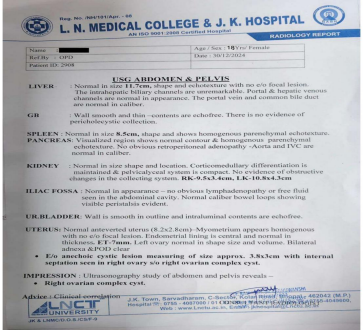
Before
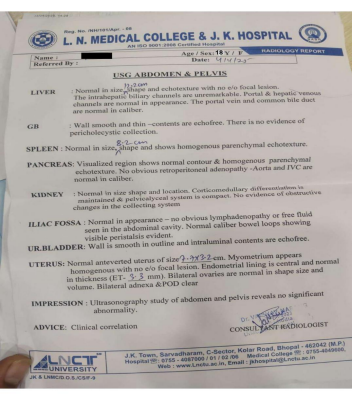
After
DISCUSSION
From the above case, we understand that PCOD (Polycystic Ovarian Disease) is a hormonal imbalance condition and also difficult to cure by modern medicine but it can be cured by homeopathic medicine. Here carcinosin 200 was selected according to susceptibility and severity of case. Then she started improving and we prescribed a placebo. After some time he felt better both physically and mentally.
CONCLUSION
Homoeopathy treats the case magically when we select medicine according to symptoms similarity. In this case patients had better quality of life due to homoeopathic medicine. As we know from our Organon of medicine, exact observation and correct interpretation help in this process of cure.
REFERENCES-
- Stein IF, Leventhal ML.Amenorrhea associated with bilateral polycystic ovaries.Am J Obstet Gynecol.1935;29;181–191. Google Scholar Crossref WorldCat
- Balen A.H., Tan S.L., MacDougall J., Jacobs H.S. Miscarriages following in-vitro fertilization are increased in women with polycystic ovaries and reduced by pituitary desensitization with buserelin. Hum.Reprod.1993;8:959–964. doi: 10.1093/oxfordjournals.humrep.a138174.[DOI] [PubMed] [Google Scholar]
- Azziz R., Woods K.S., Reyna R., Key T.J., Knochenhauer E.S., YildizB.O. The prevalence and features of the polycystic ovary syndromeinan unselected population. J. Clin. Endocrinol. Metab. 2004;89:2745–2749. doi: 10.1210/jc.2003-032046. [DOI] [PubMed] [GoogleScholar]
- Bremer A.A. Polycystic ovary syndrome in the pediatric population.Metab. Syndr. Relat. Disorders. 2010;8:375–394. doi: 10.1089/met.2010.0039. [DOI] [PMC free article] [PubMed] [GoogleScholar]
- Merkin S.S., Phy J.L., Sites C.K., Yang D. Environmental determinants of polycystic ovary syndrome. Fertil. Steril. 2016;106:16–24. doi:10.1016/j.fertnstert.2016.05.011. [DOI] [PubMed] [Google Scholar]
- Schroyens F, editor. Textbook of repertory language: For essential synthesis. Aberdeen, Scotland: Homeopathic Book; 2007.
About the Autor:
Dr. MILLO OPI1, Dr. AJAY SINGH PARIHAR2
- PG Scholar, Department of Paediatric, Govt. Homoeopathic Medical College And Hospital, Bhopal, Madhya Pradesh.
- Professor, Head of the department, Department of Paediatric, Govt. Homoeopathic Medical College and Hospital, Bhopal, Madhya Pradesh.