Abstract – Hypertension remains one of the leading contributors to the global burden of disease. Blood pressure levels, which exhibit a normal distribution across the general population, are strongly associated with the risk of cardiovascular events, including stroke and coronary artery disease. The prevalence of hypertension rises significantly with advancing age. Effective blood pressure management plays a crucial role in reducing cardiovascular morbidity and mortality, lowering the incidence of acute coronary syndromes by 20–25%, stroke by 30–35%, and heart failure by nearly 50%. These statistics underscore the importance of early diagnosis, regular monitoring, and optimal therapeutic strategies in the prevention of hypertension-related complications.
Keywords: Coronary artery disease, stroke, Diastolic blood pressure, Secondary hypertension, systolic blood pressure, Essential hypertension.
Definition:
Hypertension, also known as high blood pressure, is a condition where the force of the blood against the artery walls is consistently too high. Over time, this can cause serious health problems, such as heart disease, stroke, kidney damage, and more.
Hypertension is defined as a persistent elevation of arterial blood pressure, where systolic blood pressure (SBP) is ≥ 140 mm Hg and/or diastolic blood pressure (DBP) is ≥ 90 mm Hg, measured on at least two separate occasions under standardized condition
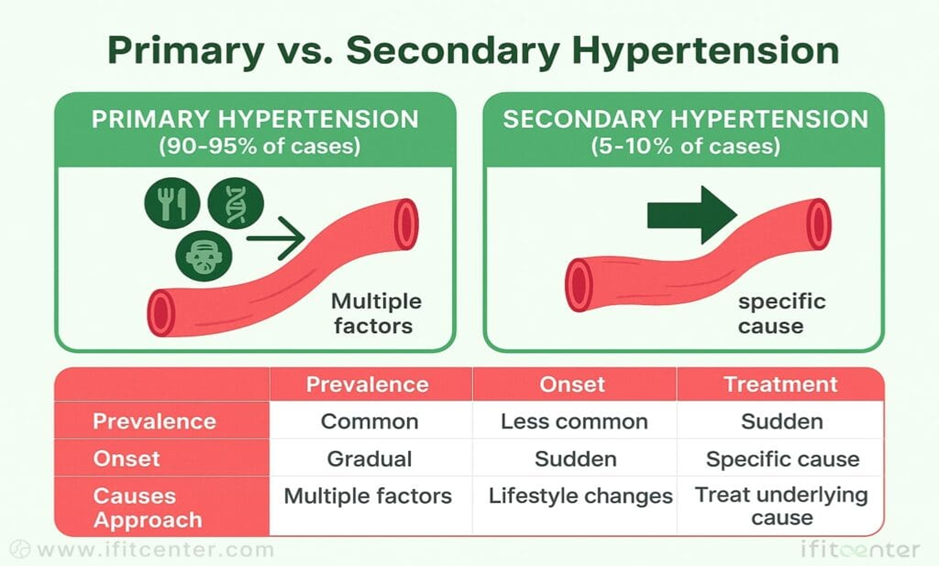
Primary hypertension—also known as essential or idiopathic hypertension—is the most common form of high blood pressure, accounting for 85–95% of adult cases. It’s a chronic condition with no single identifiable cause, developing gradually due to a mix of factors
- 95% of hypertensive patients due to multiple genetic and environmental factors.
- The onset between ages 25 and 50 years.
- uncommon before age 20 years.
Causes & Risk Factors
- Genetic predisposition: Often runs in families; it’s a polygenic trait involving multiple genes tied to blood pressure control systems like the renin-angiotensin-aldosterone pathway.
- Lifestyle & environment: Risk factors include high salt intake, obesity, sedentary lifestyle, excessive alcohol or caffeine, chronic stress, and aging.
- Other contributors: Emerging research links immune system activation and gut microbiome imbalances to the development of hypertension.
Lifestyle Modifications (first-line)
- Diet: Adopt the DASH approach – rich in fruits, veggies, whole grains, low-fat dairy; minimize salt, saturated fats.
- Physical activity: Aim for ~150 min/week of moderate aerobic exercise.
- Weight control: Even modest weight loss can significantly reduce blood pressure.
- Avoid tobacco and limit alcohol, caffeine, and stress.
Secondary Hypertension– Secondary high blood pressure (secondary hypertension) is high blood pressure that’s caused by another medical condition. It can be caused by conditions that affect the kidneys, arteries, heart or endocrine system. Secondary hypertension can also occur during pregnancy.
Causes
Many health conditions can cause secondary hypertension. Several kidney diseases may cause secondary hypertension, including:
- Diabetes complications (diabetic nephropathy). Diabetes can damage the kidneys’ filtering system, which can lead to high blood pressure.
- Polycystic kidney disease. In this inherited condition, cysts in the kidneys interfere with kidney function and can raise blood pressure.
- Glomerular disease. Kidneys remove waste and sodium using tiny filters called glomeruli. In glomerular disease, these filters become swollen. This may raise blood pressure.
- Renovascular hypertension. This type of high blood pressure is caused by narrowing (stenosis) of one or both arteries leading to the kidneys.
Renovascular hypertension is often caused by the same type of fatty plaques that can damage the coronary arteries (atherosclerosis) or a separate condition in which the muscle and fibrous tissues of the renal artery wall thicken and harden into rings (fibromuscular dysplasia).
Medical conditions affecting hormone levels also may cause secondary hypertension. These conditions include:
- Cushing syndrome. In this condition, corticosteroid medications may cause secondary hypertension, or hypertension may be caused by a pituitary tumor or other factors that cause the adrenal glands to produce too much of the hormone cortisol.
- Aldosteronism. The adrenal glands produce too much of the hormone aldosterone. This makes the kidneys retain salt and water and lose too much potassium, which raises blood pressure.
- Pheochromocytoma. This rare tumor, usually found in an adrenal gland, produces too much of the hormones adrenaline and noradrenaline. Having this tumor can lead to long-term high blood pressure or short-term spikes in blood pressure.
- Thyroid problems. When the thyroid gland doesn’t produce enough thyroid hormone (hypothyroidism) or produces too much thyroid hormone (hyperthyroidism), high blood pressure can result.
- Hyperparathyroidism. The parathyroid glands control levels of calcium and phosphorus in the body. If the glands release too much parathyroid hormone, the amount of calcium in the blood rises — which triggers a rise in blood pressure.
Other Possible Causes of Secondary Hypertension Include:
- Coarctation of the aorta. In this condition, present at birth, the body’s main artery (aorta) is narrowed (coarctation). This forces the heart to pump harder to get blood through the aorta and to the rest of the body. As a result, blood pressure increases — particularly in the arms.
- Sleep apnea. In this condition, often marked by severe snoring, breathing repeatedly stops and starts during sleep, causing a lack of oxygen.
Not getting enough oxygen may damage the lining of the blood vessel walls, which may make it harder for the blood vessels to control blood pressure. Also, sleep apnea causes part of the nervous system to be overactive and release certain chemicals that increase blood pressure.
- Obesity. As body weight increases, the amount of blood flowing through the body increases. This increase in blood flow puts added pressure on artery walls, increasing blood pressure.Being overweight also increases the heart rate and makes it harder for the blood vessels to move blood. In addition, fat deposits can release chemicals that raise blood pressure.
- Pregnancy. Pregnancy can make existing high blood pressure worse or cause high blood pressure to develop (pregnancy-induced hypertension or preeclampsia).
- Medications and supplements. Various prescription medications — such as pain relievers, birth control pills, antidepressants and drugs used after organ transplants — can cause or worsen high blood pressure in some people. Some decongestants and herbal supplements, including ginseng, licorice and ephedra (ma-huang), may have the same effect. Many illegal drugs, such as cocaine and methamphetamine, also increase blood pressure.
Diagnosis of Hypertension
A single elevated blood pressure reading is not sufficient to establish the diagnosis of hypertension.
The 2017 guidelines from the American College of Cardiology and American Heart Association (ACC/AHA).
| Category | Systolic blood pressure (mmHg | Diastolic blood pressure (mmHg) |
| BLOOD PRESSURE Optimal | < 120 | <80 |
| Normal | < 130 | 85 |
| High normal | 130–139 | 85-89 |
| HYPERTENSION Grade 1 (mild) | 140-159 | 90-99 |
| Grade 2 (moderate) | 160-179 | 100-109 |
| Grade 3(Severe) | ≥ 180 | >110 |
| ISOLATED SYSTOLIC HYPERTENSION Grade 1 | 140-159 | <90 |
| Grade 2 | ≥ 160 | <90 |
Risk Factors For Hypertension:
Common inherited and physical risk factors for high blood pressure include:
- Family history: If your parents or other close blood relatives have high blood pressure, you have an increased chance of getting it, too.
- Age: As you get older, you are more likely to get high blood pressure. As we age, our blood vessels gradually lose some of their elastic quality. This can cause increased blood pressure. However, children can also develop high blood pressure.
- Gender: Until age 64, men are more likely than women to get high blood pressure. At 65 and older, women are more likely to get high blood pressure.
- Race: Certain racial and ethnic groups, such as Black, Hispanic and Asian adults, particularly males, have higher rates of high blood pressure. Historical and systemic factors, cultural practices and dietary habits can contribute to these differences.
- Chronic kidney disease: High blood pressure may be caused by kidney disease. Having high blood pressure also may cause kidney damage. Modifiable risk factors
- You can change these risk factors to help prevent and manage high blood pressure:
- Lack of physical activity: Not getting enough physical activity increases your risk of getting high blood pressure. Physical activity is great for your heart and circulatory system, including blood pressure.
- An unhealthy diet, especially one high in sodium: You need good nutrition from many sources for good health. Making healthy food choices can help lower blood pressure. A diet too high in these items can increase the risk of high blood pressure:
- Sodium (salt)
- Calories
- Saturated and trans fats
- Sugar
- Being overweight or obese: Too much weight puts an extra strain on your heart and circulatory system. This can cause serious health problems and increases your risk for:
- Cardiovascular disease
- Diabetes
- High blood pressure
- Drinking too much alcohol: Regular, heavy use of alcohol can cause many health problems. Those problems include heart failure, stroke and an irregular heartbeat (arrhythmia). Too much alcohol can cause your blood pressure to increase.
- Sleep apnea: Obstructive sleep apnea may increase the risk of developing high blood pressure. It is common in people with resistant hypertension.
- High cholesterol: More than half of the people with high blood pressure also have high cholesterol.
- Diabetes: Most people with diabetes also develop high blood pressure.
- Smoking and tobacco use: Using tobacco can cause your blood pressure to temporarily increase. It can also lead to damaged arteries. Exposure to other people’s smoke also increases the risk of heart disease for nonsmokers
- Stress: Stress is not always bad. But too much stress may lead to increased blood pressure. also too much stress can lead to behaviours that increase blood pressure, such as:
- Poor diet
- Physical inactivity
- Tobacco use
- Drinking alcohol more than usual
- The amount of stress you live with can be influenced by your income level, job and education. This can affect your access to basic necessities, medication, health care and the ability to make healthy lifestyle changes.
Clinical Findings
SYMPTOMS
- Mild to moderate primary (essential) hypertension -asymptomatic, headache nonspecific.
- Hypertensive encephalopathy -headache, somnolence, and vomiting
- Focal neurologic deficits -cerebral infarction or hemorrhage. Subarachnoid hemorrhage – loss of consciousness and neck stiffness.
- LVH -angina and dyspnea.
- Aortic dissection or rupture – chest or abdominal pain.
- Cerebral involvement – thrombosis or hemorrhage,
SIGNS
- Osler sign—a palpable brachial or radial artery when the cuff is inflated above systolic pressure.
- copper or silver wire appearance in retinas
- A presystolic (S4) gallop due to decreased compliance of the LV
- Radial-femoral delay
- loss of peripheral pulses Tests
- If you are diagnosed with high blood pressure, your provider may recommend tests to check for a cause.
Tests
If you are diagnosed with high blood pressure, your provider may recommend tests to check for a cause.
- Ambulatory monitoring. A longer blood pressure monitoring test may be done to check blood pressure at regular times over six or 24 hours. This is called ambulatory blood pressure monitoring. However, the devices used for the test aren’t available in all medical centers. Check with your insurer to see if ambulatory blood pressure monitoring is a covered service.
- Lab tests. Blood and urine tests are done to check for conditions that can cause or worsen high blood pressure. For example, tests are done to check your cholesterol and blood sugar levels. You may also have lab tests to check your kidney, liver and thyroid function.
- Electrocardiogram (ECG or EKG). This quick and painless test measures the heart’s electrical activity. It can tell how fast or how slow the heart is beating. During an ECG, sensors called electrodes are attached to the chest and sometimes to the arms or legs. Wires connect the sensors to a machine, which prints or displays results.
- Echocardiogram. This noninvasive exam uses sound waves to create detailed images of the beating heart. It shows how blood moves through the heart and heart valves.

Complications of Hypertension
- Left ventricular failure in the absence of CAD
- Aortic aneurysm
- Peripheral artery disease
- Stroke.
- Retinal ischemia or infarction, (cotton wool’ exudates)
- Microaneurysms
- Hypertensive Kidney Disease
Management
- Non-drug therapy
- Correcting obesity, reducing alcohol intake, restricting salt intake, taking regular physical exercise, increasing consumption of fruit and vegetables, stopping smoking, Diet that is low in saturated fat
- Drug therapy
- Thiazides, ACE inhibitors, Angiotensin receptor blockers, Calcium channel antagonists, Beta-blockers, Combined β- and α-blockers, other vasodilators (Aspirin, Statins)
Homoeopathic Remedies For Hypertension
- Crataegus Oxyacantha –Cardiac dropsy, incompetent valve, pulse rapid, irregular, angina pectoris.
- Natrum Muriaticum –palpitation, pulse full and slow, intermittent every third beats
- Aconitum Napellus –palpitation with anxiety, pulse fast, bounding, arterial tension, carditis.
- Glonoinum –throbbing carotids, pulsation of the whole body to the fingertip, venous pulses.
- Baryta Carbonica –palpitation felt in head, aneurism, pulse slow, small, arteriosclerosis/
- Iodum –heart feel squeezed, great weakness and faintness, palpitation <least exertion, pulsation in large arterial trunk.
- Nux Vomica –palpitation on lying down, heart feels tired, angina pectoris
- Lachesis – pulse weak, intermittent, slow, Irregular, carditis, restless, anxiety about heart
- Belladonna –throbbing in carotid and temporal arteries, pulse full hard, tense, violent palpitation.
- Aurum Metallicum– sensation as if stopped beating of heart, oppression at heart, pulse rapid, feeble, irregular, venous congestion more to head and chest.
Conclusion: Hypertension, or high blood pressure, is a major global health concern requiring comprehensive management. It’s characterized by elevated blood pressure readings (typically 130/80 mmHg or higher) and significantly increases the risk of cardiovascular diseases, stroke, and kidney failure if left untreated. Effective management involves a combination of lifestyle modifications and, when necessary, medication to lower blood pressure to recommended target levels.
References:
- Boericke, W. (2023). New manual of homoeopathic materia medica & repertory with relationship of remedies: Including Indian drugs, nosodes uncommon, rare remedies, mother tinctures, relationship, sides of the body, drug affinites & list of abbreviation.
- Kasper, D., Fauci, A., Hauser, S., Longo, D., Jameson, J. L., & Loscalzo, J. (2019). Harrisons manual of medicine (20th ed.). McGraw-Hill Education.
- High blood pressure (hypertension) [Internet]. Mayo Clinic. [cited 2025 Jul 6]. Available from: https://www.mayoclinic.org/diseases-
- conditions/high-blood-pressure/symptoms-causes/syc-20373410
Penman, I. D., Ralston, S. H., Strachan, M. W. J., & Hobson, R. (Eds.). (2022). Davidson’s principles and practice of medicine (24th ed.). Elsevier Health Sciences.
Author.
DR. PRAVEEN JAISWAL – M.D. (HOM.) Ph. D, PROFESSOR & HOD. DEPT. OF PRACTICE OF MEDICINE GOVT. HOMOEO. MEDICAL COLLEGE, BHOPAL, MADYHA PRADESH.