Abstract
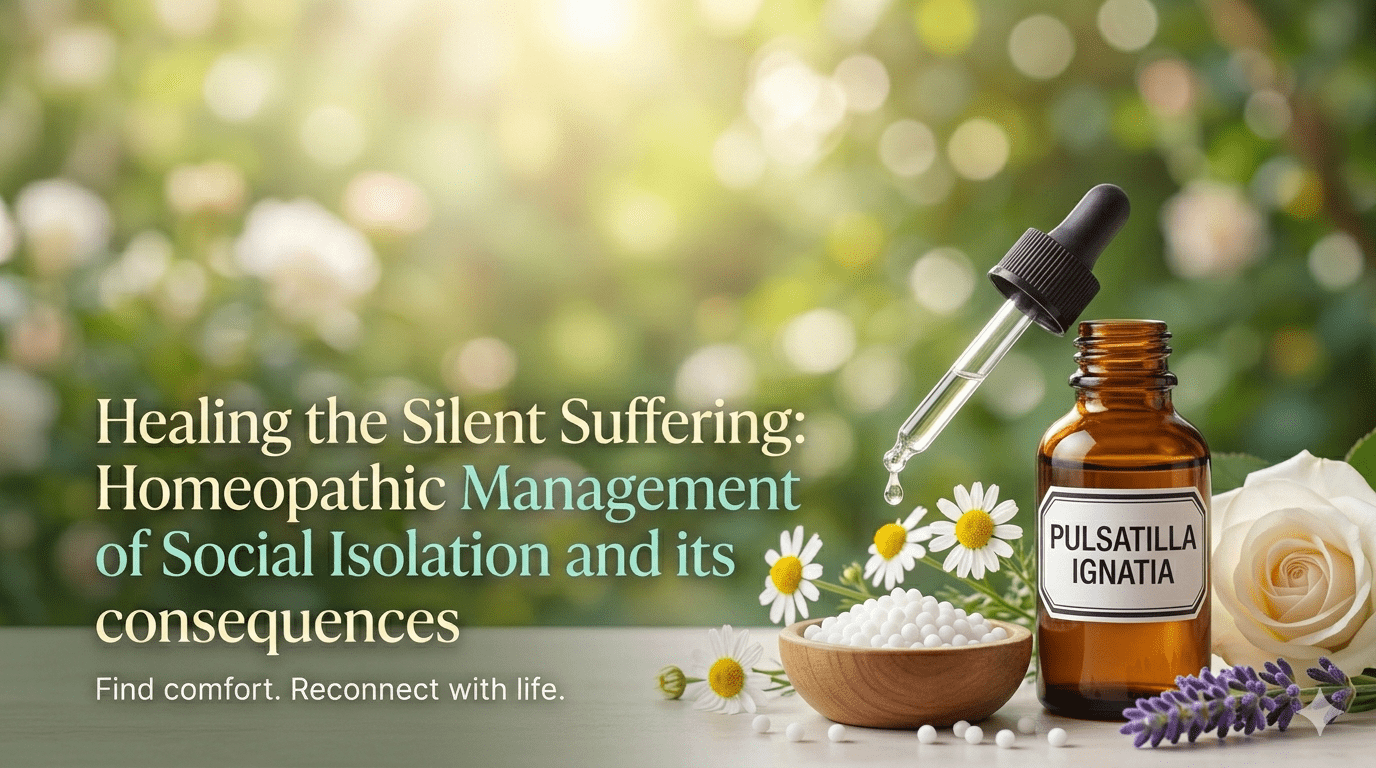
Social isolation is becoming a serious public health issue, especially in today’s world where people interact more online and less in person. It has significant effects on mental, emotional, and physical health. Homeopathy, which is a holistic system of medicine, provides personalized treatments based on an individual’s mental and emotional condition. This approach may help address the various effects of social isolation. This article looks at the causes and effects of social isolation and examines how homeopathy can help manage it.
Keywords: Social isolation, loneliness, Homoeopathy, mental health, holistic management, individualized treatment
Introduction
A person in a state of social isolation lacks a sense of social belonging, engages with people little, has few social contacts, and lacks meaningful and high-quality interactions. [1]
One in six persons, or about 16% of the global population, suffer from social isolation and loneliness. Although the most recent statistics indicate that loneliness is most prevalent among teens and younger people, loneliness affects people of all ages, including older adults, who feel it at a rate of about 11.8%. Numerous studies demonstrate the detrimental effects of social isolation and loneliness on longevity, quality of life, and mental and physical health.[2]
A 2024 comparative study published in the International Journal of Indian Psychology evaluated the impact of social isolation and loneliness on cognitive health among Indian adults aged over 60, comparing those living with families to those in old age homes. The study used the UCLA Loneliness Scale (version 3) and the Mini Cog Test to gather data from 102 participants (64 females, 38 males). Results showed a significant negative impact of loneliness and social isolation on cognitive health Importantly, the study found that older adults in old age homes experienced greater loneliness and poorer cognitive scores compared to those living with their family [3]
A study using the first wave (2017–2018) of the Longitudinal Ageing Study in India (LASI) found that 13.3% of the elderly reported severe loneliness. With the number of Indian elderly projected to reach 194 million by 2031, loneliness may arise as a huge societal and health challenge. Feelings of loneliness tend to increase with age due to retirement, death of peers, and separation from family. Persistent loneliness has been associated with higher risks of mental disorders, cardiovascular disease, dementia, and premature mortality comparable to other major risk factors. These effects are attributed to physiologic stresses involving immune and vascular pathways along with behavioural mechanisms of reduced self-care and social disengagement among lonely individuals.[4]
All types of social isolation can include staying home for lengthy periods of time, having no communication with family, acquaintances or friends, and/or will fully avoid any contact with other humans when those opportunities do arise. True social isolation over years and decades can be a chronic condition affecting all aspects of a person’s existence. Social isolation can lead to feelings of loneliness, fear of others, or negative Self- esteem. Lack of consistent human contact can also cause conflict with (peripheral) friends. The socially isolated person may occasionally talk to or cause problems with family members.[5]
Risk Factors For Social Isolation
- Aging – Once a person reaches an age where problems such as cognitive impairments and disabilities arise, they are unable to go out and socialize.
- Use of social media or long screen use is nowadays becoming a bigger problem and the most important cause for social isolation in peoples leading to unsocialness in the real world .
- Health and disabilities – People may be embarrassed by their disabilities or health problems, such that they have a tendency to isolate themselves to avoid social interaction out of fear that they would be judged or stigmatized. Sometimes, rather than embarrassment, the disability itself and a person’s lack of a support network can be the cause of social isolation.
- Autism – autistic and ballistic (non-autistic) people.
- Hearing loss – hearing loss can cause communication impairment, which can lead to social isolation particularly in older adults.
- The loss of a loved one can contribute to social isolation.
- Living alone –
- Isolation may be imposed by an abusive spouse .
- Rural isolation – In rural areas, factors such as living far apart from one another, rural flight, a negligible amount of public spaces and entertainment, and lack of access to mental health-related resources all contribute to isolation. Limited access to broadband internet and cellular activity also make it harder for those experiencing isolation to connect online or reach people.
- Harassment – isolation can be an effect of someone experiencing harassment of a sexual nature
- Unemployment – This can begin if someone is fired, dismissed, or released from a job or workplace, or leaves one of their own accords. If the person struggles or is unable to find a new job for a long period of time (i.e. months or years) the sense of isolation can become exacerbated, especially in men
- Retirement – or other source of fixed income, makes unnecessary for the person to search for a job. This situation is similar to unemployment but with better living on one hand but without the need to go outside on the other hand.
- Transportation problems
- Societal adversity – Desire to avoid the discomfort, dangers, and responsibilities arising from being among people. This can happen if other people are sometimes, or often, rude, hostile, critical or judgmental, crude, or otherwise unpleasant. The person would just prefer to be alone to avoid the hassles and hardships of dealing with people. Being a part of an outgroup and social categorization can also play a part in creating adverse circumstances that the individual may attempt to avoid depending on the policies and attitudes of the society.
- Substance abuse can be both cause and/or effect of isolation, often coinciding with mood-related disorders, especially among those living alone.
- Economic inequality
- Self-esteem – A person with a low self-esteem or lack of self-love can contribute to that person’s isolation. Having a low self-esteem can cause one to overthink and stress themselves out when being around people, and can ultimately eliminate that feeling by isolating themselves. themselves from going out. This can also lead a person into thinking that they’re not worthy of making friends and deserve any love; and also feeling like they do not deserve to have a happy life
- Lockdowns, such as those imposed in 2020 and 2021 in an attempt to prevent the spread of SARS-CoV-2.[5]
Psychological Aspects of Social Isolation
Individuals experiencing social isolation typically respond in one of two ways. Some feel content with their isolation and do not view it as a problem, while others see it as a serious issue and experience anxiety as they try to escape it. These contrasting responses are influenced by whether the isolation is ego-syntonic or ego-dystonic. In ego-syntonic isolation, the person accepts solitude as a natural state and may feel uneasy or awkward in social interactions. Conversely, in ego-dystonic isolation, the person values social connection and sees isolation as undesirable, actively seeking to improve social skills and build relationships [6]
Criteria For Social Isolation
The ICD-10-CM code for social exclusion and rejection, which can show up as social isolation, is Z60.4. This code is part of the larger category of “Problems related to social environment” (Z60). It is used when a person faces exclusion or rejection due to personal traits like unusual physical appearance, illness, or behaviour. [7]
Consequences of Social Isolation
Impact on Old Age Group:
Older adults face specific challenges that can worsen isolation, such as declining health, increasing frailty, limited financial resources, and lack of support from family or friends. feelings of loneliness. Additionally, life events like retirement, the loss of a spouse or close friends, can exacerbate isolation among Seniors. Social isolation in elderly populations has been associated with higher disease rates, increased likelihood of dementia, and reduced mobility. Isolated elderly women with depression are particularly vulnerable to cognitive decline. On the other hand, maintaining strong social connections can lead to improved health outcomes. While technologies like video calls may offer a way to reduce isolation among seniors, their long-term effectiveness is still being evaluated.
Impacts on Young adults:
Adults who experience isolation and loneliness are at greater risk for both mental and physical health issues, including higher mortality rates. Isolated individuals often show elevated blood pressure, poor cholesterol levels, weakened immunity, and chronic inflammation—factors that contribute to conditions like stroke, heart disease, and other serious illnesses. Mental health concerns such as depression, anxiety, cognitive deterioration, and substance abuse are also linked to isolation. While most studies confirm these associations, not all research agrees on the direct impact of isolation on poor health outcomes.
Effect on Children and Teenagers:
During middle school, students become highly sensitive to social dynamics, and their self-confidence can be easily affected. It’s especially important during this period to nurture their sense of connection and belonging at school. Research shows that this sense of belonging plays a vital role in emotional stability and academic performance. Studies also suggest that, for adolescents, loneliness related to friendships has a stronger effect on depressive symptoms than loneliness stemming from parents, as peers become a more important source of support during adolescence.[8]
Mental Health Effects
- Depression and Anxiety
- Loneliness increases vulnerability to mood disorders.
- Reduced emotional support contributes to hopelessness and excessive worry.
- Cognitive Decline
- Isolated individuals show faster mental aging.
- Increases the risk of dementia and Alzheimer’s disease.
- Suicidal Ideation
- Higher rates of suicidal thoughts and behaviors.
- Common in the elderly, adolescents, and chronically ill.
- Stress and Emotional Instability
- Isolation increases cortisol levels (stress hormone).
- Triggers irritability, anger, and poor emotional regulation.
- Addiction and Substance Abuse
- People may turn to alcohol, drugs, or food for comfort.
- Leads to dependence and worsened mental health.
- Poor Sleep Quality
- Disrupted sleep patterns due to anxiety or depressive symptoms.
- Insomnia and daytime fatigue are common outcome
Physical Health Effects
- Cardiovascular Disease
- Loneliness is as harmful as smoking 15 cigarettes/day.
- Raises risk of high blood pressure, heart attack, and stroke.
- Weakened Immune System
- Chronic isolation impairs immune responses.
- Increases susceptibility to infections and slower recovery.
- Obesity and Metabolic Disorders
- Leads to a sedentary lifestyle, unhealthy eating habits.
- Higher risk of type 2 diabetes and metabolic syndrome.
- Inflammation: –
- Social isolation is linked with increased systemic inflammation. Can trigger or worsen chronic diseases.
- Functional Decline in Elderly: –
- Increases risk of falls, frailty, and loss of independence. Accelerates physical and mental deterioration.
- Premature Mortality: –
- Long-term isolation significantly raises the risk of early death risk level comparable to smoking and obesity.
Homoeopathic Approach to Social Isolation
Homeopathy presents a valuable, holistic approach to addressing the varied consequences of social isolation. By focusing on the individual as a whole, including their emotional, mental, and physical health, homeopathic remedies offer personalized and gentle treatment options. Whether it’s addressing grief, emotional withdrawal, anxiety, or stress, homeopathy helps to restore emotional equilibrium, boost self-esteem, and improve overall well-being. One of the strengths of homeopathy is its individualized approach, ensuring that each person’s specific experience of isolation is treated in a way that targets the root causes. This not only alleviates symptoms but also promotes long-term healing, enabling individuals to reconnect with themselves and others in a meaningful way.
Common Homeopathic Remedies for Social Isolation
Remedy with their Indications: –
Natrum Muriaticum: Reserved, introverted; prefers solitude; hurt due to past emotional trauma; dwells on grief.
Aurum metallicum: Deep depression, suicidal thoughts, feels isolated and worthless. In all complaints of depression family disputes when a person feels isolated especially in old age groups.
Ignatia Amara: -Acute grief, emotional withdrawal, sighing, contradictory behaviour in socially isolated persons
Sepia officinalis: Indifferent to loved ones, aversion to company; feels overwhelmed and detached like symptoms in socially isolated peoples can call for this remedy.
Lycopodium: Fear of public, low self-confidence, feels better alone but craves approval
Silicea: Shy, avoids company due to low confidence; feels chilly and weak-willed
Cannabis indica: Feels disconnected from surroundings, altered perception, isolation in mental space
Phosphoric acid: Apathy, mental dullness from long-term grief or loneliness
Supportive & Lifestyle Recommendations
Counselling or psychotherapy can complement homeopathic treatment.
Mind-body techniques Meditation, yoga, journaling. Nutrition and sleep: Support physical health to improve mental resilience.
Engage in relaxing activities: Exercise and stretching, reading, listening to music, meditating, journaling, and doing hobbies can help relieve stress related to isolation.
Following a routine: Daily-routines create a sense of purpose and normality.
Maintaining healthy habits, eating well, getting enough sleep, and being physically active can improve mental health.
Stay connected If in-person contact is limited, calling, emailing, texting, using social media, and video calls can help maintain connections.
Stay informed Knowing what’s happening can be especially important for those who are isolated due to a dangerous threat, like a disease outbreak. Learning the facts about their risk can help people avoid feeling anxious. However, managing media consumption is also important; too much exposure to negative news can increase anxiety. [9]
Conclusion
Social isolation is a growing concern, affecting mental and physical health. Homeopathy offers a holistic approach to address this issue, focusing on the individual’s emotional, mental, and physical health. Homeopathic remedies help restore emotional equilibrium, boost self-esteem, and improve overall well-being. By targeting the root causes of isolation, homeopathy promotes long-term healing and allows individuals to reconnect with themselves and others meaningfully. Prevention through social engagement, self-care, and healthy lifestyle habits is crucial. Homeopathy offers a promising pathway for individuals suffering from social isolation, promoting emotional resilience and re-establishing connections.
Declaration By The Corresponding Author
ETHICAL APPROVAL: None
ACKNOWLEDGEMENT: None
CONFLICT OF INTEREST: None
FINANCIAL SUPPORT: None
References: –
- VEAZIE S, GILBERT J, WINCHELL K, PAYNTER R, GUISE J‑M. ADDRESSING SOCIAL ISOLATION TO IMPROVE THE HEALTH OF OLDER ADULTS: A RAPID REVIEW. ROCKVILLE (MD): AGENCY FOR HEALTHCARE RESEARCH AND QUALITY (US); 2019 FEB. REPORT NO.: 19‑EHC009‑EF.
- WORLD HEALTH ORGANIZATION. SOCIAL ISOLATION AND LONELINESS. IN: DEMOGRAPHIC CHANGE AND HEALTHY AGEING. GENEVA: WORLD HEALTH ORGANIZATION; [CITED 2025 JUL 21]
- SHARMA M, SAHU P, TRIPATHI M. IMPACT OF SOCIAL ISOLATION AND LONELINESS ON COGNITIVE HEALTH OF ELDERLY: A COMPARATIVE STUDY. INT J INDIAN PSYCHOL [INTERNET]. 2024 MAR [CITED 2025 JUL 21];12(1):1439–49. https://ijip.in/pdf-viewer/?id=43684
- INTERNATIONAL INSTITUTE FOR POPULATION SCIENCES (IIPS), MINISTRY OF HEALTH AND FAMILY WELFARE (MOHFW), GOVERNMENT OF INDIA. LONGITUDINAL AGEING STUDY IN INDIA (LASI) WAVE 1, INDIA REPORT 2020. MUMBAI: IIPS; 2020 [CITED 2025 JUL 21]. https://www.iipsindia.ac.in/sites/default/files/lasi_india_report_2020_compressed.pdf
- WIKIPEDIA, THE FREE ENCYCLOPEDIA;2024 FEB 14 [CITED 2025 JUL 21]. https://en.wikipedia.org/wiki/social_isolation
- BAEK S‑B. PSYCHOPATHOLOGY OF SOCIAL ISOLATION. J EXERC REHABIL. 2014 JUN 30;10(3):143–147. DOI:10.12965/JER.140132. PMID:25061592; PMCID: PMC4106767.
- ICD10DATA.COM. Z60.4 – SOCIAL EXCLUSION AND REJECTION [INTERNET]2025[CITED2025JUL 21].https://www.icd10data.com/icd10cm/codes/z00-z99/z55-z65/z60-/z60.4
- WIKIPEDIA, THE FREE ENCYCLOPAEDIA; LAST UPDATED 2025 JUL 16 [CITED2025JUL 21]. https://en.wikipedia.org/wiki/social_isolation.
- TULANE UNIVERSITY SCHOOL OF PUBLIC HEALTH AND TROPICAL MEDICINE. UNDERSTANDING THE EFFECTS OF SOCIAL ISOLATION ON MENTAL HEALTH [INTERNET]. NEW ORLEANS (LA): TULANE UNIVERSITY; 2020DEC8[CITED2025JUL21.https://publichealth.tulane.edu/blog/effects-of-social-isolation-on-mental-health/
About Author
Author: Dr. Ravi Trivedi, MD Scholar, Department of Psychiatry, Government Homoeopathic Medical College and Hospital, Bhopal, Madhya Pradesh
Co-Author: (Prof.) Dr. Santosh Hande, Head of Department, Department of Psychiatry, Government Homoeopathic Medical College and Hospital, Bhopal, Madhya Pradesh