Abstract
Appendicitis remains a common surgical emergency, traditionally managed by appendectomy. Recent interest in integrative approaches has prompted exploration of homoeopathy as an adjunct or alternative in selected cases. It’s important to evaluate the clinical course and outcomes of patients with acute appendicitis treated with homoeopathic remedies within a surgical framework, and to discuss the potential role of homoeopathy in reducing surgical intervention. This case study emphasizes the value of Keynote homoeopathic prescriptions by suggesting homoeopathic treatment as a workable adjunct or alternative therapy.
Keywords
Appendix, Homoeopathy, Surgical Perspective, Case Study, Integrative Medicine, McBurney’s point.
Introduction
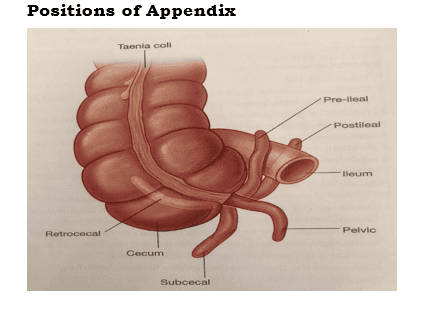
The appendix is a fingerlike pouch attached to the large intestine or it is a narrow worm like diverticulum, which arises from the posteromedial wall of the Caecum about 2 cm below the iliocaecal junction and located in the lower right area of the abdomen. Scientists are not sure what the appendix does, if anything, but removing it does not appear to affect a person’s health. The inside of the appendix is called the appendiceal lumen. Mucus secreted by the appendix travels through the appendiceal lumen and empties into the large intestine.
Despite considerable recent expansion of knowledge concerning appendicitis, accurate diagnosis remains suboptimal, especially in children.
Epidemiology
Appendicitis is the most common atraumatic surgical abdominal disorder in children aged 2 years or older. Appendicitis is ultimately diagnosed in 1% to 8% of children who present to pediatric EDs with acute abdominal pain. Males and females have a lifetime appendicitis risk of 8.6% and 6.7%, respectively.
Anatomy and Pathophysiology
The appendix is a long, thin diverticulum arising from the inferior tip of the caecum. The neonatal appendix averages 4.5 cm in length compared with 9.5 cm for adults. The appendix is funnel-shaped in neonates and infants, limiting its propensity to obstruct. By 1 to 2 years of age, the appendix assumes a normal adultlike conical shape. The function of the appendix is unknown although its lymphatic tissue and secretion of immunoglobulins suggest it may play a specialized role in the immune system.
Appendicitis Aetiology
There is no clear cause of appendicitis. Fecal material is thought to be one possible obstructing object. Bacteria, viruses, fungi, and parasites can be responsible agents of an infection that leads to swelling of the tissues of the appendix wall, including Yersinia species, adenovirus, cytomegalovirus, actinomycosis, Mycobacteria species, Histoplasma species, Schistosoma species, pinworms, and Strongyloides stercoralis. Also, swelling of the tissue from inflammatory bowel diseases such as Crohn’s disease may cause appendicitis. It appears that appendicitis is not hereditary or transmittable from person to person. Appendicitis is typically precipitated by luminal obstruction from lymphoid follicle hyperplasia, fecaliths, foreign bodies, or parasites. In other cases, direct mucosal ulceration with bacterial invasion occurs without luminal obstruction.
Appendicitis Symptoms and Signs
Most people with appendicitis have classic symptoms that a doctor can easily identify. The main symptom of appendicitis is abdominal pain. The abdominal pain usually
- Occurs suddenly, often causing a person to wake up at night
- Occurs before other symptoms
- Begins near the (belly button) or umbilicus and then moves lower and to the right
- Is new and unlike any pain felt before
- Gets worse in a matter of hours
- Gets worse when moving around, taking deep breaths, coughing, or sneezing
Other symptoms of appendicitis may include
- Loss of appetite
- Nausea, Dyspepsia
- Vomiting
- Constipation or diarrhea
- Inability to pass gas
- A low-grade fever that follows other symptoms
- Abdominal swelling
- The feeling that passing stool will relieve discomfort
Symptoms vary and can mimic other sources of abdominal pain, including
- Intestinal obstruction
- Inflammatory bowel disease
- Pelvic inflammatory disease and other gynecological disorders
- Intestinal adhesions
- Constipation
Appendicitis typically begins with a vague pain in the middle of the abdomen often near the navel or “belly button” (umbilicus). The pain slowly moves to the right lower abdomen (toward the right hip) over the next 24 hours. In the classic description, abdominal pain may be accompanied by nausea, vomiting, lack of appetite, and fever. All of these symptoms, however, occur in fewer than half of people who develop appendicitis. More commonly, people with appendicitis have any combination of these symptoms.
Symptoms of appendicitis may take 4-48 hours to develop. During this time, a person developing appendicitis may have varying degrees of loss of appetite, vomiting, and abdominal pain. The person may have constipation or diarrhea, or there may be no change in bowel habits.
Physical Examination
Details about the abdominal pain are key to diagnosing appendicitis. The doctor will assess pain by touching or applying pressure to specific areas of the abdomen. Responses that may indicate appendicitis include
- Guarding. Guarding occurs when a person subconsciously tenses the abdominal muscles during an examination. Voluntary guarding occurs the moment the doctor’s hand touches the abdomen. Involuntary guarding occurs before the doctor actually makes contact.
- Rebound tenderness. A doctor tests for rebound tenderness by applying hand pressure to a patient’s abdomen. Pain felt upon the release of the pressure indicates rebound tenderness.
SIGNS
These include localized findings in the right iliac fossa. The abdominal wall becomes very sensitive to gentle pressure (palpation). Also, there is rebound tenderness.
Rovsing’s sign
Continuous deep palpation starting from the left iliac fossa upwards (anti clockwise along the colon) may cause pain in the right iliac fossa, by pushing bowel contents towards the ileocecal valve and thus increasing pressure around the appendix. This is the Rovsing’s sign.
Psoas sign
Psoas sign or “Obraztsova’s sign” is right lower-quadrant pain that is produced with the patient extending the hip due to inflammation of the peritoneum overlying the iliopsoas muscles and inflammation of the psoas muscles themselves.
Alvarado score
A number of clinical and laboratory-based scoring systems have been devised to assist diagnosis. The most widely used is Alvarado score.
Symptoms
Migratory right iliac fossa 1 point
Anorexia 1 point
Nausea and vomiting 1 point
Sign
Right iliac fossa tenderness 2 Points Rebound tenderness 1 point
Fever 1 point
Laboratory
Leukocytosis 2 points
Shift to left (segmented neutrophils) 1 point
Total score 10 points
A score below 5 is strongly against a diagnosis of appendicitis, while a score of 7 or more is strongly predictive of acute appendicitis. In patients with an equivocal score of 5-6, CT scan is used in the USA to further reduce the rate of negative appendicectomy.
Laboratory Investigations
Although a WBC count is frequently ordered in children with suspected appendicitis, it is nonspecific and insensitive for this disorder. A low WBC threshold (>10,000 to 12,000 cells/mm3) is 51% to 91% sensitive for appendicitis.
Diagnosis
In my 29 years of clinical practice and also as professor of Anatomy subject. I have observed the symptoms for diagnosis is based on patient history (symptoms) and physical examination backed by an elevation of neutrophilic white blood cells. Histories fall into two categories, typical and atypical. Typical appendicitis usually includes abdominal pain beginning in the region of the umbilicus for several hours, associated with anorexia, nausea or vomiting. The pain then “settles” into the right lower quadrant, where tenderness develops.
Ultrasound
Ultrasound image of an acute appendicitis. Ultrasonography and Doppler sonography provide useful means to detect appendicitis, especially in children.
Differential Diagnosis in Children:
- Gastroenteritis,
- Mesenteric adenitis,
- Meckel’s diverticulitis,
- Intussusception,
- Henoch-Schonlein purpura,
- Lobar pneumonia,
- Urinary tract infection (abdominal pain in the absence of other symptoms can occur in children with UTI),
- New-onset Crohn’s disease or ulcerative colitis, pancreatitis, and abdominal trauma from child abuse; distal intestinal obstruction syndrome in children with cystic fibrosis.
- In girls: Menarche, dysmenorrhea, severe menstrual cramps, Mittelschmerz, pelvic inflammatory disease, ectopic pregnancy
In Adults:
- Regional enteritis,
- Colic,
- Perforated peptic ulcer,
- Pancreatitis
- Rectus sheath hematoma
- In men: Testicular torsion,
- new-onset Crohn’s disease or ulcerative colitis
- In women: pelvic inflammatory disease,
- Ectopic pregnancy,
- Endometriosis
- Torsion/rupture of ovarian cyst,
- Mittelschmerz (the passing of an egg in the ovaries approximately two weeks before an expected menstruation cycle)
In Elderly:
- Diverticulitis,
- Intestinal obstruction,
- Colonic carcinoma,
- Mesenteric ischemia,
- Leaking aortic aneurysm.
Complications
- Appendicular Abscess
- Appendicular Mass
- Perforation
- Malignancy
- Intestinal Obstruction
HOMOEOPATHIC MANAGEMENT OF APPENDICITIS
Prevention
There is no proven way to prevent appendicitis, but eating a diet that includes fresh vegetables and fruit decrease your risk of developing the condition.
Using the appropriate Homoeopathic remedy along with conventional Western medicine may relieve your symptoms and help clear up appendicitis more quickly. However, no scientific literature supports the use of homoeopathy for appendicitis. An experienced Homoeopath would consider your individual case and may recommend treatments to address both your underlying condition and any current symptoms.
Belladonna and Bryoniaare classic homoeopathic remedies often used for an inflamed appendix.
- Phosphorus
Phosphorus in crude form is highly combustible it exposed to air, dangerous but when the same is potentized, it becomes one of the leading healers, Phosphors irritate, inflame and degenerates mucous membranes, serous membrane, spinal cord and nerves causing paralysis, destroys bone, disorganizes the blood causing fatty degeneration of blood vessels and thus gives rise to hemorrhages and hematogenous jaundice. Hahnemann says acts most beneficially when patient suffer from chronic loose stool or diarrhea”. Craves cold things, ice-creams, adds, refreshing things, sour things, salt and fatty food. Aversion to tobacco, sweets, tea pudding, coffee and beer. Cold water which is thrown up as soon as it gets warm in the stomach. Throws up ingesta by the mouthfuls.
Mind Great lowness of spirits, easily vexed, fearfulness, as something were creeping out of every corner, great tendency to start, oversensitive to external impression, loss of memory and brain feels fired. Restless dread of death when alone.
- Belladonna
In the early stages of this affection where there is severe pain in the ileo-cecal region, where the slightest touch cannot be borne, and patient lies on back, this remedy will be found most useful. It corresponds to the pain, the vomiting, the paralysis of the intestine. It comes in after the chill of the Aconite stage has passed off and the inflammation has localized itself. Much pain contra-indicates Aconite. Ferrum phosphoricum and Kali muriaticum have proved themselves clinically in inflammation about the ileo-cecal region and their indications rest on clinical grounds only. Belladonna is especially useful in catarrhal and recurring cases.
- Bryonia
As in all inflammations about serous membranes, Bryonia will here find a place. It has throbbing and sharp stitching pains confined to a limited spot and the patient is constipated. The ileo-cecal region is very sore and sensitive to touch. Any movement is painful and the patient lies perfectly still and on the painful side. The febrile disturbance of the drug will be present. Mercurius being Homoeopathic inflammation of the mucous membranes deserves consideration, especially has it hard swelling, fever, flushed face, red, dry tongue, etc.
- Arsenicum
When the condition points to sepsis Arsenicum may be the remedy. There are chills, hectic symptoms of diarrhea and restlessness, and sudden sinking of strength. It relieves vomiting in these conditions more quickly than any other remedy. Dr. Mitchell finds it more often indicated in appendicitis than Mercurius corrosives, which may also be a useful remedy. Arnica is a remedy suiting septic cases and it should be employed after operations.
- Rhus Toxicodendron
This remedy, with its great correspondence to septic troubles may be required, and may be indicated by its peculiar symptoms; locally, took it has extensive swelling over the ileo- cecal region and great pain, causing an incessant restlessness. Dr. Cartier, of Paris, recommends Rhus radicans 6. in appendicitis of influenza origin at the onset. Hepar has a deep- seated induration and Dioscorea has proved a valuable, remedy when the pain is constant, the patient never being entirely free from pain. One observer claim. Dioscorea to be as important a remedy in appendicitis as is Bryonia in hepatitis. Its indications are bowels filled with gas and griping, twisting pains. It may be given in hot water. It is a far more inflammatory remedy than Colocynth, deeper acting, and its paroxysmal pains are an indication. Echinacea, it is claimed, has acted brilliantly in septic appendicitis; the tincture, 1X and 3x are the strengths used. No indications except septic condition; tiredness is characteristic.
- Lachesis
This is also a valuable remedy; its great characteristics of sensitiveness all over the abdomen, and stitching from the seat of the inflammation backward and downward to the thighs, will indicate it in this disease. The patient lies on the back with knees drawn up, and other general Lachesis symptoms present. Plumbum has a tense swelling in the ileo-cecal region, painful to touch and on movement; the abdominal walls are retracted, there are eructation of gas and vomiting and both have a fecal odor. Ignatia is the remedy for the nervous symptoms of the disease, and to be used in cases where operation has been performed and no relief has resulted; also, in those who become exceeding nervous from any abdominal pain. Undoubtedly many Cases of simple colic areas diagnosed as appendicitis and operated upon. Therefore, purely colic remedies as Colocynth and Magnesia phosphorica should be studied. The foregoing remedies will be found the most commonly indicated any may be used in both operable and non- operable cases.
A CASE REPORT
Preliminary Data
Name – Mr. ABC
Age – 30 yrs
Sex – Male
Address – Malgaon
Marital Status – Married
Religion – Hindu
D.O.I. – 24/06/2024
O.P.D. – 5550
Chief Complaint
– Nausea and vomiting in the last 2 days
– Pain in right iliac fossa 2 days
History of Chief Complaints
- Nausea and vomiting in the last 2 days
- Pain in Right iliac fossa Aggravates after eating, radiates from umbilical region
Past History
Nothing specific
Family History
4 Members in family all are apparently healthy
Personal History
Diet – Mixed
Appetite – Reduced
Desire – Spicy food
Aversion – Not specific
Thirst – Small quantity at long interval Perspiration – Profuse and generalized
Bowel – Satisfactory
Urine – Satisfactory
Sleep – Disturbed due to pain otherwise normal
Dreams – Not specific
Habit – Smoking
Thermally – Chilly
Mind
- Fastidious
- Fear of ghost
- Anxiety future about
- Desire company
Physical General Examination
Built – Average
Nourishment – Average
Conjunctiva – Pink
Sclera – White
Tongue – Pink
Nose – No D.N.S.
Clubbing – Absent
Oedema – Absent
Cyanosis – Absent
Lymphadenopathy – Not palpable
Vital Data
Temp – 99o F
Pulse Rate – 78 Beats pm
R.R. – 17 Cycles per minute
Blood Pressure – 130/90 mm of Hg
Systemic Examination
Per Abdominal
Inspection – Scaphoid shape abdomen, no scar
Palpation -Tenderness at right iliac fossae, no organomegaly
Percussion – Liver dullness present
Auscultation – Increased peristaltic sound heard
Respiratory System – NAD
Cardiovascular System – NAD
Central nervous System – NAD
Differential Diagnosis
- Acute Appendicitis
- Ulcerative Colitis
- Renal Calculi
Investigation
C.B.C
Urine
U.S.G. (abdomen.)
Final Diagnosis – Acute Appendicitis
Analysis of Symptoms
Mental General –
- Fastidious
- Fear of ghost
- Anxiety future about
- Desire company
Physical General –
- Desire- Sweet.
- Thirst-Thirsty
- Profuse perspiration
Particulars –
- Pain in right iliac fossa
- Nausea and vomiting
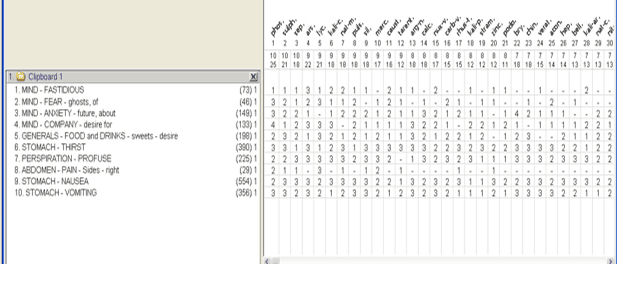
Differential Remedial Diagnosis –
1) Phosphorus
2) Arsenic Alb
3) Sulphur
4) Pulsatilla
5) Rhus tox
Final Remedy Indication – Phosphorus
PRESCRIPTION
Name – ABC
Age – 30 yrs
Rx
Phosphorus 200
TID for 2 days
Follow up After 4 Days
| DATE | PROGNOSIS | REMEDY |
| 28/06/2024 | Diarrhea reduced two motions per day pain in abdomen reduced 50 % | Placebo 4 globules B.I.D. |
| 07/07/2024 | Diarrhea stopped Completely & pain in abdomen reduced 70% | Placebo 4 globules B.I.D. |
CONCLUSION
Homoeopathic treatment appeared safe and effective for selected patients with mild‑moderate acute appendicitis, potentially averting surgery and reducing healthcare costs. Larger controlled studies are warranted to validate these findings and to define appropriate patient selection criteria. I have observed and treated in my 29 years of clinical practice by applying the same principals.
1) Homoeopathic intervention can resolve uncomplicated acute appendicitis in selected patients, eliminating the immediate need for surgery.
2) The presented case showed rapid symptom relief within 48 – 72 hours and no progression to complicated appendicitis.
3) Close clinical monitoring and clear patient selection (Alvarado score 4–6, no perforation signs) are essential to ensure safety.
4) No adverse events were observed, supporting the safety profile of the homoeopathic protocol used (Arsenicum album, Belladonna, Nux vomica).
5) Integrating homoeopathy within a surgical framework offers a pragmatic, patient‑centered approach that may expand treatment options for mild‑moderate appendicitis.
1. Ananthanarayan, R., & Jayaram Paniker, C. K. (1996). Textbook of Microbiology (5th Ed.). Sangam Books.
2. Bailey and Love’s, Short Practice of Surgery (C. V. Mann & R. C. G. Russell, Eds.; 23rd Ed.). Hodder Arnold. pp.1083.
3. Clarke, J. H. (2023). Dictionary of Practical Materia Medica: 3-Volume. B Jain.
4. Penman, I. D., Ralston, S. H., Strachan, M. W. J., & Hobson, R. (Eds.). (2022). Davidson’s Principles and Practice of Medicine (24th Ed.). Elsevier Health Sciences.
5. Kumar P, Clark ML. Kumar and Clark’s clinical medicine. 7th ed. Kumar P, Clark ML, editors. London, England: W B Saunders; 2009.
6. Allen H.C. Allen’s keynotes & characteristics: With comparisons of some of the leading remedies of the material medica with bowel nosodes. New Delhi, India: B Jain; 2022.
7. Boericke W. Pocket Manual of Homeopathic Materia Medica. New Delhi, India: B Jain; 2008.
8. ICD-10 version: 2019 [Internet]. Who.int. [cited 2023 Jan 31]. Available from: https://icd.who.int/browse10/2019/en#/K35.2
9. ICD-10 Code for Splenomegaly, not elsewhere classified- R16.1- Codify by AAPC [Internet]. Aapc.com. [cited 2023 Jan 31]. Available from: https://www.aapc.com/codes/icd-10-codes/R16.1
10. Gignoux B, Blanchet MC, Lanz T, Vulliez A, Saffarini M, Bothorel H, Robert M, Frering V. Should ambulatory appendectomy become the standard treatment for acute appendicitis. World J Emerg Surg. 2018.
11. Eng KA, Abadeh A, Ligocki C, Lee YK, Moinuddin R, Adams-Webber T, Schuh S, Doria AS. Acute Appendicitis: A Meta-Analysis of the Diagnostic Accuracy of US, CT, and MRI as Second-Line Imaging Tests after an Initial US. Radiology. 2018 Sep; 288(3).
12. Hahnemann S. The Chronic diseases, Their Peculiar Nature and Their Homoeopathic Cure. New Delhi: B. Jain Publishers (p) Ltd; 2016.
Co-Author – Mr. Padmraj Jineshwar Yaligouda B.H.M.S. Final Year, Bharatesh Homoeopathic Medical College & Hospital, Belagavi, Karnataka. India.