Keywords:
Adolescence, Fear, Emotional Stress, Mental Pressure, Homoeopathy, Anxiety, Teenage Mental Health, Individualization
Abstract:
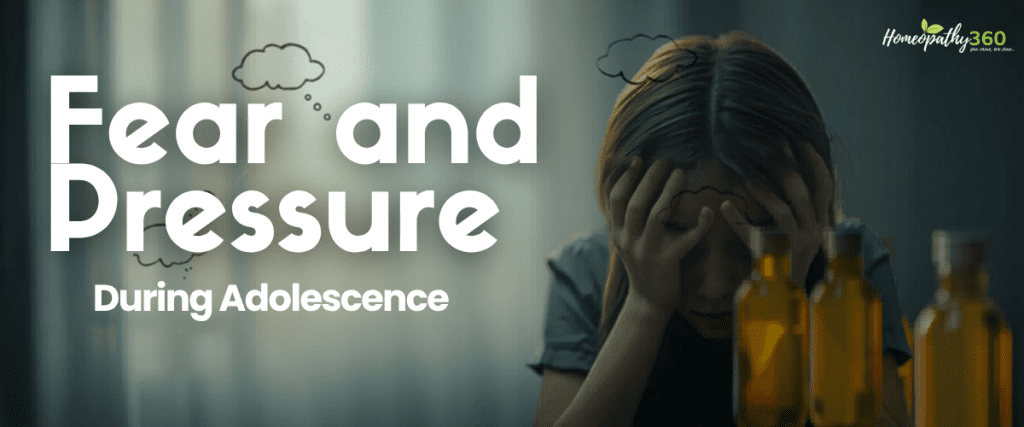
Adolescence is a critical developmental phase marked by profound physical, emotional, and psychological changes. During this period, individuals often experience fear, anxiety, and various forms of pressure related to academics, social expectations, identity formation, and peer influence. These stressors can significantly impact mental well-being and overall health. Homoeopathy, with its holistic and individualized approach, offers a promising method for managing such emotional disturbances. This article explores the causes and manifestations of fear and pressure in adolescents and highlights key homoeopathic remedies that aid in restoring emotional balance and promoting mental resilience.
Introduction:
Adolescence is the transitional stage between childhood and adulthood, typically ranging from ages 10 to 19. It is characterized by rapid biological changes, hormonal fluctuations, and evolving cognitive abilities. Alongside these changes, adolescents face increasing expectations from family, school, and society.
Fear and pressure are common experiences during this period. Academic competition, fear of failure, peer pressure, body image concerns, and uncertainty about the future often contribute to emotional distress. If not addressed properly, these issues may lead to anxiety disorders, depression, low self-esteem, and behavioral problems.
Homoeopathy considers the individual as a whole—mind, body, and emotions—and aims to treat the root cause rather than just symptoms. It is especially useful in adolescent mental health due to its gentle and non-invasive nature.
Content:
1. Causes of Fear and Pressure in Adolescence:
• Academic expectations and exam stress
• Parental pressure and high expectations
• Peer pressure and social acceptance
• Fear of failure and rejection
• Body image issues and self-esteem concerns
• Exposure to social media and comparison
• Uncertainty about career and future
2. Manifestations (Symptoms):
Mental Symptoms:
• Anxiety, nervousness, restlessness
• Fear of exams, public speaking, or failure
• Irritability and mood swings
• Lack of confidence
• Overthinking and negative thoughts
Physical Symptoms:
• Palpitations
• Sweating
• Tremors
• Sleep disturbances
• Headaches or digestive issues
3. Homoeopathy and the Role of Mind in Disease
Homoeopathy considers the mind as one of the most important aspects of health. According to Hahnemann, disease first affects the dynamic vital force and then manifests through mental and physical symptoms.
Mental symptoms often guide remedy selection, such as:
- Fear of darkness
- Anxiety about health
- Suspicion
- Jealousy
- Grief after disappointment
- Anger with trembling
- Lack of confidence
- Desire for solitude
Homoeopathy does not merely label disease but studies the unique way each patient experiences suffering.
For example:
Two patients with anxiety may receive different remedies depending on their personalities and symptoms.
One fears death suddenly → Aconite
One fears failure before exams → Gelsemium
One hides grief silently → Natrum mur
This individualized approach parallels psychoanalysis, which also studies unique inner conflicts.
Homoeopathy is based on the principle of “Similia Similibus Curentur” (like cures like). Remedies are selected based on the totality of symptoms, especially mental and emotional characteristics.
Individualization is key—no single remedy suits all adolescents.
Common Philosophical Similarities:
Though psychoanalysis and homoeopathy differ greatly in practice, they share several principles:
a) Root Cause Approach
Both seek underlying causes rather than superficial symptom suppression.
b) Individualization
Each patient is unique and must be understood personally.
c) Mind-Body Unity
Mental states can create physical symptoms.
d) Importance of Past Experiences
Childhood trauma, grief, rejection, humiliation, and emotional shock may influence present illness.
e) Long-Term Healing
Both aim for lasting improvement rather than temporary relief.
4. Important Homoeopathic Remedies for Mental and Emotional Disturbances
- Ignatia amara
Useful after grief, disappointment, emotional shock, heartbreak.
Symptoms:
- Silent grief
- Sighing frequently
- Lump in throat
- Mood swings
- Contradictory nature
- Natrum muriaticum
For reserved individuals who suffer silently.
Symptoms:
- Dwells on past grief
- Avoids consolation
- Sensitive to criticism
- Introverted sadness
- Pulsatilla nigricans
For mild, emotional, affectionate personalities.
Symptoms:
- Weeping easily
- Needs company and comfort
- Changeable moods
- Better by consolation
- Aurum metallicum
For deep depression and hopelessness.
Symptoms:
- Self-condemnation
- Feeling worthless
- Suicidal thoughts
- Failure in career or duty
- Anacardium orientale
For inner conflict and low confidence.
Symptoms:
- Feels two wills inside
- Poor memory
- Cruel thoughts
- Lack of self-trust
- Gelsemium sempervirens
For anticipatory fear.
Symptoms:
- Exam fear
- Trembling
- Weakness
- Dullness from anxiety
- Aconitum napellus
For sudden panic after shock.
Symptoms:
- Fear of death
- Restlessness
- Palpitations
- Sudden anxiety attacks
- Lachesis mutus
For jealousy and intense emotions.
Symptoms:
- Suspiciousness
- Excessive talking
- Cannot tolerate tight clothes
- Emotional intensity
- Stramonium
For terror states and trauma.
Symptoms:
- Nightmares
- Fear of dark
- Violence
- Effects of fright
- Lycopodium clavatum
For hidden insecurity with outer confidence.
Symptoms:
- Fear of public speaking
- Inferiority feeling
- Digestive complaints with anxiety
5.Advantages of Integrating Psychoanalysis and Homoeopathy
Deeper understanding of patient suffering
Better chronic case management
Helpful in psychosomatic illness
Improved emotional resilience
Individualized healing
Better doctor-patient relationship
6. Limitations
Severe psychiatric illness may require psychiatric care
Emergency suicidal states need immediate medical intervention
Homoeopathy should complement, not delay urgent treatment
5. General Management and Cure:
• Counseling and emotional support
• Healthy lifestyle (sleep, nutrition, exercise)
• Encouraging open communication
• Reducing unrealistic expectations
• Mindfulness and relaxation techniques
• Individualized homoeopathic treatment
Homoeopathy not only relieves symptoms but also strengthens the individual’s mental resilience, helping adolescents cope better with stress and fear.
Conclusion:
Fear and pressure during adolescence are natural but can become harmful if ignored. Early recognition and proper management are essential to prevent long-term psychological issues. Homoeopathy provides a holistic and individualized approach that addresses both emotional and physical aspects of stress. By restoring balance and enhancing coping abilities, it plays a valuable role in promoting adolescent mental health.
Bibliography:
• Boericke, William. Pocket Manual of Homoeopathic Materia Medica
• Kent, James Tyler. Lectures on Homoeopathic Materia Medica
• Hahnemann, Samuel. Organon of Medicine
• Clarke, John Henry. A Dictionary of Practical Materia Medica
• Allen, H.C. Keynotes and Characteristics with Comparisons
• World Health Organization (WHO) – Adolescent Mental Health Reports
• Nelson Textbook of Pediatrics – Adolescent Health Section