Abstract:
Benign Prostatic Hyperplasia (BPH) represents a prevalent age-dependent urological disorder among ageing males, frequently presenting as lower urinary tract symptoms (LUTS) that severely impair quality of life. Standard conventional interventions, including surgical resection and long-term pharmacotherapy, are often constrained by adverse effects such as sexual dysfunction and systemic hypotension, driving the search for safer, non-invasive therapeutic alternatives.
Objective: This paper evaluates the clinical potential, safety profile, and holistic scope of individualised homoeopathic therapeutics in alleviating BPH-associated distress and optimising patient outcomes.
Methods: A comprehensive synthesis of contemporary clinical trials, observational data, and classical repertorial methodology was conducted. The analysis emphasizes the traditional homoeopathic framework of constitutional prescribing based on the totality of symptoms, alongside an evaluation of prominent organophilic remedies including Sabal serrulata, Conium maculatum, and Thuja occidentalis.
Results: Existing clinical documentation indicates that tailored homoeopathic interventions contribute to measurable reductions in the International Prostate Symptom Score (IPSS), diminished post-void residual volume, and objective improvements in urinary stream velocity. Additionally, the therapy demonstrates excellent tolerability, a lack of toxic side effects, and high patient adherence rates.
Conclusion: Homeopathy offers a viable, cost-effective, and holistic strategy for managing mild-to-moderate BPH. To firmly integrate these findings into evidence-based medicine, rigorous multi-center randomized controlled trials are warranted to further substantiate these therapeutic outcomes.
Keywords: Benign Prostatic Hyperplasia; Homoeopathy; Individualised Therapeutics, Lower Urinary Tract Symptoms.
Introduction
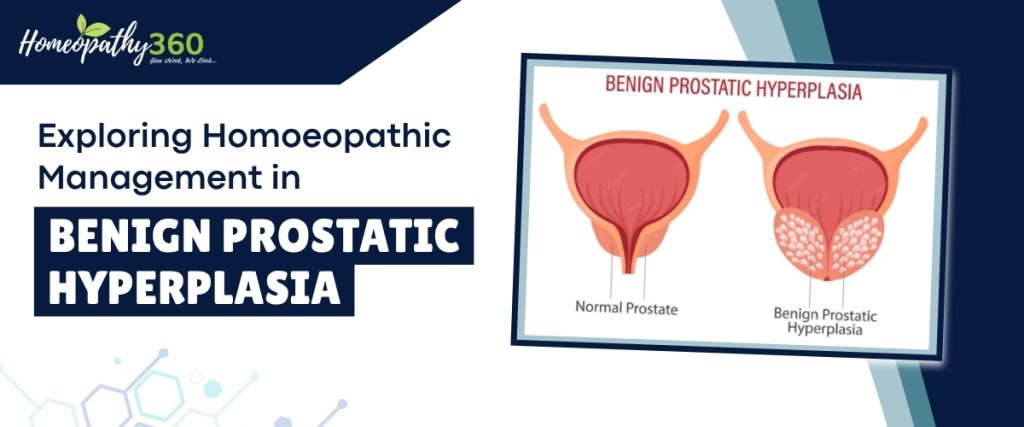
Benign Prostatic Hyperplasia (BPH) is one of the most pervasive urological conditions affecting the aging male population worldwide [1]. Characterised by the non-malignant proliferation of prostate glandular and stromal tissue, this condition leads to progressive structural constriction of the urethra [1]. Clinically, this manifests as lower urinary tract symptoms (LUTS), including urinary hesitancy, a weakened stream, nocturia (frequent nighttime urination), and incomplete bladder emptying [1]. Beyond the physical discomfort, BPH significantly compromises the psychosocial well-being and overall quality of life of ageing men, making effective management a global healthcare priority.
In contemporary mainstream medicine, the therapeutic matrix for BPH primarily revolves around pharmaceutical intervention and surgical resection. Standard drug regimens, such as alpha-blockers and 5 alpha-reductase inhibitors, are routinely deployed to relax prostatic smooth muscle or reduce prostate volume [2]. However, these conventional options are frequently shadowed by a high incidence of adverse effects, including orthostatic hypotension, erectile dysfunction, decreased libido, and retrograde ejaculation [2]. When pharmacotherapy fails, surgical options like transurethral resection of the prostate (TURP) offer relief but carry inherent surgical risks, anaesthetic complications, and post-operative urethral strictures. These therapeutic limitations and patient-reported tolerability issues have fueled a growing global interest in safe, non-invasive, and holistic alternative medical systems [1].
Homoeopathy offers a distinct therapeutic paradigm that addresses BPH not merely as an isolated organ pathology, but as a localised expression of a systemic, constitutional imbalance [3]. Grounded in the foundational principle of Similia Similibus Curentur (“like cures like”), homoeopathic management bypasses the one-size-fits-all approach [3]. Instead, it relies on highly individualized prescribing dictated by the patient’s unique totality of symptoms, encompassing physical, mental, and constitutional attributes [3]. Furthermore, homoeopathic literature recognises the utility of organ-specific, deep-acting remedies—such as Sabal serrulata, Conium maculatum, Thuja occidentalis, and Baryta carbonica—which possess a historical affinity for glandular tissue hypertrophy [3,4].
While historical data and observational clinical practices suggest that homoeopathy can effectively mitigate LUTS, reduce post-void residual urine volume, and delay surgical intervention, the mechanism and clinical predictability of these ultradiluted remedies remain a subject of active research [4]. This article aims to explore the clinical efficacy, repertorial methodology, and therapeutic scope of homoeopathic management in BPH, offering an evidence-based perspective on its role as a safe, cost-effective, and holistic alternative in modern urological care.
Aetiology of Benign Prostatic Hyperplasia
The precise underlying pathophysiology driving Benign Prostatic Hyperplasia remains complex and multifactorial. Rather than stemming from a solitary trigger, BPH arises from a delicate interplay of endocrine shifts, cellular microenvironment disruptions, and metabolic influences associated with the natural ageing process [1,2].
1. Hormonal Alterations and Deregulated Signalling
The primary driver of prostatic tissue proliferation is the age-related shift in male endocrine profiles [2]. While circulating testosterone levels naturally decline as men age, the intraprostatic concentration of its highly potent metabolite, Dihydrotestosterone (DHT), remains remarkably high [2].
• The Role of 5 alpha reductase: The enzyme 5 alpha-reductase (specifically Type 2) actively converts testosterone into DHT within the prostatic stromal and epithelial cells [2].
• Androgen Receptor Binding: DHT binds to intracellular androgen receptors with high affinity, activating the transcription of growth factors that stimulate cell division and inhibit apoptosis (programmed cell death) [2].
• The Estrogen-Androgen Ratio: Concurrently, ageing men experience a relative increase in systemic estrogen levels [1]. This shifting ratio sensitises the prostate tissue, further upregulating androgen receptors and amplifying the proliferative signals of DHT [1,2].
2. Stromal-Epithelial Interactions and Growth Factors
The prostate is composed of a delicate balance of stromal (connective tissue/smooth muscle) and epithelial cells. In BPH, the biochemical communication between these two cellular
compartments breaks down [2]. Stromal cells begin to overproduce polypeptide growth factors—such as Fibroblast Growth Factor (FGF) and Transforming Growth Factor-beta (TGF beta). This localised overproduction disrupts homeostatic tissue maintenance, inducing the hyperplastic growth of both smooth muscle and glandular components [2].
3. Chronic Inflammation and Metabolic Syndrome
Accumulating clinical evidence highlights chronic, low-grade prostatic inflammation as a core etiological pillar [5]. Immune cell infiltration (lymphocytes and macrophages) releases proinflammatory cytokines, which cause localized tissue hypoxia and trigger compensatory cellular repair mechanisms, accelerating tissue growth [5]. Furthermore, metabolic syndrome—characterised by hyperinsulinemia, obesity, and dyslipidemia—acts as a systemic exacerbator, providing a high-insulin environment that directly stimulates prostatic cell proliferation [2,5].
Clinical Manifestations
The clinical presentation of BPH stems from two distinct mechanical mechanisms: static obstruction (the physical mass of the enlarged prostate compressing the prostatic urethra) and dynamic obstruction (increased smooth muscle tone within the prostatic capsule and bladder neck) [1]. Together, these obstructions manifest as Lower Urinary Tract Symptoms (LUTS), which are traditionally classified into obstructive (voiding) and irritative (storage) categories [1,3].
| Symptom Category | Clinical Manifestation | Underlying Mechanism |
| Obstructive / Voiding Symptoms | * Urinary Hesitancy: Delay in initiating the urinary stream. * Weakened Stream: Reduced force and velocity of urine flow. * Intermittency: A urinary stream that stops and starts repeatedly. * Post-Void Dribbling: Involuntary terminal spraying or dripping. | Caused directly by the physical narrowing and elongation of the prostatic urethra, requiring higher bladder pressure to overcome the resistance [1,3]. |
| * Straining: The need to utilize abdominal musculature to empty the bladder. | ||
| Irritative / Storage Symptoms | * Frequency: Increased requirement to urinate, often defined as more than 8 times per waking hours. * Nocturia: The disruption of sleep by the need to urinate multiple times at night. * Urgency: A sudden, compelling, and difficult-to-defer desire to void. * Urge Incontinence: Involuntary leakage immediately following a sudden urge. | Secondary to chronic urethral obstruction, which induces detrusor muscle hypertrophy, bladder wall thickening, and subsequent bladder hypersensitivity/instability [1,3]. |
Secondary Complications and Advanced Manifestations
As BPH progresses and the bladder fails to empty efficiently, patients can develop severe secondary urological sequelae:
• Chronic Urinary Retention: An elevated Post-Void Residual (PVR) volume of urine left in the bladder, creating a breeding ground for recurrent Urinary Tract Infections (UTIs) and the formation of vesical (bladder) calculi due to urinary stasis [1,4].
• Acute Urinary Retention (AUR): A painful, sudden, and total inability to void, representing a medical emergency that requires immediate catheterization [1].
• Gross Hematuria: Microscopic or visible blood in the urine, caused by the rupture of friable, congested, and dilated mucosal veins over the surface of the enlarged prostate [1].
• Obstructive Nephropathy: In severe, long-standing, unmanaged cases, the high backward pressure from urinary retention travels up the ureters, causing hydronephrosis and potentially culminating in chronic renal impairment [1].
Diagnosis of Benign Prostatic Hyperplasia
The diagnostic protocol for BPH serves a dual purpose: it confirms non-malignant prostatic enlargement and systematically rules out critical differentials, such as prostate cancer, urethral strictures, or neurogenic bladder dysfunction. A definitive clinical diagnosis relies on an integrated approach combining patient-reported symptom scoring, physical examination, and objective diagnostic metrics.
1. Clinical Symptom Quantification (IPSS)
The fundamental starting point is the International Prostate Symptom Score (IPSS) [3]. This validated 7-item questionnaire evaluates the severity of both voiding and storage symptoms over the preceding month. Each symptom is scored from 0 (not at all) to 5 (almost always), categorizing the patient’s condition into Mild (0 to 7), Moderate (8 to 19), or Severe (20 to 35). An additional 8th question assesses the overall impact on the patient’s quality of life [3].
2. Physical Examination: Digital Rectal Examination (DRE)
A bedside Digital Rectal Examination (DRE) is mandatory to physically evaluate the prostate gland through the anterior rectal wall [1].
• Classic BPH Presentation: The prostate feels symmetrically enlarged, firm, smooth, elastic (rubbery), with a preserved median sulcus, and is non-tender [1].
• Differential Red Flags: Asymmetry, stony-hard consistency, or palpable nodules strongly suggest malignancy and necessitate immediate prostate biopsy.
3. Laboratory Investigations
• Urinalysis and Urine Culture: Performed to exclude concurrent urinary tract infections (UTIs) or hematuria caused by bladder calculi or malignancies [1].
• Serum Prostate-Specific Antigen (PSA): A glycoprotein manufactured by prostatic epithelial cells [3]. While elevated in BPH due to increased tissue volume, a marked rise can indicate prostate malignancy or acute prostatitis [3].
• Serum Creatinine/BUN: Ordered to screen for renal insufficiency secondary to chronic, high-pressure urinary retention.
4. Objective Instrumentation and Imaging
• Uroflowmetry: An objective, non-invasive test measuring the speed of the urinary stream [6]. A peak flow rate ($Q_{max}$) of less than 10 mL/s is indicative of significant bladder outlet obstruction [6].
• Post-Void Residual (PVR) Urine Volume: Measured via transabdominal ultrasound immediately after urination [4]. An elevated residual volume signifies detrusor muscle failure or advanced urethral obstruction [4].
• Transrectal Ultrasound (TRUS): Provides highly accurate, three-dimensional spatial visualization to precisely calculate total prostatic volume, optimizing therapeutic strategy planning [4].
Basis and Principles of Homeopathy in BPH
When applied to BPH, Homeopathy departs from the standard approach of uniform, disease centric suppression. Instead, it views the local structural changes of the prostate as a localized manifestation of a deeper, systemic constitutional imbalance [3]. The treatment is anchored on the core principles established by Dr. Samuel Hahnemann.
1. Law of Similars (Similia Similibus Curentur)
The bedrock of homeopathic science asserts that a substance capable of producing a specific complex of symptoms in a healthy, sensitive individual can cure a matching symptom pattern in a sick individual [3]. In BPH management, a remedy like Sabal serrulata is selected because, in its crude form or during provings, it induces intense vesicle irritation, painful micturition, and constant nighttime urgency—mirroring the exact presentation of BPH-driven LUTS [3,6].
2. Principle of Individualization and Totality of Symptoms
Homeopathy treats the patient who has the disease, rather than the disease itself [3]. The homeopath constructs a Totality of Symptoms, which synthesizes physical generals (appetite, thermal preferences, thirst), mental/emotional states (anxiety, irritability), and local modalities (factors that aggravate or ameliorate the urinary symptoms, such as symptoms worse at 3 AM) [3].
3. The Concept of Chronic Miasms
Hahnemann’s miasmatic theory posits that chronic, progressive pathological states are rooted in deep-seated, inherited or acquired dynamic vulnerabilities (miasms). BPH, characterized by
abnormal tissue overgrowth, hypertrophy, and slow, indurated structural changes, is classified primarily as a Syco-Syphilitic manifestation.
• The Sycotic Element: Drives the proliferation, hyperplasia, and benign tissue overgrowth (e.g., Thuja occidentalis).
• The Syphilitic Element: Reflects the hard induration of glandular tissue, structural changes, and progressive parenchymal degeneration (e.g., Conium maculatum).
• Effective long-term homeopathic management requires deep-acting anti-miasmatic remedies to halt this progressive structural expansion.
4. Law of Minimum Dose and Potentization
Homoeopathic medicines are prepared through a sequential process of serial dilution and mechanical agitation, known as potentization. This protocol strips away the material toxicity of the raw substance while unlocking its dynamic, curative energetic footprint. In treating advanced BPH, applying the minimum dose ensures that the vital force is gently stimulated toward self-regulation without triggering a disruptive, painful local aggravation in an already restricted urinary tract.
Homoeopathic Management of Benign Prostatic Hyperplasia
1. Essential Repertorial Rubrics for BPH
To translate a patient’s LUTS into accurate homoeopathic terminology, clinicians look to specific rubrics within established medical repertories [3]:
• Urination – Hesitancy / Retarded: Must wait long for urine to start flowing. (e.g., Hepar sulph, Conium, Lycopodium)
• Urination – Interrupted / Intermittent: The stream stops and starts repeatedly. (e.g., Conium, Clematis, Thuja)
• Urination – Involuntary – Dribbling – Post-voiding: Involuntary spraying or dripping after concluding urination. (e.g., Conium, Selenium, Staphysagria)
• Prostate Gland – Hypertrophy / Enlargement: The definitive pathological rubric. (e.g., Sabal serrulata, Thuja, Baryta carb, Conium)
• Bladder – Urination – Frequent – Nighttime (Nocturia): Frequent waking due to an urgent need to void. (e.g., Sabal serrulata, Lycopodium, Causticum)
2. Comparative Materia Medica of Leading BPH Remedies
[BPH THERAPEUTIC MATRIX]
| Sabal Serrulata | Conium Maculatum | Thuja Occidentalis | Baryta Carbonica |
| ▪ Organopathic ▪ Genitourinary focus ▪ “Homoeopathic Catheter” | ▪ Syco-Syphilitic ▪ Hard induration ▪ Interrupted stream flows & stops | ▪ Primary Anti Sycotic ▪ Fleshy hypertrophies ▪ Retarded/split stream ▪ Post-void burning | ▪ Scrofulous diathesis. ▪ Involuntary dribbling of urine in old men ▪ Piles come down while urinating. |
[BPH THERAPEUTIC MATRIX]
Sabal Serrulata (Saw Palmetto)
• Clinical Picture: Often referred to as the “homoeopathic catheter,” this remedy has a direct, profound affinity for the genitourinary organs of elderly men [3].
• Key Indications: Painful micturition with constant, distressing nighttime urgency [3,6]. The patient experiences a sensation of a cold weight or heavy ball in the perineum or prostate region. It is highly effective in acute or chronic urinary retention arising from a sudden congestion of an enlarged prostate [1].
• Mechanism of Action: Weisser et al. [7] demonstrated in vitro that Sabal serrulata extracts directly inhibit 5 alpha-reductase activity in both the epithelium and stroma of human BPH tissue, providing a chemical validation for its deep organ affinity observed in clinical practice.
Conium Maculatum (Poison Hemlock)
• Clinical Picture: This remedy corresponds directly to the degenerative, indurated, and slow chronic changes associated with advanced age [3]. It matches the syco-syphilitic miasmatic profile perfectly.
• Key Indications: The hallmark symptom is a classic interrupted urinary stream— the urine flows, stops, and flows again. The prostate feels stony-hard on rectal
examination [3]. There is often a history of suppressed sexual desire or injuries to glandular tissues.
Thuja Occidentalis (Arbor Vitae)
• Clinical Picture: As the premier anti-sycotic remedy, Thuja is indicated when the BPH is characterized by rapid epithelial proliferation, fleshy hypertrophies, or a history of suppressed infections.
• Key Indications: The urinary stream is split, weak, or significantly retarded. The patient experiences severe, burning pain in the urethra after voiding, accompanied by a sensation as if a drop of urine is trickling along the canal.
Baryta Carbonica (Barium Carbonate)
• Clinical Picture: Suited to the extremes of life, particularly elderly individuals who exhibit physical and mental premature ageing alongside generalised senile atrophy.
• Key Indications: Indicated for marked hypertrophy of the prostate accompanied by difficult urination and chronic, involuntary dribbling of urine in old men.
Conclusion
Benign Prostatic Hyperplasia is an increasingly prevalent clinical challenge that deeply affects the physical comfort and psychological well-being of the ageing male population [1,3]. While modern conventional medicine offers immediate solutions via pharmaceutical suppression or surgical resection, these methods are frequently accompanied by compromised quality of life due to persistent side effects [1,2].
Homoeopathic therapeutics offer a distinct, non-invasive, and highly personalised therapeutic alternative [3,4]. Rather than viewing the hyperplastic prostate as an isolated structural defect, homoeopathy interprets it as a localised expression of a broader constitutional imbalance [3]. A key double-blind clinical trial conducted by Hati et al. [3] demonstrated that combining constitutional and organopathic homoeopathic medicines (BCOM approach) provided the highest symptom relief score, significantly reducing IPSS values and post-void residual urine volumes in patients. Furthermore, retrospective data from Gupta and Singh [4] confirmed a statistically significant 10.9% reduction in objective prostate weight and a 28% decrease in post-void residual urine volume under combined homoeopathic management.
Clinical observations support the efficacy of these remedies in providing safe, cost-effective relief with exceptionally high patient compliance [3,4]. However, to bridge the gap between alternative practice and mainstream evidence-based urology, future efforts must focus on conducting rigorous, multicenter, randomised controlled trials [3]. Standardising objective outcome measures will provide the robust scientific validation necessary to firmly integrate homoeopathic management into the global standard of care for ageing men [3,4].
References
1. Chaurasia B. Top homoeopathic remedies for prostate enlargement. World J Pharm Res. 2016;5(12):1-10.
2. Csikós E, Horváth A, Ács K, et al. Treatment of Benign Prostatic Hyperplasia by Natural Drugs. Molecules. 2021;26(23):7141. doi:10.3390/molecules26237141
3. Hati AK, Paital B, Naik KN, Mishra AK, Chainy GBN, Nanda LK. Constitutional, organopathic and combined homeopathic treatment of benign prostatic hypertrophy: a clinical trial. Homeopathy. 2012;101(4):217-223. doi:10.1016/j.homp.2012.08.005
4. Gupta G, Singh S. Role of homoeopathic medicines in prostate enlargement: A retrospective observational study. Indian J Res Homoeopathy. 2016;10(4):266-273. doi:10.4103/0974-7168.194323
5. Sens-Albert C, Weisenburger S, König BC, et al. Effects of a proprietary mixture of extracts from Sabal serrulata fruits and Urtica dioica roots (WS® 1541) on prostate hyperplasia and inflammation in rats and human cells. Front Pharmacol. 2024;15:1379456. doi:10.3389/fphar.2024.1379456
6. Kondás J, Philipp V, Diószeghy G. Sabal serrulata extract (Strogen forte) in the treatment of symptomatic benign prostatic hyperplasia. Int Urol Nephrol. 1996;28(6):767-772. doi:10.1007/bf02550725
7. Weisser H, Tunn S, Behnke B, Krieg M. Effects of the Sabal serrulata extract IDS 89 and its subfractions on 5α-reductase activity in human benign prostatic hyperplasia. Prostate. 1996;28(5):300-306. doi:10.1002/(sici)1097-0045(199605)28:5<300::aid pros5>3.0.co;2-f
Co-author:
Dr Sarita Verma, HOD, Department of Homoeopathic Repertory and Case Taking, Government Homoeopathic Medical College and Hospital, Bhopal, Madhya Pradesh, India