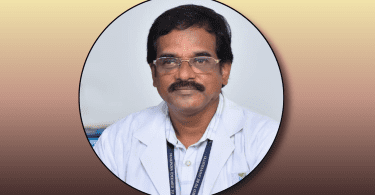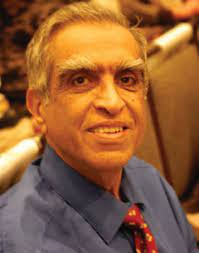
Dr. Ahmed N Currim (1940–2017)
Dr. Ahmed Currim was one of the most profound scholars and custodians of Kentian homeopathy, whose life’s work was devoted to preserving, clarifying, and transmitting the authentic legacy of James Tyler Kent. He passed away on 12 March 2017, after a prolonged illness, at the age of 76 — leaving behind an indelible imprint on the world of classical homeopathy.
Born on 20 November 1940 in Bombay (Mumbai), India, Dr. Currim received his early education in India before moving to Switzerland in 1955 to complete his secondary studies. Supported by his family, he pursued higher education across Europe and the United States, demonstrating extraordinary intellectual breadth and discipline. After emigrating to the United States in 1958, he earned dual degrees in engineering mathematics and chemical engineering from the University of Michigan in 1961. His academic journey continued at Harvard University, where he obtained a Master of Arts in Physics in 1963, followed by a Doctorate in Mathematics from the University of Colorado in 1970.
Despite this formidable scientific background, destiny had charted another course. Dr. Currim’s first encounter with homeopathy occurred in his youth, when he was cured of severe, intractable asthma by the legendary Dr. Pierre Schmidt. Yet it was years later — while pursuing his PhD in Denver — that homeopathy claimed him fully. One day, an unsolicited copy of Kent’s Lectures on Homeopathic Philosophy appeared mysteriously in his mailbox. The sender was never identified, though Dr. Currim suspected Dr. Schmidt’s hand behind the gesture. Opening the book, he felt he had “met a long-lost friend.” That moment became the turning point of his life.
Resolute in his calling, Dr. Currim undertook medical studies at the University of Brussels, earning his medical degree in 1979. Returning to the United States, he successfully passed both the Connecticut State Medical Board Examination and the Connecticut State Homeopathic Medical Board Examination, becoming licensed in family and internal medicine. He later served for several years as Chairman of the Connecticut State Homeopathic Medical Board, a role that reflected both his authority and integrity within the profession.
Dr. Currim’s most enduring legacy lies in his scholarly and editorial contributions. He devoted over two decades to editing The Collected Works of Arthur Hill Grimmer, a monumental task that preserved Grimmer’s teachings for future generations and was later made available in German. He served as editor of James Tyler Kent: Unpublished Materia Medica, revealing previously unknown remedy pictures drawn from the notes of Kent’s students. His Guide to Kent’s Repertory remains an essential work, offering historical insight, philosophical clarity, and precise guidance on case-taking and repertorial analysis.
Perhaps his most remarkable contribution was his painstaking work on Kent’s Repertory itself. Dr. Currim was instrumental in the identification, verification, and incorporation of 11,398 additions and corrections from Kent’s personal working copy into the Synthesis Treasure Edition. This included 333 handwritten additions from Kent’s own copy of Hering’s Guiding Symptoms. Many of these invaluable corrections were discovered during Dr. Currim’s studies with Pierre Schmidt.
Following a lead that Kent’s original materials were in India, Dr. Currim travelled there — only to find the documents scattered, fragmented, and buried in a metal box. With extraordinary patience and scholarly rigor, he reconstructed these pieces like a puzzle, meticulously comparing them against Kent’s repertory to ensure their authenticity. Through this devotion, an updated and historically faithful version of one of homeopathy’s most important reference works came into being.
Beyond his writings, Dr. Currim was a gifted teacher and speaker. He authored numerous articles, conducted seminars worldwide, and guided study groups in materia medica, homeopathic philosophy, and repertorial analysis. His reverence for Kent was not merely academic — it was deeply personal. During his 2005 presentation at LIGA in Berlin, while speaking on Kent’s Repertory, he was visibly overcome with emotion, shedding tears as he spoke — a moment that many attendees remember as a rare expression of humility, devotion, and love for the art he served.
Dr. Ahmed Currim was more than a scholar or physician; he was a bridge between generations, a meticulous historian, and a faithful steward of homeopathy’s classical foundations. His life stands as a testament to intellectual rigor guided by reverence, and to service performed with quiet, unwavering dedication.