Abstract
Allergic contact dermatitis is a common inflammatory skin condition characterized by pruritus, erythema, and recurrent exacerbations following exposure to allergens. Conventional treatment often provides symptomatic relief with frequent relapses. Homoeopathy, through its therapeutic approach based on characteristic physical symptoms, offers an effective alternative. This case report presents a patient with acute allergic contact dermatitis showing marked clinical improvement following homoeopathic therapeutic management.
Introduction
Allergic contact dermatitis (ACD) is a delayed hypersensitivity reaction resulting from exposure to specific allergens. Clinically, it presents with itching, erythema, dryness, and burning sensations. Homoeopathic therapeutics emphasizes individualized remedy selection based on characteristic physical generals and particulars, making it a valuable modality in the management of allergic skin disorders.
Case Report
Patient Information
• Age / Sex: 23, female
• Date of First Consultation: 29/10/2025
Chief Complaints
1. Severe itching over both upper and lower limbs since 3 days
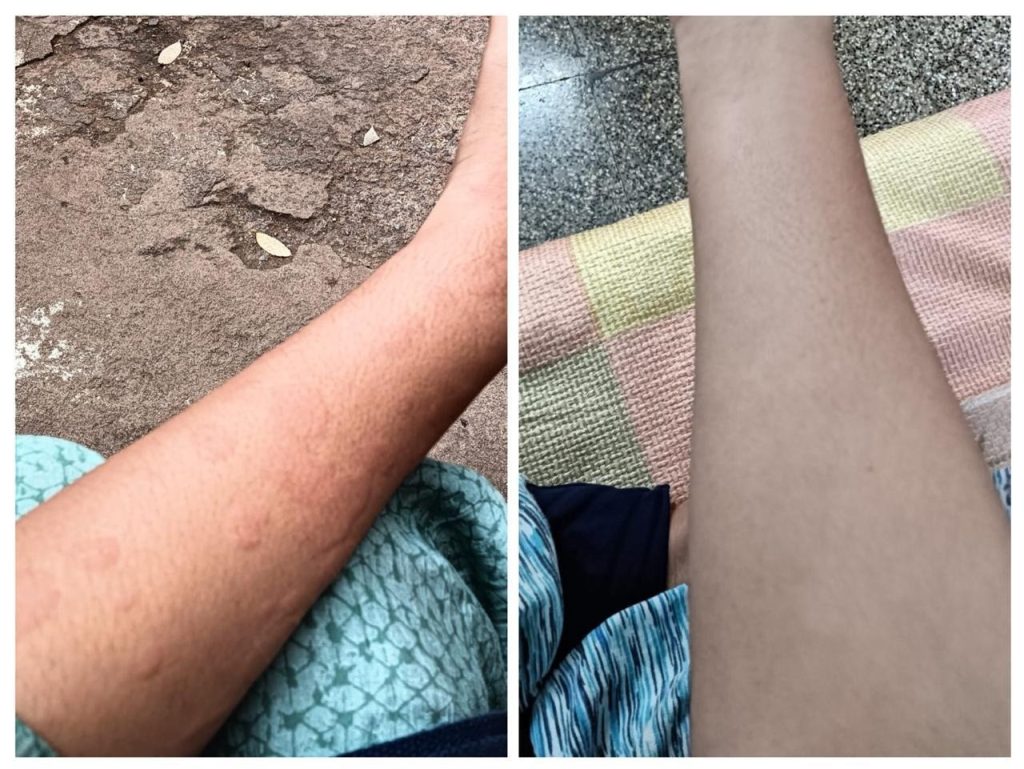
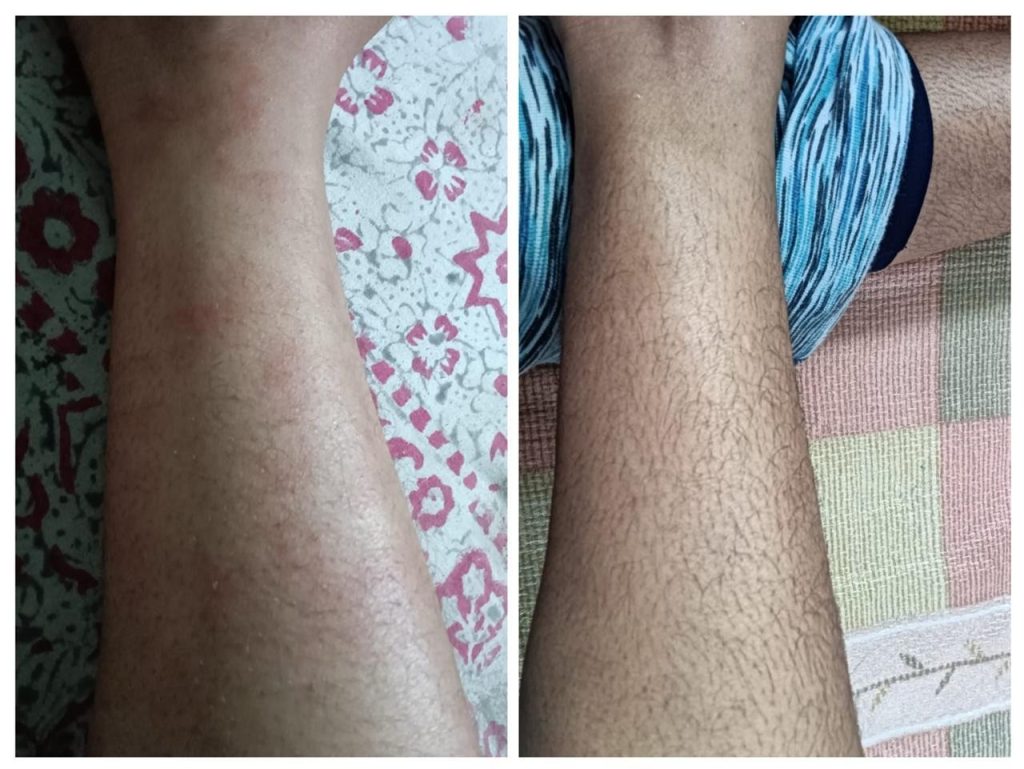
2. Dry, red patches over hands, forearms and legs
3. Burning sensation after scratching
4. Occasional swelling of eyes
History of Present Illness
The patient was apparently well 3 days prior, after which she gradually developed dry, itchy patches over the hands. The lesions later extended to the forearms. Itching was intense and predominantly aggravated at night, compelling the patient to scratch, which resulted in pain and burning sensation.
The symptoms were aggravated after consumption of peanuts and sesame seeds. Temporary relief was obtained by application of oil and antihistamine gels.
Past History
Tonsillectomy – 2 years back
Family History
Father – DM Type 2
Mother – Healthy
Personal History
- Appetite: Normal
- Thirst: 5-6 Glass a day
- Desire: Spicy, panipuri
- Urine: Normal
- Stool: once a day
- Sleep: disturbed due to itching
- Dreams: not remembered
- Tongue: moist
Mental State
- Irritable due to eruption
- Easily angered when someone says points out my mistake
Local Examination of Skin
• Site: Hands and forearms
• Lesions: Dry, erythematous patches
• Skin Texture: Rough and scaly
• Itching: Severe, worse at night
• Scratching: Causes pain and burning
• Discharge: Absent
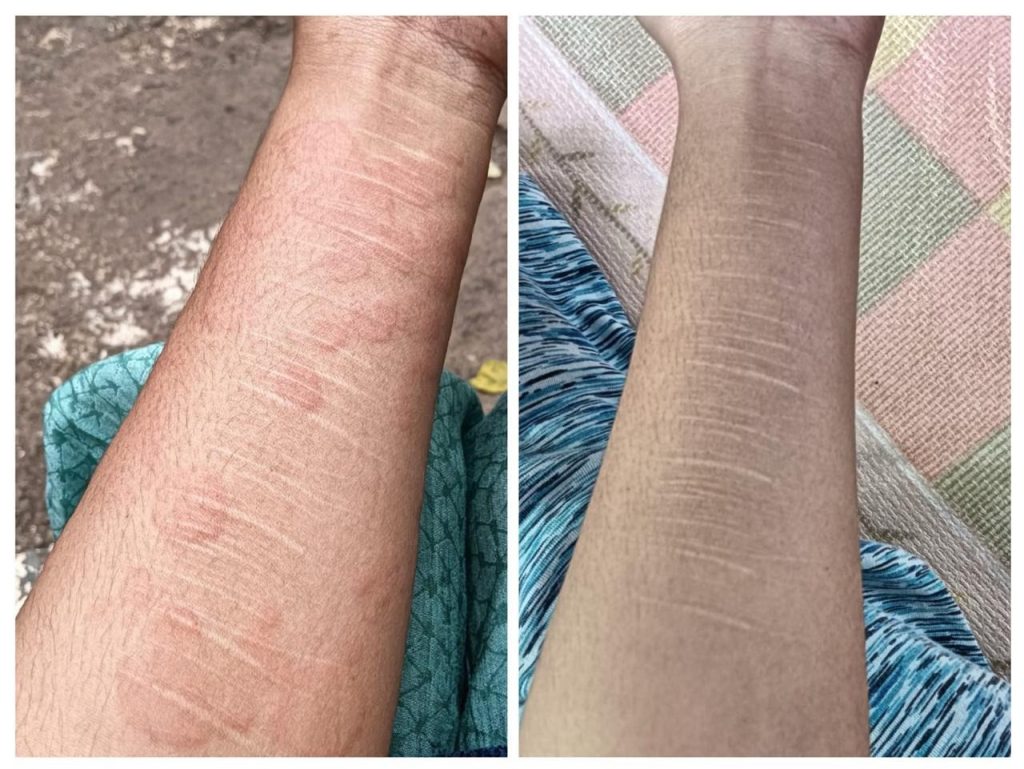
Photographic evidence before and after treatment demonstrated significant improvement with reduction in erythema and restoration of normal skin texture.
Diagnosis
Allergic Contact Dermatitis
Basis Of Diagnosis
• recurrent itching
• Dry, erythematous patches
• Marked aggravation at night
• Burning pain after scratching
• Definite history of aggravation from specific food allergens (peanuts and sesame seeds)
• Absence of fungal features or psoriatic scales
Differential Diagnosis
Atopic Dermatitis
Considered due to itching and chronicity, but absence of flexural involvement and childhood onset ruled it out.
Tinea Corporis
Ruled out due to absence of central clearing, active margins, and discharge.
Psoriasis
Ruled out due to absence of silvery scales, Auspitz sign, and typical distribution.
Miasmatic Consideration
The case predominantly indicated psoric miasm, evident from itching, hypersensitivity, and functional skin disturbance.
Totality Of Symptoms
1. Dry, red patches over hands and forearms
2. Severe itching, worse at night
3. Scratching causes pain and burning
4. Aggravation from peanuts and sesame seeds
5. Occasional swelling of eyes
6. Chronic and recurrent course
Therapeutic Intervention
Selected Remedy: Apis Mellifica
Reference :- Boericke William pocket manual of homoeopathic materia medica
Justification of Prescription
Apis Mellifica was selected based on the following characteristic physical symptoms:
• Allergic inflammatory conditions
• Intense itching with burning sensation
• Redness and local swelling
• Aggravation at night
• Edematous reactions such as eye swelling
The remedy corresponds well with the patient’s physical generals and particulars, making it the most appropriate therapeutic choice.
Prescription
• Apis Mellifica 30C – 6-0-6 for 3 days
• Followed by Apis Mellifica 200C as per clinical response
Follow-Up And Result
The patient showed gradual and sustained improvement. Itching and burning significantly reduced, erythema subsided, and no new lesions appeared. Follow-up photographs confirmed marked clinical recovery. BUT
All the eruptions are disappeared but itching still persist
RX
Sulphur 200 x 1 dose
Discussion
Allergic contact dermatitis is often recurrent due to underlying hypersensitivity. Homoeopathic therapeutics, by addressing the characteristic physical symptoms and individual susceptibility, can effectively control the disease process and prevent relapses. This case highlights the role of remedy selection based on totality of physical symptoms in dermatological conditions.
Conclusion
This case demonstrates that allergic contact dermatitis can be successfully managed with homoeopathic therapeutics when remedies are selected on the basis of characteristic physical generals and particulars. The treatment resulted in significant clinical improvement without adverse effects.
NAGULA VIVEK RAMESH (MD SCHOLAR)
ORGANON OF MEDICINE AND HOMOEOPATHIC PHILOSOPHY
CHANDRAVATIBEN DHANSUKHLAL PACHCHIGAR COLLEGE OF HOMOEOPATHIC MEDICINE AND HOSPITALs, SURAT