Introduction:
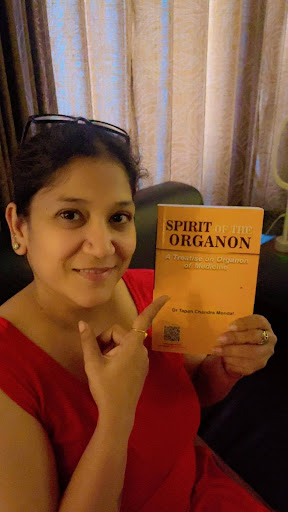
“Spirit of the Organon” by Dr. Tapan Chandra Mondal is a well-crafted, insightful commentary on Dr. Samuel Hahnemann’s Organon of Medicine, the foundational text of Homoeopathy. The book stands as a bridge between classical homoeopathic philosophy and modern-day understanding, offering readers a lucid and in-depth perspective on the spirit behind Hahnemann’s teachings.
Content and Structure:
The book is systematically divided into sections that mirror the structure of the Organon, guiding readers through its aphorisms with detailed explanations, interpretations, and practical reflections. Dr. Mondal does not merely explain the aphorisms but attempts to uncover the essence — the spirit — that guided Hahnemann’s thoughts and intentions.
Each aphorism is not only discussed in terms of its literal meaning but is expanded with relevant clinical insights, philosophical commentary, and historical context. This makes the book particularly valuable for students and practitioners who often struggle with the archaic language and dense structure of the original Organon.
Strengths:
- Clarity and Simplicity: Dr. Mondal simplifies complex concepts without diluting their meaning. His lucid style and use of real-life examples make the philosophical aspects of Homoeopathy accessible to all levels of readers.
- Deep Insight: The author’s understanding of Hahnemann’s philosophy is profound. He brings out the rationality and scientific temper inherent in classical Homoeopathy, which helps the reader appreciate Organon not as a static text, but as a living guide.
- Practical Orientation: Unlike many theoretical commentaries, Spirit of the Organon balances philosophy with practice. Students can see how each aphorism relates to clinical case-taking, remedy selection, and management.
- Educational Value: The book is a helpful companion for UG and PG students, especially in preparing for examinations and viva voce. It also serves as a refresher for practitioners aiming to reconnect with foundational principles.
Limitations:
While the book offers a rich commentary, some readers might feel that it occasionally reiterates points, making certain sections slightly repetitive. Also, more comparative perspectives from other stalwarts of Homoeopathy could have enriched the discussion further.
Areas of Improvement
🔹 Inclusion of Cross-References with Other Authors
While the book centers on Hahnemann’s philosophy, referencing and comparing interpretations by other stalwarts like Dr. J.T. Kent, Dr. Stuart Close, or Dr. Boger could offer a richer, multidimensional view of each aphorism.
🔹 More Case-Based Applications The book does well to explain concepts, but it could be further strengthened by including brief case studies or clinical examples to demonstrate how certain aphorisms are applied in real practice — especially aphorisms on remedy selection and follow-up.
🔹 Graphical Aids or Flowcharts Visual tools such as tables, diagrams, or conceptual flowcharts could enhance understanding — especially for students. For example, a visual flow of the logic behind case-taking or posology would make complex ideas more digestible.
🔹 Updated Research Integration Integrating modern-day clinical or philosophical research on Homoeopathy could help establish the Organon as relevant even in the context of contemporary evidence-based medicine.
🔹 Improved Indexing and Navigation A more detailed index or a glossary of frequently used terms would help readers quickly find key topics. Especially for students using it as a textbook, navigational aids can boost usability.
🔹 Language Consistency and Editorial Refinement Some sections could benefit from tighter editorial review to avoid minor repetitions and ensure uniformity in tone and clarity. While the language is mostly clear, a more polished academic style would make it more publication-ready.
🔹 Inclusion of Discussion Questions or Reflections
At the end of each major section or chapter, adding a few reflective questions or prompts would help readers (especially students) self-assess their understanding and encourage deeper engagement with the material.
Conclusion:
Spirit of the Organon is an excellent and much-needed contribution to Homoeopathic literature. Dr. Tapan Chandra Mondal has succeeded in demystifying the Organon and presenting its enduring wisdom in a format that is both engaging and intellectually satisfying. This book is not just a commentary — it is a tribute to the genius of Hahnemann, interpreted through the lens of an experienced and devoted Homoeopath.
Highly recommended for students, teachers, and practitioners who wish to deepen their understanding of Homoeopathy’s philosophical roots.
Useful for : BHMS students
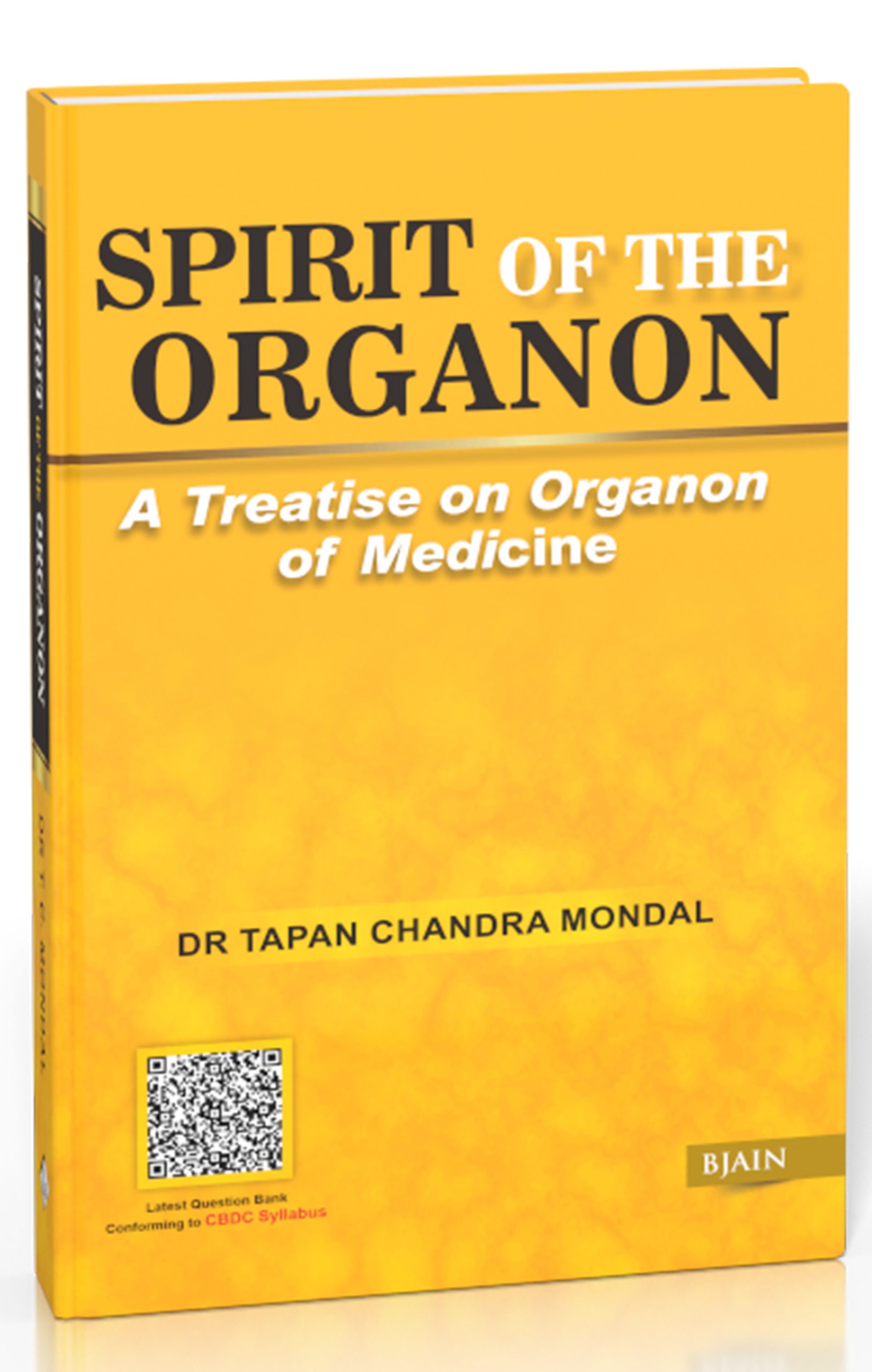
Title: Spirit Of The Organon (Vol -I)
Author: TAPAN CHANDRA MONDAL
ISBN: 9788131902813
Imprint: B Jain Large Print
Pages: 345
Format: Paperback
Language: English
Dr. Gauri Sharma
Professor and Guide, Organon of Medicine and Philosophy