
Overview
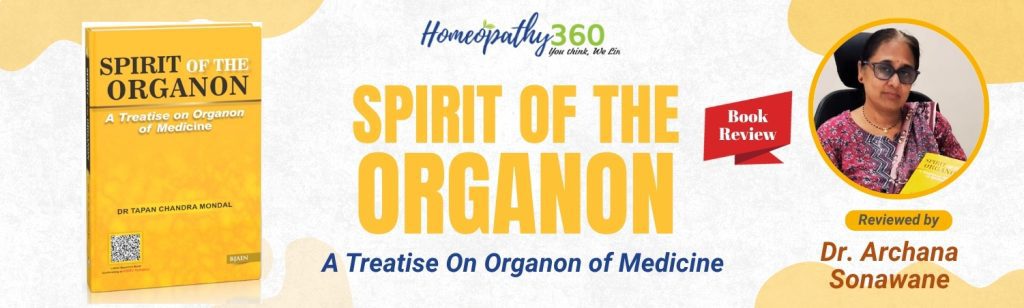
Spirit of the Organon is a commentary and exposition on Samuel Hahnemann’s Organon of Medicine, ready for students and teachers of homeopathy. It aims to make the classical principles more accessible, while aligning with modern curricular requirements.
The book has been revised and expanded to meet the updated CBDC-based curriculum demands, making it more relevant for both theoretical understanding and examination preparation and clinical practice.
Strengths
- Comprehensiveness and Curriculum Alignment
The book covers almost all topics needed for undergraduate homeopathy students, providing both depth and breadth. Because it is adjusted to the CBDC curriculum, it helps bridge classical theory with competencies required under the new syllabus.
- Clarity of Presentation
In its newer editions, the author has moved from a point-wise format to a more textual, narrative style. Reviewers find this format more analytical, explanatory and better suited to fostering understanding. The language is lucid, and complex concepts are broken down in digestible portions.
3. Student-Friendly Features
At the end of chapters, model questions and objective questions help students test their understanding and prepare for exams. The inclusion of comparative notes, short notes, and objective format helps in quick revision.
The layout (typography, page design) is reported to be readable and well organized.
4. Supplementary Material & Contextual Enrichment
The author includes historical essays, biographical sketches of Indian homoeopathic pioneers, and discussions on relevant topics (e.g. miasms, chronic disease) to enrich the reading. This gives the work value not just as a textbook but also as a reference.
Weaknesses & Areas for Improvement
- Depth vs. Simplicity Trade-off
Because it tries to serve both as a teaching text and exam guide, some treatments of topics may lean toward summary rather than critical depth. Students seeking deeper philosophical or advanced interpretive discussion may find it lacking in some places.
- Integration with Clinical Practice
While the text is strong on theory and principles, some readers might wish for more case studies or clinical correlation (in Organon context) to see application in practice. The book focuses heavily on explaining doctrine and frequently asked questions, but may not always carry this forward into detailed application.
- Repetition and Redundancy
In places, certain foundational ideas are repeated (in different chapters or vantage points). For readers who grasp the basics early, this repetition can feel redundant, although for revision purposes it can also help reinforcement.
Usefulness under CBDC Syllabus & in Academic Context
Given that the book is revised in accordance with the new CBDC (competency-based) curriculum, Spirit of the Organon is well placed to support students under the newer system.
Its structure—with objective questions, model papers, short notes, and comparative summaries—makes it a good companion for exam preparation. It helps students internalize core concepts which are foundational under CBDC frameworks. Reviewers note it “reaches the students, teachers of organon, practitioners as well.”
For faculty, its clear explanations and organized layout make it a useful teaching aid or reference when designing lessons on Organon.
Overall Impression & Recommendation
Spirit of the Organon by Dr. Tapan Chandra Mondal is a solid, student-friendly work that balances fidelity to Hahnemann’s original Organon with the needs of modern learners under the CBDC syllabus. While it may not always cater to the most advanced or research-oriented reader, its comprehensiveness, pedagogical features, and clarity make it highly recommended for undergraduate students and teachers of homoeopathic Organon.
If I were to rate it (on a 5-point scale) for its purpose (textbook + exam companion), I would give it 4.2 / 5.
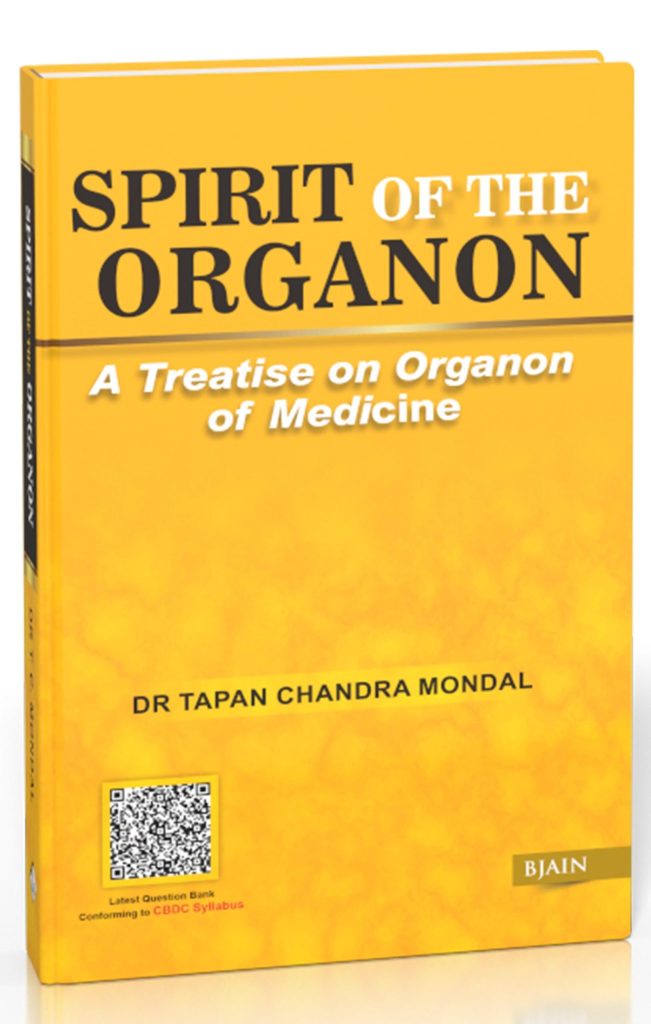
Title: Spirit Of The Organon (Vol -I)
Author: TAPAN CHANDRA MONDAL
ISBN: 9788131902813
Imprint: B Jain Large Print
Pages: 345
Format: Paperback
Language: English
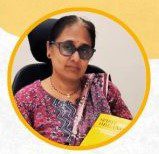
Dr.Archana Prakash Sonawane
MD (Hom Psychiatry).
Associate Professor.Dept of Organon of Medicine.
Shree Bhagwan Homoeopathic Medical College. Ch. Sambhajinager.