ASTHMA:
Asthma is a chronic inflammatory disease of the airways that leads to recurrent episodes of wheezing, breathlessness, chest tightness, and coughing, particularly at night or early in the morning.
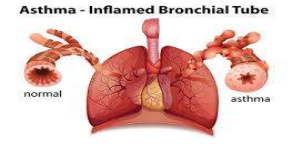
In asthma, the bronchial tubes become inflamed, narrowed, and filled with mucus, making it hard to breathe. It’s a reversible obstructive airway disorder, but can be life-threatening in severe cases if not properly managed. Asthma symptoms can vary in intensity and frequency. Some experience symptoms only during certain activities (like while exercising or at night), while others have symptoms daily such as :
Common Symptoms:
• Shortness of breath
• Wheezing (a whistling sound while breathing)
• Coughing, especially at night, in the early morning, or after activity
• Chest tightness or pressure
• Difficulty in exhalation
• Feeling tired or fatigued due to poor oxygenation
• Increased mucus production
Asthma Attack:
A sudden worsening of symptoms where the airways become acutely narrowed:
• Severe breathlessness
• Inability to speak full sentences
• Bluish lips or fingernails (cyanosis)
• Use of accessory muscles to breathe
While conventional treatments focus on bronchodilation and inflammation control, homeopathy offers individualized remedies that aim to treat the underlying susceptibility. One such highly effective remedy is Blatta orientalis.

Blatta Orientalis: Source and Nature
• Common name: Indian cockroach
• Source: Prepared from the insect Blatta orientalis, potentized according to homeopathic principles.
• Type: Animal kingdom remedy
• Primary sphere of action: Respiratory system, especially useful in cases of asthma and bronchitis.
Clinical Indications in Asthma
• Acute and chronic bronchial asthma, especially when symptoms are aggravated by dampness or rainy weather.
• When the patient has a tendency to frequent and severe asthmatic attacks.
• Suits well when the patient has a tendency to obesity or a tendency toward bronchial congestion.
Key Symptoms:
• Violent and suffocative cough with dyspnea.
• Rattling of mucus in the chest with difficult mucus expectoration.
• Wheezing and shortness of breath, worse in humid weather or monsoon.
• Great difficulty in breathing, needing to sit up; lying down aggravates.
• Asthma associated with bronchitis or chronic cough.
• The patient feels better after spitting thick mucus.
Modalities (Aggravation/Amelioration):
• Worse: From damp weather, rainy seasons, or exertion.
• Better: From spitting mucus expectoration, fresh air (sometimes), or rest.
Dosage and Potency:
• Commonly prescribed in lower potencies like 3x, 6x, 6C, especially in acute conditions and its mother tincture also have marvelous results in asthmatic patients.
Complementary and Comparative Remedies for Asthma:
1. Antimonium tartaricum
• Great rattling of mucus in chest with very little expectoration.
• Useful in old people and children who are weak and cannot cough out mucus.
2. Arsenicum album
• Asthma with great anxiety, restlessness, and fear of death.
• Worse at midnight or after midnight, and in cold air.
• The patient often sits up leaning forward to breathe.
3. Ipecacuanha
• Constant nausea with asthmatic attacks.
• No relief from vomiting.
• Chest feels constricted; dry cough with breathlessness.
4. Nux vomica
• Asthma in persons with a sedentary lifestyle, addicted to stimulants.
• Worse early morning and from cold air.
• Irritable temperament, spasmodic cough.
5. Spongia tosta
• Dry, barking, suffocative cough as if from a saw cutting wood.
• Better from warm drinks and sitting upright.
6. Lobelia inflata
• Asthma with sensation of weakness and faintness in the chest.
• Dyspnea with nausea, anxiety, and a sense of impending suffocation.
7. Sambucus nigra
• Asthma in infants and children.
• Sudden awakening at night with a suffocative feeling.
• Nose dry and blocked.
Conclusion :
Blatta orientalis is a trusted and time-tested remedy for asthma, particularly in humid-weather-related attacks with mucus congestion. However, for holistic and long-term control of asthma, individualized constitutional treatment is essential. With proper guidance, homeopathy offers a gentle, safe, and effective path to manage asthma naturally.
Author
– Dr. Dakshta Choubey
– Under the guidance of Dr. Shobhana Shukla (HOD MATERIA MEDICA DEPARTMENT GHMC )