Abstract
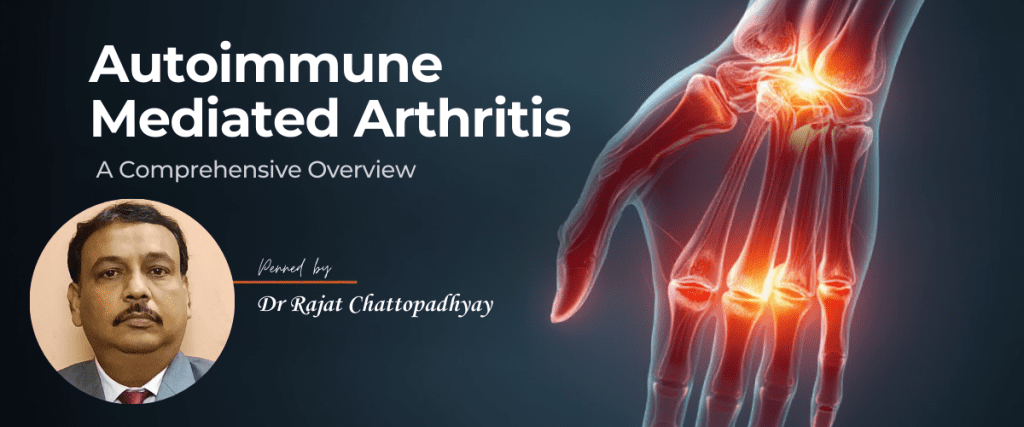
Autoimmune arthritis encompasses a diverse group of disorders characterized by the immune system erroneously attacking the body’s own tissues, particularly the joints. This review delves into various forms of autoimmune arthritis, including rheumatoid arthritis (RA), seronegative spondyloarthropathies (SpA), systemic lupus erythematosus (SLE), Behçet’s disease, palindromic rheumatism, polymyalgia rheumatica (PMR), Sjögren’s syndrome, sarcoidosis, and systemic sclerosis (SSc). We explore their clinical manifestations, epidemiology, ICD-11 classification, latest investigative approaches, and current management strategies, incorporating the most recent updates from the World Health Organization (WHO). Advances in biologic and targeted therapies have significantly improved outcomes, emphasizing the need for early diagnosis and intervention [1,2].
KEYWORD
Autoimmune arthritis, Seronegative Arthritis, Rheumatoid arthritis, Homoeopathic treatment, Scope of homoeopathy
Introduction
Autoimmune arthritis refers to a spectrum of inflammatory joint diseases caused by dysregulated immune responses. These conditions primarily target the synovium, leading to chronic inflammation, joint destruction, and systemic involvement. The diseases can be categorized as seropositive (e.g., RA, SLE, Sjögren’s syndrome) or seronegative (e.g., PsA, SpA, Behçet’s disease, PMR, sarcoidosis), based on the presence or absence of specific autoantibodies. Recent advancements in diagnostic tools and targeted therapies have transformed the management and prognosis of these disorders [3].
FIG 1: Difference between seropositive and seronegative autoimmune arthritis:
| Features | Seropositive Arthritis | Seronegative Arthritis |
| Definition | Autoimmune arthritis with +ve autoantibodies (RF and/or anti-CCP) | Autoimmune arthritis without autoantibodies (RF and/or anti-CCP) |
| Common types | Rheumatoid arthritis | Ankylosing Spondylosis, Psoriatic arthritis, Reactive arthritis, Enteropathic arthritis etc. |
| Autoantibodies | RA, anti-CCP +ve | RA, anti-CCP -ve, may be HLA-B27 +ve |
| Joint involvement | Symmetrical, small joints involved | Asymmetrical, large joints involved, axial skeleton often involved |
| Systemic features | More common (nodule, vasculitis) | Less common (may have skin, eye, GI symptoms) |
| Radiological findings | Joint erosion, osteopenia, joint space narrowing | Syndesmophytes, sacroilitis, new bone formation |
| Genetic marker | HLA-DR4 (in RA) | HLA-B27 (in spondyloarthropathies) |
| Prognosis | Often more severe with progressive joint damage | Variable, can be milder or have extra-articular manifestations |
- Rheumatoid Arthritis (RA)
Articular Symptoms: Symmetrical polyarthritis, affecting small joints of the hands and feet, characterized by pain, swelling, and morning stiffness lasting >30 minutes.
Extra-articular Features: Rheumatoid nodules, interstitial lung disease, vasculitis, and cardiovascular complications [1].
- Seronegative Spondyloarthropathies (SpA)
Ankylosing Spondylitis (AS): Chronic back pain, spinal stiffness, sacroiliitis, and progressive loss of spinal mobility [4].
Psoriatic Arthritis (PsA): Asymmetric oligoarthritis, dactylitis (“sausage digits”), and psoriatic skin/nail involvement.
Reactive Arthritis (ReA): Acute arthritis following infections, commonly associated with conjunctivitis and urethritis.
Enteropathic Arthritis (EA): Arthritis linked to inflammatory bowel disease (Crohn’s disease, ulcerative colitis).
- Systemic Lupus Erythematosus (SLE)
Articular: Non-erosive arthritis, typically involving small joints.
Systemic: Malar rash, photosensitivity, lupus nephritis, and hematologic abnormalities [5].
- Other Autoimmune Arthritis Conditions
Behçet’s Disease: Recurrent oral/genital ulcers, uveitis, and arthritis.
Palindromic Rheumatism: Recurrent joint inflammation without permanent damage.
Polymyalgia Rheumatica (PMR): Proximal muscle pain and stiffness (shoulders, hips), systemic symptoms.
Sjögren’s Syndrome: Dry eyes (keratoconjunctivitis sicca), dry mouth (xerostomia), systemic features.
Sarcoidosis: Arthritis, erythema nodosum, and hilar lymphadenopathy.
Systemic Sclerosis (SSc): Skin thickening, Raynaud’s phenomenon, organ fibrosis.
FIG 2: Epidemiology and ICD-11 Classification:
| Disease | Global Prevalence (%) | Peak Age (years) | M:F Ratio | ICD-11 Code |
| RA | 0.5-1.0 | 30-50 | 1:3 | FA20 |
| AS | 0.1-1.4 | 20-40 | 3:1 | FA24 |
| PsA | 0.1-0.3 | 30-50 | 1:1 | FA20.1 |
| ReA | 0.1-0.2 | 20-40 | 1.5:1 | FA23 |
| SLE | 0.02-0.1 | 15-45 | 1:9 | FA33 |
| Behcet’s | 0.03-0.06 | 20-40 | 1:1 | FA35 |
| PMR | 0.5 | >50 | 1:2 | FA32 |
| Sjogren’s | 0.3-0.6 | 40-60 | 1:9 | FA30 |
| Sarcoidosis | 0.02-0.05 | 20-50 | 1:1 | CBF |
| Ssc | 0.01-0.03 | 30-50 | 1:3 | FA34 |
Latest Investigations
- Serological Tests
Rheumatoid Factor (RF): Positive in ~70% of RA patients.
Anti-Cyclic Citrullinated Protein Antibodies (ACPA): Highly specific for RA.
Antinuclear Antibodies (ANA): Positive in SLE, Sjögren’s syndrome.
HLA-B27 Testing: Linked to AS, ReA.
- Imaging Studies
Ultrasound: Detects synovitis and early erosions.
MRI: Identifies early joint inflammation and bone marrow edema.
X-rays: Show joint erosions and structural changes.
- Advanced Diagnostics
HRCT: Assesses interstitial lung disease in RA, SSc.
Salivary Gland Biopsy: Confirms Sjögren’s syndrome.
PET-CT: Evaluates systemic inflammation in sarcoidosis [7].
Latest Management Strategies
- Pharmacological Therapies
NSAIDs: Symptom relief.
Glucocorticoids: Rapid control of inflammation.
Disease-Modifying Antirheumatic Drugs (DMARDs):
Conventional: Methotrexate, hydroxychloroquine.
Biologic: TNF inhibitors (e.g., etanercept), IL-6 inhibitors (e.g., tocilizumab), JAK inhibitors (e.g., tofacitinib) [8].
- Non-Pharmacological Management
Physical therapy for maintaining joint function.
Dietary modifications to reduce inflammation.
Psychosocial support to enhance patient quality of life.
- Other Lifestyle approaches to managing autoimmune forms of arthritis:
• Getting regular exercise: Some types of physical activity can improve the range of motion in the joints. Walking, water aerobics, and other low impact aerobic exercises are especially beneficial.
• Quitting smoking, drug intake, if applicable: Smoking can worsen the symptoms of many types of autoimmune arthritis.
• Eating a well-balanced diet: A nutritious diet can help people maintain a moderate weight, putting less pressure on painful joints. Polyunsaturated fatty acids (PUFAs) have gained wider attention because of their links to a variety of brain disorders, including anxiety and depression. These PUFAs include docosahexaenoic acid (DHA) and eicosapentaenoic acid (EPA) in the series of omega-3 fatty acids.
• Aiming for a regular sleep schedule: Sleep disruptions may worsen flares and other symptoms.
HOMOEOPATHIC APPROACH OF AUTOIMMUNE MEDIATED ARTHRITIS:
Miasmatic analysis:
- PATHOLOGICAL CONDITIONS ASCRIBED FOR THREE MIASMS according to M. L. Dhawale:[9]
Psora: Functional, reversible and nutritional deficiency disorders.
Sycosis: overgrowth of tissue, fibromuscular affection, rheumatism, arthritic conditions, tumours (simple, benign), gouty diathesis
Syphilis: Degenerative, deformities, suppuration, ulceration, squamous and coppery eruption of skin, ulceration, fissures of glands, bones, blood vessels.
- According to H. A. ROBERTS:[10]
The fundamental miasms have their period of remission, latent states lasting perhaps for years without showing any manifestations, some sudden-crisis in the history of the individual may rouse them to sudden eruption and the patient will become severely disturbed in health. Weakness of the knee joints is a sure indication of the presence of a syphilitic taint in combination with the psoric stigma.
The sycotic patient is especially liable to rheumatic troubles, and where this taint appears, especially if there has been any attempt at suppression of the rheumatic manifestations. There are pains in the small joints with infiltrations and deposits. Stiffness, soreness and lameness are characteristic of this stigma.
The syphilitic stigma attacks the long bones; the growing pains of children are syphilitic, especially when at night, < in storms or on change of weather. This stigma causes destruction of tissue partly because it hampers assimilation of the necessary elements, and we see the result in rickets of children; they cannot assimilate from their food what they require to make the bones sufficiently hard to support their weight without bending.
- According to J.H. Allen:[11]
Syphilis Long bones; the growing pains of children, at night, < in storms or on change of weather. Destruction of tissue, rickets of children; > dry, fair weather; worse at the approach of a storm or a damp, humid atmosphere and a falling barometer or becoming cold;
Sycosis Stiffness, sore- ness, lameness. > stooping, bending or beginning to move.
Psora Worse by motion and better by rest and warmth
Tubercular Joint troubles have increased in osseous tissues, nodular growths similar to syphilis. The bones are soft, rickety and curved, as seen frequently in bow-legged children, soft and flexible, deformed or the long bones become curved. The periosteal difficulties in pseudo-psora are due to periosteal inflammations or tertiary or tubercular changes in the bones themselves, while the pains in the joints or periosteum from sycosis, are due to gouty concretions, or chalky deposits in the tissues themselves, conveyed from the circulation. The tubercular and syphilitic bone pains are very similar, both as to their character and times of aggravation.
- According to Dr. S.P. Dey, in his immunology and homoeopathy, stated that, the therapeutic approach should begin with nosodes. Though not specified to autoimmune diseases, it could be taken in importance.[12]
Examples of some CLINICAL REPERTORIES:
- The homoeopathic therapeutics of rheumatism and kindred disease by C.D. Perkins:[13]
| CHAPTER | RUBRIC | MEDICINE |
| KNEE Rheumatic | Drawing in: | Iodum |
| KNEE | Pains in | Cimici., Clem., Phyto. |
- Repertory of the symptoms of rheumatism, sciatica etc by Alfred Pulford (1898):[14]
| CHAPTER | RUBRIC | MEDICINE |
| Knee | Rheumatism | Apis, Bry. Ferr., Kali c. Puls., Rhus Sticta, Sul. Esp. |
HOMOEOPATHIC THERAPEUTICS:
- According to Lilienthal, in his therapeutics:[15]
RHEUMATISM:
➢ CHRONIC RHEUMATISM AND SWELLING OF JOINTS: abrot, arn, calc, caust, chinap,
Clem…etc
➢ WITH CURVATURE AND STIFFNESS OF THE AFFECTED PART: ant, bry, caust, guaic,
Lach, sulph…etc
➢ WITH PARALYSIS: arn, chin, fer, rhus, ruta…etc
➢ ERRATIC PAIN: bry, nux.m, nux.v, puls…etc
- According to Dr. E.B. Nash:[16]
Trio of rheumatism: Caust., Rhus. Tox., Sulph.
- Roberts Rheumatic Remedies:[17]
Rhus Tox.: Inflammatory rheumatism from exposure to cold followed by paralysis of right side ; pain almost constant in right side.
Caust: Pain in loins as if bound by hands. Pinching cramping pain in lumbar region and buttocks. CHRONIC INFLAMMATION OF ARTICULAR STRICTURES, ESPECIALLY IF FROM A BLOW OR STRAIN. SYNOVITIS, FALSE ANCHYLOSIS.
SCOPE OF HOMOEOPATHY:
- Symptom Relief
Homeopathic remedies are prescribed based on the specific symptoms experienced by each individual. They aim to alleviate pain, stiffness, swelling, and inflammation associated with rheumatoid arthritis. Homeopathic remedies are selected based on the principle of similars, meaning that substances that produce similar symptoms in healthy individuals are used to stimulate the body’s self-healing mechanisms.
- Individualized Treatment: Homoeopathy emphasizes the importance of individualization. Each person with rheumatoid arthritis may experience different symptoms and respond differently to various triggers. Homeopathic practitioners take into account the unique characteristics, modalities, and progression of symptoms in each patient to prescribe a customized treatment plan.
- Holistic Approach: Homeopathy considers the physical, mental, and emotional aspects of an individual. It aims to address the whole person rather than just the physical symptoms of rheumatoid arthritis. By considering the individual’s overall well-being, homeopathy seeks to improve the quality of life and promote a sense of balance and well-being.
- Minimizing Side Effects: Homeopathic remedies are highly diluted and prepared through a process called potentization, which aims to enhance the healing properties of the substances while minimizing potential side effects. This makes homeopathy a potentially safer alternative or complementary option to conventional medications used in the management of autoimmune mediated arthritis.
- Psychological Stress Triggers Autoimmune Diseases: Retrospective studies found that a high proportion (up to 80%) of patients reported uncommon emotional stress before disease onset. Unfortunately, not only does stress cause disease, but the disease itself also causes significant stress in patients life.
Conclusion
Autoimmune arthritis represents a heterogeneous group of diseases with significant implications for morbidity and quality of life. Early diagnosis using serological markers, imaging techniques, and clinical evaluation is crucial for initiating appropriate treatment. The advent of biologic DMARDs and targeted therapies has revolutionized disease management, improving long-term outcomes though it has significant side effects. Ongoing research continues to refine treatment strategies, with the goal of achieving remission and minimizing disability. Here individualized approach of classical homoeopathic treatment promises better health and improves patients life by treating with its holistic view point. Each patient with same disease presents with different symptomatology and disease phenomena which should be taken care by homoeopathic physicians by means of detailed case taking and finding the similar with miasmatic and therapeutic evaluation.
References
- Jameson JL, Fauci AS, Kasper DL, Hauser SL, Longo DL, Loscalzo J, editors. Harrison’s Principles of Internal Medicine. 22nd ed. New York: McGraw-Hill Education; 2023.
- Papadakis MA, McPhee SJ, Rabow MW, editors. Current Medical Diagnosis and Treatment 2025. 64th ed. New York: McGraw-Hill Education; 2024.
- Smolen JS, Aletaha D, McInnes IB. Rheumatoid arthritis. Lancet.
- 2016;388(10055):2023-38.
- Van der Heijde D, Ramiro S, Landewé R, et al. 2016 update of the ASAS-EULAR management recommendations for axial spondyloarthritis. Ann Rheum Dis.
- 2017;76(6):978-91.
- World Health Organization. WHO Model List of Essential Medicines. 2023 update. Available from: https://www.who.int/publications/m/item/WHO-model-list-of-essential-medicines-2023
- Penman, Ian D, et al. Davidson’s Principles and Practice of Medicine International Edition. S.L., Elsevier Health Sciences, 2022. P.1043
- Powell A, Davis P, Jones N, Russell AS. Palindromic rheumatism is a common Disease: comparison of new-onset palindromic rheumatism compared to new-onset Rheumatoid arthritis in a 2-year cohort of patients. J Rheumatol. 2008 Jun;35(6):992-
- Epub 2008 Apr 15. PMID: 18412310.
- Ruan P, Wang S, Yang M, Wu H. The ABC-associated Immunosenescence and Lifestyle Interventions in Autoimmune Disease. Rheumatol Immunol Res. 2022 Oct
- 20;3(3):128-135. Doi: 10.2478/rir-2022-0021. PMID:36788975;PMCID:PMC9895871.
- Dhawale M.L. Principle and Practice of Homoeopathy, B Jain Pvt Limited, 2014.
- Roberts HA. Disease classification, The principles and art of cure by homoeopathy: a modern textbook, Sittingbourne, England:B. Jain Publishers (P) Ltd Homoeopathic Book Service; 1995 p:180-187
- Allen J H. Mental sphere,The Chronic Miasms, vol I, Psora and Pseudo-psora New Delhi: reprint edition B. Jain Publishers (P) Ltd; 2004,p:49-50
- DEY S.P. Essentials of Principles and Practice of Homoeopathy. Bhattacharya, Recorded Cassets, 2009 p.159
- Perkins DC, The Homeopathic Therapeutics of Rheumatism and Kindred Diseases. Philadelphia: F. E. Boericke, Hahnemann Publishing House; 1888.p154155
- Pulford A. Repertory of the Symptoms of Rheumatism, Sciatica, Et Cetera. 1898.p,122-12.
- Lilienthal S. Homoeopathic Therapeutics. B Jain Pvt Limited, 1879.p.916-917
- Nash E.B. Expanded Works of Nash. B Jain Pvt Limited, 2022 p.346
- Roberts H.A. The Rheumatic Remedies. B Jain, 1994
Authors:
- Prof. (Dr.) Rajat Chattopadhyay, Principal & Administrator, The Calcutta Homoeopathic Medical College & Hospital (Govt. of WB)
- Dr. Meghamala Chakraborty, PGT (Final Year), Dept. of Practice of Medicine, The Calcutta Homoeopathic Medical College & Hospital (Govt. of WB)