Dr. Prasoon Choudhary1, Dr. Kamal Nainawat2, Dr. Tushar Agarwal3
1H.O.D. Department Of Paediatrics, Dr. M.P.K. Homeopathic Medical College, Hospital and Research Center, Saipura, Sanganer, Jaipur, Rajasthan, 302029 2PG Scholar, Dept Of Paediatrics, Dr. M.P.K. Homeopathic Medical College, Hospital and Research Center, Saipura, Sanganer, Jaipur, Rajasthan, 302029
Abstract
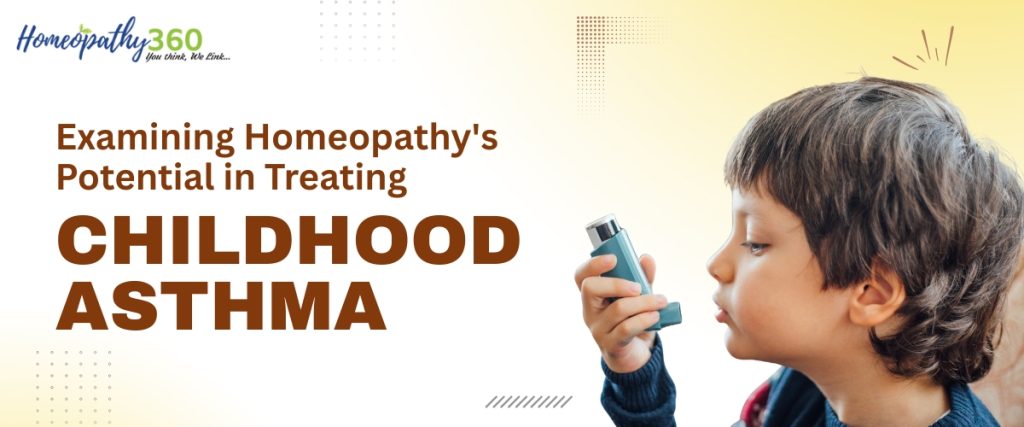
Millions of children throughout the world suffer from asthma, a chronic respiratory disease.
Investigating the function of homoeopathy in treating childhood asthma is crucial in India, where traditional medical systems like homoeopathy are widely practiced.
When exposed to specific triggers, the lungs and airways in children with asthma become quickly irritated.An extensive examination of childhood asthma, including its epidemiology, causes, risk factors, symptoms, consequences, and traditional treatment, is given in this article. Additionally, it explores the potential of homoeopathy as a supplemental or alternative method of treating asthma in children from India.
Introduction
The common chronic respiratory disease known as asthma is typified by bronchoconstriction and inflammation of the airways.Although it can happen to anyone of any age, it is particularly worrisome when it affects youngsters.
One chronic (long-term) lung condition is asthma. It impacts the tubes that transport air into and out of the lungs, known as the airways.The airways may narrow and become irritated if you have asthma.Chest tightness, coughing, and wheezing may result from this.Although asthma can strike at any age, it usually first manifests in childhood, when the immune system is still maturing.By the age of five, the majority of
kids with asthma experience their first symptoms.A growing number of youngsters may be developing asthma as a result of some of these conditions.These elements consist of reduced breastfeeding (chestfeeding) rates, which deprive infants of vital nutrients for the immunological system, increased exposure to allergens such secondhand smoking, dust, and air pollution, insufficient exposure to childhood diseases that strengthen their defences.
Epidemiology
India is not an exception to the global health challenge of asthma.It is estimated that asthma affects more than 6% of Indians, including a sizable portion of youngsters.Numerous factors, including as genetics, environmental trigger and socioeconomic circumstances, affect the occurrence of asthma.Asthma prevalence increased dramatically in both industrialised and developing countries between 1970 and 2000. Between 1979 and 1999, the prevalence of asthma increased steadily from 9% to 29.5%.In 2004 and 2009, it dropped 3% and 1%, respectively. The prevalence of urban children in semirural areas is rising due to rapid urbanisation.Children living in one room huts and homes with inadequate ventilation; children attending schools in crowded areas, particularly those from lower socioeconomic origins; Compared to rural areas, semirural areas are becoming more prevalent due to rapid urbanisation.Seventy-five percent of the population is under five, while twenty-five percent is above five.Asthma in parents, siblings, or grandparents is a positive family history
Pathophysiology:
The pathogenesis of asthma, a common chronic respiratory disease that affects people of all ages, should be better understood, especially in relation to paediatric patients. Chronic airway inflammation, increased airway reactivity or hyperresponsiveness, excessive bronchoconstriction, and increased mucus production leading to airway blockage are the main pathophysiological factors underlying asthma. Eosinophil infiltration, which releases inflammatory mediators, and an immunoglobulin E (IgE)-mediated reaction, which is frequently linked to allergic asthma.Furthermore, recurrent asthma episodes and chronic inflammation can cause structural alterations in the airways known as “airway remodelling,” which includes fibrosis, thickening of the airway wall, and an increase in smooth muscle mass.Together, these intricate processes are responsible for the typical asthmatic symptoms and flare-ups seen in youngsters.
Causes:
Children’s asthma is a complicated respiratory disease with several underlying causes. It is generally acknowledged that asthma results from a confluence of environmental factors and genetic predisposition, even though the precise cause is still unknown. Key causes and significant factors include the following:
1. Genetic Factors: A child’s risk of having asthma is greatly increased if there is a family history of the condition or other allergy disorders. The identification of particular genes linked to asthma susceptibility highlights the genetic component.
2. Respiratory Infections: Children who already have asthma may see symptoms of their condition worsened by viral respiratory infections, such as the common cold and respiratory syncytial virus (RSV). Asthma development may also be influenced by early infection exposure.
3. Prematurity and Low Birth Weight: Children who are born low or preterm are more likely to acquire asthma.This elevated risk may be exacerbated by preterm newborns’ incomplete lung development.
4. Allergies: Asthma symptoms can be brought on by allergic reactions to things like pollen, dust mites, pet dander, mould spores, and specific foods.Asthma is more common in children with allergies, especially if both disorders run in the family.
5. Environmental Factors: Children’s risk of developing asthma can be raised by exposure to environmental pollutants such as tobacco smoke, air pollution, and indoor irritants (such as strong odours, fumes, and allergens).Two particularly important risk factors are postnatal smoke exposure and maternal smoking during pregnancy.
6. Obesity: Children who are obese have an increased chance of acquiring asthma.Although the precise processes underlying the association between obesity and asthma remain unclear, they may include alterations in lung function and inflammation.
7. Dietary Factors: According to certain research, a diet heavy in processed foods and poor in fruits and vegetables may raise the chance of developing asthma.However, further study in this field is required.
Risk Factors:
The following variables may raise a child’s risk of acquiring asthma:
1. tobacco smoke exposure, including prenatal exposure.
2. Prior allergic reactions, such as hay fever, food allergies, or skin reactions, are also referred to as allergic rhinitis.
3. an allergy or asthmatic family history.
4. residing in a very polluted region, like Delhi, Uttar Pradesh, etc.
5. Obesity.
6. respiratory disorders, including pneumonia, irritated sinuses, and a persistently runny or congested nose.
7. Gastroesophageal reflux disease (GERD)
Symptoms and Clinical Manifestations:
While most asthmatics do not wheeze, wheezing is not always a sign of asthma.Here are a few instances of common clinical characteristics:
Medical History: In order to determine possible risk factors and asthma symptoms, the child’s medical history is essential. Doctors will ask about symptoms including frequent coughing, wheezing, dyspnoea, and pressure in the chest, particularly at night or in reaction to certain stimuli.
Physical Examination: A comprehensive physical examination aids the medical professional in determining the child’s general health and lung function.During the examination, physical symptoms such wheezing, an elevated respiratory rate, nasal flaring, and chest retractions may be noticed.
Pulmonary Function Tests: For children five years of age and up, spirometry is a crucial diagnostic procedure for asthma. By determining how much and how rapidly a child can inhale and exhale, it evaluates lung function. Allergy Testing: To find allergens that can cause asthma symptoms, allergy testing, such as skin prick tests or blood tests (particularly IgE levels), may be performed.
Imaging or Chest X-ray: In cases when symptoms are unusual, imaging investigations or chest X-rays may be required to rule out other respiratory disorders or consequences.
Monitoring and Follow-Up: To monitor asthma control, modify treatment regimens, and make sure the child’s symptoms are effectively managed over time, routine follow- up consultations are crucial. The diagnosis of childhood asthma is a complex procedure that includes objective testing, medical history, clinical assessment, and continuing observation. An early and precise diagnosis enables prompt therapy and intervention, improving the child’s quality of life and controlling asthma symptoms.
Management:
Controlling symptoms, preserving regular activities, and avoiding exacerbations are the major goals of asthma treatment for kids.Usually, this includes:
Medication: While quick-relief drugs offer prompt symptom alleviation during attacks, long-term management drugs, such as inhaled corticosteroids, lessen airway inflammation. Beta agonists with a brief half-life.During an asthma attack, these inhaled bronchodilator medications can quickly reduce symptoms. Among them are levalbuterol (Xopenex HFA) and albuterol.The effects of these medications linger for several hours after they start working.
Immunotherapy is another name for allergy injections.
Typically, immunotherapy injections are administered once a week for a few months, followed by once a month for three to five years.They progressively lessen your child’s immune system’s response to particular allergens over time.
Combo inhalers –
These medications include both a long- acting beta agonist (LABA) and an inhaled corticosteroid. These consist of mometasone and formoterol (Dulera), fluticasone and vilanterol (Breo Ellipta), budesonide and formoterol (Symbicort), and fluticasone and salmeterol (Advair Diskus).
Education: For asthma to be effectively managed over the
long term, parents and kids must receive education on how to manage the condition.
Homeopathic Management:
For more than 200 years, homoeopathy has been used as an alternative medicinal
method.It is founded on the idea that “like cures like,” which states that a drug that produces symptoms in a healthy individual can be used to treat those same symptoms in a sick person at a much lower dosage. Practitioners of homoeopathic treatment for asthma perform a comprehensive evaluation of the child’s symptoms, medical background, and general health. Next, based on the child’s unique symptoms and constitution, they choose a homoeopathic cure
Children with asthma can manage their chronic recurrence tendency with the use of homoeopathic medications. Additionally, these medications lessen the severity and frequency of asthma symptoms. When necessary, homoeopathy also modifies the immune system to address allergic tendencies, which are a contributing factor to asthma
These medications, which are made of natural ingredients, can be used safely and effectively and have no negative side effects.In acute episodes of asthma, homoeopathic treatment might be utilised in addition to conventional medicine.
One well-known homoeopathic remedy for asthma that worsens in cold air is hepar sulphur. The youngster experiences wheezing, breathing difficulties, and a cough after being exposed to cold air. There is mucous in the chest and a loose cough.Phlegm that is yellow in colour may be expelled. In addition to being worse in the morning, drinking cold beverages exacerbates the cough.
Ipecac –
A homoeopathic remedy called ipecac is used to treat asthma.It is made from the ipecac plant’s roots. This plant is a member of the Rubiaceae family of plants.It is recommended for severe dyspnoea and chest tightness associated with an asthmatic cough.Shortness of breath is often brought on by mild exertion. The child’s cough is taxing, and their breathing is heavy and short. There may be a rattling of phlegm in the chest.A noticeable suffocating is present.Coughing is followed by vomiting.The child stiffens with a spasmodic cough, and their face turns blue.Being outside could help the child feel better.
Spongia Tosta –
A great homoeopathic remedy for an asthmatic cough is Spongia tosta.The primary symptom of using Spongia Tosta is a dry cough accompanied by chest wheezing. The cough is deep, bark-like, and incredibly dry.Day or night, it is there.For a while, warm beverages could help with the cough.This is accompanied by short, painful breathing and suffocating.
Antimonium Tart –
For asthma symptoms like coughing and chest mucous rattling, Antimonium Tart is a suitable homoeopathic remedy. There appears to be too much mucus in the airways. There is a lot of mucous rattling and the chest is really crowded.There is constant coughing without any sputa ejection. There may be a feeling of suffocation and shortness of breath.
Arsenic Album –
One significant homoeopathic remedy that is commonly used to treat childhood asthma is arsenic album. This medication effectively treats asthma that causes severe breathing difficulties. The child’s airways are narrowed, making breathing uncomfortable. He or she works very hard to breathe normally. Wheezing in the chest and a difficult mucus evacuation accompany a cough.Homoeopathic treatment Arsenic Album is mostly used to treat asthma that gets worse after midnight or before bed.
Natrum Sulph –
Children’s asthma can be effectively treated with natrum sulphur, a great homoeopathic remedy. Children’s asthma can be effectively treated with this constitutional homoeopathic remedy. A youngster that requires Natrum Sulph has a cough, chest rattling, and dyspnoea.Green-colored mucus may be seen being expelled. The symptoms of taking Natrum Sulph are asthma that is aggravated in damp conditions and asthma that is provoked by cold and effort.
Sambucus Nigra –
One of the greatest homoeopathic treatments for childhood asthma is Sambucus nigra.Common Elder is the herb used to make this natural homoeopathic remedy. The plant is a member of the Caprifoliaceae family.The medication is made from the plant’s fresh leaves and blooms. In children’s asthma, Sambucus Nigra often results in a spectacular recovery.The main sign that a child needs to take this medication is when they have suffocating asthma attacks every night. Feeling stifled, the child abruptly wakes up in the middle of the night. Suffocation is accompanied by restlessness and irritability in the youngster. The usual symptoms include a cough that makes breathing extremely difficult, a tiny amount of tough mucus being expelled, and nasal blockage.
Conclusions:
In summary, children’s asthma is a prevalent chronic respiratory condition that can significantly affect their quality of life if left untreated. Prompt diagnosis, comprehensive asthma action plans, and adherence to prescribed medications are critical for managing symptoms and preventing complications.Asthma treatment should use customised treatment plans that incorporate trigger avoidance strategies to lessen exacerbations. Regular monitoring and follow-up with medical specialists are essential for tracking asthma management and making the necessary adjustments.Children with asthma may lead busy, fulfilling lives that enable them to develop while effectively controlling their condition if they receive the proper care. The patient as an individual is the main focus of homoeopathic treatment.A ill person’s symptoms gradually subside and their health is restored when a carefully chosen medication is given to them.It symbolises how a vulnerable organism responds to the impression of the healing treatment.With the correct medication, the elevated sensitivity to gluten protein will return to normal, and diet control combined with homoeopathic treatment can help children’s asthma be better managed.
References:
1. Ghai, O.P., Ghai Essential Paediatrics, 6 th edition ( revised and enlarged), Delhi, CBS Publishers, 2006,
Page No. 281
2. Agarwal , Mukesh, Textbook of Paediatrics, 1st edition, Mumbai, Bhalani Publishers, 2009, Page No. 346 Siddharth Shah, API Textbook of medicine, 6th Edition,
Mumbai, Association of Physicians of India, 1999
3. Behrman and Kliegman, Nelson Textbook of Paediatrics, 17th edition, Philadelphia, Elsevier Health Science, Saunders, 2003, Page No. 1264
4. Colledge, Walker and Ralston, Davidson’s Principles & Practice of Medicine, 20th edition, Churchill Livingstone ELSEVIER, 2006, Page No. 894
5. Allen H.C. Allen’s Keynotes, Rearranged and Classified with
leading remedies of the MateriaMedica& Bowel Nosodes, 9th edition : B. Jain Publisher Pvt. Ltd., New Delhi, Reprint edition 2004
6. Boericke, William. Pocket Manual of Homoeopathic Materia Medica and Repertory comprising of the Characteristic and guiding symptoms of all Remedies (clinical and pathogenetic) including Indian Drugs. B. Jain Publishers Pvt. Ltd, New Delhi, 2007.
7. Kent James Tyler. Lectures on Homoeopathic Philosophy. Memorial Edition Reprint. B. Jain Publishers Pvt. Ltd., New Delhi , 2004.
8. Sarkar. B. K. Hahnemann’s Organon of Medicine. Reprint
Edition, Birla Publications Pvt. Ltd., Delhi, 2007- 2008.