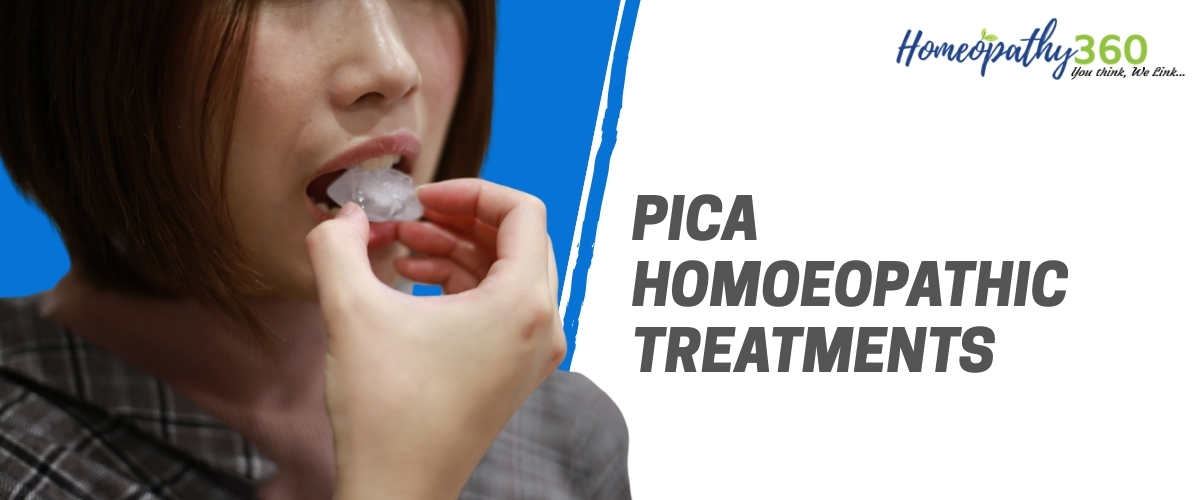
An desire for mostly non-nutritive things, such as ice (pagophagia), hair (trychophagia), paper (papyrophagia), plasterboard or paint, metal (metallophagia), stones (lithophagia) or dirt (geophagia), glass (hyalophagia) or excrement (coprophagia), is a characteristic of pica.
Young children are more likely than adults to have pica. These behaviours are present in 10% to 32% of children aged 1 to 6. It is unknown how common geophagy—the deliberate eating of dirt—is among kids, a subgroup of kids that exhibit pica behaviour.
Pregnancy might also cause pica. Rare cravings can occasionally be brought on by a lack of specific minerals, such as zinc inadequacy and iron deficiency anaemia. Adults who have a craving for a certain mouth texture may also experience pica.
Pica symptoms include eating things like animal excrement, clay, dirt, hairballs, ice, paint, and sand. For this eating pattern to be diagnosed as pica, it must persist for at least one month.
HOMOEOPATHIC REMEDIES
ANTIMONIUM CRUDUM – An great treatment for pica is antimonium crudum. Raw foods and veggies are in demand. Another prescription for this medication is appetite loss. After eating, the abdomen becomes bloated. incapacity to tolerate heat from the sun, made worse by excessive sun exposure and overeating. There is a propensity to gain weight. The main symptom of this treatment is a thick, milky, white-coated tongue. Bread, pickles, and acids are craved and intolerable. thirst and a propensity to gain weight. The patient is abrasive, agitated, and unable to tolerate being touched or gazed at.
CALCAREA CARB – Calcarea carb sufferers are sluggish, chubby, fair, flabby, timid, shy, and afraid. They are yearning pencils, coal, charcoal, and chalk. When Calcarea carb sufferers sleep, their heads perspire a lot. They are frigid and readily chilled. They dislike meat and milk and have a craving for eggs.
CALCAREA PHOSPHORICA– People with calcrea phos are cold, slender, malnourished, rickety, and unable to stand. They perspire easily. They want things like clay, chalk, slate, pencils, lime, and dirt. wants smoked items and raw salt as well. Abdominal distension and poor digestion are present. annoyance brought on by damp, chilly temperatures, weather changes, and mental strain.
CICUTA VIROSA– Unusual cravings for coal, chalk, charcoal, and cabbage are enjoyed in Cicuta. They have a propensity to bend backward and are convulsive. Suppressed skin eruptions have been documented in the past. Patients in Cicuta are cold. They make weird movements, sing, dance, and are foolish.
NATRUM MURIATICUM – Patients with natrum mur develop a salt desire. They are overheated patients with greasy faces and inadequate nutrition. Food digestion takes a long time. dislike of bread and fatty foods
NUX VOMICA – Patients with nux vomica experience cravings for chalk, pepper, and charcoal. craves spicy meals and fats. They’re thin and cold. Patients with nux vomica are extremely sensitive to light, music, noise, and smells. They are swift, energetic, ardent, and angry.
NITRIC ACID – Patients with nitric acid experience cravings for charcoal, lime, slate, pencils, and papers. They are weak, skinny, frigid, and easily chilled. wants salt and fat. They have fissures in the rectum and corners of the mouth, as well as cracks in the muco-cutaneous junction. Patients with nitric acid are agitated, scared, aggressive, vengeful, and light and noise sensitive.
SILICEA – Patients with silica are very cold; cold exacerbates all symptoms, with the exception of stomach issues, which are alleviated by cold. craving uncooked foods, sand, and lime. Every discharge is unpleasant and abundant. They are tense, anxious, overly sensitive, agitated, and afraid.
Authors
Dr. Prasoon Choudhary – Professor (HOD)
Dr. Kamal Nainawat – PG Scholar,
Department of Paediatrics, Dr. MPK Homoeopathic Medical College, Hospital and research Centre, Homoeopathy University, Jaipur (Rajasthan)