Definition:
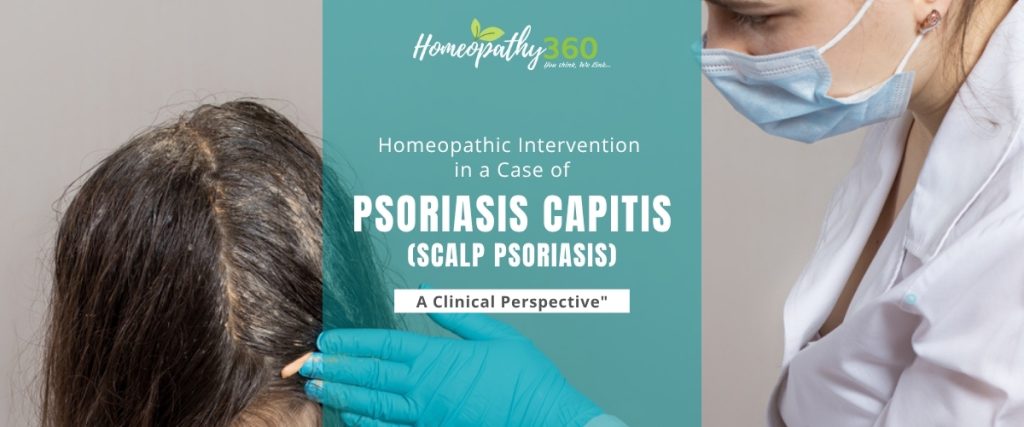
Psoriasis Capitis (also called scalp psoriasis) is a chronic, non-infectious, inflammatory skin condition characterized by well-demarcated, erythematous plaques with silvery-white scales predominantly affecting the scalp. It is a localized form of plaque psoriasis.
Types:
- Mild Psoriasis Capitis:
- Fine scaling with minimal redness and itching.
- May resemble dandruff.
- Fine scaling with minimal redness and itching.
- Moderate Psoriasis Capitis:
- More defined plaques.
- Thicker scales, redness, and itching.
- More defined plaques.
- Severe Psoriasis Capitis:
- Extensive scaling covering large portions of the scalp.
- May extend beyond the hairline to the forehead, neck, and ears.
- Significant itching, burning, and hair loss (temporary).
- Extensive scaling covering large portions of the scalp.
- Sebopsoriasis:
- Overlapping condition between seborrheic dermatitis and psoriasis.
- Occurs in the scalp, face, and oily areas.
- Overlapping condition between seborrheic dermatitis and psoriasis.
Etiology (Causes):
Psoriasis Capitis is multifactorial. Key factors include:
- Genetic predisposition – family history of psoriasis.
- Autoimmune dysfunction – abnormal T-cell mediated immune response causing keratinocyte proliferation.
- Triggers:
- Stress
- Cold weather
- Skin trauma (Koebner phenomenon)
- Infections (especially streptococcal)
- Certain drugs (e.g., beta-blockers, lithium, antimalarials)
- Hormonal changes
- Alcohol and smoking
- Stress
Clinical Features:
- Location: Scalp, especially behind ears, nape of neck, and forehead margins.
- Appearance:
- Thick, well-demarcated plaques.
- Silvery-white, dry, adherent scales.
- Red base (erythema).
- Thick, well-demarcated plaques.
- Itching and irritation – variable in intensity.
- Bleeding points (Auspitz’s sign) on scale removal.
- Hair loss – usually non-scarring and reversible.
- Scalp tightness or burning sensation in severe cases.
Differential Diagnosis:
| Condition | Differentiating Features |
| Seborrheic Dermatitis | Greasy, yellow scales; less well-defined borders; no silvery scales. |
| Tinea Capitis | Fungal infection; may show broken hairs, lymphadenopathy; positive KOH test. |
| Lichen Planopilaris | Violaceous flat-topped papules; scarring alopecia. |
| Atopic Dermatitis | Itchy eczema patches; early onset; history of allergies. |
| Lupus Erythematosus (Discoid) | Scarring lesions, depigmentation, photosensitivity, ANA positive. |
Homoeopathic Treatment:
Note: Homoeopathic medicines should be selected based on the totality of symptoms, miasmatic background, and constitutional type.
Common Remedies:
| Remedy | Key Indications |
| Arsenicum album | Dry, scaly eruptions; intense burning; worsens at night; anxious and restless. |
| Graphites | Thick, dry eruptions with sticky, honey-like discharge; cracks behind ears and in scalp folds. |
| Mezereum | Thick crusts on scalp; pus oozing out; intense itching, worse from warmth. |
| Sulphur | Dry, scaly, itchy eruptions; worse from heat and bathing; scratching causes burning. |
| Lycopodium | Dry eruptions with hair fall; worse on the right side; digestive issues. |
| Thuja | Dry white scales on scalp; sycotic miasm; often associated with vaccination history. |
| Petroleum | Cracks and fissures on scalp; worse in winter; dryness and itching. |
| Kali arsenicosum | Severe itching of scalp with chronic eruptions; useful in stubborn cases. |
Intercurrent Remedies:
- Psorinum – Indicated in psoric miasm, chronic relapsing cases.
- Tuberculinum – For tubercular miasm with family history of TB or chest complaints.
- Sulphur – Used as an intercurrent to awaken reactive forces.
Case Presentation: Psoriasis Capitis
Presented by: Dr. Chinna Solanki, MD Part 2 (Practice of Medicine)
HOD: Dr. S.K. Sharma
Institution: RKDF Homoeopathic Medical College Hospital and Research Centre
Date: [Insert Date]
Diagnosis: Psoriasis Capitis
1. PATIENT INFORMATION
- Name: Mr. Abhishek Jain
- Age/Sex: 32 years/Male
- Occupation: Bank Clerk
- Address: [Insert City, State]
- Date of First Visit: 15th April 2025
- OPD No.: 1025/25
2. Chief Complaints
| Complaints | Duration | Description |
| Itching and burning on scalp | 8 months | Worse at night, especially after scratching. Causes disturbed sleep. |
| Scaly eruptions on scalp | 8 months | Thick, white crusts that bleed on removal. |
| Occasional hair fall | 6 months | No bald patches; reversible hair loss. |
| Extension behind ears and into nape | 3 months | Dry, cracked skin with flakes. |
3. History Of Present Complaints
- Complaints started insidiously 8 months ago after a bout of work stress.
- Initially thought to be dandruff. Worsened over winter.
- Tried anti-dandruff shampoos and topical steroids with temporary relief.
- Patient noticed worsening after emotional stress and dietary changes.
4. Past History
- Chickenpox in childhood
- No major illness or surgery
- No known allergies
5. Family History
- Mother has bronchial asthma
- Maternal uncle has psoriasis
- Father is diabetic
6. Personal History
- Appetite: Normal
- Thirst: Moderate, prefers cold water
- Stool: Irregular, occasional constipation
- Urine: Normal
- Sleep: Disturbed due to itching
- Dreams: Frightening, often of falling
- Thermal reaction: Chilly patient
7. Mental Generals
- Very anxious and insecure about health
- Gets irritated when questioned
- Sensitive to criticism
- Feels better when consoled
- Workaholic and perfectionist
- Emotionally suppressed
- Avoids conflict but internally feels angry
8. Totality Of Symptoms
- Itching and burning of scalp, < night, > cold applications
- Thick crusts on scalp with pus and bleeding on removal
- Cracks behind ears
- Disturbed sleep due to itching
- Hair fall with crust formation
- Emotionally sensitive, easily offended
- History of suppressed eruptions
- Family history of skin disease
- Craving for warm food, aversion to meat
- < in winter and after bathing
9. Repertorial Totality
Repertory Used: Synthesis Repertory
| Rubrics | Chapter |
| Head; eruptions; crusty, scalp | Head |
| Head; eruptions; scales, scalp | Head |
| Skin; eruptions; itching; night | Skin |
| Skin; eruptions; bleeding on scratching | Skin |
| Generals; food and drinks; meat; aversion | Generals |
| Sleep; disturbed; itching from | Sleep |
| Mind; sensitive; to criticism | Mind |
| Mind; consolation amel. | Mind |
Remedies Considered: Mezereum, Graphites, Arsenicum album, Sulphur
Selected Remedy: Mezereum 30 (based on physical, mental and miasmatic totality)
10. Prescription
Medicine Prescribed:
- Mezereum 30C – 4 pills once a day × 7 days
- Placebo – BD × 14 days
- Advice: Avoid triggers (stress, cold weather), use mild shampoo, adequate hydration
11. Follow-Up
Follow-up 1 (After 2 weeks)
- Itching reduced by 40%
- Crusts drying, healing observed
- Sleep improved
➡ Continued Mezereum 30C for another 7 days
Follow-up 2 (After 1 month)
- Most plaques resolved
- Mild discoloration behind ears
- No itching
➡ Gave Tellurium 200C, 1 dose (to address residual circular discolored patches)
Follow-up 3 (After 2 months)
- 95% improvement
- Scalp clear
- Mentally calm and emotionally stable
➡ Intercurrent remedy: Bacillinum 200C, 1 dose
(To manage underlying psoric/tubercular miasm, prevent recurrence)
12. CONSENT FROM PATIENT
“I, Mr. Abhishek Jain, voluntarily consent to the homeopathic treatment provided to me. I understand the nature of my condition, and the homeopathic approach being followed. I also grant permission to use my anonymous case for academic purposes.”
13. REFERENCES
- Boericke’s Materia Medica – William Boericke
- Synthesis Repertory – Radar Opus
- Allen’s Keynotes – H.C. Allen
- Rook’s Textbook of Dermatology
- Homeopathic Practice of Skin Diseases – Dr. Ramji Gupta
- Miasmatic Prescribing – Dr. Subrata Banerjea