Our perspective on the book:
Homoeopathy is filled with great epochal data of human proving which is compiled in all forms, right from anatomical schema, keynotes, lecture style, so on and so forth. All created with various problem-solving attitudes and a co-curation of invaluable clinical experience of various practising homoeopathic physicians. Most of them give the data regarding the multifarious usage of the polycrest remedies, which cannot be overstated, but what if even after the most meticulous case evaluation the best selected remedy fails? Is the homoeopath to be held accountable, or did the answer lie within the silence of an unexplored road?
This book by Dr. Parag Sharma highlights those medicines which have been in our materia medica for a long time or may be introduced recently as well, but have been neglected or never been thought of in place of the usual favourite remedies. It broadens the horizon of a homoeopath for a more suitable “indicated” remedy. These remedies can be wisely used as ‘Intercurrent’ remedies in stuck up situations in day-to-day practices. It demystifies the confirmation bias where physicians are choosing medicine like Lycopodium for 4-8 pm aggravation and in case of its failure missing out on the use of Indian Lycopodium – Azadirachta Inidica or Aegle Marmellos or Chelidonium etc., as the saying goes that – the tool serves the craftsman who knows it well, and this book is one such armamentary of these kinds of tools.
Content Structure and Overview:
Foreworded by eminent homoeopathic physicians and professors like Dr. LK Nanda, Dr. Anand Kumar Chaturvedi, Dr. Aswini Kumar Das, Dr. Vijay Krishna and Dr. Alok Misra.
Introduction:
The author has added an Introduction which briefly points out to the inception of this book and its beneficial effect on the homoeopathic society and its role as a guiding lamp during
challenging clinical moments. A total of 255 remedies have been discussed under this publication with an equal importance given to all kingdoms right from plant, mineral and animal to nosodes, sarcodes and imponderabilia.
Materia Medica:
Each medicine is thoughtfully assembled with its
o Author/Prover
o Indications
o Keynotes
o Theme
o Important rubrics
o Case excerpts
o Commentary of various stalwarts who have used the drug successfully and published their results to the world.
Remedies have been compared simultaneously with other similar medicines in various spheres of action.
Any additional information unique to the remedy or an explanation to any cryptic word/ phrase has been appended at the bottom of the same page and marked with a superscript number, a total of 44 sections have been added.
Appendix:
For ease of practitioners an appendix has been added at the end of the book for smooth navigation through the list of 103 common medicines that have been discussed in this book with the alternative choices in front of the aforementioned remedy. This will help the practitioners to readily access the information they have read in this book.
Index
Helps to access the multiple mentions of a single remedy in various contexts in the whole book which provides a kaleidoscopic interpretation of information.
Bibliography
A total of 72 references have been mentioned and all of the data in this publication belongs to authentic books/ journals/ provings or personal clinical experiences and not added on the basis of intuition or mere speculations. Various source books have been mentioned in the remedy as well.
Unique Contributions:
- Case Excerpts – A similar style has been observed in “A Study of Materia Medica – Dr. N.M. Choudhuri” where he added his personal clinical experiences at the end of the medicines. The author here has also added cases of various stalwarts re-proving the clinical efficacy of the drug in concern.
- Use of Rare remedies – “Rare remedies are called ‘Rare’ because they are used rarely – Dr. L.M. Khan”. This book diligently shows the wise use of such hidden gems of our materia medica such as o Allium Ursinum in cases of Hyperlipidaemia, Hypercholesterolemia and Atherosclerosis. o DNA as a neglected intercurrent especially in cases of auto-immune disorders. o Guaiacum Trichilioides as one of the forgotten remedies in arthritis and rheumatism.
o Santoninum in worm affections when Cina seems indicated but fails and many more.
- Untapped insights of routine medicines – Due to regular use of few medicines especially polycrest, we tend to remember them for some specific kind of symptomatology, this book provides an insight into the neglected facets of such medicines as well, such as
o Mental state of pent-up grief of Bellis perennis
o Temper tantrums with repulsive behaviour are indications of Cina for adults o Phosphorus cures lasciviousness when Hyoscyamus fails.
o Thuja in children’s cases of suppressed skin troubles which later develop asthma. 4. Well-balanced priority to Bowel Nosodes, Nosodes, Sarcodes, Imponderabilia Insightful information has been provided for medicines like Bacillus Coli, Colostrum, DPT vaccine, Luna, Methylene Blue, Osteoarthritis nosode, Pepsinum, X-ray etc.
Conclusion:
Dr. Parag Sharma’s What If the Indicated Remedy Fails? is not just a compilation of forgotten or lesser-used remedies—it is a thoughtful reawakening of clinical possibilities. The book serves as a timely reminder that the success of homoeopathic prescribing often lies beyond our habitual choices, in the subtle whispers of the overlooked hints. With a structured presentation, verified clinical experiences, and a treasure trove of insights, it empowers practitioners to think beyond the obvious and question the regular use of familiar remedies. This work will undoubtedly stand as a valuable companion for every homoeopath striving to refine their art and navigate clinical dead ends.
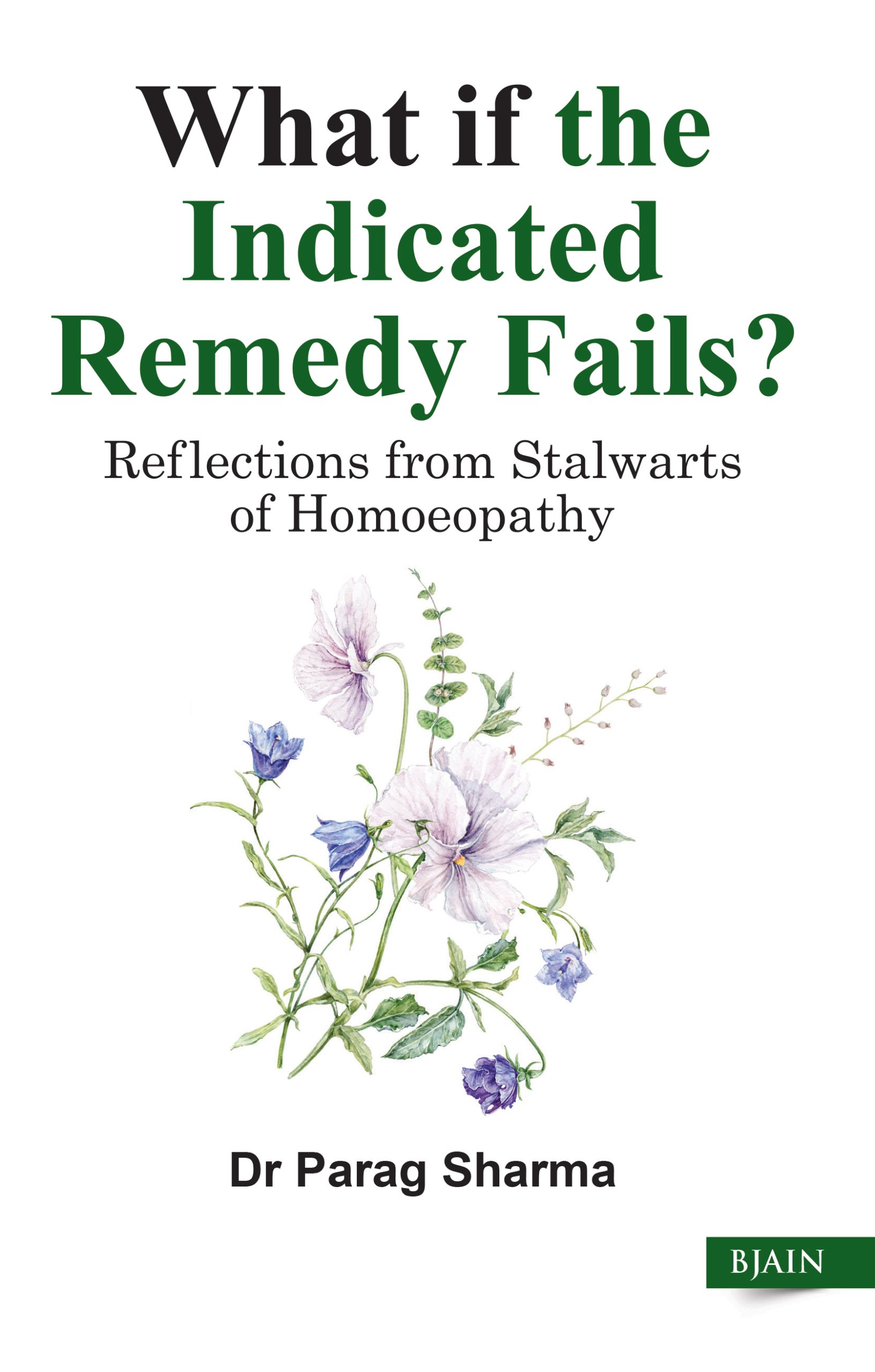
Title: What If the Indicated Remedy Fails?
Author: Dr Parag Sharma
ISBN: 9788131999424
Imprint: B Jain Regular
Pages: 196
Format: Paperback
Language: English
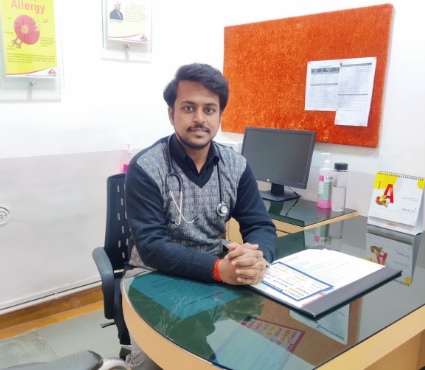
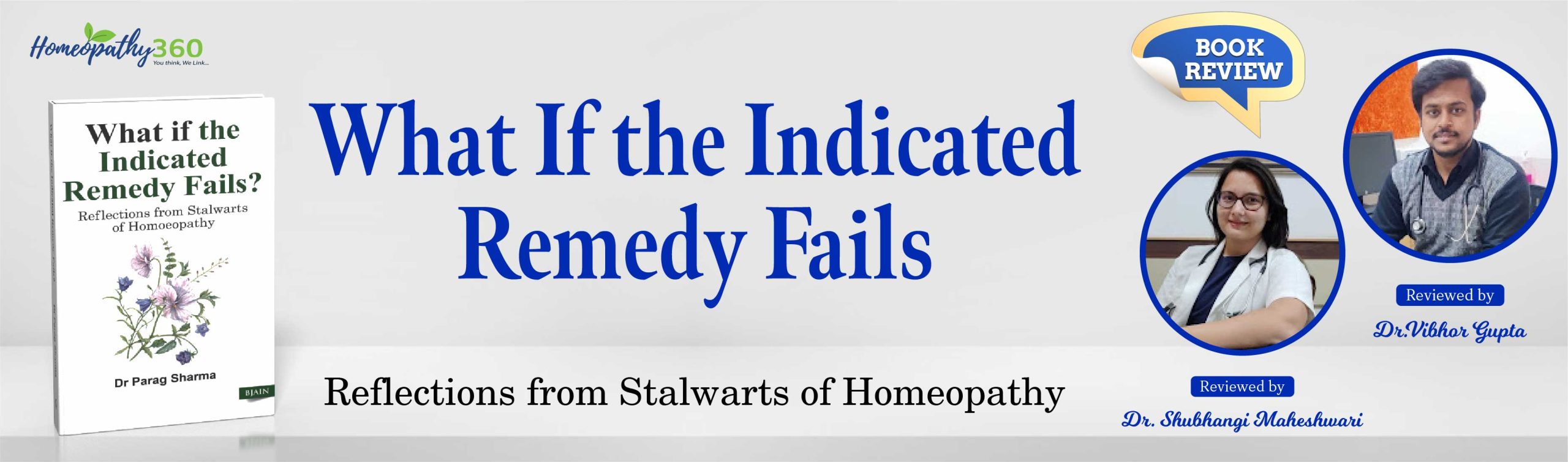
Dr. Vibhor Gupta – MD (Scholar) , Dept. of Repertory and Case-taking, Bakson Homoeopathic Medical College and Hospital Dept. of Materia Medica, State Lal Bahadur Shastri Homoeopathic Medical College and Hospital
Dr. Shubhangi Maheshwari, MD (Scholar), Dept. of Repertory and Case-taking, Bakson Homoeopathic Medical College and Hospital Dept. of Materia Medica, State Lal Bahadur Shastri Homoeopathic Medical College and Hospital